
California’s cities and schools face big budget gaps, few options
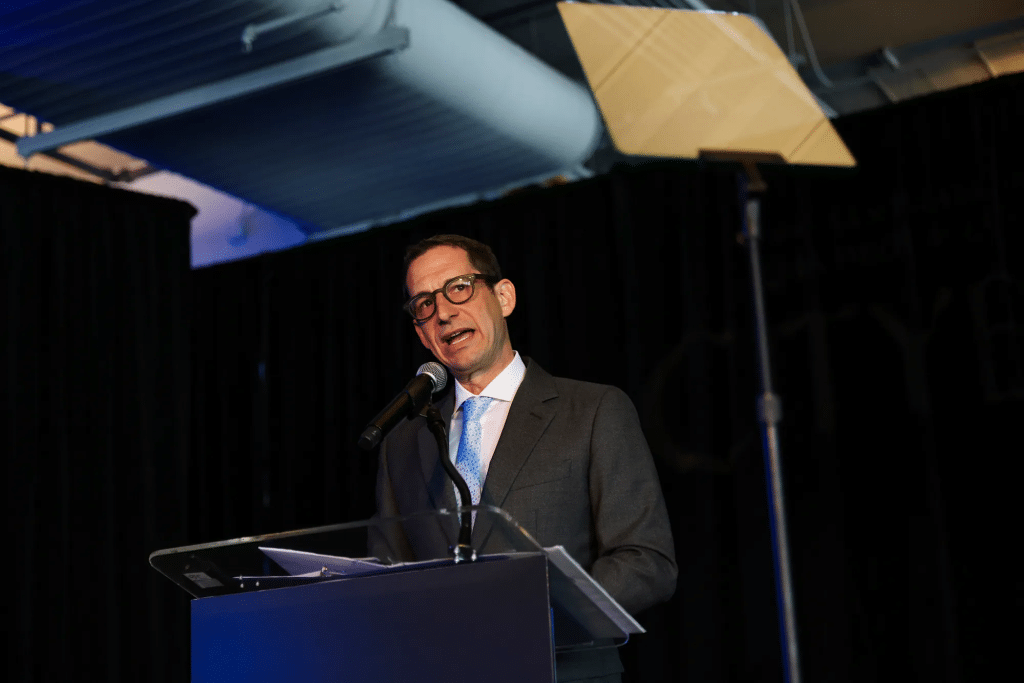
Mayor Daniel Lurie speaks at a Chamber of Commerce breakfast on Feb. 26, 2025. He has said the city faces an $876 million deficit. Photo by Gabrielle Lurie, San Francisco Chronicle via AP
This story was originally published by CalMatters. Sign up for their newsletters here.
California’s state budget is mired in what fiscal authorities call a “structural deficit,” meaning its revenues cannot keep up with spending mandated by current law.
For several years, Gov. Gavin Newsom and the Legislature have papered over the chronic gap between income and outgo with gimmicks, including on- and off-budget borrowing and creative accounting, plus dips into “rainy day” funds set aside for emergencies.
Those maneuvers merely postpone the day of reckoning, because the administration and the Legislature’s budget analyst, Gabe Petek, project yearly multibillion-dollar shortfalls indefinitely.
The state’s dilemma has several roots, most notably an erroneously high multi-year revenue forecast in 2022 that led to a belief that there would be an immense budget surplus and to sharply increased spending. The administration later pegged the revenue error at $165 billionover four years.
That factor was exacerbated by what Petrek dubbed “a sluggish economy.”
“Outside of government and health care, the state has added no jobs in a year and a half,” Petek noted in a November fiscal overview. “Similarly, the number of Californians who are unemployed is 25% higher than during the strong labor markets of 2019 and 2022.”
State government is not alone in facing chronic budget deficits. The state’s major cities and many school districts are also feeling the pinch of stagnant revenues and inflation, especially with rising worker salaries. Add the horrendous Los Angeles wildfires and President Donald Trump’s potentially huge federal spending reductions and the budget gaps could become even wider.
A few days ago, Matt Szabo, the City of Los Angeles’ chief administrative officer, and city Controller Kenneth Mejia bluntly warned the city council that LA is several hundred million dollars short of covering its budgeted expenditures — not even counting the likely effects of wildfires on revenues and spending.
“The city is facing significant headwinds,” Szabo said, adding “immediate spending reductions required.”
“The city of L.A., financially, we are in trouble,” Mejia told the council in a letter. He added, “The city is estimated to overspend by $300 million over budget. So when you have less revenues compared to your budget, and you have more expenses over your budget — that’s a big gap that we have to fill.”
San Francisco’s new mayor, Daniel Lurie, says he wants to “eliminate $1 billion in overspending” over the next three years to cover an $876 million deficit over two years. “The era of one-time or Band-Aid solutions is over,” Lurie told other officials after taking office in January.
A number of smaller cities, including Sacramento, are also dealing with significant deficits.
Meanwhile many school districts are also facing big budget gaps due to declining enrollment and chronic absenteeism that reduce state aid based on attendance, in addition to the expiration of federal grants meant to cope with COVID-19 and employee union demands for raises to offset inflation-hammered personal budgets.
The Fiscal Crisis and Management Assistance Team, a state agency that monitors school district finances, recently issued a report on school systems in various degrees of fiscal difficulty, with those in Oakland and San Francisco on the list of the most troubled.
The agency cited not only enrollment declines, but the jolts of losing federal pandemic aid and rising costs, particularly for fire insurance and electric power, as factors.
In theory, local officials could seek tax increases as they ponder ways to balance their budgets. However voters facing rising living costs of their own are not likely to approve of that solution.
Therefore the options are either make real spending reductions, which might mean laying off workers and closing schools, or emulate the state’s gimmickry and hope the problems solve themselves.
This article, which was originally published in CalMatters on March 13, 2025 and is republished, with permission. CalMatters is a nonpartisan and nonprofit news organization bringing Californians stories that probe, explain and explore solutions to quality of life issues while holding our leaders accountable. They are the only journalism outlet dedicated to covering America’s biggest state which includes 39 million Californians and represents the world’s fifth largest economy.
Author

Related Articles

California middle schools are ground zero for testing AI in classrooms
Districts are trying to develop more systematic approaches to introducing AI into the classroom.

Hundreds of deaths, thousands of injuries, billions of dollars: The cost of extreme heat in California
Heat waves have killed hundreds of Californians and cost billions of dollars in the past decade, according to a new report from the state insurance department.
11 California county education offices underpaid or overpaid millions due to state clerical error
These county education offices, all starting with the letter “S,” mistakenly got or were missing millions in state funding.