
Covered California health insurance will cost more in 2026. Here’s what’s behind the double-digit increase
Millions of consumers will feel the pinch when rates already expected to rise will jump even further. Federal subsidies, set to expire at year’s end, are partly to blame.
This story was originally published by CalMatters. You can sign up for their newsletter here.
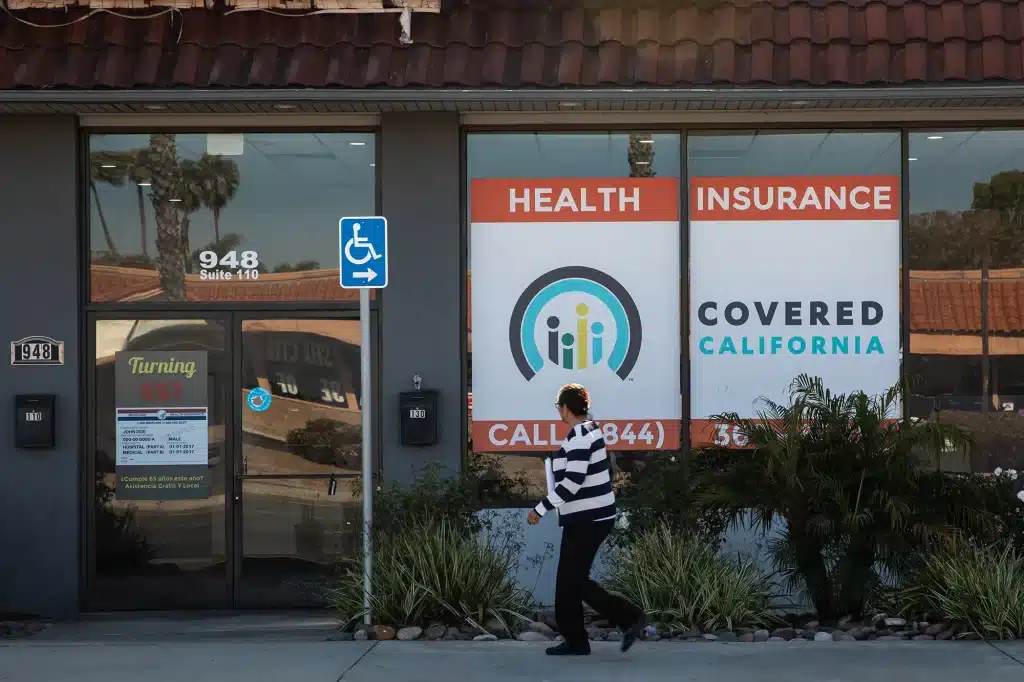
Californians who get their health insurance through the state’s marketplace will see premiums increase by an average of 10.3% next year.
Covered California officials on Thursday announced the first double-digit rate increase since 2018, saying it represents a “confluence” of factors putting upward pressure on the market.
Rising health care costs, the expiration of enhanced federal subsidies and policy-driven market uncertainty together are fueling the hike, Covered California Director Jessica Altman said.
Insurers in recent years have expected health care costs to increase by about 8% each year. That makes up the bulk of next year’s increase. But Altman said about 2% of the rate increase in the state’s version of the Affordable Care Act marketplace is based on federal financial assistance that expires at the end of the year.
President Donald Trump’s signature spending and tax reform bill — the “One Big Beautiful Bill Act” — left out funding for enhanced premium tax credits used by more than 90% of Affordable Care Act enrollees nationwide. Congress enacted these subsidies during the COVID-19 pandemic to ensure people had health insurance. Since then, Affordable Care Act enrollment has nearly doubled nationwide from 12 million to 24 million people.
“We’ve never been through a loss in affordability like the expiration of the enhanced tax credits,” Altman said.
Congress could still decide to re-up the subsidies in September. If it doesn’t, California will lose about $2.1 billion in enhanced tax credits for consumers.
Double whammy for consumers
Ariana Brill, a certified health insurance agent who helps people enroll in Covered California, said if the enhanced subsidies aren’t renewed, consumers’ pocketbooks will be hit twice next year.
“We’ll see rates go up. We’ll see assistance go down. And the net premium, the consumer’s take home price, is going to go up considerably,” Brill said.
Open enrollment typically starts on Nov. 1, but Brill said clients are already calling her with concerns about increases. A majority of her clients, about 2,600 of them, will have to pay significantly more for health care if Congress doesn’t extend the enhanced subsidies, she said.
If that happens, Brill said she expects some people to switch to less comprehensive, lower-cost plans to make ends meet. Others will drop coverage altogether.
“For most people, affordability is a huge part of their decision making. Very few of us have the luxury of buying things without looking at the price,” Brill said.
State officials recently took steps to ease the potential loss of federal subsidies for the lowest-income Covered California members. The state will spend $190 million to maintain subsidies for people earning up to 150% of the federal poverty level (individuals earning about $23,000 or families of four earning about $48,000).
Still, that investment is far short of the $2.1 billion the state stands to lose.
Covered California’s previous estimates indicate that 600,000 people could drop coverage as a result of lost subsidies and rising costs. That, in turn, could make health care even more expensive, experts say. That’s because younger and healthier people tend to forego coverage first, leaving sicker and more costly people behind. To meet their needs, insurers have to charge more.
“With those lower utilization people leaving the marketplace, which leaves only the high cost users in the pool, it drives up premiums for those who are left,” said Matthew McGough, a policy analyst for KFF’s Affordable Care Act program who co-authored a recent study looking at 2026 premium increases.
More people seeking health care and higher prices are already the primary factor driving annual rate increases, McGough said. Some of that can be attributed to the aging population and widespread use of costly pharmaceuticals like Ozempic and Wegovy to treat diabetes and other chronic health conditions.
But insurers nationally and in California have pointed out other factors contributing significantly to increased costs. These include tariffs on drugs and medical devices, enrollment and eligibility changes included in Trump’s budget package, and inflation. Most insurers are assuming Congress won’t extend the enhanced premium tax credits.
Nationally, the median premium increase for next year is 18%, according to the KFF analysis. Loss of subsidies accounts for 4%, McGough said.
“It’s definitely a significant factor this year and that along with the general environment of uncertainty are what is pushing these rates above what we’ve seen in the past few years,” McGough said.
Supported by the California Health Care Foundation (CHCF), which works to ensure that people have access to the care they need, when they need it, at a price they can afford. Visit www.chcf.org to learn more.
This article was originally published on CalMatters and was republished under the Creative Commons Attribution-NonCommercial-NoDerivatives license.
Through December 31, NewsMatch is matching donations dollar-for-dollar up to $18,000, giving us the chance to double that amount for local journalism in Shasta County. Don't wait — the time to give is now!
Support Scout, and multiply your gift
Author

Related Articles

California schools inch closer to rescuing mental health funds slashed by Trump
Court ruling forces Trump administration to release grants.

Who’s running for California governor? Here’s a look at the current field of candidates
A few moments of controversy have touched an otherwise sleepy, wide open race to be California’s next governor.

Celebrating a religious or cultural holiday that falls on a school day? Here’s what to know
For any holiday or observance that falls outside of California’s recognized list, it is best to contact your child’s school administration in advance.
