
Federal appeals court pauses ruling on student gender identity disclosure in California
An appeals court panel wrote that it was “skeptical” of a lower court ruling that said California policies violate educators’ and parents’ constitutional rights. The pause means that California school policies aimed at protecting students from being “outed” to parents against their will can remain in effect while the case proceeds. Attorneys representing teachers in the case said they plan to appeal to the U.S. Supreme Court.
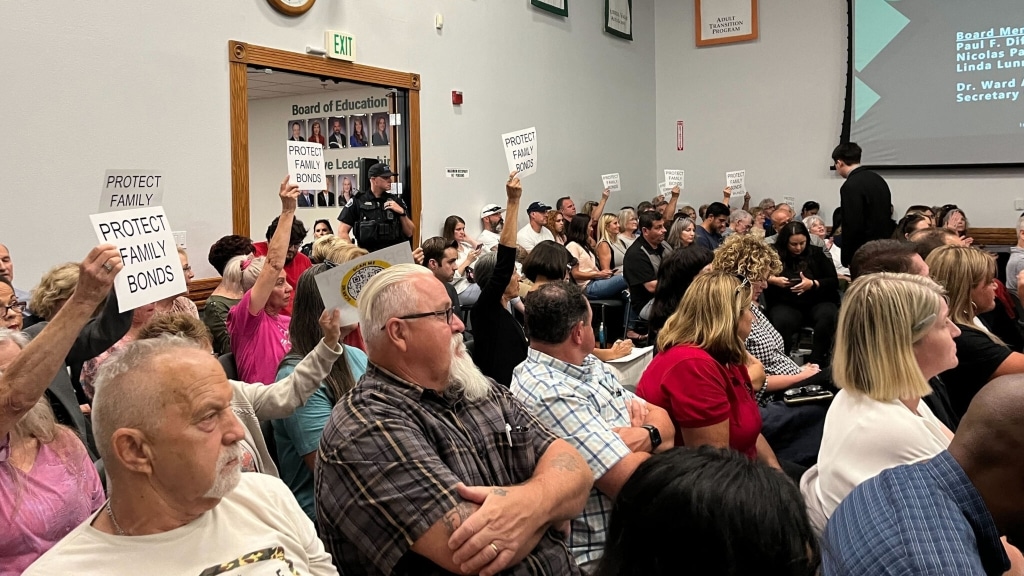
This story was originally published by EdSource. Sign up for their daily newsletter.
A federal order that would allow California educators to freely disclose a student’s gender identity to parents without a student’s consent was blocked this week from taking immediate effect by the U.S. Court of Appeals for the Ninth Circuit.
A panel of three judges, including Chief Judge Mary H. Murguia, wrote Monday that they have “serious concerns” with the district court’s order, including its decision to certify the case as a class action covering every parent and public school employee in California. The panel wrote that it is “skeptical” of the lower court’s decision, which would challenge policies adopted by 598 of the state’s nearly 1,000 local school districts.
In his Dec. 22 order, U.S. District Judge Roger Benitez, of San Diego, wrote that various California laws violate parents’ right to be informed early “after a student says or dresses in a way that suggests a non-conforming gender identity.”
The original case was filed in April 2023 by Escondido Union School District teachers Elizabeth Mirabelli and Lori Ann West, who claimed that district policies that stopped them from disclosing a child’s gender identity violated their constitutional free speech and religious rights. The case also named California state officials, including State Superintendent of Public Instruction Tony Thurmond, the State Board of Education, and California Attorney General Rob Bonta.
Benitez’s ruling referenced guidance that the California Department of Education shared with school districts, including an FAQ that has since been deleted, as well as cultural competency training. His injunction directed the state to include a notice in educator training materials that parents have a right to be informed if their student expresses gender incongruence.
The Ninth Circuit judges noted that Bonta’s office explicitly stated that schools can disclose a student’s gender identity when there is a “compelling need to do so to protect the student’s wellbeing.”
A spokesperson for Bonta’s office said in a statement Wednesday that the stay “protects vulnerable students and avoids confusion for teachers and schools while we appeal the district court’s decision.”
“We are pleased that the Ninth Circuit has agreed we are likely to succeed on appeal in arguing that the district court’s injunction is unnecessarily vague, far more sweeping than necessary to remedy the alleged harms, reliant on faulty readings of the policies at issue, and contrary to longstanding principles of constitutional law,” said the statement.
Christine Parker, senior staff attorney with the American Civil Liberties Union Foundation of Southern California, applauded the decision to pause Judge Benitez’s ruling. She said the panel recognized the harm the ruling could have on LGBTQ+ students, particularly transgender and gender non-conforming students. She agreed with the panel’s statement that “the sweeping nature of the district court’s injunction, the dubious class certification, and the weakness of Plaintiffs’ substantive due process claim” were important reasons to grant this stay.
Attorneys from the Thomas More Society, the Chicago-based conservative Catholic law firm that filed the case, said that they planned to seek a hearing by the full Ninth Circuit while also pursuing a review by the U.S. Supreme Court. Paul Jonna, special counsel for the Thomas More Society, said he was “deeply disappointed” by the ruling but believes its clients’ constitutional rights will ultimately be vindicated.
“Teachers have a constitutional right to communicate honestly with parents without being forced to deceive them in violation of their faith,” said Jonna in a statement. “California cannot override these rights, and we are prepared to take this case as far as necessary — including all the way up to the Supreme Court — to protect the families and educators who are being harmed by these policies.”
This story was originally published by EdSource and is republished here with permission.
Author

Related Articles

Hundreds of deaths, thousands of injuries, billions of dollars: The cost of extreme heat in California
Heat waves have killed hundreds of Californians and cost billions of dollars in the past decade, according to a new report from the state insurance department.

11 California county education offices underpaid or overpaid millions due to state clerical error
These county education offices, all starting with the letter “S,” mistakenly got or were missing millions in state funding.
California’s foster care system is buckling under the weight of this unexpected cost
Critical infrastructure that holds up California’s foster care system is quietly collapsing, leaving children at risk. A well-meaning reform for sexual abuse survivors in the foster care system is contributing to the crisis