
How Prison Self-Help Classes Help Us All
Our Society Rewards Denial. But Together, Inmates Learn the Power of Accountability
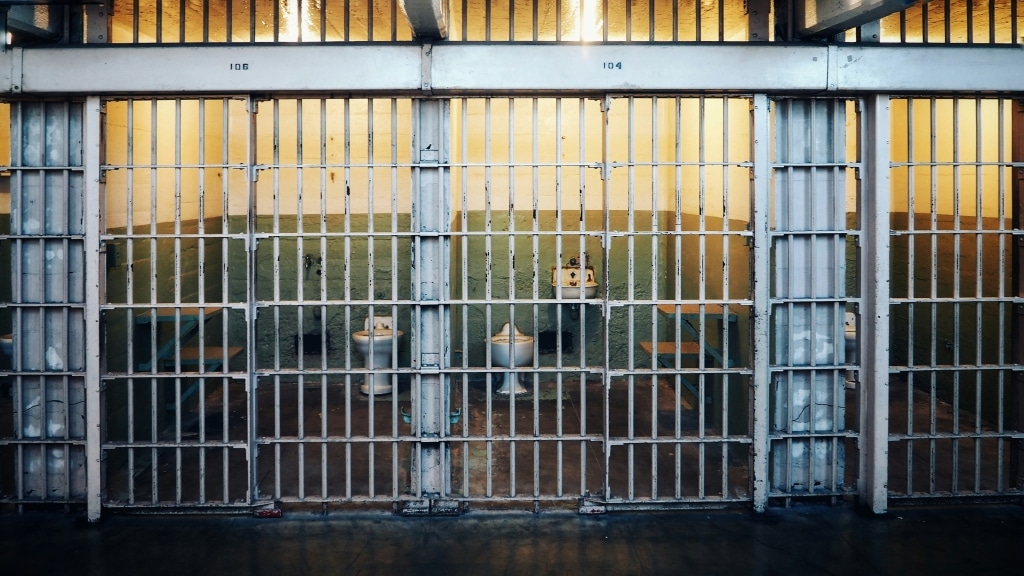
This story was originally written for Zócalo Public Square and is republished here with permission.
How do California prisoners become citizens of accountability in an environment that normalizes and celebrates denial?
For inmates committed to the hard work of change, self-help classes are rays of light within the gloom of prison.
Self-help education provides tools for dismantling webs of self-deception and building new ways of living upon a foundation of personal responsibility and reality-based thinking.
Every California prison offers self-help classes, but the options vary by facility and security level. Classes address topics like victim impact, anger management, addiction, and gang recovery, and are often facilitated by inmates.
In addition to self-improvement, inmates attend classes to earn completion certificates and modest sentence reduction credits. Parole boards also recommend or require inmates to take specific courses. Inmates pursuing resentencing in court often take classes to demonstrate their rehabilitative efforts.
I currently attend a class, Criminals and Gangmembers Anonymous (CGA), which I am facilitating. Every Monday and Wednesday evening about 20 peers and I file into a classroom in the education department. We take turns reading aloud from the CGA booklet and engage in group discussions. The booklet contains a 12-step program that serves as a guide to breaking addiction to the criminal gang lifestyle.
This class marks the third time in the third prison I have taken CGA. The first time around, seven years ago, I initially scoffed at the notion of lifestyle addiction or that I was somehow an addict.
To many inmates, as it was for me, the first step toward rehabilitation is the hardest: summoning the will to admit that profoundly warped and harmful values control their thinking. The struggle is connected to denial, a set of coping mechanisms people consciously and subconsciously employ as part of a natural desire to avoid pain, fear, anger, guilt, and shame.
In the short term, denial can be beneficial, especially to prepare the mind for a harsh reality and to cope in heathy fashion. However, long term, habitual denial leads to damaging thinking and behavior.
Where criminal lifestyle addiction is concerned, habitual criminal denial is the fuel individuals use to craft delusional excuses for their malign conduct and to avoid personal responsibility.
What does criminal denial look like? In one of my first CGA classes, the inmate facilitator revealed it by asking five men about their crimes.
“I’m here for murder, but I was just the driver.”
“It was either him or me—I had to do it.”
“If he didn’t want to get jacked, he shouldn’t have been flossin’ his chain.”
“Man, that’s my business, not yours.”
“I’m innocent, gee; they got the wrong guy.”
The last man to speak smirked, and then all five and the facilitator laughed. It was, we soon found out, a choreographed exercise, but the impact resounded.
This was my introduction to MR BAD. The acronym represents the “Big 5” denial patterns of minimizing, rationalizing, blaming others, avoidance, and (absolute) denial.
The CGA facilitator linked MR BAD to denial-based criminal thinking patterns like the victim stance (“He started it; I just defended myself”), the good guy stance (“I rob people but only to feed my family”), and the unique person stance (“Only God can judge me”).
Step one of CGA forced me to reflect on my long use of criminal denial. I experienced a deep sense of shame and clarity. I could never undo the terrible losses I inflicted on so many people, but I would choose to be a better person as a result. This acceptance and commitment turned my rehabilitation into reality.
That awareness was reinforced by my peers serving as messengers. Those inmates further along in the rehabilitative process are role models for others wrestling with the imposing figure of change. They illustrate that genuine change is possible in part by using their abilities to help rather than hurt people.
I carry those lessons about the power of community and positive peers forward. As the facilitator for my current CGA group, I share my journey and understanding to help my classmates find their best paths in life. Speaking in class is not required, but I encourage everyone to do so as a way of uplifting our small community.
One need not be a self-help vet to make that difference. Everyone has a valuable story. The act of speaking itself gives others the courage and desire to follow.
These dynamics matter when discussions turn to childhood trauma, which is part of CGA step four—taking a personal inventory to confront points of origin for criminality. Traumatic events do not excuse criminality. But discussing them helps inmates develop insight about how their buried issues gave rise to the beliefs and behaviors that caused them to commit their crimes.
Many inmates’ families operated under a code of silence—what happens at home, stays at home—and the trauma caused by difficult childhood experiences went unaddressed. Inmates realize denial has been with them from a young age and exacerbated their trauma. That understanding becomes a road map to recovery and the basis for healthier responses to future adversity.
During group we discuss the challenges of continuing our personal growth in prison and beyond. We learn that we will need to continue 12 step practices like self-honesty, prompt admission of our wrongs and self-correction, and daily personal inventory. And that we can never forget the vast harm we created and our duty to make amends.
Such habits take on greater importance in a society like our own where standards of accountability have fallen. Denial is mainstream, and the rule of law has been devalued. Government figures, celebrities, and private citizens regularly minimize, rationalize, or lie about their conduct to avoid accountability—and then receive support and celebration.
But through self-help classes, committed individuals gain healthy new values and control over their thinking. They recognize habitual denial and the dangers it brings. They uphold their personal responsibilities and accountable lifestyle even as the larger culture rewards contrary thinking and behavior. You might think this would be frustrating. But as I see it, they become representatives of a larger solution for stronger communities and combating the decline in accountability across society.
This story was originally written for Zócalo Public Square and is republished here with permission.
Related Articles
How an aging California is turning to senior centers for romance, community and health
No two senior centers are alike. We visited three very different venues in L.A. to learn how they’re changing for California’s aging population.
California schools face a new budget hit: Soaring insurance costs after sex abuse lawsuits
A recent state law lifted the statute of limitations on sex abuse lawsuits, driving a huge increase in payouts by school districts and government agencies. It has also increased insurance premiums for all agencies.
How to help homeless college students: A Cal State Long Beach professor studies what works
Professor Rashida Crutchfield’s work includes evaluating rapid rehousing pilot program.