
Open Notebook: A reflection on the value of trust and fairness after my summer as a journalist in Shasta County
Our Open Notebook series offers readers a behind-the-scenes look at how our journalists work. In this Notebook entry, reporter Madison Holcomb shares what she’s learned about the importance of trust-building with sources from reporting on the communities of Shasta County.
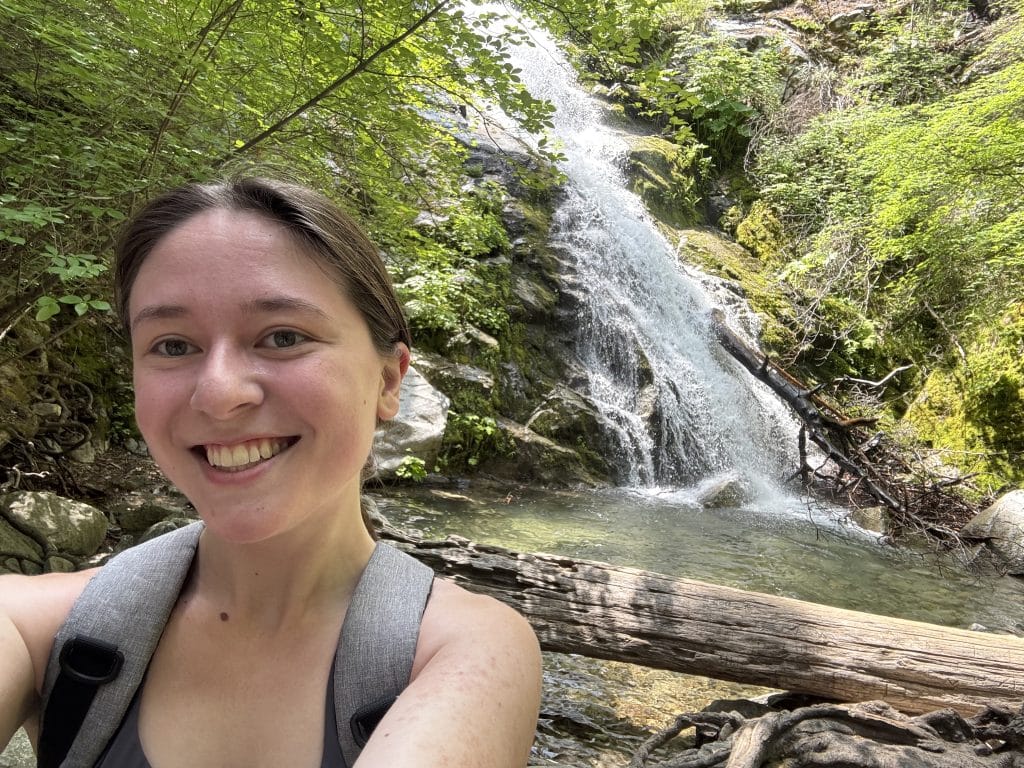
When I accepted an internship in Redding, California, I wasn’t sure what I was walking into.
I didn’t know much about this area before applying for the job. I found out about Shasta Scout through a national internship program, where applicants ranked their top choices from a list of news organizations throughout the country. After reading more into Shasta County and this tiny yet driven newsroom, Scout quickly rose to the top of my list.
Ever since I decided to go into journalism, I’ve had special interests in increasing accountability and providing facts in response to misinformation. As I researched the unique political landscape of Shasta County, which includes distrust of both government and the media and deep political divisions over important topics like elections, I felt a pull to the region. I saw Shasta as a place for me to learn how to increase access to factual reporting for an audience that lacks trust in the news.
After I accepted the internship, I sat in my midwestern apartment following Google links to national news about Shasta. But many of the stories I read were overly-sensationalized, leading my imagination to scenes of angry mobs storming county board meetings, widespread government collapse and a gun-wielding militia that patrols the streets. To be frank, by the time my start date was truly in sight, the idea of moving here had started to scare me.
Nevertheless, I found an apartment, signed a lease for an overpriced rental car and booked a plane ticket, and by June, I was moving from my rural town of 6,000 people to Redding.
It was a big leap for me. I grew up and went to college in Illinois, and the farthest away from home I’d lived before was just three hours away, in St. Louis. I’d never been this far from my family, and the only people I knew in California lived four hours away.
But my nerves began to calm soon after I arrived. Redding was actually a lot like home, just with 15 times as many people. Just like my town, Redding isn’t racially diverse, and the majority of people are conservative. But there weren’t people guarding the streets with rifles or community members screaming at one another in restaurants over politics. My anxieties about moving across the country to a place I imagined as unfamiliar and politically violent eased.
On my first day on the job, I covered a Shasta Board of Supervisors budget meeting. There wasn’t an angry mob; just a small, peaceful protest outside the building, advocating against the supervisors’ decision to declare that Shasta is not a sanctuary county. Though I did take note of the all white, male board, and how some supervisors seemed somewhat dismissive of public speakers who had opposing views of them — avoiding eye contact and looking at their computers. While this was a mostly “normal” and calm meeting, there have certainly been times when meetings have gotten out of hand, and even situations when reporters were pushed out of the meeting by law enforcement without cause.
A few days later, I drove to Cottonwood with fellow reporter Nevin Kallepalli to interview the sources of the subject that intimidated me most when I moved to Shasta County: the local, unauthorized militia.
The Cottonwood Militia is one of the most sensationalized subjects when it comes to national media portrayal of Shasta. News articles often describe the militia as an aggressive group that took control of the county and has an abundance of weapons to prepare for a civil war. While I was certainly startled by this idea, I was also incredibly intrigued.
In the interview, I learned a lot about both the men in that barber shop — former militia leader Woody Clendenen and current leader Dan Scoville, among others — and the militia itself that I wasn’t anticipating. The way it was described to me by my sources, the militia acted more like a community organization — it often had classes and workshops on self-sufficiency and survival, like first-aid training and disaster-preparedness lessons. The men there valued community, and above all else wanted to protect their families and the other people they care for.
Throughout the interview, though, I made sure to maintain my critical nature and mentally note the comments made that raised my suspicion, including their repeated reassurance that guns were the last line of defense while not being able to specifically admit where they drew that line, as well as their characterization of 2020 Black Lives Matter protests in Redding as riots when they have been documented as peaceful. People in the community have valid concerns about the militia, including the journalists who have been threatened for writing critical pieces about them, and I didn’t forget that.

Overall, the interview with militia leaders didn’t go at all how I expected, but in a good way. Clendenen and Scoville voiced their appreciation for us actually coming in to talk to them face-to-face and not doing what they said several news organizations have done before: call them from states away to comment on a story or not even give them the chance to respond before publishing an article critical of them.
Their gratitude for our approach to journalism gave me pause. I hadn’t realized just how much of a difference actually sitting in-person with sources can make on trust- and relationship-building, and how important that is to sources to feel seen and not misrepresented. I walked away from the interview with new goals for the summer: show up for my sources to help repair their trust in the media, don’t let personal biases interfere with my reporting and tell stories fairly without sensationalizing them.
I went to a couple militia meetings after our initial interview to learn about this side of the overall community I was reporting on. One member in particular told me how she doesn’t read Shasta Scout because she sees the newsroom as biased and thinks the organization often doesn’t report on the things that matter to her. I listened and assured her that we appreciate any feedback we get. A couple weeks later, she made a positive comment on a Scout Facebook post about a story I was working on, something I saw as a small step toward gaining her trust.
But the militia wasn’t the only group I focused on this summer. Toward the beginning of my internship, Nevin and I spent several hours interviewing Lynette Craig, the mother of a local Indigenous man, Nick Patterson, who went missing in 2020. This time, she led the interview, her grief and sense of humor carrying the tone of the conversation. It was the first interview she had committed to since her son went missing, so I knew the high stakes of the conversation and her decision to trust. When Nevin and I made the hour-drive back to the office after the interview, we agreed that it was one of the most emotionally moving interviews either of us had ever had.
A few days later, he and I drove two hours northeast to where Craig was holding a grid search to look for the remains of her son. We spoke with members of the Pit River Tribe and with law enforcement, walking alongside those involved in the search process. It was physically and emotionally exhausting, but it also felt incredibly fulfilling to be able to invest in showing up for our sources this way.

I spent several days writing the story about Craig and her son because of how much I wanted to get it right. I know some Native tribes and individuals don’t trust the media because of ways they’ve been misrepresented in the past, and I wanted to make sure I was doing my best to tell a true, clear and strong story. While reporting on this story, I had several conversations with my friend Marshall Baker, an Indigenous journalist who I met just a few weeks prior, to make sure I was covering the story as fairly as possible.
The day the story published, Craig called me to express her appreciation for the time and care I had put into her son’s story, telling me over and over how important it was to her. When we got off the phone, I sat down and cried, overwhelmed by the way simply taking time to seek to understand and tell the truth had impacted her. I felt proud.
There were many other instances throughout the summer where I consciously made an effort to build strong and trusting relationships with my sources, whether that was by relating my personal experiences to theirs or listening to the specifics of their hardships. I spoke with attorneys who struggled to meet both professional and personal needs, firefighters who battled physical and mental challenges while fighting a unique fire and voters who didn’t feel represented in their government. In my reporting, I focused on how I could humanize my sources to share their stories in meaningful ways.
By the end of my internship, I’ve realized how important and necessary it is for journalists to connect with their sources on a human level, utilizing tools like curiosity and open listening to really seek to understand them. While I might not personally agree with the values or opinions of my sources at times, I have to set my biases aside and convey to readers that the people we report on are more than stereotypes, job titles and labels. I believe that a big contributor to the extreme polarization of our country today is the way much of the media has drifted away from this idea of human-centered stories that show the complexity and nuance of our subjects, and instead has leaned into overly-sensationalized, stereotyped clickbait articles like the ones I read before moving to Shasta County.
That isn’t to say that places like Shasta County don’t have real problems, especially ones in local politics, that shouldn’t be thoroughly reported on and investigated. People in power should be held accountable for rule-breaking and injustice, and it’s important to remain critical of such systems. But it’s also important to report stories fairly, in a way that doesn’t exaggerate the subject at hand for the sake of views or taking sides, and to understand that people are nuanced, not just “good” or “bad.”
I should also emphasize that I probably had different experiences in this region as a young white woman than, say, a person of color. This area has a horrific history of racial violence that has likely contributed to many systemic issues and generational trauma today, and I would be ignorant to not make mention of these trickle-down effects and how they might impact others’ experiences here.
Overall, being a journalist in Shasta County has taught me a lot about the significance trust-building can have with the sources in the community I’m reporting on. It’s also been a reminder of how I should use my platform as a journalist to show the human stories behind the issues I write about and not to take advantage of someone opening up about their experiences to sensationalize a story. The impression Shasta has made on me will be long-lasting, and I plan to carry my summer goals with me to the rest of my career. I’m thankful to this community for an unforgettable summer.
Madison Holcomb is a recent graduate of the University of Illinois Urbana-Champaign. She’s reporting for Shasta Scout as a 2025 summer intern with support from the Nonprofit Newsroom Internship Program created by The Scripps Howard Fund and the Institute for Nonprofit News.
Do you have something to share? Email us: editor@shastascout.org.
Comments (11)
Comments are closed.
Related Articles
Open Notebook: The intersection of mental health and criminal justice
Our Open Notebook series offers readers a behind-the-scenes look at how our journalists work. In this notebook entry, reporter Madison Holcomb shares insights into the considerations she makes as she reports on criminal justice stories, especially where mental health plays a major role.
Open Notebook: Justice for the Dead
Our Open Notebook series offers readers a behind-the-scenes look at how our journalists work. In this notebook entry, California Local News Fellow Nevin Kallepalli shares why he reports on the dead, as well as the living.
Open Notebook: As journalists, we too are threads in the fabric of our stories
Our Open Notebook series offers readers a behind-the-scenes look at how our journalists work. In this notebook entry, reporter Maya Nelson reflects on what it means to build relationships with sources and the public, and how those relationships play an integral role in shaping stories.

Good insights Madison. I am also from small town Illinois and have returned recently from a class reunion in Hillsboro. I wrote for the Montgomery County News while in college and later, as County Coordinator was often tasked with explaining new County programs and positions on behalf the Board. I agree, Redding is pretty similar to small town, rural Illinois, just with a slightly faster pace and less humidity. Good luck in your studies and career!
There’s entirely too much reporting and personal opinion-making about other people and groups without ever actually, yeah, sitting down and talking with them. Thanks for the reminder of other ways to do it and thanks for the good work!
Madison Holcomb do you even realize how left leaning and biased you are? Try being a little less judgmental and more open minded about people and facts you disagree with. It will make you a better reporter.
Paul: examples?
This isn’t a Facebook comment thread, you don’t get to whine when you hear something you don’t like
We need more journalists
Like you. Thank you for spending time in Shasta County
Congratulations Madison for a job well done. Your career goals are noble and uplifting.
You’re going to have a lot of trouble in the future though; witness what is happening to the Smithsonian. All the best to you and good luck.
A thoughtful and well written article with lots of heart and soul! May you have a wonderful career and keep your enthusiasm and integrity intact as you navigate these tricky times. Thank you for your contributions to knowledge and understanding.
I also thank you for taking the risk to come to Shasta County and reporting with an open mind; being interested in human beings and their heart aches and challenges. Your reporting is what journalism should be about – not sensationalism and stereotyping. I’m so happy you chose to intern with Shasta Scout/Annelise Pierce who is consistent about reporting without posing an enemy. Hallelujah!!!
Great article Madison. Thank you for your outstanding attitude. Best of luck in all you do.
Thank you for choosing to come here and with open eyes. I appreciate you. There is soooo much that this beautiful country has to offer and soooo much more that can be improved and transparent for our community. Blessings to you in this journey. Feel free to Google my name and read the articles. Much can be learned and journalism is the forefront to change.