
Opinion: If Prayer Really Works, Bethel Should Prove It. 
A research group working with Bethel Church to prove that prayer heals people, cites studies that lack evidence-based reasoning. If prayer really works, it’s worth taking the time and money to provide scientific evidence. If we can’t, we shouldn’t be offering false hope.

The Global Medical Research Institute (GMRI) working with Bethel Church told Shasta Scout they’ve used science to prove that prayer works. The research group is conducting studies of intercessory prayer in coordination with Bethel Church in attempts to further prove the efficacy of their religious work.
A review of their cited research shows they haven’t actually proven anything yet. Looking at their referenced study, which focuses on someone supposedly healed from an abdominal illness, you’ll find very little evidence that supports any kind of conclusion. You’ll also find a statement from researchers themselves that their work lacks evidence-based reasoning.
The best we can say from this study is that a person was sick, people performed an intercessory prayer, and the person got better. This doesn’t tell us anything about the mechanism of improvement, and whether prayer was the deciding, or important factor. What’s also left out: a control group. How many people didn’t survive or were not healed with intercessory prayer?
Could this simply have been the placebo effect? The case study is inconclusive on this subject, stating merely that, “there is insufficient evidence that placebo effects can account for the observed resolution of symptoms.” And adding that, “the mechanisms by which PIP (Proximal Intercessory Prayer) may have contributed to the resolution of symptoms remains unclear”. These experts propose that healing might have occurred as a result of PIP activating the autonomic nervous system, but no mechanism is provided, just a claim that this might have been the cause.
This matters because helping people get well matters. If prayer works, let’s prove it – with controlled, evidence-based studies.
In the case study above, the patient claims that he felt a spark that originated in his shoulder and went through to his stomach. This is a phenomenon that should be detectable by modern instrumentation and could therefore be tested and studied under controlled conditions.
Yes, these studies are expensive, time-consuming and complicated to conduct. Participants with debilitating diseases that met certain criteria would have to be recruited and sorted into test and control groups. We would need to conduct thorough investigations into the participant’s medical histories, and obtain independent physical assessments. And we’d have to establish the parameters by which the study would be conducted which would require an extensive amount of research into existing claims of the effects of intercessory prayer.
Once numerous trials have been conducted, researchers could begin to form a more educated hypothesis about what mechanism caused any proven healings. Further testing would then need to be done to determine efficacy (i.e. is this mechanism consistently reproducible to obtain the intended outcomes and if so, be used in a monitored medical setting). The major problem is that in order to conduct a controlled experiment such as this, the participant would necessarily have to forego standard medical treatments so that external factors could be ruled out and this would be extremely unethical.
So far, research has not proven that healings are the results of some “greater” force interacting with the natural world (which many people call a god), only that some people that are prayed for have gotten better. Correlation is not causation. And until a mechanism showing that prayer caused healing is scientifically verified, there’s no good reason to continue to take anecdotal claims of healing seriously.
Declaring that prayer causes healing, and sharing testimonies of such healing without any evidence is not only wrong, but can also be dangerous, because it provides false hope. The promise of healing through an unprovable method may encourage faith-filled followers to forgo medical treatments that actually work in exchange for the unprovable chance of being healed. For example, in numerous cases parents have chosen prayer over proper medical treatments, a decision that has resulted in the deaths of their children.
The Templeton Foundation conducted their own study into the effects of prayer and discovered that prayer worked about as often as random chance. Interestingly, patients who knew they were being prayed for actually did worse than those who did not or those who weren’t being prayed for at all.
Some will say, “You can’t test God.” Others will say, “God works in mysterious ways.” Others will excuse the results of the Templeton research by saying the patients who knew they were being prayed for had performance anxiety or some people weren’t praying hard enough or using the right techniques. How then are we to actually conduct a study that would produce any kind of usable results that supported this claim?
When it comes to studies like these, we need to ask ourselves, what is more probable: that a powerful force outside of our current understanding, through a mechanism we can’t identify, healed someone? Or, that a natural healing process occurred, which, through proper testing could eventually be discovered?
Probabilistically, it seems as though it would be the latter, because we already know that these things can and do occur. We know that diseases go into remission, we know that certain combinations of drugs can cure diseases, and we know that the placebo effect sometimes works. This is not to say that it can’t be the former, just that it’s not yet nearly as likely a hypothesis.
Bethel teaches how to heal people as part of its School of Supernatural Ministry but there’s no evidence that the supernatural actually exists. After all, once science proves a mechanism, it ceases to be supernatural and becomes a scientifically understood part of the natural world.
Think critically and be skeptical of claims.
Want to share your thoughts and opinions with our readers? You can submit your writing here.
Author

Related Articles
Opinion: Healthcare and Food Benefits are at Risk in Rural California. Will the Governor and Legislature Act?
The need for health care, behavioral health treatment, and food assistance will not disappear because federal funding drops. The burden simply shifts downstream to counties — forcing cuts to emergency rooms, food banks, sheriff’s deputies and already-overwhelmed local systems.
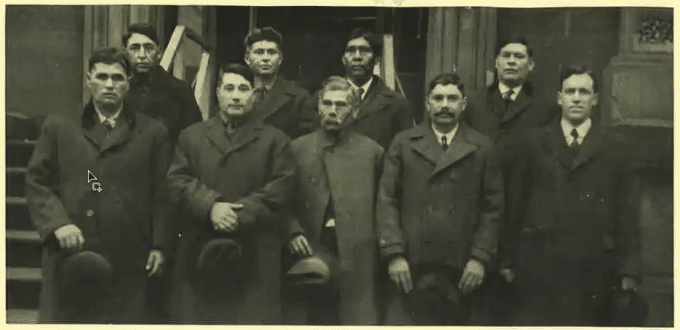
“My ancestors have not deserted me”: The life and writings of Wintu poet Alfred Gillis
After recent erasures of the historical contributions and experiences of Indigenous people from public sites, the work of an early 20th century Wintu poet provides poignant insights into how local Native people have fought against invisibility for centuries.
Letter to the Editor: Redistricting California is not a fight the Democrats can win
Anderson resident Curtis Scott draws on current events to scrutinize the value of a proposed redistricting effort by California Democrats. He describes himself as a 50-year resident of Shasta County and life-long progressive.