
Small California Schools Brace for Layoffs as Congress Slashes Funding for Rural Education
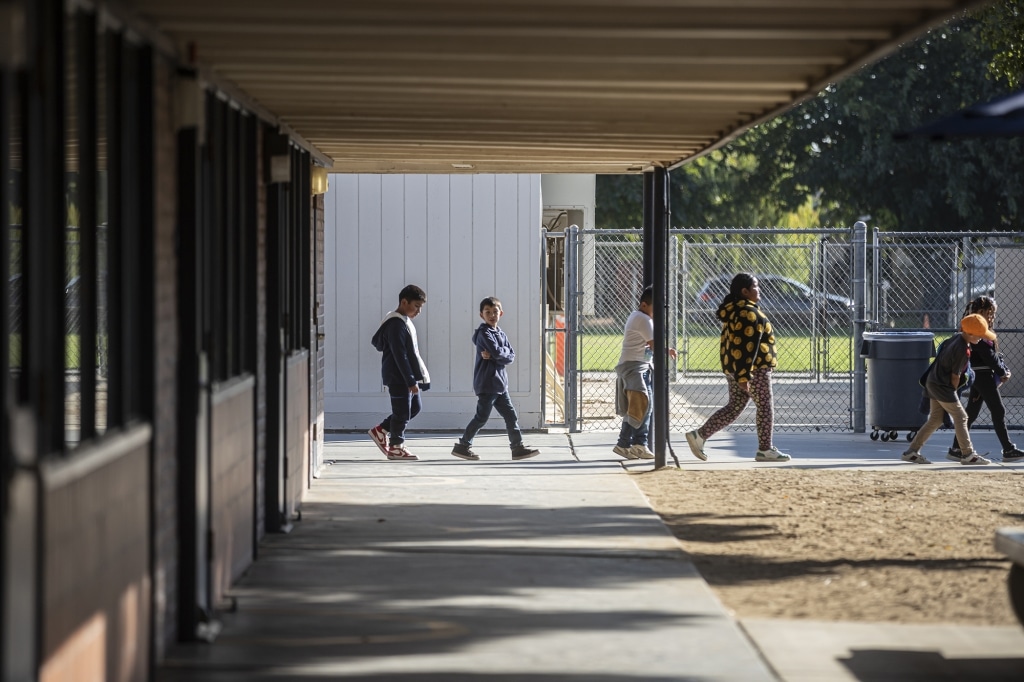
Federal funding for rural schools goes to 39 California counties. School districts in those communities, including those in Shasta County, consider the money a lifeline.
This story was originally published by CalMatters on January 14, 2025 and is reprinted here with permission.
Rural school districts — already beset with financial struggles — are furiously scrambling to save a century-old funding source that Republican lawmakers last month eliminated from the federal budget.
The Secure Rural Schools and Community Self-Determination Act, which has been approved almost continuously since 1908, is intended to compensate rural counties that have large swaths of non-taxable national forest land. Last year, the bill brought nearly $40 million to 39 California counties, funding everything from after-school programs to school roof repairs.
The money is a lifeline for rural districts that, because of lower enrollment, receive less money from the state than their urban and suburban counterparts yet tend to have large numbers of high-needs students and higher costs, such as providing bus service to remote areas.
In December, amid the flurry of last-minute budget negotiations, the bill died in the House after House Speaker Mike Johnson did not put it forward for a vote. The bill’s original sponsors hope to reintroduce it in the next few weeks in a last-ditch effort to get it passed before the final budget deadline in March.
It’s a longshot, but school officials are renewing their fight because the loss of those funds could have deep repercussions for rural school districts.
“It might not seem like much, but it’s real money for us,” said Allan Carver, superintendent of schools for Siskiyou County, which last year received $4.3 million from Secure Rural Schools. “If it was to go away, there would be a hole in our budget that would have an undeniable impact on children.”
GOP promises to cut federal spending
Republican Congressional leaders did not respond to interview requests from CalMatters. But in budget hearings, they have vowed to reduce government spending, including education funding. President-elect Donald Trump has also proposed eliminating the U.S. Department of Education and making other cuts to schools. His advisor, Elon Musk — whom Trump recently named head of a yet-to-be-created Department of Government Efficiency — has been outspoken in his desire to cut federal programs.
That’s been frustrating for rural residents, many of whom supported Trump in November and feel Secure Rural Schools is neither a partisan issue nor a government handout.
“This is not a ‘gift’ of Congress,” said Lonnie Hunt, a retired judge from rural Texas who’s head of the National Forest Counties and Schools Coalition. “It’s a pact made more than 100 years ago between the government and local communities. If the federal government had not made this deal, they’d never have been able to create the National Forest Service.”
“Yet somehow it’s been lost in the politics,” Hunt added. “It’s a shame that rural America is being victimized here. And I’m pointing fingers in all directions, not just one side.”
Mold and layoffs in Trinity County
Secure Rural Schools dates from the creation of the National Forest Service in the early 20th century, when the federal government set aside millions of acres of land for logging. Because that land was removed from the local tax rolls, nearby communities were left with budget shortfalls — and few options to make up the cash. To compensate, the federal government agreed to share a portion of timber profits with those areas. When the logging industry started to decline in the 1990s, the government started augmenting the payments through the modern version of Secure Rural Schools.
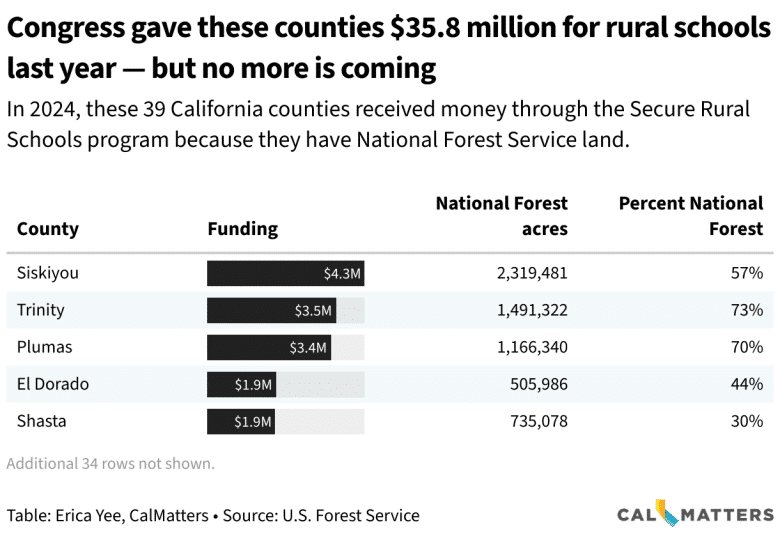
The money goes to counties that have National Forest Service land, where it’s divided between schools and public works. California, with nearly 21 million acres of national forest, receives far more than any other state. And within California, Trinity County receives the second-highest amount – $3.5 million last year.
Located in the mountains of northwest California, Trinity County spans 3,208 square miles and is more than twice the size of Rhode Island. About 80% of it is owned by the federal government, which means it has limited ability to raise money through local tax measures. Due in part to the decline in logging, it’s also one of the poorest counties in the state, with a poverty rate of more than 20%, compared to 12% statewide.
Trinity Alps Unified, the largest district in the county, received about $600,000 from Secure Rural Schools last year, about 5% of its overall budget. That money was crucial for paying for things like teachers’ aides, art and music programs, field trips and after-school programs, Superintendent Jaime Green said.
Local residents know all too well what could happen without Secure Rural Schools. In 2016, the only other time in recent memory the bill didn’t pass, Trinity County school districts didn’t have money to make basic repairs to school buildings, leading to dangerous outbreaks of toxic mold at numerous campuses. Students’ and teachers’ lives were disrupted by school closures, and the state had to spend more than $50 million to help districts rebuild.
This time, Green is warning that the district may have to eliminate seven jobs, leading to bigger class sizes and fewer enrichment programs. He worries that the students who need the most help will suffer the worst impacts.
“We’re an impoverished county, and the only way to reverse that pattern of poverty is through education,” Green said. “Cutting funding hurts kids. We have to be realistic about that.”
Keeping the pressure on
Green and other rural superintendents have traveled to Washington, D.C. almost a dozen times in the past year or so to lobby for Secure Rural Schools. Their work paid off, at least in the Senate, where the bill passed unanimously.
Green and his colleagues plan to keep the pressure on through emails and phone calls to Republican leadership, in hopes of convincing them to support rural schools even as they face pressure from Musk and Trump to slash federal spending.
Sonoma County Supervisor James Gore, president of the National Association of Counties, has also been persistently lobbying for Secure Rural Schools. He said there’s usually some last-minute wrangling before the bill passes, but this year “was vastly different.”
“Every time it comes up, all the cowboy hats show up” to advocate for the bill in Washington, D.C., he said. “This year we had a lot of momentum and we thought we’d get it over the hump. It was a gut punch when it didn’t go through. We were shocked, to be honest.”
Rural areas’ lack of population and money often means that politicians overlook residents’ needs in those areas, Gore said. Likewise, few people outside of rural areas would hear about the impact if programs are cut, he said. None of the House Republican leaders, including Johnson, party leader Rep. Steve Scalise and House Majority Whip Rep. Tom Emmer, represents areas that receive Secure Rural Schools funding. None of the three responded to requests for comment.
“It’s a catastrophe that no one knows about,” said Gore, referring to the bill’s failure. “But we have an absolute responsibility to these small towns, who are the stewards of these largely unmanned federal lands.”
The last Secure Rural Schools payment was in April. Even if Congress returns to funding the bill next year, even one missed year of payments may leave an impact, superintendents said. Children will have fallen behind academically and teachers will have lost their jobs. In small communities where jobs are scarce, layoffs can have a disproportionate impact, sometimes leading to families moving out of the area entirely.
“In the past, we’d go through the motions but we always got it solved by the buzzer,” Hunt said. “This year we’re past the buzzer and we’re in OT. But we won’t quit.”
This article, which was originally published in CalMatters on January 14, 2025, is republished with permission. CalMatters is a nonpartisan and nonprofit news organization bringing Californians stories that probe, explain and explore solutions to quality of life issues while holding our leaders accountable. They are the only journalism outlet dedicated to covering America’s biggest state which includes 39 million Californians and represents the world’s fifth largest economy.
Author

Comments (1)
Comments are closed.
Related Articles

California schools face a new budget hit: Soaring insurance costs after sex abuse lawsuits
A recent state law lifted the statute of limitations on sex abuse lawsuits, driving a huge increase in payouts by school districts and government agencies. It has also increased insurance premiums for all agencies.

How to help homeless college students: A Cal State Long Beach professor studies what works
Professor Rashida Crutchfield’s work includes evaluating rapid rehousing pilot program.

How Prison Self-Help Classes Help Us All
Our Society Rewards Denial. But Together, Inmates Learn the Power of Accountability
I guess when you’re dealing with an uneducated administration that doesn’t value education, history or previous Congressional Acts made, you end up taking much needed funds that can’t be replaced. Reminds me of the federal gov’t taking what (reservation lands) they want, when they want to make big money, or strip an area of it’s natural resources, without regard to the communities it destroys. What a world we live in now. Education used to mean something and was considered a valuable commodity. But not now. Now all you need is a lot of money and insane behavior to become successful. What a waste of Taxpayer monies.