
Editorial: Here’s What Fascism Is, and What It Isn’t
Today’s usage muddies the political meaning of the word, confusing an advancing threat of fascism both in the United States and globally.
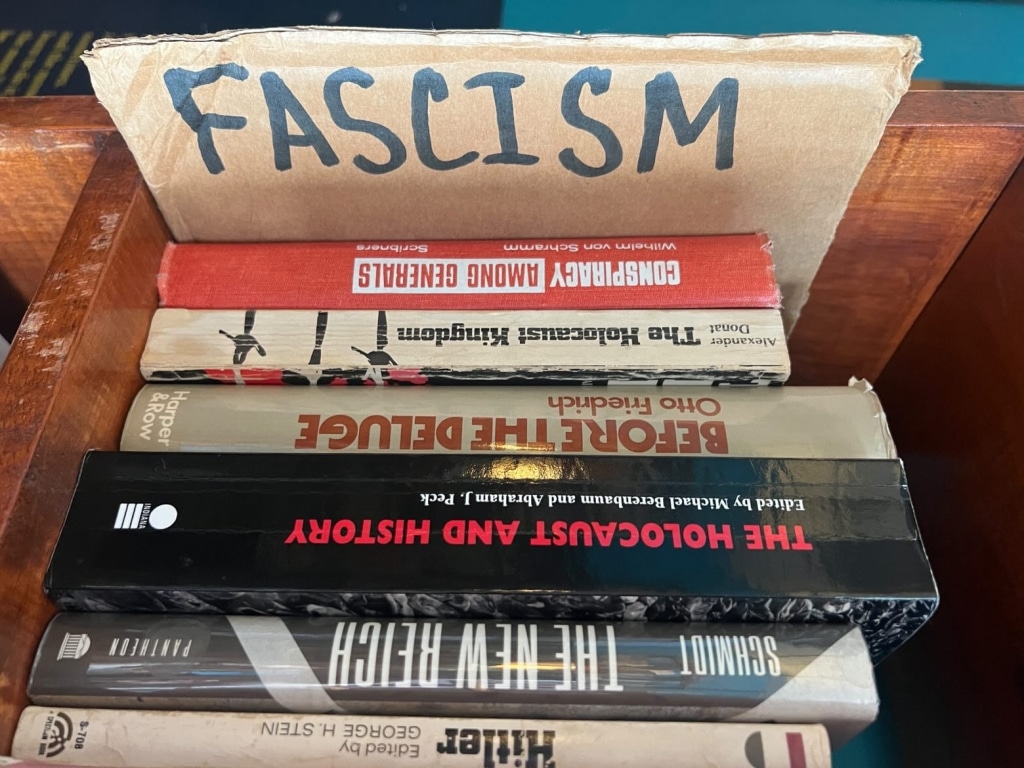
“Fascists.”
If it’s a typical Monday morning at Shasta Scout our emails, DM’s, or social media comments may already contain this allegation, or another similar one.
Much of the everyday name-calling we receive as journalists is in the form of an ad hominem attack, meaning an attack on the character of myself or Annelise as individuals, rather than a debate on the content of our work. Despite their poor logic, ad hominem attacks can be very powerful because they are designed to broadly discredit. After all, if you can make someone impossible to believe on principle, you’ll be less likely to have to argue with them on any issues ever again.
At one time, the term fascist was one of the most devastating accusations you could make. To be called a fascist was to be called anti-American. The only thing worse? A commie. Incidentally, most fascist movements have used the fear of socialism to garner greater influence. But “fascist” is now frequently used merely to indicate someone we feel is oppressing us, whether real or perceived.
Today’s usage muddies the political meaning of the word, confusing the existing and advancing threat of fascism we are facing both in the United States and globally.
So what is fascism and how can we spot it? Fascism is a system of government where one ruler holds governing power obtained through specific methods. That ruler has the ability and will to manipulate the public conversation in ways that can make their followers feel very powerful, despite their actual disenfranchisement. One way this is accomplished is by rallying citizens around a shared love of their country above all else, making the will of a leader the will of the people, by default.
As a political movement, fascism is characterized by extreme nationalism, militarism, and forcible government suppression of any opposition. This last part is important. Fascism is not a disagreement between individuals, it isn’t even about disagreements between politicians, it is a form of authoritarianism that demands and coerces obedience to a single ruler and a particular belief system. It is a type of government that has the power and the will to suppress political opposition with violence or the threat of violence.
For comparison, in its basic form, democracy is a system of government in which state power, meaning the power of the government to rule, is held by everyday people who vote in ways that can change how the government functions. The United States is a representative democracy, meaning that we vote to elect representatives who then make decisions for us in their respective governmental bodies such as Congress, the Senate, City Councils, or Boards of Supervisors.
Because of our form of government, any effort to make the ability to vote more challenging, or to disrupt the safety and security of elections, eats away at the most foundational of our theoretical freedoms. Historically, the majority of people who have lived on this land over time, including Indigenous peoples, did not have the right to vote for many decades. Some still don’t. This is why it may be fair to say that America’s relationship with democracy has, at times, been more of a flirtation than a reality. Nevertheless, the basic idea that ordinary people wield the power of the state is one that many Americans consider fundamental.
In the United States, the fight for the right to vote is one of our longest and most brutal legacies. We can tell by the tremendous local zeal over how votes are counted and how elections are run that this foundational element of democracy is still seen as deeply important political territory here in Shasta County.
You may hear the term constitutional republic used to replace the word democracy in local board meetings. A constitutional republic is a form of government that revolves around a central constitution and representatives who make governing decisions based on that central constitution. The difference when considering which of these two the United States is is best seen as a matter of emphasis. We are both, although certainly, the concept of democracy was one that existed at the forefront of the minds of the founding fathers and has been central to the creation of laws ever since.
The founding fathers valued both principles of democracy and principles of republicanism (rule by representation), and our form of government in the United States was created in large part by the tension between the two. Since both principles are true to our country, it’s likely that those who insist we are a constitutional republic today are more interested in using the federal Constitution as a centralized ruling document than in the people’s vote to make decisions that impact how we all live. And vice versa.
The apparent contradictions between what people claim to value and what they choose to do are often confusing. Also, many of the decisions made by elected officials can seem perplexing and impossible to engage with and influence as ordinary people.
It can be hard to see the impact of our votes because of the many layers between the time when we cast our ballots and the decisions that our elected representatives will later make. But the smaller the voting pool, the more directly our decisions as voters impact our daily lives. So, our ballots cast for local Shasta County representatives actually give us more direct access to those who are meant to speak for us, whether or not they are willing to listen to the majority being another story. And it’s important to remember that we have various ways to remove an elected representative if they end up not doing what we wanted them to when we voted for them. One such mechanism is a recall.
What does all this have to do with fascism? Our whole lives we are taught that we hold power as citizens. But our life experiences more often show us how hard it is to feel and exercise that power. Perhaps this is one reason that so many of us search for a feeling of power in other ways. Having experienced a sort of phantom limb of influence, we are aware of where we should have an impact, but still rarely see the results we want and expect.
The effects of fascism in our country today can be felt in further attempts to limit true public participation in decision-making. Remember that fascism is fueled by violence or the threat of violence, the use of military or paramilitary force, and the use of nationalistic propaganda. Fascism promotes allegiance to a country, above all other allegiances, and it uses this to coerce citizens to obey. It is also closely aligned with beliefs in racial purity and demonization of anyone seen as an “other.” Under fascist rule, in order to maintain a monolithic disempowered “us,” there has to be a threatening “them.”
The threat of fascism in the United States involves an attack on the concept of truth, making it very difficult to identify what that term means. Ongoing misinformation and disinformation pose real threats to our ability to safely and securely cast our vote as well as our ability to understand where political opposition to voting access and trust in the outcome of our votes comes from.
Media has a huge role to play in the struggle for a healthy democracy and against the constant threat of fascism, attempting to hold open doors to public information that are always in danger of being closed. It also has a role to play in calling out blatant falsehoods, especially the ones that are spoken as if fact for the purpose of distorting historical truths.
Not only is access to information necessary for the transparency and integrity of institutions, but it is also fundamental to an informed citizenry. You can’t understand what you are allowed to know nothing about. People need access to source documents and a clear voice in the public discourse for a functioning democracy to exist.
So, the next time a board meeting isn’t going your way, or you read a Shasta Scout article that makes you angry, or you find yourself in yet another online argument, or you hear the county has resisted yet another request for information . . . ask yourself these questions:
- Is this person, organization, or idea attacking our system of representational democracy?
- Are they or have they been involved in groups who use the threat of violence to make a point or intimidate an opponent?
- Do they villainize entire groups of people who may have nothing in common other than one aspect of their identity in order to create a false “us” versus “them” narrative?
If yes, then go ahead and call them fascist.
If you choose to leave a comment please keep in mind our community guidelines. All comments will be moderated to ensure a healthy civic dialogue. Have questions, concerns, or comments you’d like to share with us directly? Reach out: editor@shastascout.org.
Comments (7)
Comments are closed.
Related Articles
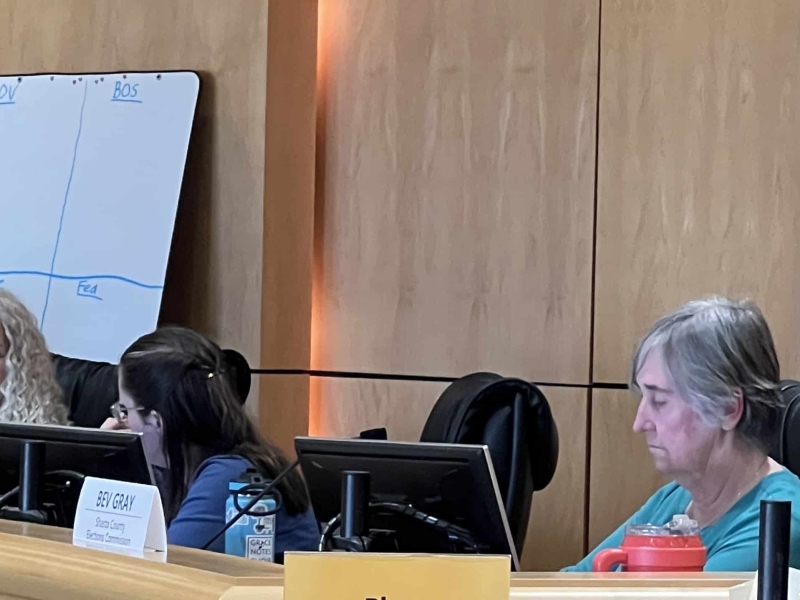
Editorial: Public Officials Must Transparently Serve the Public’s Good
Elections Commissioner Bev Gray has made detailed verbal claims of election fraud during her ongoing reports to the Commission. She responded to a public records request for documentation to back those claims by saying she has none.
Great article!
As a longtime fan of Shasta Scout’s reporting, even when it doesn’t favor “my team,” I will kindly suggest that this sort of essay is a diversion from the work that makes the site vital and important.
Hey! Comments! Is this new? Yeah, I am leaving one. All the same, you might come to regret them.
Hi AH. Thanks for your feedback. Can you clarify why you feel this is a diversion from the work? We’d love to learn. Really. 🙂 Annelise
Fascism is an authoritarian system of government under absolute control of a single dictator, allowing no political opposition, forcibly suppressing dissent, and rigidly controlling most industrial and economic activities. Such regimes usually try to achieve popularity by a strongly nationalistic appeal, often mixed with racism.
Kinda sounds like Newsom and the unaparty running the state?
The last three bullet points define our local militia our local county BOS and our local Red White and Blue maga adherents.
Yet the cannot come to call themselves Fascists
Having lived under fascism for five years, YES I can !
I totally agree! Your explanation was right on, it’s going on in Redding and the whole country. So much misinformation on rt-wing media. It should not be aloud to say they are news organizations. Fox propaganda, and many others. We need to get the Truth out there with evidence or they don’t believe it.