
Underground Good: Lee Lamp
“We don’t talk politics and we don’t talk religion in our group …Discussions about politics or religion are causing tremendous division in our country today. I don’t understand why everything has to be divisive.”

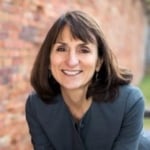
This Opinion piece is part of our Underground Good series, which focuses on providing a window into the mindsets of ordinary people doing good work in their community. It’s written by sociologist, coach and evaluation consultant Sharon Brisolara. You can find the rest of our Underground Good series here. Want to nominate someone? You can do that here.
Lee Lamp is a veteran, a Little League Coach, and President of the local branch of Sons in Retirement (SIR), “a non-profit, public benefit corporation formed for men. My conversation with Lee covered a lot of ground including the value of service and social organizations, the benefits of staying connected, and the number of opportunities that exist for engaging and giving back.
How would you like to introduce yourself to readers?
My name is Lee Lamp. I’m a retired United States Air Force Veteran. I served for 24 years. I had a second career in telecommunications where I stayed in the same company for 20 years, eventually working my way up to vice president of quality and safety before I officially retired in 2017.
I believe in placing service before self and I enjoy working with volunteer organizations. I principally work with two volunteer organizations right now. I’m the President of the West Redding Little League and I work with SIR.
How’d you get involved in working with Little League?
I’ve been a coach at many different levels of amateur and youth baseball for years. When my grandsons were born, I became their coach and manager. I still coach the youngest and he’s an eighth grader at U Prep. His dad is also a good coach and we did it together. It was a great experience. I got to manage an all-star team that went to state when the youngest was 11.
We really wanted to speak to you about Sons in Retirement (SIR). Could you explain to readers what SIR is and how you first came to know about the organization?
Sons In Retirement is the official name of the organization, but we don’t use it anymore. We just refer to it as SIR. The organization was created in the late 50s, early 60s in the Southern Bay Area. It was set up for men who wanted to play golf and get together. They decided to create a group and it grew from there. At its apex, in the early 1990s, there were about 33,000 men in Northern California who belonged to the organization. We are now at about 8400.
The Redding branch has been around since the 1990s. I joined because a very dear friend of mine and my father-in-law were involved and invited me to play golf with them every now and then. When I retired, although my father-in-law had passed away, our friend asked me to join the club and I did. Then he asked me to take over the golf program and, at the beginning of 2018, I did. In the middle of 2019, I was kind of thrust into the position of branch president and I’ve been in that position ever since.
In terms of what I do, I run the golf program, orchestrate the meetings, and write the newsletter. Currently, I’m also the vice president for the state board.
Our group focuses on social activities for men; we strive to find opportunities for seniors to be both physically and cognitively active. We play golf and bocce. We have a tremendous reading library and try to challenge our folks to engage their brains that way. We get together for lunch so that we can sit around, tell stories, and solve the problems of the world. We laugh a lot. Doing that is healthy for you and you also can combat loneliness.
The median age of our local group is currently 78 and statewide it’s probably almost 80. So we are actively trying to recruit new leadership and members, especially younger ones. Recently I have been reaching out to newspapers and Enjoy magazine to increase visibility in our community.
Addressing social isolation has been recognized as an important need. To what extent does a group like yours, dedicated to men, fill specific needs?
The founding of the organization was during the late 50s and 60s. And if you think about society at that time, we had mostly single income families. Men retired early and many were looking for something to do to fill their time and they wanted to do it with a bunch of buds. We didn’t have the same social opportunities that we have today. However isolation and loneliness are real and providing opportunities to join in our activities can help combat those issues.
What is important about having a group dedicated to men?
Many at the state level want to incorporate women into our membership. When we have activities, I encourage our guys to bring their wives or significant others if they want to. The women that golf with us usually play with the nine-hole group because that’s a more social group while the 18 hole group is a little bit more competitive. In many parts of the state, there are groups that don’t want to have women as members, but don’t care if other chapters do. Even in those groups, women join their activities.
Your materials talk about including men from all walks of life. From your perspective, what does being inclusive and diverse look like for your group?
That’s one of the other things we are working on because recruitment for our organization typically happens by one member bringing in a guest. So, two things happen there: you tend to get like-minded individuals, and they tend to be the same age. I would say that our group matches the demographics here just as much as the groups down in the Bay Area match the demographics there.
By increasing visibility in our community, we are working to expand our reach to people from all walks of life, letting them know that if they have leisure time now, due to their circumstances or work, they can come check out one of our activities.
I read that your group doesn’t allow talking about politics.
We don’t talk politics and we don’t talk religion in our group. While we’re a mostly conservative group up here, I also work closely with the State Board and members who live in San Jose, Concord, and Walnut Creek are in much more politically liberal environments. We all strive for the same things…encouraging seniors to enhance their lifestyle, become more active both physically and cognitively to improve their health.
Why did they decide to say no discussions about politics or religion? Probably to avoid the arguments. Discussions about politics or religion are causing tremendous division in our country today. I don’t understand why everything has to be divisive. Sometimes I stand on a soapbox and say “I spent 24 years of my life in the military defending people’s rights to do these things. Please don’t trample their rights.” There is an equality aspect to it.
There are differences, too, between a service organization and a social organization. Rotary is a service organization. They’re trying to serve the public that they are part of and so it’s easy to see how politics can become more ingrained in what they do. We are a social organization. We want to keep it civil, so to speak. When people walk away from an activity, we want them to feel like they just had a great time.
It can be challenging when your guest speaker brings up politics. I have invited members of the city council, our state representatives and our US Representative to come and talk to us about a particular topic, like water issues. They do that, but often they will be sure to make some other point.
Our members are all friends. They know when to joke. They know when to be serious. And they leave the serious stuff at home most of the time because they come to have fun.
What has being involved in SIR meant for you?
I have always been, for lack of a better word, a doer. There was my time in the service where I was involved in a local program called Operation Warmheart, where we wanted to go out and raise money so that we could feed those that needed help. We created our own food pantry. Later, I sat on the board of directors for the Black Hills Regional Food Bank.
I think I’ve lived a big chunk of my adult life trying to find ways to give back. Maybe it’s just in my DNA. It’s the same reason that I stayed with Little League after my grandson left the league. My wife sometimes jokes, do you think you can take care of some of the things around the house? She is so supportive of me but I still have to remember to contribute to those things at home.
Also, I love talking to people. I love talking to groups. I want to keep people engaged.
Is there anything that you would share with people as a way to invite them to SIR?
People need friendship and to find a way to enrich their lives. When people find the right connections, they can get back to being social and walk away from their phones. You can stay engaged by sending emails but that doesn’t give any joy back. When you come to an activity and meet this group of men and when you get to meet their families and their wives, girlfriends or significant others, you see the smiles and experience the camaraderie that comes from that engagement. Members have an opportunity to connect around the luncheons or by listening to guest speakers – and they just may find joy in creating ways to enhance their lives.
You can learn more about SIRS here. To reach out to the local Membership Chair you can email sirs129@outlook.com.
Do you have a correction to share? Email us: editor@shastascout.org.
Through December 31, NewsMatch is matching donations dollar-for-dollar up to $18,000, giving us the chance to double that amount for local journalism in Shasta County. Don't wait — the time to give is now!
Support Scout, and multiply your gift
Author
Comments (1)
Comments are closed.
Related Articles
Underground Good: Kelly Hemphill, Lelnamis Wintu Qol
“As we continued with class, we began to think there’s more to Wintu Qol than learning the language. Language is community, it’s culture, it’s who you are and how you connect with the community, your family, and your history.”
Underground Good: Linda Rube of Goodwater Crossing
“It has been surprising to me to see how well a housing first model works! When people step up and take responsibility for themselves and make decisions for themselves, they’re much more apt to follow through. They are doing what they want to do with their lives. There’s hope in that.”
Underground Good: Greg Lawson and Vicki Ono
“I told him I hadn’t brought a guitar and he sent me to borrow one from a woman who turned out to be Sarah Lee Guthrie, Arlo Guthrie’s daughter. That was an incredible moment for me, to be standing in the Capitol Mall, on a stage, using Guthrie’s guitar and singing one of my songs about Darfur.”

Outstanding, Sharon! Thanks so much for sharing. My father was a member for many years and thought highly of the group. My mom liked it because it got dad out of the house for a few hours! Lol!