
Despite Stalled Contract Negotiations, Shasta’s IHSS Workers Don’t Plan to Strike
More than 4,000 Shasta County community members work for a program known as In-Home Health Services. While IHSS workers are legally allowed to strike once their contract expires, local workers are pursuing other forms of negotiation instead — out of concern for their clients.
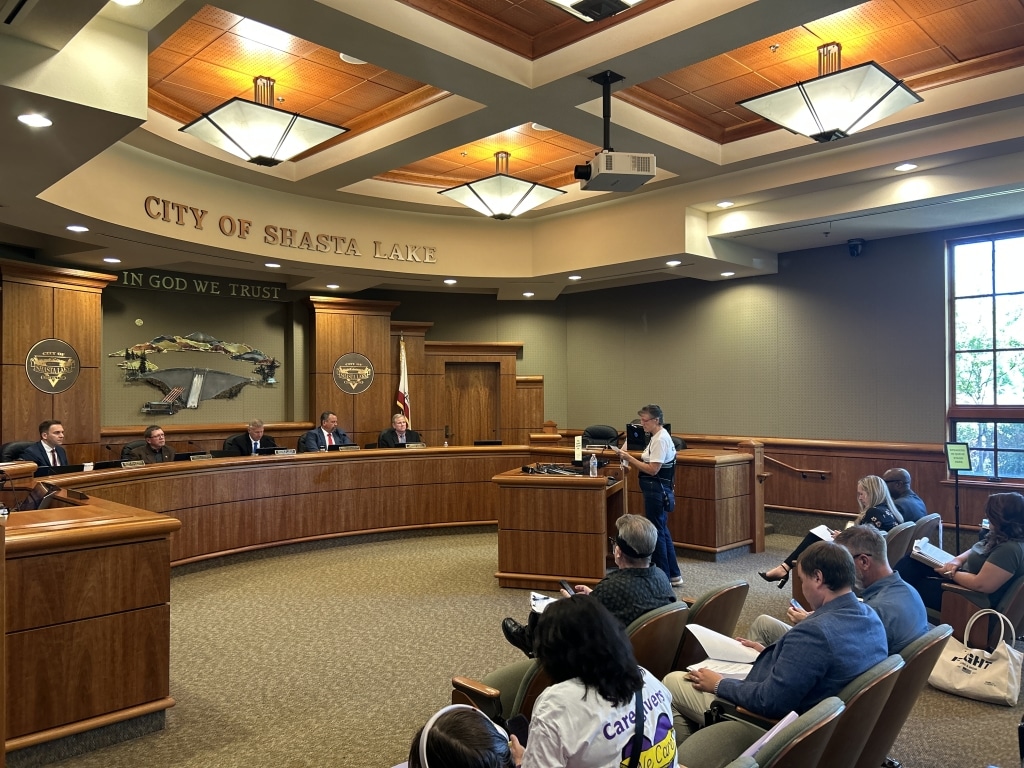
Rachel Smith has a psychology degree and gave up her job doing nails to take care of her son with cerebral palsy. She’s one of 11 In-Home Supportive Services (IHSS) workers who spoke at an April 8 Shasta County Board of Supervisor’s meeting.
“Cognitively, he’s there. He gets the jokes. He gets the criticisms,” Smith said in reference to her 30-year-old son during the public comment period. “I can’t put him in a nursing home. I couldn’t. There is nowhere for somebody his age with his abilities — or lack of abilities — that will take him. So, I gave up my life.”
Shasta County’s IHSS workers are unionized through SEIU 2015. Their union contract expired in December of 2024, so they’ve been in bargaining meetings with the board for a new contract since March. There is no set date for finalizing negotiations.
In public comments, some workers have been asking for a living wage, which according to MIT’s living wage calculator would be $23.44 per hour for a one-person household in Shasta County. They currently make $18.10.
The exact details of the board’s latest offer to IHSS workers have not been released to the public. In response to questions, Shasta County’s Health and Human Service Agency Community Education Specialist Kimberly Ross declined to comment on behalf of county staff, saying contract negotiations are still ongoing.
SEIU 2015 also chose not to comment on the pending negotiations but IHSS caregiver Smith referenced a specific amount during her public comment.
“A 50 cent raise, that’s ridiculous,” Smith told the board emphatically. “I could leave (my son) in a box and go work at McDonald’s and make more money. You think that’s right?”
Rebecca Howe, an IHSS worker of four years and member of the union’s bargaining team, amounted the county’s offer, whatever it was, to “nickels and dimes.” She told the board she works 12 to 16 hours a day between her cleaning business and her IHSS job, providing care for a 96-year-old woman.
“I do this so that my recipient can have the remaining years of her life in comfort and safety of her own home and not have to be moved to a nursing home,” Howe told supervisors.“ We’re not asking for a lot, we’re asking for a livable wage that will help keep the roof over our heads and feed our families.”
The cost of IHSS services is shared between the federal government, state government, and individual counties. While the county’s cost share is relatively small, the money still adds up due to the large number of service hours provided by county IHSS workers — who support more than 4,500 clients. Shasta County currently spends about $856,000 each month on IHSS workers, according to a recent staff report. Shasta County’s Health and Human Services Agency (HHSA) did not confirm how much of IHSS worker’s hourly wages come from local funds making it difficult to assess how much a raise would impact county budgets.
For the sake of comparison, Shasta Scout reviewed IHSS salaries in Butte and Merced Counties, two places similar to Shasta County in both population and median income. Currently, IHSS workers in Shasta County receive the highest wages of the three. Butte County IHSS wages sit at $17.25 per hour while Merced’s sits at $17.10.
While it’s clear IHSS workers are determined to fight for a living wage, they’re not considering striking. They could. While contracts between SEIU 2015 and the county have always included a “no-strike” clause union members are now working on an expired contract, so an IHSS strike is not explicitly prohibited. And the right to strike is protected for health care workers, as long as they give written notice 10 days prior to the event. In 2023, Kaiser Permanente workers in California won a 21% raise via a three-day strike.
But IHSS workers have ethical concerns to consider as well. During the Kaiser strike, labs in California closed, prescription refills were delayed, and some patients were directed to out-of-network providers. An IHSS worker strike would exacerbate an existing county-wide healthcare shortage. A 2022 Community Health Needs Assessment from Mercy Medical Center in Redding identified Shasta County as a medically underserved area, with provider shortages in primary care, dental care and mental health care. IHSS is also seeing its own shortage of workers. There are only 4300 IHSS workers for the 4500 people currently eligible to receive care through the program.
Matthew Vanscoter, a caregiver of 17 years, used his public comment on April 8 to highlight union workers perceived inability to strike, based on patient need. He has two IHSS clients and works a day job to support his three-person household. He says he’s been told to find a better-paying job.
“If I were to walk out, my friend’s grandma already knows that she would be dead,” Vanscoter said in his public comment. “We can’t strike. We don’t have the option of stopping what we’re doing at the risk of somebody else’s life. So when it comes down to it, we’re kind of strong-armed into doing this job for the people that we care about and we love.”
Healthcare workers in hospitals face a similar challenge when it comes to the risk to their patients but most have a much more significant level of separation from their clients, and more backup help. During the Kaiser Permanente strikes, for example, Kaiser’s labor relations team wrote that 60% of their patients receiving mental health and addiction medicine care continued to get care from providers not participating in the strike.
It’s not that simple for workers like Smith, who are often the only ones available to take care of their IHSS-qualifying family members. Smith said when she had surgery on her leg, she only took one day off.
“Four surgeries, one procedure, and took one day off,” Smith said in her public comment. “And I still find time to come here.”
Another worker, Harry Madson, referred to striking as the union’s strongest negotiation tactic in his comments to the board while also acknowledging IHSS workers’ reluctance to use that tactic.
“We can’t strike because we have to take care of our people. We can’t just let them go and get hurt, and you’re taking advantage of that,” Madson said. “If we could strike, something different would come out of this.”
Instead, IHSS has pursued other forms of collective bargaining. Since March, there have been two rallies at Shasta’s Administrative Building. The first briefly interrupted the board meeting, while the second was held completely outside. SEIU 2015’s website includes a link to an email campaign to Shasta County Supervisors and at several board meetings in April, public comment was dominated by the voice of IHSS caregivers.
Some used their time to respond to a remark made by Board Chair Kevin Crye in a comment on one of his recent Facebook Live videos. Responding to IHSS worker Ronnie Dillon in the comment section of that video, Crye emphasized that caring for family is something most people do without expecting to be paid for it.
“I know many people who care for their family members who are on very limited incomes/tight budgets and they don’t get one penny of money for doing so. It’s what you do for family. Paid or not,” Kevin Crye wrote.
Madalynn Clark, an IHSS worker and organizer at SEIU 2015, referenced Crye’s statement in her public comment period last month saying she believed his privilege was showing.
“Members of this board have implied that this work should be done for free by family members,” Clark said. “And it must be really nice to be that disconnected from the average citizens’ struggle, to be privileged enough to assume that people come from families with those types of resources.”
Another public speaker, a former programming manager at KRCR, Natosha Harlow, contrasted what it was like to care for her grandfather-in-law for free with the experience of paid IHSS caregiving for her grandmother. While working for free to care for her grandfather, Harlow says, her family struggled to pay the bills. Once enrolled as an IHSS caregiver, she was able to provide support to her grandfather without the same severe financial burden.
“Eventually we had to get on food stamps to make sure we could keep food on the table for our children,” Harlow said, referencing the time when she was providing unpaid caregiving for her grandfather-in-law.
“We lived like this for about 18 months until he passed away. Although the emotional stress of caring for my grandmother during her final months took a toll, having financial support from IHSS made all the difference in my life.”
05/06/2025 8:06 am: We have updated the story to clarify where IHSS workers have mentioned asking for a living wage.
Do you have a correction to share? Email us: editor@shastascout.org.
Author

Related Articles
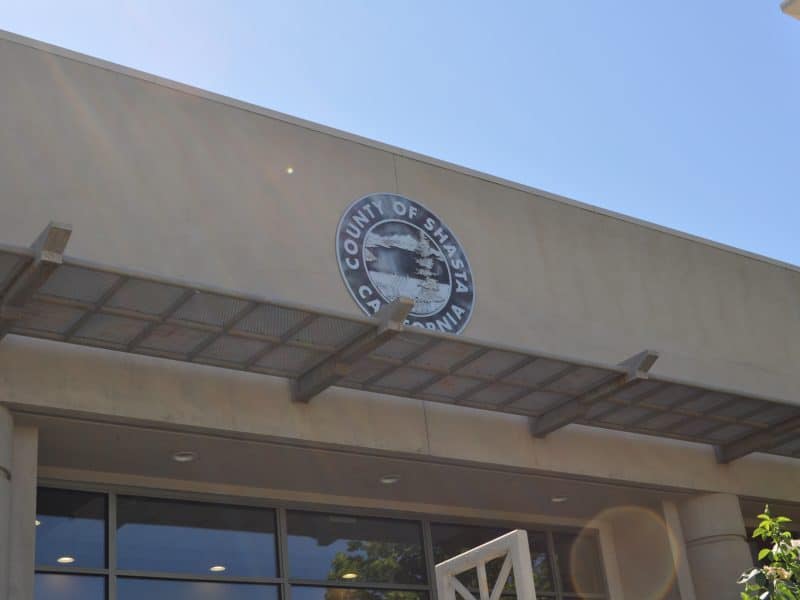
Some supervisors want to put limits on Shasta County’s nonprofit contracts. Here’s what you should know
On June 8, Shasta supervisors voted to move towards passing a local law restricting the county from contracting with nonprofits that spend more than 18% on administrative costs. The county’s elected auditor-controller has pushed back.
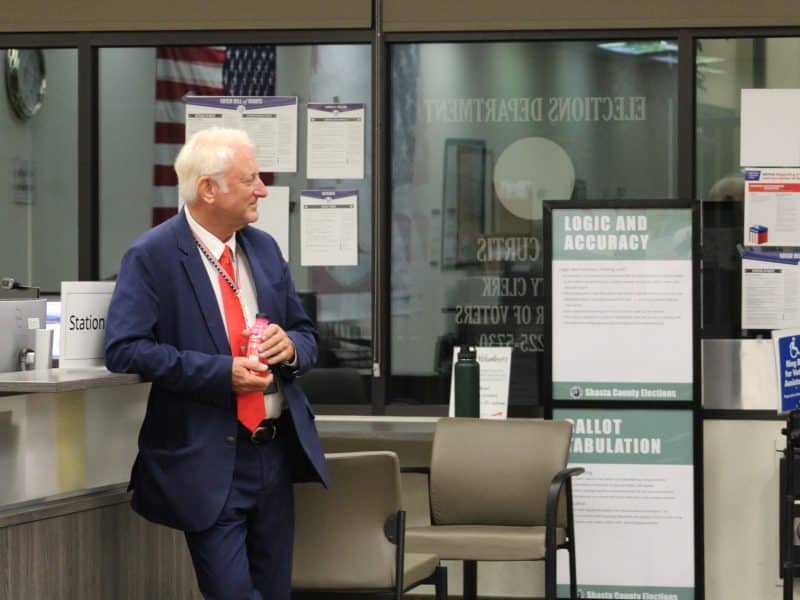
Shasta elections official says he’ll certify June primary despite demands from activists
At a recent board meeting, election activists — some of whom now work for the county elections office — alleged fraud on statewide voter rolls, demanding that Shasta’s election official not certify the vote. Registrar of Voters Clint Curtis told a reporter yesterday he’ll certify the vote unless a court order tells him otherwise.
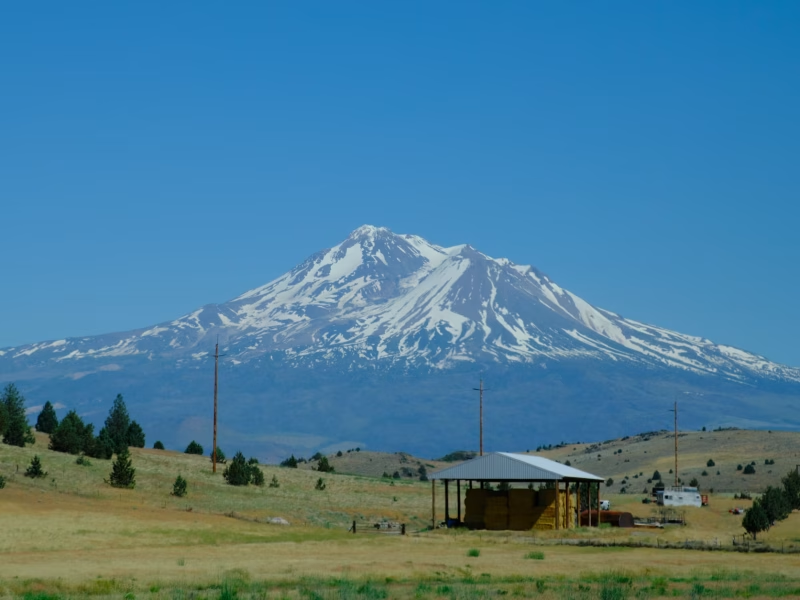
Reach-out from an unnamed entity raises fears about possible data center in Mount Shasta region
This week, the Mount Shasta city manager revealed that the city had received an inquiry from an entity interested in building a data center at the former Crystal Geyser facility in Siskiyou County. The discussion comes amid ongoing concerns about water shortages across California.