
Anderson City Council Unanimously Opposes Discrimination based on Caste
Following suit with other cities in California, Anderson has officially condemned discrimination based on caste. The effort was spearheaded by Dr. Promila Dhanuka, a Shasta County oncologist who spoke before the council to explain the history of the caste system and its impacts.

Ancient Hindu scripture includes the concept of kala pani, or “black water,” which decrees that Hindus who cross the ocean lose their caste. Theoretically this should be true. When a Hindu travels to a faraway land where society is not segregated along caste lines, their own caste – whether that be at the top or bottom of traditional social hierarchies – would be irrelevant.
In reality, this often isn’t the case. As Hindu immigrants have migrated across the world, many have carried with them the caste system’s forms of discrimination, which organizes people into haves and have-nots based on lineage. In California, home to some of the nation’s most robust Hindu communities, people born into lower castes have come forward about their ongoing experience of caste oppression by higher caste Hindus in workplaces and social settings.
This was the reason for Redding resident Dr. Promila Dhanuka’s visit to the Anderson City Council during a regularly scheduled meeting on May 6. On the council’s agenda, a caste discrimination resolution that would require the City of Anderson to both recognize and denounce the damage wrought by the caste system among some of its residents. The item was approved soon after by a unanimous vote of council members. It was sponsored by newly-elected Council member Darin Hale who says he learned about the issue from Dhanuka, who’s both a local oncologist and the wife of newly-elected Redding Council member Dr. Paul Dhanuka.
“I was approached in late March by Dr. Promila Dhanuka and (another local community member) Mayra Monarch, and we had a discussion about the caste system. I had no idea what it was… It was actually really eye opening, and then I went home and I did my homework.” Hale told his fellow council members before Dr. Dhanuka approached the lectern to speak.
First, What is the Caste System?
In South Asia, the caste system has structured Hindu communities for millennia. Caste cannot be succinctly explained, nor is it immediately comparable with the forms of repression familiar to most Americans. Caste is a system that divides human beings into five hierarchical categories of value, based on birthright. This means that from the time one is born to the time they die, they cannot transcend their family’s caste.
The first are Brahmins, the priestly caste. Then there are Kshaitriyas, traditionally warriors and landed gentry. Next are Vaishyas, or merchants and traders. Below them are Shudras, commonly known as the “lower castes” or laborers. And at the very bottom of this system are Dalits, who actually exist outside the caste system, formerly called “untouchables” in traditional Hindu societies. Dalits are relegated to the most taboo professions: working in sewers, handling dead bodies, and sweeping streets. Within each tier, there are near infinite matrices of subcastes that change depending on the geographic region of India.
Caste is perhaps better described by what it is not. It is not quite racism and it is not quite classism, but it can incorporate the most inequitable elements of both. As Dr. Dhanuka pondered in her presentation to Anderson’s board, “race is skin-deep, but caste is in your bones.” Before modern India abolished caste-based discrimination in its Constitution (written by the Dalit reformer Dr. Bhajirao Ramji Ambedkar), caste largely defined one’s profession, who one could marry, what neighborhood one could live in, from which wells one could draw water, who could enter a temple, and where the dead were burned.
When India achieved its liberation from British rule in 1947, its newly-independent government implemented a system of “reservations” or open slots at universities and government agencies specially designated for lower caste and Dalit students or workers–similar to what Americans know as affirmative action. The reservation system was intended to ensure that historically disenfranchised demographics (including lower castes, Dalits, Muslims, and tribal communities) had the same opportunities for success as higher caste Hindus. These inclusivity policies are controversial in India, and many politicians have called for stripping the protections that limit the upper castes from dominating educational and civic spaces.
Despite the strides that lower castes and Dalits have made in India, obstacles remain intact in South Asia and beyond. In the most extreme cases, those who stray from caste-imposed segregation, even accidentally, have been subject to lynchings as recently as 2019.
Casteism in California
Standing before the council earlier this week, Dr. Dhanuka shared a few personal anecdotes about the way that caste has affected her life since moving to the U.S. from India.
She explained that while the majority of Indians with the resources to immigrate to the U.S. are typically upper caste, she herself was a beneficiary of the aforementioned reservation system which expanded access to education to lower castes.
“When I came to Shasta County, Redding, for the first time almost 20 years ago, I was asked (to what caste I belonged) by a group of doctors,” she recounted. “Caste discrimination is not confined by geography, whether in South Asia, Africa, or here within our North State communities.”
As occurs in the medical field, Dhanuka pointed out, both the hotel and tech industry also commonly employ Indian immigrants — making them arenas in which caste divisions can play out. In Silicon Valley, this is of particular concern where Dalit workers report being harassed or demeaned by upper caste colleagues at Google and other tech companies. This history is in part what laid the groundwork for the landmark 2023 California Senate Bill 403, which would have recognized caste as a protected category in California and the first of its kind in the United States. It was vetoed by Gavin Newsom at the eleventh hour.
“(SB 403) passed with an overwhelming majority of both houses, and Newsom’s corruption at the top took it down,” Dhanuka said.
There is debate over how caste discrimination should be dealt with by Hindu American communities. One of the country’s most powerful Hindu organizations, the Hindu American Foundation, condemns caste discrimination but also opposed SB 403 denying that caste plays a significant role in American communities and claiming it unduly targeted Hindu communities. Surveys, news investigations, and lawsuits suggest otherwise. Notably, HAF has been accused by other South Asian organizations as having ideological ties to India’s ethnonationalist political parties that are openly contemptuous toward the nation’s minority populations.
On the other hand, the organizations Hindus for Human Rights and Equality Labs were both vocal advocates for the bill, the latter of which focuses intently on the structural discrimination faced by Dalit communities globally. Opponents of HHR and EL, namely the Hindu American Foundation, take issue with their framing of caste as a codified principle of the Hindu faith, and believe Equality Lab’s caste oppression awareness campaign perpetuates anti-Hindu tropes.
The Anderson Council’s Discussion on Caste
Aside from Council member Hale, who had been primed by Dr. Dhanuka before the meeting, other members of the Anderson Council were largely unfamiliar with the concept of caste.
Council member Mike Gallagher – who described himself as the grandson of Irish immigrants – wanted to know how many of the Indians Dr. Dhanuka was describing have “actually gone through the process of going through the immigration system?” Or become citizens, as Mayor Susie Baugh clarified.
Dr. Dhanuka wagered that the answer was “most,” before Gallagher elaborated on his thoughts about the resolution. Like the rest of the council, he wasn’t opposed, but wanted to emphasize that sometimes “folks come to America to escape their country, but they don’t adopt the good things that they came to.” Real change, Gallagher suggested, has to start on a cultural level within individual communities, and that laws alone can do little to change societal behavior.
From her perspective, Baugh opined on the issue by recalling the memory of white supremacists burning a cross in the yard of a Black family in Anderson several years ago, noting that the community responded to denounce that incident. Shortly after, Hale made a motion to approve the resolution, which was confirmed with five ayes.
Discrimination and Inclusion
Hale, the sponsor of the resolution, has made public criticisms of Diversity Equity and Inclusion (DEI) initiatives on his Facebook page, writing that as a Council member he “will give no special acknowledgment to any single social class period” and stating that all demographics of Americans are equal and therefore “equity does not become enhanced through recognition.”
Given those public comments, Shasta Scout reached out after the meeting to clarify why he chose to support a resolution specifically recognizing the inherent inequity of the caste system. By phone, Hale responded that he believes the concept of “DEI has been hijacked and weaponized, (including) but not limited to how white people are an enemy.”
But, he also said he thinks the “vast majority of Americans can agree discrimination at its core is not the American way.”
“If (the resolution) is just strictly against discrimination, I can get behind it,” Hale said. “I believe (caste) is discrimination. I don’t like it. I would rather it not be in my community, and if it is, then I will support (opposing it in) whatever way I can.”
5.10.25 7:34 pm: We have updated the story to correct the name of a community member.
Do you have a correction to share? Email us: editor@shastascout.org.
Related Articles
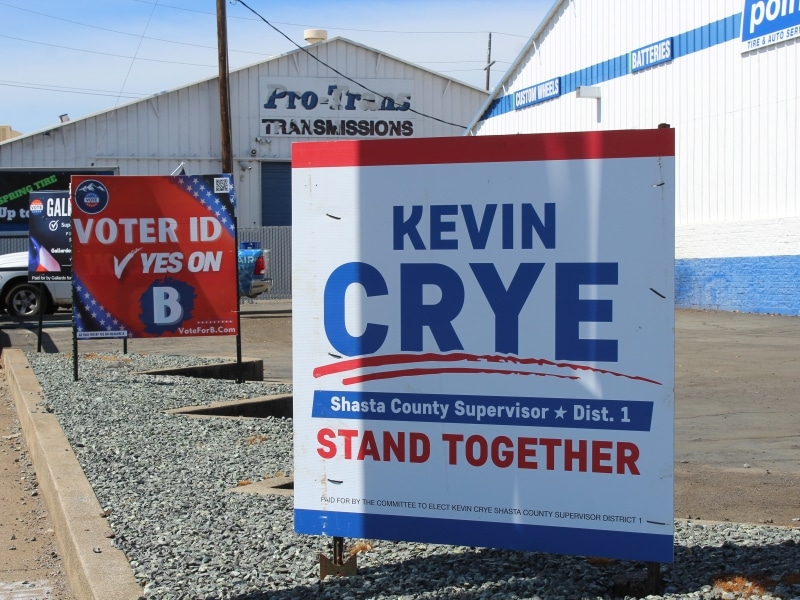
Redding Rancheria makes last-minute investment into District 1 race, donating to Crye
The Redding Rancheria made the maximum-allowed payment of $5,900. It was received by Supervisor Kevin Crye on Election Day. He’s one of only two local candidates the Rancheria supported in this election. A donation to Supervisor Chris Kelstrom for the county’s District 5 race was made two months ago.

Shasta County calls special weekend board meeting
The board’s agenda includes only one closed session item related to anticipated litigation.
New Shasta results show margins for Francescut, Resner, Gallagher increasing, Measure B’s decreasing
The vote totals are still far from complete, about 30,000 of the county’s estimate of 58,000 ballots — also a moving target — still remain to be counted.
