
Anderson City Council takes on proposed state caregiver bill, planning commission and feral cats
At this week’s meeting, Council member Darin Hale suggested disbanding the city’s planning commission. Plus, Anderson stands united against a partisan bill intended to provide temporary guardianship for children in the event that they are separated from their parents through deportation, and imposed new penalties for people who feed stray cats, even on private land.
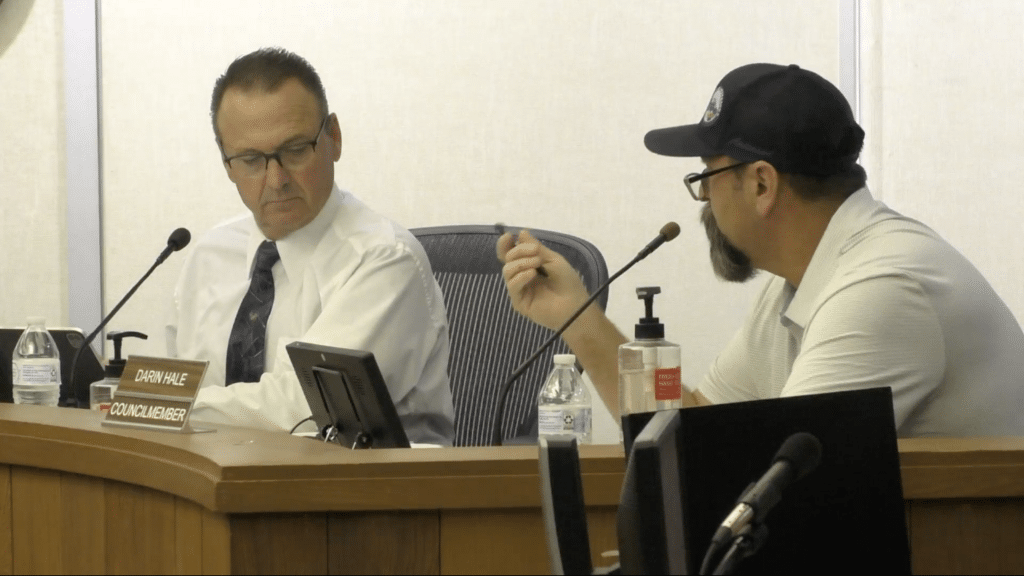
“Let’s just call it what it is – evil,” said Anderson Council Member Mike Gallagher during a Sept. 2 council meeting. He was referring to Assembly Bill 495, otherwise known as the Family Preparedness Act, which is currently working its way through the California legislature. “I haven’t read the actual language of the bill, and I’m a little terrified to,” Gallagher admitted, “seeing what these people in the State Assembly want to ram down our throats.”
AB 495 would make it more efficient to appoint a temporary guardian over a child whose parents are suddenly deported, experiencing a medical emergency or incarcerated. “The intent of the Legislature,” the bill’s text writes, “is to provide clear and streamlined processes for short-term guardianships that address urgent needs, such as medical care and educational decisionmaking, while upholding the rights of parents.”
More specifically, AB 495 expands who can be designated by blood relatives as an official caregiver to a child. Existing law allows people who live in the same household to become a child’s official caregivers, a less-formal option than being named a legal guardian. Becoming a caregiver does not give someone actual custody over a child or provide the same rights as a legal guardianship, which requires a legal process to play out.
As it stands now, caregivers who are blood relatives can enroll a child in public school and make medical decisions on their behalf, but fewer rights are given to caregivers who are not related. The new bill would give nonrelative caregivers the same authority as relative caregivers. The text of AB 495 defines “nonrelative extended family member” as “any adult caregiver who has an established familial or mentoring relationship with the child or who has an established familial relationship with a relative of the child.”
The Anderson City Council unanimously voted to send a symbolic letter of opposition because, from Council Member Daren Hale’s perspective, the proposed law “allows for nearly anybody to sign a child out of school without court consent, without a court order.”
The bill does not make mention of signing students out of schools. Instead, individual school policies would determine whether a child could be signed out by only a designated emergency contact, parent / guardian or official caregiver who has been granted that status by a blood relative.
Under current law, becoming an official caregiver does not require a court appearance and does not have to be notarized, and parents can designate or cancel a caregiver’s status at any time.
The new legislation does not change existing laws for becoming a caregiver. The process remains the same: completing the authorized paperwork to become a caregiver. The new bill does expand the decisions that nonrelative caregivers can make on behalf of children in their households.
Critics like those on the Anderson Council believe the bill’s unexpected consequences will empower human traffickers and is too broad in how it redefines “nonrelative caregivers.”
Planning commission kept intact
The Anderson City Council unanimously voted to add Chico State grantwriter Becca Joiner to the city’s planning commission. Her appointment came shortly before the council discussed the idea of disbanding the planning commission all together, a proposal first brought up by Council Member Hale at the Aug. 19 meeting.
Hale opened the discussion by citing the intended purpose of a planning commission, an appointed group of individuals who can strategize on city planning policies so these decisions aren’t solely in the hands of council members — who may have a conflicts of interest. But, he noted, independent planning commissions are not required by law. According to California Government Code, the council could disband its planning commission but would instead be required to take on certain legally required planning responsibilities.
Disbanding Anderson’s planning commission, Hale emphasized, could save the city money given that the commission’s meetings have become somewhat infrequent and commissioners are paid monthly even when they don’t meet. Anderson’s monthly compensation for commissioners is currently $125, or $9,000 annually.
Council Member Mike Gallagher agreed the city could save money by decommissioning, but he said he didn’t “see a need to change this at the moment,” adding that having a separate commission strengthens transparency in how the city makes city planning decisions. Council Member Bonnie Simmons proposed that commissioners should only be paid when they actually meet, as opposed to on a monthly basis.
Anderson City Manager Joey Forseth-Deshais pointed out that any changes to how the commission operates would require a change to the municipal code. “If we were to, in essence, disband the commission, we’d have to formally change our city permits, which would have to come back before you guys in another meeting, and then we have the first second reading and be enacted after 30 days,” Forseth-Deshais said.
After a series of motions, the council voted to keep the commission as is.
Criminalizing feeding feral cats
The council unanimously approved a new ordinance that limits who can feed the city’s population of feral cats and where they can do so. Those who deviate from the city’s new standards for feeding feral cats can face fines on initial offenses and a misdemeanor after their third offense.
The proposal creates what’s known as a Trap-Neuter-Release (TNR) permit system that only allows permit holders to feed cats at designated times in specific feeding stations, as well as requiring other standards of care for feral cats. Individual people and organizations registered with the TNR program are allowed to humanely trap feral cats that have not yet been sterilized and take them to a veterinarian to be spayed or neutered and ear-tipped.
An Anderson police officer presented a report to council detailing how colonies of stray cats affect wildlife and the public health. He told the story of a local elementary school where neighbors were feeding stray cats against the wishes of staff, and another situation in which a mobile classroom was infested with fleas because of a colony of cats living beneath it.
The University of California’s statewide Integrated Pest Management program (UC IPM) designates feral cats as pests because of their hunting habits’ effects on native birds and rodents. They can also spread disease. UC IPM lists a number of mitigation methods to reduce risks from feral cats such as not feeding them and keeping vegetation trimmed to prevent feral cats from sheltering on private property. They also promote TNR permits and trapping cats for the purpose of being euthanized, which they refer to as “humane.”
A number of community members spoke during public comment, adding dimension to the various factors that contribute to the growth of cat colonies in Anderson beyond just feeding them.
One woman noted, “There are those annoying neighbors who let their cats out but aren’t fixed, and they populate that whole neighborhood right then and there,” suggesting that people who don’t spay their cats should be fined. And a man who works with Stillwater Cat Haven was one of multiple people who noted the problem of dumping, or abandoning, litters of cats, a common occurrence in Anderson River Park, they claimed.
Robin Bray, who organized a pet rescue amid the devastating Carr Fire in 2018, suggested that feeding the cats is not the primary cause of the problem and simply imposing penalties is not enough to manage the issue.
“Real leadership is not layering ineffective rules, one atop the other and penalizing those compassionate citizens trying to help,” she said. “It’s bringing together a team, creating resources and finding funding to solve the problem at its root.”
As articulated by Bray and others, the prevailing feedback from the public was that penalties alone will not be as effective as allocating more funding toward TNR permit programs. Nevertheless, the council approved the introduction of the ordinance, advancing the potential adoption of the city ordinance.
Do you have a correction to share? Email us: editor@shastascout.org.
Through December 31, NewsMatch is matching donations dollar-for-dollar up to $18,000, giving us the chance to double that amount for local journalism in Shasta County. Don't wait — the time to give is now!
Support Scout, and multiply your gift
Comments (5)
Comments are closed.
Related Articles
A group of community members are hoping to start a new medical school in Shasta. Here’s what we know
Redding Vice Mayor Dr. Paul Dhanuka and Simpson University President Dr. Norm Hall are some of the leading figures behind the plan.
With more rain ahead, Redding officials explain flooding, urge caution
This weekend, the city’s stormwater infrastructure became clogged with debris due to the speed and volume of rain, officials said, leading to serious flooding in parts of Redding.

The Redding Public Market opened about a month ago. Here’s how it’s going
The CEO of the development company that owns the market said the venue, which is serving around 2,000 people a day, is revitalizing downtown.

Soon City of Anderson will make it illegal to feed the homeless people as well… Watch
“I haven’t read the actual language of the bill” Go figure that people up here like to bitch about things when they have no idea what it’s actually about. Surely this will never happen again
When reporting on AB495 they keep saying the bill is for immigrant children and that the parents assign the caregiver. This is not what the bill says. Anyone can apply for a affidavit to take position of a child. There is no background checks no identification provided. All the person has to say is they can’t find the parents. All they need is the child’s name and birth date to get a affidavit. Imagine you drop your child or grandchild off at school and when you go to pick them up and they are gone. The school’s are not required to tell the parents who they gave the child to.
This is a child trafficker’s dream Take the time and read the bill
Dodi: The word immigration is woven throughout the bill. I’m not sure where you’re getting your information. https://calmatters.digitaldemocracy.org/bills/ca_202520260ab495
I’m glad to see at least one news outlet is reporting on the Anderson City Council.
A planning commission is an important part of city and county planning process and allows the public to become involved and aware and comment on decisions that could have a long term effect on where they live. If a controversial decision is made at a panning commission meeting, the citizens of Anderson will still have a chance to oppose it at the city council level if it approved by the commission. It makes it a more transparent process than having a decision go direct to the city council and the only alternative to opposing it is to file an expensive lawsuit.
The feral cat population in Anderson River Park is a serious issue that needs to be addressed and having a fine for feeding feral cats without having special training and permission is important although I doubt few will be issued. It will not cure the problem, but will hopefully stop for the people who pull into their favorite feeding station and dump a bag of cat food, more than the cats can eat and leave the rest for wild animals. For those who want to see the problem, walk the trails starting near the music venue at the southern end of the park.
The south end of the park is owned by CDFW and managed by the City of Anderson and should not have cat feeding stations there. I’ve only seen one feeding station there, hopefully there aren’t others.