
Shasta food bank prepares for potential spike in demand amidst CalFresh delays
State officials say CalFresh benefits will be delayed in November because of the government shutdown. The Dignity Health Connected Living Food Bank is preparing to help those impacted.
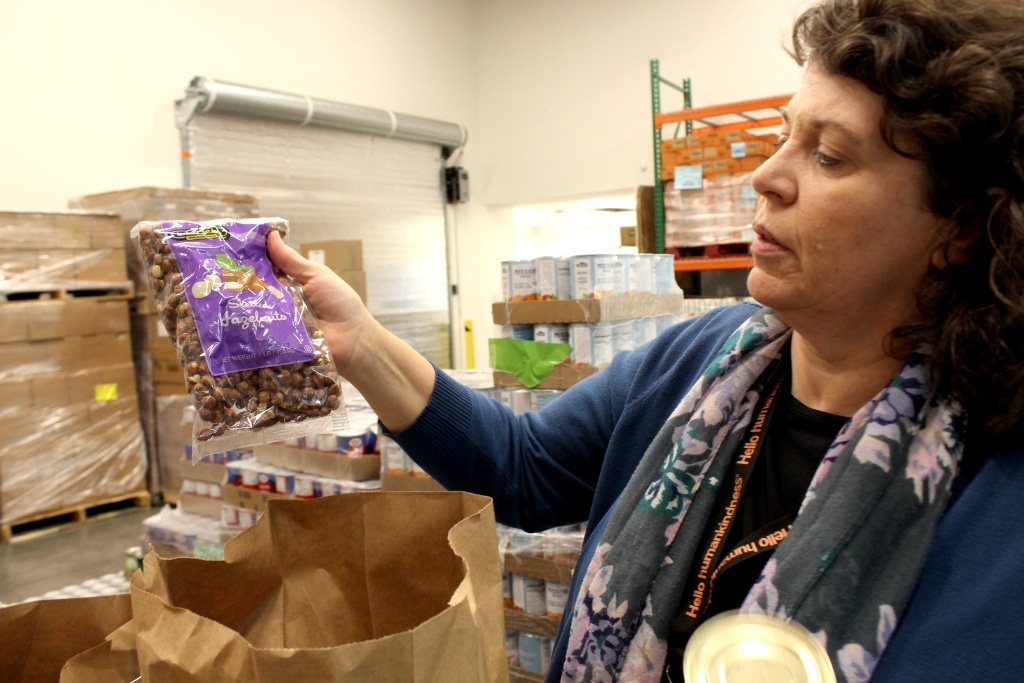
The Dignity Health Connected Living Food Bank, Shasta County’s designated food bank, is taking steps to prepare for a predicted spike in demand due to a delay in CalFresh benefits next month.
CalFresh benefits — California’s version of the Supplemental Nutrition Assistance Program, or SNAP — will be withheld in November because of the federal government shutdown causing a gap in funding, according to the California Department of Social Services. The government shutdown will hit the one month mark this Saturday unless Congress passes a bill funding government services before then.
More than 31,000 Shasta County residents are on CalFresh, which makes up almost 20% of the county’s population. Dignity Health Connected Living Food Bank Director Staci Wadley said she’s not yet sure how big the impact will be, but she’s concerned about the local food pantries — like those at the Good News Rescue Mission and Salvation Army — the food bank helps supply.
“We are getting calls and emails from our food bank pantry partners saying, ‘We’re nervous. We are afraid that we’re going to get overwhelmed and won’t have food,’” Wadley said. “For some of them, that could very well be true.”
Funding for CalFresh benefits is available through the end of October, then it will run out, which is what will cause the delay in November. The federal government has not allocated any additional funds for people on SNAP, which serves about 41.7 million people nationally per month.
How the food bank is preparing
The Dignity Health Connected Living Food Bank is the designated food bank of Shasta County, meaning it’s authorized by the state to distribute Department of Agriculture commodities for the county and is part of the state food bank network. It is also the food bank affiliate in Shasta for Feeding America — a nationwide network of food banks — which allows the bank to get grocery donations at most county retailers.
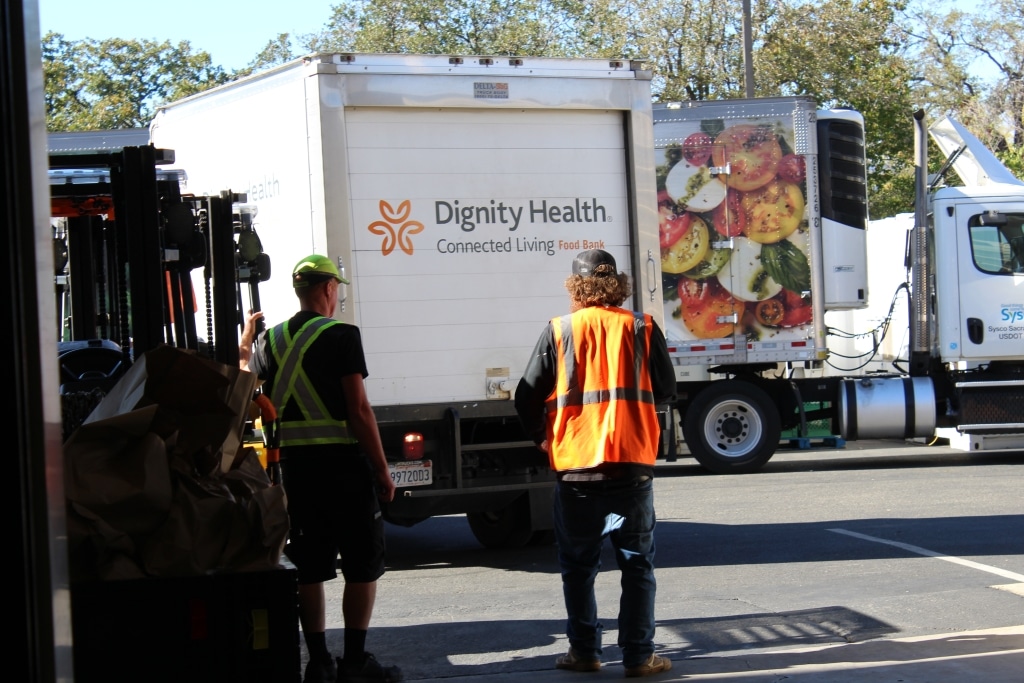
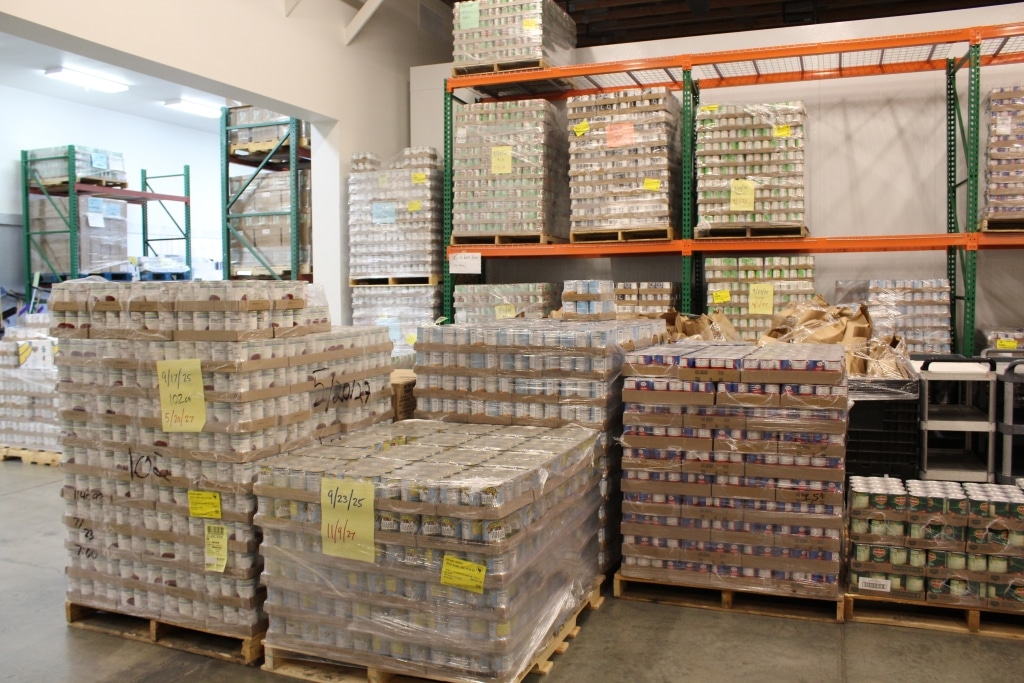
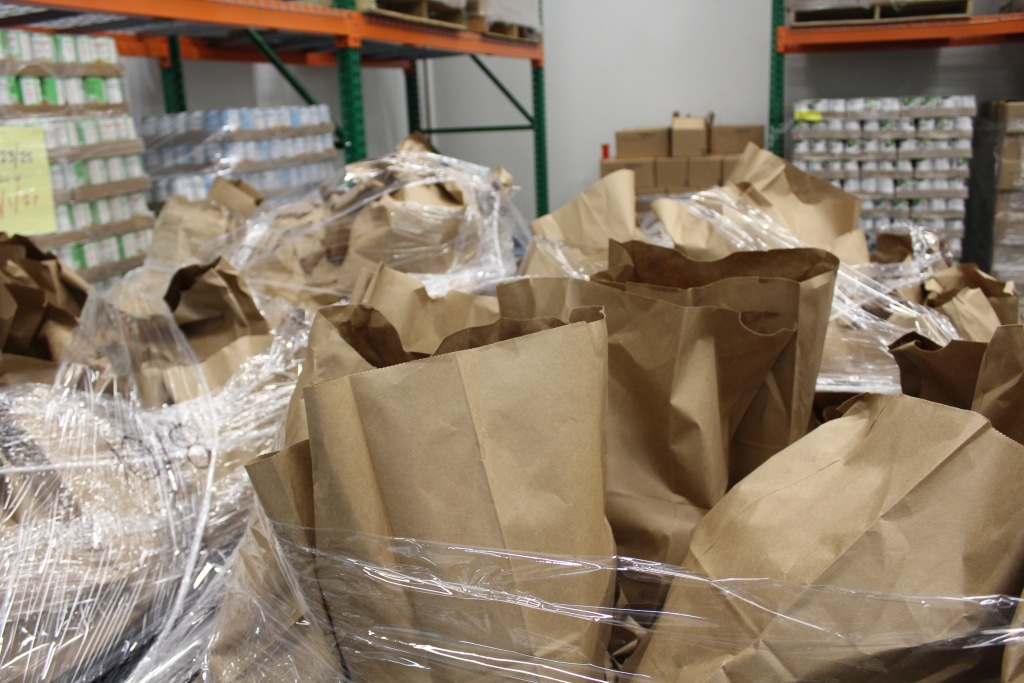
Here’s how it works: The food bank uses resources from the state and federal government and Feeding America to facilitate food into Shasta County, then food bank employees and volunteers distribute that food to distribution sites and food pantries across the county, as well as to different programs run by the Dignity Health food bank, including the Senior Commodities Program and Food 4 Kids Program. The food bank also operates as its own food pantry, where people can pick up food as part of the Emergency Food Program. The food bank supplies around 54,000 bags of food a year and serves 5,000-8,000 people a month, according to Wadley.
Wadley said it’s hard to predict how many more people will be coming to the food bank, its distribution centers and the food pantries throughout the county due to CalFresh benefits being delayed. She said she expects certain populations to be hit harder than others, such as federal workers who aren’t getting paid, larger families and people who are one financial hardship away from not being able to afford necessities, like food. She added that kids, especially those who receive support from their school for food, may also be impacted.
“The longer we go, the more of a crisis it becomes, especially as we go towards the holidays,” she said. “Then you’re going to have kids out of school, kids that receive school meals [who] are now going to be home, and that increases the need for food at home, as well.”
To prepare for the potential increase in people needing food, Wadley said the food bank is using a cash advance for food banks allocated by Gov. Gavin Newsom to order more food to distribute throughout the county. She said the food bank only gets a certain amount of money every year, which means if she orders more food now, then she’ll get less later on. While it’s a concern, she said she’s trying to stock up while not going overboard on spending.
She added that she’s encouraging strong communication between the food bank and the food pantries it supplies so that the bank can stay updated on the needs and inventory levels of the pantries across the county to keep up with demand.
“We need to plan for the people that we’re serving [here], but we also need to see what we can do to help support these entities that are feeding people that we may not ever see,” Wadley said.
Wadley said she’s also been working with food bank networks like the California Association of Food Banks to make sure Shasta is receiving advocacy at the state level. Additionally, she said she’s been putting out more social media posts and press releases to help educate people who might be in need of food or who want to volunteer or donate.
Newsom announced last week that he’s deploying the California National Guard to support food banks throughout the state; though Wadley said she doesn’t expect any troops to be sent here because of Shasta County’s population size compared to other counties in the state. Despite a relatively smaller population, she emphasized the food bank already has a deficit of volunteers and will need more because of the anticipated spike.
The area where volunteers are needed most is at the food bank’s distribution sites across the county, she said, explaining that she needs people who can commit to being at one of their locations consistently, including Lakehead, Burney, Anderson and Happy Valley, among other locations. She said she’d also appreciate having volunteers help work the front desk at the Dignity Health Connected Living facility, as well as long-term volunteers who are willing to learn their systems and work consistently. Those interested in volunteering can fill out a form on Dignity Health’s website.
The food bank is also taking food and monetary donations, but donated food can’t be homemade, home-canned, dented or expired. Monetary donations can be made both online and in-person.
Wadley said she wants people to understand that a food bank is “part of the infrastructure” of a community, and that it’s there for people “when the government falls short.” She said if people are embarrassed or feeling depressed about having to get food from a food bank or pantry, then they should remember that they’re not alone and that this service is here to help them in a time of need.
“Food banks are safety nets,” she said. “They’re designed to be here, to keep you from getting into a worse situation. … Give back later, take your turn now.”
The food bank is open Monday through Friday at 9 a.m. to 3 p.m. Information about its programs, including the Commodities Program, Senior Box, Emergency Food Program and Food 4 Kids Program, and how to register for them is available on its website. The food bank’s distribution schedule can be found here.
Federal cuts have already been affecting supply and demand at the food bank
Wadley said the food bank has already been expecting to see a gradual increase in demand because of cuts and changes to federal programs by the Trump administration. Specifically, people who are no longer eligible for MediCal due to cuts from the One Big Beautiful Bill (OBBB) may need help affording essentials like food, because “now more money is being put towards medical bills that could be put towards food,” Wadley said.
Not only that, but the food bank has also been hit by cuts to its own funding while operating under the Trump administration.
For one, Emergency Food and Shelter Program funding has been indefinitely frozen since January — Wadley said the food bank didn’t get a huge amount of money from this program, but it was a consistent amount that now they don’t have. She said it was used for the Food 4 Kids Program.
In the spring, the Department of Agriculture also cut a program that gave schools and food banks funds to buy food from local farmers. Wadley said this program was not just great for farmers, but it was also a chance to give people access to fresh produce and not processed food.
The OBBB Act also cut a program called SNAP-Ed, which was intended to educate people on healthier living and help those on SNAP make healthy choices with fewer funds. Overall federal funding for SNAP was also cut under the OBBB, by $187 billion through 2034. About four million people are expected to see their food assistance cut or significantly reduced as a result.
California sues Trump administration for “unlawfully” withholding SNAP benefits
Newsom and Attorney General Rob Bonta announced yesterday that California is joining 20 other states in a lawsuit against the Trump administration over its “refusal to fund SNAP benefits … despite possessing funds to support SNAP in November.”
The suit argues that President Donald Trump is choosing to delay November SNAP benefits rather than using available contingency funding, which amounts to $6 billion, to keep the program going amid the federal shutdown. Newsom’s press release explained that the USDA “is selectively choosing what programs to keep open during this shutdown, as it has provided billions of aid for farmers and has been able to temporarily fund WIC benefits.”
Shasta County Health and Human Services Agency said in a press release on Monday that Women, Infants and Children (WIC) services will remain available, and the program is able to take new participants during the shutdown. HHSA added that the state is expected to continue to fund CalWORKs without disruption, unless the shutdown continues into 2026, which could put those benefits at risk.
HHSA’s release lists local resources for food:
- Dignity Health’s Connected Living Food Bank website. Click on “FOOD BANK Distribution Schedule” or call (530) 226-3071. For program info, call (530) 223-6034.
- 211 Shasta can help connect people to food resources. Call 2-1-1 or visit 211norcal.org/Shasta, scroll down to “Select Your Category” and click on “Food.”
- 2025 Shasta County Key Services flyer, in English and Spanish, provided by 211 Shasta. Lists food distribution sites, contact numbers, meal programs and more.
- Shasta County Food Resources, compiled by Partnership HealthPlan of California. Lists food pantries and programs.
- Local Food Resources by county, on Chico State University’s Center for Healthy Communities’ CalFresh webpage. Offers downloads of Shasta County food site lists, plus English and Spanish lists specifically for older adults.
HHSA has also provided locations for referrals to community resources to help with necessities like health care, food, utility assistance and housing:
- Anderson Regional Office, 2889 East Center St., Anderson, (530) 378-1146 or (530) 229-8200, 8 a.m.-4:30 p.m. Monday through Friday.
- Enterprise Regional Office 2757 Churn Creek Rd., Redding, (530) 224-4894,
8 a.m.-4:30 p.m. Monday through Friday - Cascade Regional Office 2460 Breslauer Way, 8 a.m.-4:30 p.m. Monday through Friday
- Burney Regional Office 36911 Main St. (Highway 299 E.), Burney, (530) 335-5576, 8 a.m.-4:30 p.m. Tuesday through Friday
10.31.25 3:00 p.m. We have corrected two small errors related to how food moves through the system to reach families and how many bags they receive.
Do you have information or a correction to share? Email us: editor@shastascout.org.
Related Articles
Shasta board punts on planning commissioner change, hears update on H.R. 1 impacts
As part of a busy agenda Tuesday, supervisors deferred a decision about a change in planning commissioners and heard a presentation on how H.R. 1 might impact county finances.

State to invest more than $100 million in improving trucking along 1-5 in Shasta County
The ambitious ‘Fix 5 Cascade Gateway Project’ will see a series of renovations on the major highway, with the goal of streamlining traffic and preventing collisions for both passenger and commercial drivers.

Proponents have appealed suspension of Measure B, Shasta ROV says ‘they better hurry’
A new voter-approved measure intended to make significant changes to Shasta’s elections is currently suspended, but proponents are hoping to find a workaround before the county’s ballot order for the November election is sent out this Friday.