
A group of community members are hoping to start a new medical school in Shasta. Here’s what we know
Redding Vice Mayor Dr. Paul Dhanuka and Simpson University President Dr. Norm Hall are some of the leading figures behind the plan.
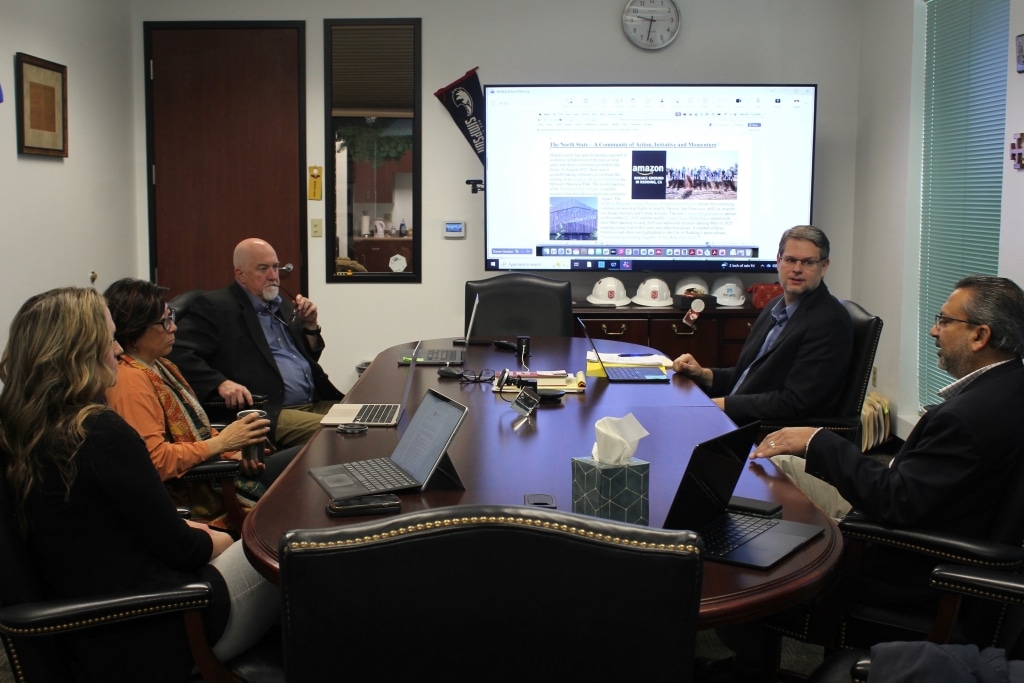
Efforts are being made to open a new medical school in Shasta County, though it’s uncertain exactly what that might look like.
A group of community members started officially meeting about five months ago to develop ideas for a North State medical school, citing a local health care crisis attributed to a lack of physicians and providers in the area.
The group — the Rural Northern California Medical Education Consortium, as they call it — is composed of eight physicians, educators, health care leaders and community partners. It includes Simpson University President Dr. Norm Hall, Redding City Council Vice Mayor and gastroenterologist Dr. Paul Dhanuka, Shasta Health and Human Services Director Christy Coleman and former Shasta Community Health Center CEO Dean Germano, among others.
The consortium’s leaders see a medical school as a long-term strategy to strengthen rural health care in the North State and retain physicians in the region.
“This will become an institution for generations to come,” Dhanuka said in an interview with Shasta Scout.
Currently, the consortium hopes to open the school as part of Simpson University. But it takes years to open and establish a medical school, so the future — including if such a school will come to fruition — is still uncertain.
How did the idea for a new medical school come about?
For years, Shasta County has faced a health care provider shortage and in June, Shasta Health Officer Dr. James Mu declared a public health crisis — which is not the same as a health emergency — due to the lack of physicians. His declaration came after the Shasta Board of Supervisors hired political commentator and activist Chriss Street as the county’s health care consultant early this year in an effort to find solutions to the provider shortage. Street’s recommendation was to open a medical school in the county.
But conversations around starting a new medical school began even before he was hired. Dhanuka said he spoke with several community members about their frustrations with the provider shortage in Shasta while he was running for the Redding City Council in 2024, and a plan to set the concept of a medical school in motion became part of his campaign. He presented the idea of a medical school to the Redding council along with Street shortly after he became a council member.
Dhanuka said the lack of medical schools in the North State is an issue that hits close to home: He said while his daughter had an impressive GPA and received an almost perfect score on the Medical College Admission Test, or MCAT, she couldn’t secure a spot at a medical school in California because of a low number of spots compared to schools in other states. He also said California has fewer medical school seats than many other states — a problem he linked to the North State’s provider shortage, along with there being no medical schools nearby.
While it’s true that there are no medical schools in California north of Sacramento, the state actually has the third-most medical students in the country — though California has lower ratios of medical students per 100,000 residents than most states. And overall, there are significantly more medical schools in the eastern half of the U.S. than the western.
Dhanuka also feels that opening a medical school in Shasta will encourage prospective medical students to stay in the North State, as well as help inspire younger generations in the region to pursue a medical degree.
“When they see they can achieve these things right here in our community,” he said, “they may not have to go outside the area, because a lot of young people here find it difficult to afford to go out for further education. Whether it’s professional or technical, it’s very expensive.”
After speaking with community members about the provider shortage issue and the potential solution of opening a new medical school, Dhanuka started discussing the idea with local health care and government leaders. He also connected with Simpson University President Dr. Norm Hall to discuss opening the medical school as part of the university, something Hall supports — though the university president said he’d be open to considering other options that don’t involve Simpson, if need be.
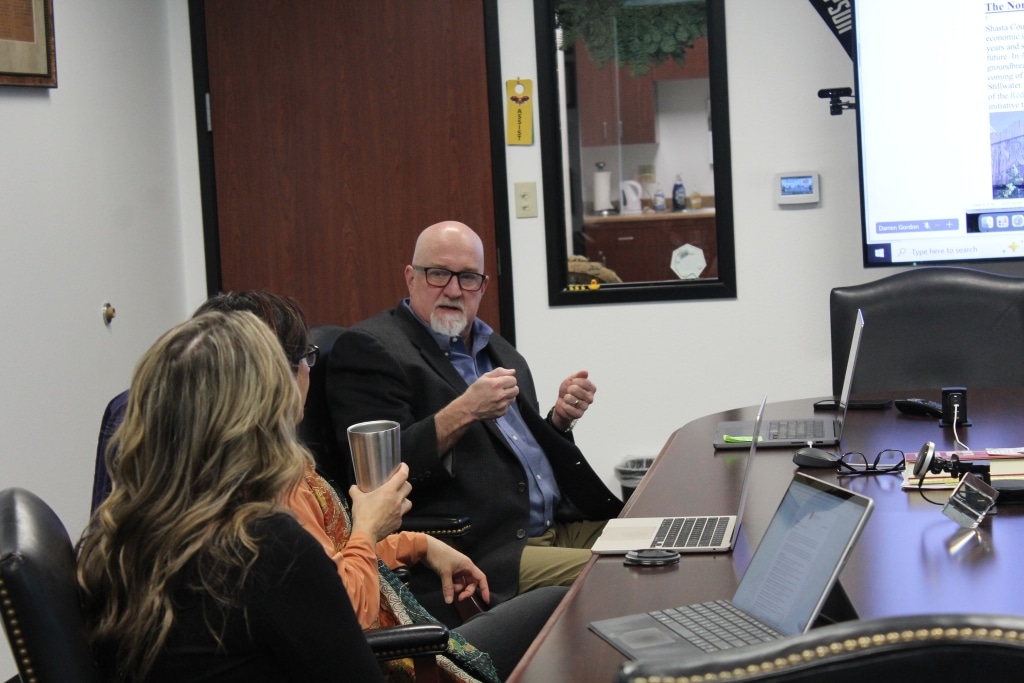
“Whether it’s Simpson University or not, I’m committed to the North State,” Hall said, “and I’ll bring whatever expertise I can to bear on that.”
Simpson University has been a primary focus in the consortium’s plan for the medical school because it’s the only four-year university in Shasta, Dhanuka said, a requirement to receive accreditation. Hall added that the university has other benefits, including a successful nursing program, the upcoming launching of a doctor of psychology degree program and what he described as connections and “expertise” with federal grants.
The consortium is also considering other options, including partnering with the University of California Davis to bring a branch campus to Shasta.
Dhanuka formed a group of interested community members, and they started meeting in July of this year to develop their plan. The Rural Northern California Medical Education Consortium was formed over the following months. Street, the county health care consultant, is not involved with the consortium or the project.
Is a medical school the answer to Shasta’s provider shortage?
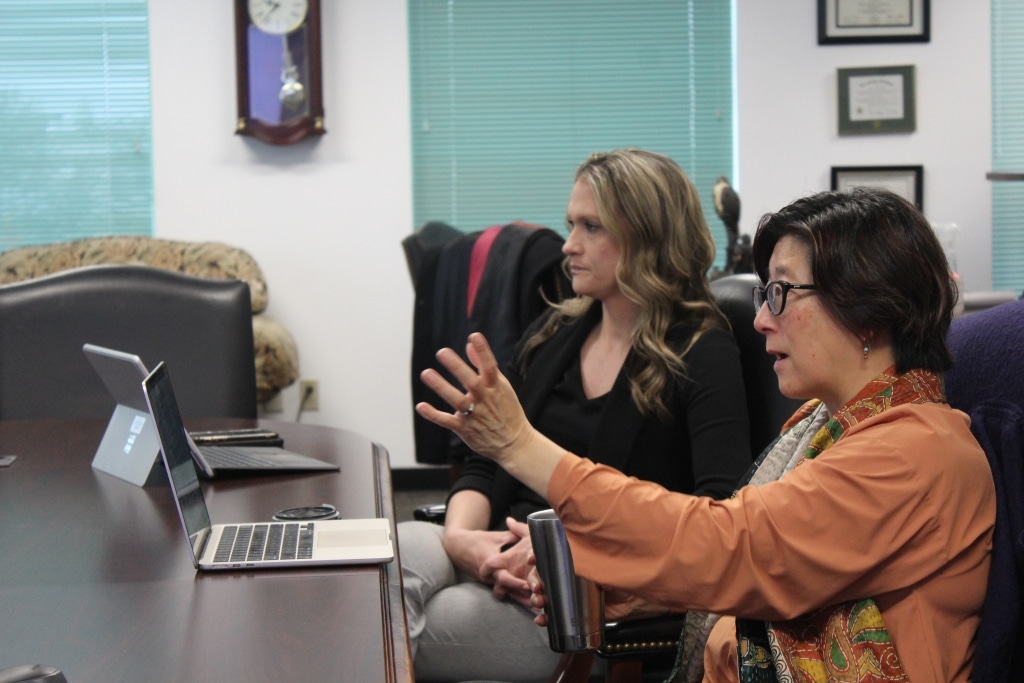
Dr. Irene Salter, a neuroscientist, educator and leadership coach — and Shasta Scout board member — is also involved in the consortium for the new medical school. She said people living in the North State who are interested in becoming a physician have to travel elsewhere, oftentimes to other states, in order to receive their medical education, making it less likely for them to return to Shasta to work.
“What if instead, we could educate our own and keep them here?” Salter said. “Then they have this long term commitment to our community.”
But the state or region where a physician went to medical school isn’t the only, or even the primary, determining factor of where they’re likely to settle down after their training.
It’s actually more likely that a physician stays in the state where they completed residency, not medical school. According to the Association of American Medical Colleges, almost 60% of physicians stay in the state where they completed residency. However, it’s most likely that physicians who complete all of their training in one state, including both medical school and residency, stay in that state.
While California does have more residency programs, as well as medical schools, than most other states, there are significantly more medical residency and fellowship programs in the eastern half of the U.S. than the western. For example, only about 20% of some of the most popular residency programs and crucial areas of medical practice — internal medicine, family medicine and surgery — are located in the western half of the country.
So why not add more residency programs out west? It turns out it’s not that simple.
The largest federal funding source for residencies and fellowships is Medicare. In its inception of Medicare in the 1960s, Congress allocated funding for residencies through the Graduate Medical Education program to support teaching hospitals that train physicians. In 1997 the funding was capped, limiting the number of positions that teaching hospitals receive funding for.
Despite the cap on Medicare-funded GME that ensures residency training, the number of medical school graduates has significantly increased over the last two decades, meaning more people are getting a medical education than there are Medicare-funded residency slots. In 2022, more than 3,300 medical school graduates did not receive residency slots.
When confronted with research that shows physicians are more likely to settle down where they did residency, not medical school, Dhanuka demurred, saying, “That data gets quoted a lot, but it’s not the hard reality.” He explained that residency and fellowship programs must be sponsored by institutions, like medical schools, and that the entities go hand-in-hand, citing the fact that physicians are more likely to stay in the area where they completed both medical school and residency.
Dhanuka said he sees the medical school as a long-term solution for Shasta’s provider shortage, but that the consortium is also working to expand residency and fellowship programs in the area. The medical school would also sponsor more residency and fellowship programs in the North State once it’s established, he said.
Shasta Supervisor Matt Plummer was initially involved in conversations about establishing a medical school in the county because he wanted to address the medical provider shortage problem. He still feels the idea of a medical school is worth looking into as a long-term strategy, but acknowledges that it won’t be a viable solution if there aren’t similar investments made into the residency programs and clinical rotations that will help students stay in the North State.
Plummer is advocating for further conversations with UC Davis establishing a medical school in Redding as a branch campus, something the consortium is considering. But Dhanuka said the UC system is a large institution with a lot of state involvement, meaning the process of getting a UC Davis branch established here might be slow, and it wouldn’t have as much of a focus on rural northern California as a brand new medical school launched here would.
Shasta HHSA Director Christy Coleman is also involved in the consortium as a representative from the county. She said since the county is very focused on improving the health of Shasta residents, especially when it comes to mental and behavioral health, the county supports the consortium’s efforts.
What’s the current vision for the medical school?
Since it takes several years to open and establish a medical school and conversations are in very early stages, there are still a lot of uncertainties when it comes to the specifics of a potential project.
What is proposed is that the school would have a rural, community focus, aiming to transform rural and tribal health care in the North State region by training generations of physicians and, hopefully, retaining many of them in the process. The project organizers hope building a school and expanding residency and fellowship programs would also lead to overall improvements in health care access across the North State.
Consortium leaders plan to form a nonprofit entity and pursue large federal grants as a jumpstart for funding.
Among many remaining questions, the consortium has not yet decided whether to launch a Doctor of Medicine (MD) or Doctor of Osteopathic Medicine (DO) school, determined how much funding it’ll take to open the school, decided whether the school will be part of Simpson University or not and planned for when the school might open.
The press release explained that in general terms, establishing a medical school takes around seven to 10 years, and that a minimum of $30 million to $50 million would need to be raised in startup funds. As part of the launch process, proper accreditation would also need to be secured, a monumental task in itself.
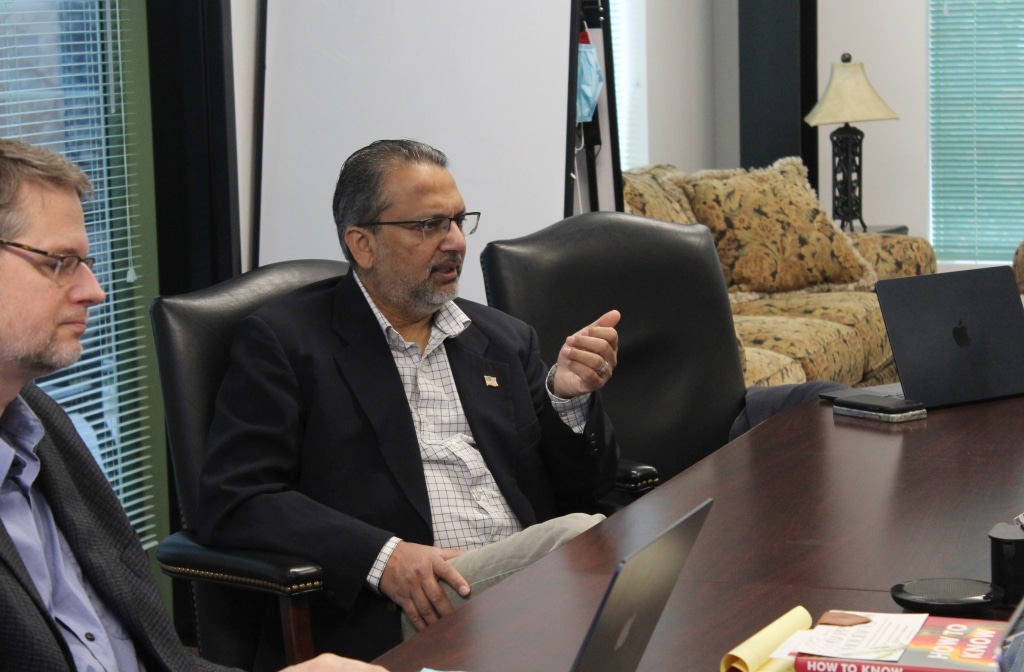
Dhanuka said some people in the community have been skeptical about Shasta having enough of the needed professionals to provide faculty options for the medical school to successfully operate. While staffing may be a challenge, he feels there’s enough talent in the area for the school and residency programs, and that the school itself will likely attract people from all over the nation. Overall, Dhanuka feels that the school would act as a hub for the North State that would bring major impacts in a variety of ways, including to the local economy.
As next steps, along with gaining nonprofit status, the consortium plans to develop a formal feasibility study and multi-year strategic plan for the project, then seek letters of support from various entities, including hospitals, clinics, tribal nations, regional stakeholders, educational institutions and economic leaders.
Meanwhile, consortium members are organizing site visits to rural medical schools in other parts of the country to learn about how they operate. In February, Simpson President Hall plans to take a small group to the University of Pikeville-Kentucky, which hosts a medical school that was created to address a physician shortage in central Appalachia, according to the consortium’s press release.
Do you have information or a correction to share? Email us: editor@shastascout.org.
Comments (18)
Comments are closed.
Related Articles
Could Shasta’s elections official actually hire Tina Peters?
The answer is complicated and would involve factors at both the county and statewide levels.
Redding shows up: Hundreds of volunteers power Ironman 70.3 Northern California’s debut
Nearly 750 people volunteered for the Ironman 70.3 Northern California, a number that impressed both Redding officials and those from Ironman. Volunteers saw the race as a way to put Redding on the map in a positive way.
California requires county jails to meet minimum standards. That hasn’t prevented Shasta’s high rate of in-custody deaths
Shasta’s jail has consistently passed most aspects of state inspections amid a worrying level of deaths. A close look at the state’s standards — and the California board responsible for examining deaths in jails — shows key gaps in oversight.
First thing is to define is what a MEDICAL SCHOOL means.
Is it to train nurse in candidates, doctors, clinical and non clinical staff,….?
To think it is for training doctors it is a bad concept.
With some of the most prestigious medical universities in the world just a stone’s throw away, both north and south of Redding it’s a non starter.
Remember also our area is not associated with the most intelligent folks. Our area is also known as populated with people who poo poo higher education.
We already have a credible nursing program both here in Redding and in Chico.
Unfortunately with the maga mentality permeating our area, who wants to come and study here.
How about instead a state of the art vocational training school?
Good thorough reporting. Thank you.
Simpson Univwrsity’s involvement is a non-starter for me. SU is a diplomat mill—no entry standards. You pays your money, you gets your diploma. Ask anyone who has attended the education program for teachers—SU graduates illiterate rubes who have zero chance of passing the credentialing exam, but SU cares not because by then they have their money. Worse, other SU grads barely pass the exam (which isn’t difficult) and pollute our schools with their ignorance because some of our districts hire teachers and administrators on the basis of church affiliation.
Please remember Kevin Crye was the first supervisor on board with this as well as the most enthusiastic. Kevin was also the one who proposed Chris Street be hired to pursue grants and navigate the red tape. Chris has done a fantastic job finding available funding!
You know Kevin is married, right Nick?
Don’t think he is going to show you the same affection as you show him…
I can see why you would find honesty, integrity and truthfulness offensive.
Truth, integrity, and honesty would mean you admitting that you have a man crush on Kevin Crye.
So, Dr. Dhanuka needs a medical school for his daughter? Warning: The idea of a “medical school” in Shasta County is acceptable, but there are issues. Will this be a hard-right, “Christina Based” medical school? Originally a pipe dream by Kevin Crye, Mr. YMCA, Chris Street, and Dr. Dhanuka—all far-right, anti-vax Trump supporters—and now associated with far-right, non-secular Simpson University, the question must be asked: Why would taxpayers want to support “The Anti-Woke Ronald Regen – Donald Trump Medical School” when UC Davis, which has trained medical personnel for years, has just expanded its accelerated Rural Accelerated Competency-based Education in Primary Care and Psychiatry (Rural ACE-PCP), clinical training hub in Shasta County? UC Davis trains doctors at Mercy Medical Center Redding, the Shasta Community Health Center (SCHC), both vital for ongoing outpatient care and procedures, and Shasta Regional Medical Center, which focuses on training physicians for underserved areas, including family medicine, psychiatric inpatient and outpatient care, procedures, and integrated behavioral health. It also offers dedicated rural rotations and a site for hands-on general surgery training. Most Shasta County Supervisors, Simpson University, and Dhanuka are all anti-woke Trump supporters. Trump has severely cut and devastated medical training programs, Medicaid, and the Affordable Care Act, leading to hospital and clinic closures here in the North State. We would be better off with a secular, nonpolitical medical school. Don’t reinvent the wheel. We would be far better served by expanding UC Davis with a campus here in Shasta County.
Warning: rambling christian word salad.
WHY are you consigning Simpson U. to the anti-vax category? As I remember, I got my first Covid shot from a Simpson nursing student. What’s more, the first I heard of a Covid vaccine was when Dr. David Thompson, a retired CMA missionary, mentioned that he was volunteering as a test subject for the Phizer vaccine.
The biggest obstacle in my opinion is the cost of building and running a medical school, easily costing hundreds of millions, perhaps even billions. Where will the money come from? Expanding existing residency programs and using traveling doctors might be a better short term solution.
This area has born and bred doctors. I have had several of my former students become licensed physicians- one even did a residency at Mercy. But later relocated with her family to another state for a variety of reasons.
Shasta County is a cultural desert with bigoted, racist community members. Once our motivated young people go to populated areas and experience life in those communities, they do find that there is a whole other world that they can happily live in.
Years ago, before Macys moved into the mall, one argument in its favor was that when doctors were recruited to come here, the doctor’s wives (because all doctors are men) wanted to know where they could shop. In reality, the situation is a doctor’s spouse being also well-educated and a professional who wouldn’t be able to find employment. Until that changes, which as a 70+ year resident of Shasta County, I do not see anything magically bringing qualified physicians or those seeking a medical education to Redding Area.
“This area has born and bred doctors. I have had several of my former students become licensed physicians- one even did a residency at Mercy. But later relocated with her family to another state for a variety of reasons.Shasta County is a cultural desert with bigoted, racist community members”
Gosh, I wonder what keeps you here.
Didn’t know it was cheap and easy to move, genius
The thought of you teaching our children with your bigoted hatful view of our community is truly frightening.
the irony of someone named Bill Ray being triggered hearing the most obvious news ever about our county is great. Thanks pal
Do you have specific facts to back up the statement that racism is obvious and pervasive in our county? It sounds like you are projecting the very stereotypes you condemn.
Wow! Great reporting with lots to unpack. Thanks Madison and Shasta Scout.