
Shasta and Lassen Counties face ‘dire’ health care access challenges, according to new report
The report, published by the California Health Care Foundation, highlighted the region’s physician shortages, high rates of mortality and recent federal cuts that impact rural health care systems. It also said that political tensions are impacting Shasta’s health care.
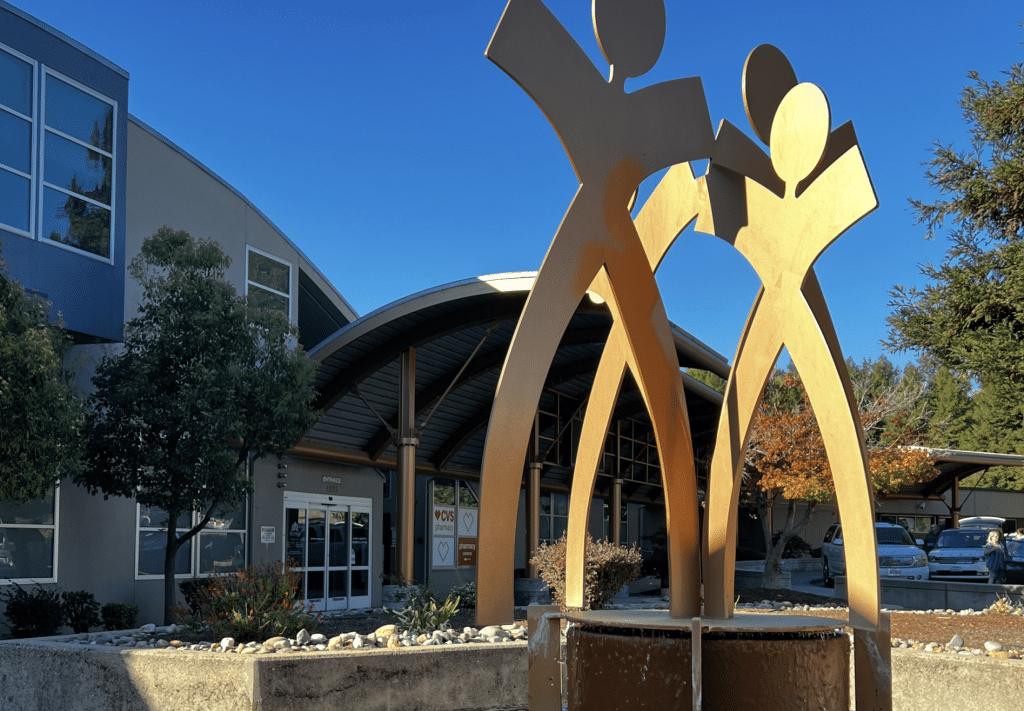
Shasta and Lassen Counties are facing “dire” health care access challenges but meeting them with resilience, according to a new report by the California Health Care Foundation.
The report, published late last month, aimed to identify the challenges communities in the region are facing in terms of their health care systems and gain insight into how these communities are responding to such challenges. It’s one of a set of reports by the foundation focused on a variety of regions throughout California.
Overall, the report said, the health care-related challenges Shasta and Lassen Counties face are primarily driven by a lack of physicians — in both primary and specialty care fields — high rates of chronic disease and mortality, including suicide, and federal cuts that could hit rural medical services especially hard. The report also highlighted contributing factors to some of these problems, such as Shasta’s high levels of political polarization.
However, local health care leaders are working toward ways to overcome these challenges through collaboration and innovation, the report said.
The California Health Care Foundation is an independent, nonprofit philanthropy with a mission to improve health care systems in the state, especially for those with low incomes and communities that face significant barriers to care.
What factors are shaping health care in Shasta and Lassen Counties?
One of the main challenges this region of the North State is facing is a severe shortage of primary care providers and specialists, according to the report, although this issue is one that’s been in discussion in the area for years.
The lack of physicians in these counties creates issues concerning access to care for its residents, the report said, as it leads to long wait times for those trying to establish primary care or receive specialty care. The report outlined those who are most affected by this issue, which includes Medicare patients, those with commercial insurance and Medi-Cal enrollees.
According to the report, Shasta and Lassen Counties together have roughly a third fewer physicians per 100,000 residents than the state average. There are also fewer behavioral health providers on average as compared to the rest of the state, which is already facing a shortage of behavioral health workers.
But the region is looking up in some ways in terms of its workforce challenges: The number of nurses and advanced practice providers is higher per capita than the state average.
Another factor that the report said is contributing to the region’s health care challenges is high rates of mortality, as both counties experience significantly higher death rates than the overall state average. In Shasta, the all-cause death rate is almost 60% higher than the statewide rate, and Lassen’s rate is 31% higher. Chronic disease, suicide, firearms and alcohol and drug use were the main factors the report highlighted as contributors to the region’s high death rates.
“These ‘deaths of despair’ reflect broader challenges with behavioral health access, substance use treatment, and social conditions in the region,” the report stated.
The report also outlined federal budget cuts that impact rural health care systems, including cuts under the One Big Beautiful Bill, which threaten Medi-Cal coverage and could reduce access to care throughout the North State, regardless of insurance status. According to the report, about three in five Shasta and Lassen residents are covered by Medi-Cal or Medicare, which is higher than the state average.
In many rural communities, community health centers or critical access hospitals, which often prioritize serving Medi-Cal and uninsured patients, are the only sources of care. Though the report noted that community health centers in Shasta and Lassen Counties are more likely to serve those with Medicare and commercial insurance, resulting in such health centers generating a smaller portion of net patient revenue from Medi-Cal.
“Health care leaders in the region are resourceful and resilient, but operating without economies of scale and navigating statewide policies designed for urban settings creates ongoing challenges to rural sustainability,” the report read.
To make matters worse, the political polarization of Shasta County has direct implications for health care, affecting access to behavioral health services, county health department functions and the recruitment of medical professionals in the region, the findings noted.
“This politicization of public health creates additional barriers in a region already struggling with workforce shortages and limited resources,” the report said.
How are local leaders overcoming these challenges?
While the health care-related challenges Shasta and Lassen Counties face are strenuous and ongoing, local leaders are working to mitigate these issues.
The report explained that community organizations have joined in Shasta to address critical behavioral health infrastructure needs, highlighting a proposed new treatment facility that would provide crisis stabilization services, including medical detox services, a 16-bed psychiatric health facility and youth crisis services.
Local groups, including the Shasta Health Assessment and Redesign Collaborative and Arch Collaborative, are working together to secure state funding for this new infrastructure. But the report pointed out that Shasta supervisors voted to submit a letter of opposition to efforts to secure state funding, which could jeopardize such efforts despite a reverse in course by the county.
Community members are also working to open a new medical school in Redding as a solution to the provider shortage, though the report did not mention these efforts.
The California Health Care Foundation will present its findings from the report at an event at the Sheraton Redding Hotel on Sundial Bridge Drive on April 2 from 11:30 a.m. to 1:30 p.m. Registration for the event is required. The link to register can be found here.
Do you have a correction to share? Email us: editor@shastascout.org.
Comments (4)
Comments are closed.
Related Articles
As election results finalize, Shasta board waits to reconsider censure against elections official Clint Curtis
In April, after the county substantiated findings of misconduct by Curtis against staff, supervisors promised to circle back to a decision about a vote of censure after the June 2 primary. As election results begin to finalize, questions remain about whether supervisors will act on their word.
Here’s how Shasta is embracing AI so far, and what could be next
Shasta County is already using artificial intelligence, but so far, without an official AI policy. District 4 Supervisor Matt Plummer is looking to change that. He’s leading an initiative to implement AI use into county processes for increased efficiency and cost savings. His vision may be beginning to materialize.

Erin Resner wins race for Shasta District 1 supervisor, shifting board majority
Near-final ballot numbers show Resner as victor. The current Redding City Council member has beat out incumbent Supervisor Kevin Crye, who’s part of a three-person group on the board that often votes together.
Well, maybe after all the old MAGA’s finally kick the bucket, we can focus on passing things that will actually protect and better the community
Gosh, with the combination of Trump’s cuts to rural healthcare paired with local MAGA/MAHA hostility to science-based medicine, why would young doctors hesitate to locate in rural Shastanistan?
This is the direct outcome and intended consequences of Obama Care! Didn’t we just secure funding at the federal level for rural healthcare communities! This is more alt left nonsense. My personal doctor of 20 years walked away from his practice because the system is now run by the insurance companies thst Barack Obama enriched! Let’s make sure we are honestly laying blame where it belongs
No, we didn’t just secure federal
funding for rural healthcare—Trump slashed it. Rural healthcare is collapsing under Trump, not Obama.
Compared with the rest of the developed world, we get sub-par healthcare in the currencies of outcomes and satisfaction, at twice the per-capita cost. That’s because the GOP insists on preserving the role of private for-profit insurance companies.
MAGA true-believers are chumps.