
After Lengthy Debate, Redding Council Approves United Way’s South Market Shelter Site
The council’s prolonged discussion with United Way staff and community members during a December 20th meeting highlighted the challenges Redding faces as it seeks to meet the needs of unsheltered community members.
It took nearly 90 minutes of in-depth questioning and discussion before four members of the Redding City Council finally voted 3-1 to approve a new emergency housing shelter site in downtown Redding. Council member Michael Dacquisto was absent.
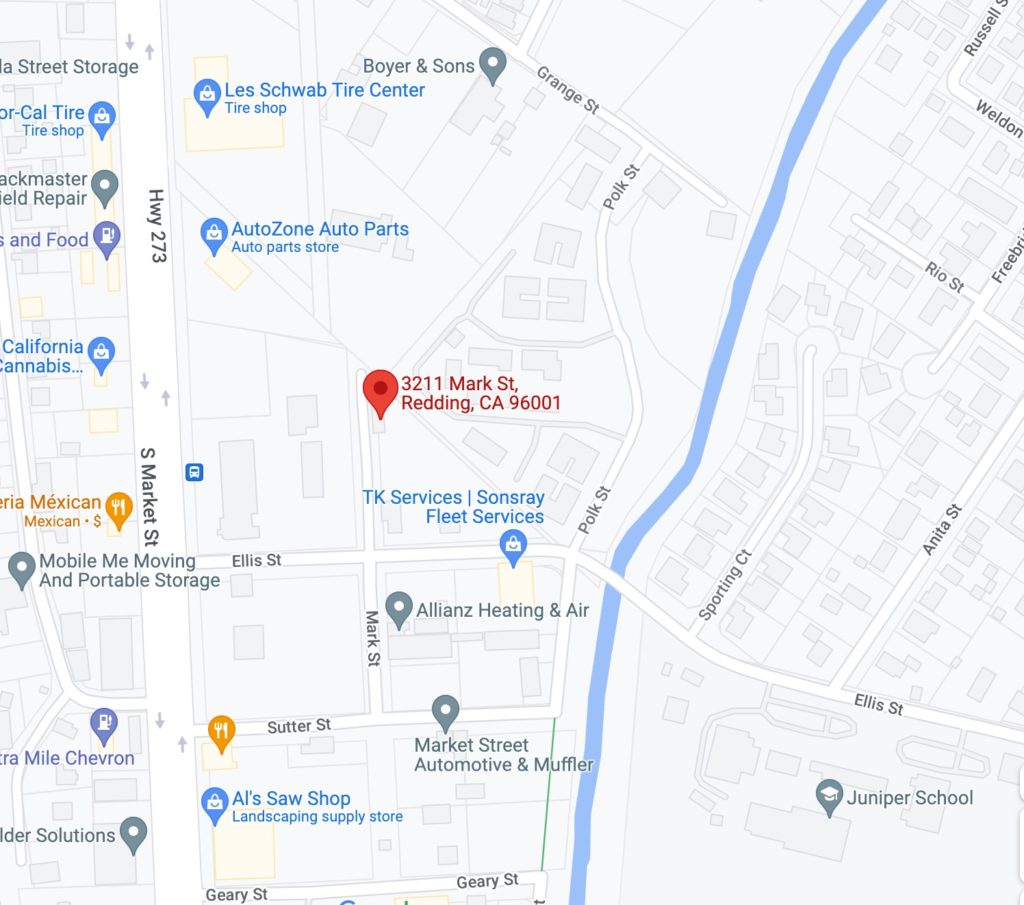
The United Way of Northern California intends to begin developing the South Market Street Emergency Shelter site in January and have it in operation by the end of the month. It will be located on Mark Street, near South Market and Ellis Streets and will be operated by the United Way, in cooperation with the City of Redding.
Access to housing is currently one of Redding’s most significant concerns. In 2021, the city declared a shelter crisis, indicating that a significant number of people are unable to obtain shelter. Since that time, the city has addressed the crisis by investing funding in police crisis response staff and hotel housing, but has not funded any accessible, low-barrier emergency shelter.
It’s unclear so far whether the South Market Street site will meet that need. While the site’s emergency housing guidelines require low-barriers to admission, United Way personnel speaking to the council during the Tuesday, December 20, meeting spoke of “selecting” the best participants for the program, indicating that the nonprofit will be looking for people who will “use their time productively” and are ready to “step up and make a change to their lives.”
The South Market Street site will include eight 64-square-foot pallet shelters which will house one person each. A separate bathroom facility, on-site parking, dog run, storage unit, and common office and service provider building are also included in the site plan. There is no kitchen facility or shared community space.
United Way’s President and CEO Larry Olmstead estimated the first annual budget for the site at $375,000, which will cover the cost of a full-time project supervisor, a site manager, an on-site caretaker, a case management supervisor and a case manager. Local service providers and volunteers will also work at the site, he said, which will include access to health and wellness classes.
The city will help fund the project with $150,000, funding that will come from Shasta County’s American Rescue Plan Act (ARPA) funds.
Newly elected council member Tenessa Audette cast the single “no ” vote against the project after sharing a litany of concerns about the advisability of the project. Audette’s concerns largely centered on the safety needs of staff at the site and the liability the city may incur as a result of security issues. She also questioned United Way’s statements about who would be housed on site.
“The idea that we’re going to put the best (of the homeless) in there,” Audette said. “I called CIRT (the Redding Police Department’s Crisis Intervention Response Team) last night . . .They want temporary housing of the worst of the worst. They don’t have these special people that you’re talking about.”
Olmstead responded to Audette’s repeated questions by emphasizing that residents would sign an agreement to be good neighbors. He also said that staff will be on site full-time during working hours, until 11pm four nights a week and on-call 24 hours a day. The site will not allow visitors and will include a number of security cameras.
But Olmstead also acknowledged that the United Way will be learning as it goes on the pilot project and will be working closely with the city and other partners to find solutions as they seek to address the complex problems of addressing the needs of unhoused community members.
“This is a demonstration/pilot project and is a first in our community,” Olmstead explained. “There is no one method of addressing an individual that works for everyone, in every community. Every situation is different. We need actions and we need options . . . Our commitment, at United Way, is transparency, a willingness to flex, pivot, to make sure the project is successful.”
According to an operations and services manual for the site, individuals will begin as probationary residents for the first four weeks before being considered for more permanent residency. Longer term, residents can stay at the facility for up to ten months. That’s a step in the right direction for local housing, Olmstead said.
Neither he nor Deputy City Manager Steve Bade offered much response to community member Susan Murray’s question about where residents would be able to go for long-term housing once their ten months on site have ended.
Before voting “no” on the project, Audette pushed the council to consider funding more hotel beds through the city’s contract with No Boundaries instead, saying that project is working.
The council voted to fund the nonprofit organization No Boundaries with nearly $300,000 to operate 76 beds for unsheltered community members at the Bridgeway Inn & Suites since September. A recent investigation by Shasta Scout found that the No Boundaries project is operating with written policies that contradict the state funding being used for the project, expose the city to liability, and create significant barriers to housing.
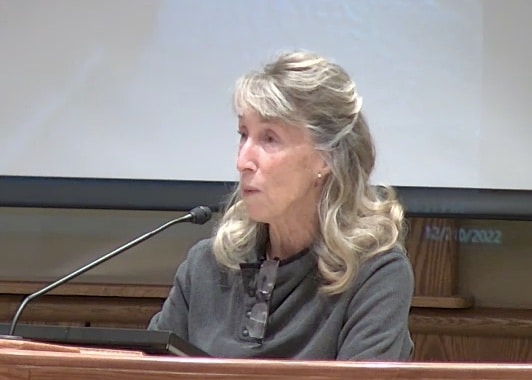
During the December 20 meeting, community member and retired social worker Laural Park, who has advocated for micro-shelter sites in Redding for several years, spoke last, reminding the council of its responsibility to all citizens.
“You mentioned things like ‘our name is on this and we have to be accountable to the public,’” Park said, “That includes our homeless. We need to be accountable to them as well. And yes, your name is on the decisions you make, including solutions to help people that are in desperate need.”
You can access the city’s Emergency Housing Site guidelines here.
Annelise Pierce contributed to this story.
Do you have a correction? Submit it here.
Author

Related Articles
ROV Curtis claims scheduling issues are preventing him from complying with state law to shred November 2024 ballots
The ballots were supposed to be retained only through Sept. 5, but they still haven’t been destroyed, allegedly due to a series of scheduling missteps and delays.

As gray wolves reemerge in Shasta, humans look for ways to address threats to livestock
Long eradicated from Northern California, gray wolves are reappearing — but their new habitat also means new threats for ranchers whose livestock provide easy prey. Efforts are being made at the county, state and federal levels to find solutions that allow for coexistence between people, their livestock and wolves.

Shasta board removes Kerns as planning commissioner amid contentious debate
County Counsel Joseph Larmour said Planning Commissioner Steve Kerns was being removed without cause. Supervisors who attempted to delve into what was behind Kerns’ removal received pushback from the county’s attorney.