
Underground Good: Dr. Doug Craig
I often urge my clients to see beyond good and bad to what “works.” What works is to love. It doesn’t work to hate. What works is to care for one another, and seek to understand one another and find common ground. It doesn’t work to hate one another and hurt one another.

Ed Note: This Opinion piece is part of our new series, Underground Good, which focuses on providing a window into the mindsets of ordinary people doing good work in their community. It’s written by sociologist and educator Sharon Brisolara. You can find the rest of our Underground Good series here. Want to nominate someone you see doing good? You can do that here.v
Dr. Doug Craig is a psychologist who has lived in Shasta County for nearly forty years. He is also a writer, seeker, listener, and someone who embraces social justice work, body, mind, and soul. He was nominated for Underground Good because of his tireless efforts to educate people about the effects of climate change and to inspire action to protect the Earth and the living beings who inhabit it.
In this rich conversation, Doug shares his love of writing, his experience hosting radio shows, teaching, and climate change activism, his deeply examined beliefs about life and spirituality, and how he’s been shaped by both the Carr Fire and his current walk with cancer.
Recognizing our interdependence is what lies at the heart of Doug’s way of seeing and being in the world. Both he and I invite you to this conversation and to the many conversations we hope it inspires.
How long have you lived in Shasta County, Doug?
I moved to Redding in August of 1984 from Dayton, Ohio to complete a post-doctoral fellowship at Shasta County Mental Health. I loved Redding — the mountains, lakes and wilderness areas — and knew this was home, especially after I met Nancy, my wife for the last 36 years, within a few months of moving here.
You have had a long career as a therapist. What drew you to that profession?
I usually credit my parents for my career path. My dad had an affair in 1973 when I was 17 and left my mom and me to deal with the grief of that trauma. We — my mom and I — were both pretty depressed, and my mom suggested we not wallow in our despair and instead seek out therapy ourselves. We also began to volunteer at a crisis hotline, where we learned to counsel other people who were going through their own emotional struggles.
Those experiences had a profound impact on me and enabled me to grow up quickly and seek deeper, more spiritual answers to many of the insecurities I was wrestling with. After some years of intermittent vagabonding — hitchhiking around the U.S., Europe, and North Africa and then living at a yoga ashram — I ended up in college at the University of Dayton. I was majoring in Journalism and Broadcasting at the time. This was after Watergate happened and I became obsessed with journalism and broadcasting, thinking that would be a way to make a difference. I was also a disc jockey at the college radio station and had jobs at two newspapers, the Dayton Daily News and the Dayton Journal Herald.
Then I took a few psychology classes and something clicked. I shifted my focus. I began studying and working in the mental health field and felt a natural affinity for it just as a new School of Professional Psychology was starting at Wright State University. I applied and amazingly was accepted into their charter class in 1980. I graduated with a doctorate in clinical psychology in 1984.
What do you subjects do you write about?
I’ve been interested in writing ever since I was a little kid. Fortunately, I had teachers and other adults —all women, by the way — who encouraged my writing and it became a passion of mine early on. I mostly wrote poetry, and still do, but became socially active in high school and saw journalism as an outlet for my creative impulses.
I began writing for our high school poetry journal and then for the local newspaper, focusing on environmental issues, student rights, and social justice issues. One of the projects I took on was creating a scientific survey to poll the level of marijuana use in my high school. This was the early 1970s and the school administration was pretty upset by the results showing rates much higher than anyone imagined.
Many years later, I returned to journalism after 9/11, the invasions of Afghanistan and Iraq, and the lies we were told about Saddam Hussein and his fictional weapons of mass destruction. I began regularly writing op-eds for the Record Searchlight, attempting to educate our community about how we are easily manipulated by politicians, government officials, and the corporate media to mindlessly believe propaganda and put our military men and women at risk in pointless, costly, and unnecessary wars.
As a result of those efforts, Doug Bennett reached out to me and invited me to join Citizens for Responsible Government (CRG) in 2004. We accomplished quite a bit, including helping to establish two community radio stations, KFOI and KKRN, bringing the journalist/broadcaster Amy Goodman from Democracy Now! to Redding to speak to packed auditoriums on two occasions, and holding education symposiums in the community on a number of environmental and social justice issues. I also attended several National Conferences for Media Reform between 2005 to 2013 to learn about ways to promote and support independent, non-corporate, non-commercial news media organizations like Democracy Now! and community radio stations.
From 2018 to 2019, Randy Compton and I did a series of radio programs on KKRN featuring interviews with nationally known climate scientists and authors that I called Wake-Up Call, the same name I used for a weekly radio program Pamela Spoto and I ran for 18 months in 2010 and 2011 on KKRN.
Starting in 2012 until the present, I have been fortunate to write pieces for Doni Chamberlain’s A News Café, including my Free Therapy columns. I have always tried to incorporate my writing into the various social and climate justice projects I was working on at the moment.
You were nominated for Underground Good for your work bringing attention to climate change. What has that work entailed?
When I first learned about the climate crisis in 2004, at a Citizens for Responsible Government (CRG) meeting, I learned for the first time about the in-depth, scientific facts of global climate change. I totally got it. I could see the future (that has become our reality now) and I grieved for what was coming and simultaneously knew I must do everything possible to prevent it.
Two years later, I found myself before the Redding City Council, pleading with council members to sign the Mayors’ Climate Protection Agreement. They refused. That same year, I taught a series of classes at Shasta College on aspects of the climate crisis and was appointed and then elected to serve on the Shasta Community Services District, attempting unsuccessfully to advocate for responsible water education, use and preservation.
I gave talks before church groups and other community organizations about the climate crisis. I wrote 2200 essays on my Record Searchlight Climate of Change blog from 2009 to 2016, approximately one a day for seven years and was one of the founders of the Whole Earth and Watershed Festival that First United Methodist Church’s Peggy Rebol started and led from 2006 until 2020. During that time, I joined a three-day Climate Reality Project’s Leadership Corps training in 2015 to become a Climate Reality Leader.
One of my first efforts to educate the community was at an Earth Day event in Caldwell Park in 2006 that Mauro Olivera and Acorn Enterprises organized. I had a booth there with about ten books that focused on the climate crisis. And one that surprised people, a Dr. Seuss book called Horton Hears a Who. My point was that, just as in the book, every citizen in Whoville needed to yell in order to be heard and save the world, each of us needs to join together in making enough noise to save the planet for future generations.
Later, I developed a PowerPoint slide that read: “Too many JoJos, not enough Hortons.” Jojo was the young child playing with his ball instead of joining with the rest of the planet in seeking to save their precious world. Too many of us are still on the sidelines, hoping someone else will fix this. Jackson Browne wrote, “Oh, people, look around you. The signs are everywhere. You’ve left it for somebody other than you to be the one to care.”
At first, I didn’t understand why my efforts to educate our community about the climate crisis were unsuccessful. I do now, but then all I knew was that there was something about the human mind that prevents it from seeing uncomfortable truths. Now I more deeply understand that through evolution, our brains are not really designed to care about what is true as long as we secure the safety of belonging to our group, team or clan, even if that group believes lies.
My main aim from the beginning was to make several simple points: Climate change is real and the science supporting it is as solid as it gets. Human activity is primarily responsible for it through our use of carbon-based fossil fuels. The more we burn, the hotter the planet will become. This is a severe catastrophe and if left unchecked, will likely end human civilization, if not extinguish most life forms on earth, including human beings.
Our window to act opened in 1990 and will likely close in 2030. In order to stand a chance of leaving a livable planet to future generations, we need to drastically reduce our reliance on fossil fuels by 50 percent by 2030 and achieve net zero by 2050.
Each individual, community, city, county, state and country is responsible for making this change. We are not doing enough. It is not too late but our time to act is quickly evaporating before our eyes.
With bigger, complex issues like climate change, there is so much to be done and different ideas among advocates about priority actions. How do you decide the role you will play?
The role I played for the last couple decades was like a Paul Revere. I did everything I could to wake people up to the crisis and I trusted that once they understood, they would elect leaders and support effective policies that would enable us to quickly transition away from fossil fuels and toward renewable sources for our energy and transportation needs. I had hopes that Shasta County would see beyond the politics and embrace the science and act accordingly.
It never occurred to me how brazen and sociopathic powers would dedicate themselves to ensuring we continue as we always have and allow the collapse of the Earth’s biosphere so they can continue to make money and cling to power. The only thing that could work locally is if hundreds or perhaps thousands of our citizens demand rapid change. I tried to make that happen. I have no idea what role I might play now, besides writing, if anyone is interested in reading what I have to say.
It always seemed like we needed a Greta Thunberg and a great following to make change locally. I always thought that this issue should be on the front page of every newspaper every single day. In geologic terms, the climate is changing faster than it ever has, but from the human perspective, it is slow enough that we find it easy to ignore. But these changes are irreversible. The melting glaciers and rising oceans are baked in now and will continue for thousands of years. Species extinctions will only accelerate. Wildfires will continue until there is nothing left to burn. Extreme weather events have become the norm and they will only become more frequent and more intense and more costly. Vast swaths of the planet will become unlivable due to excessive heat and drought. And this was all preventable. We knew enough thirty years ago to act, but we chose to ignore, delay, and deny and now here we are.
How have your writing, your work as a therapist, and your commitment to causes like climate change come together in your life?
I suppose I could best answer that question with the word service. I had these seminal experiences, visions, and dreams as a child and throughout my life that led me to carry these rather grandiose beliefs about myself and what I might accomplish in service to others.
Now, as I near the end of my life, I am more realistic, but a lot of my life was devoted to this idea of service. I recognized at a very early age that we — humanity — were all connected spiritually, and I saw my clinical work, my writing, and my community activism as ways to educate and inform, but also to provide healing to my clients and my community.
When we operate from this place of connected consciousness or awareness, we operate from what connects us, the only “thing” that is ultimately real, which is love.
This informs how I interact with my clients, my family, my friends, strangers, and the poor souls who sleep on our streets at night. It informs what I write and how I write, and it informs my efforts to serve our community and educate the public about what is true, important, and necessary.
Most of us believe in this false ego or illusory, conceptualized, “separate” self that isn’t fundamentally real and is the source of our suffering. When we wake up to what is real, we can begin to focus on what is deeply true and that is when our emotional and spiritual growth can really begin. It becomes difficult to harm anyone else because we see our self in the other and the other in ourselves. We share a kind of oneness.
We also suffer when we become certain that we alone know what is true, right, good or real. This certainty is dangerous. Matthew McKay, in Seeking Jordan, points this out when he writes, “Beliefs born of certainty harden and become swords of emotional violence. Certainty divides the world into what is true and false, rejected and embraced. It is what war — in every form — is made of.”
Science is the one-and-only method to collectively agree on what is true in this physical universe we share. Based on science, we come to understand our proper relationship with the Earth. We care for the planet not because it is good or right, but because it is our only home and the source of our existence. We are the Earth and whatever we do to the planet we do to ourselves. It is our duty to care for the Earth, like protecting our children or loved ones from harm.
When my wife was diagnosed with breast cancer in 2007 and when I was diagnosed with throat and tonsil cancer last year, we didn’t argue with the doctors and refuse care. Likewise, when the planet’s doctors, the climate scientists who have studied human-caused global warming for multiple decades, warn us about the planetary heating that we are responsible for, we don’t pretend we know more than them and instead we respond like any mature, conscious, sentient being. We need to seek and be open to scientific truth and take responsibility for what we have done and what we continue to do and how we must change.
This series focuses on the good that happens in our community, especially good that is not readily noticed. How do you think about “doing good”?
This is a great question. In my work with my clients, I often urge them to see beyond good and bad and to see what “works.” For example, what works is to love. It doesn’t work to hate. What works is to care for one another, and seek to understand one another and find common ground. It doesn’t work to hate one another and hurt one another.
Very simply, the golden rule works if we understand it to mean that we become deeply empathic and treat this other person in a manner that is ultimately kind, compassionate and loving. It leads us to approach one another with deep humility. We are open to listening, learning and changing our minds. We are not attached to our perspective or point-of-view.
Each of us is one piece in a grand, glorious, organic, spiritual puzzle. We all fit together. We all need to see our part and how we fit. Doing “good” in this respect means being true to who or what we are as we seek our connection with those around us in our community.
Imagine a room with a single light bulb obscured by a large wall-to-wall, false ceiling. Now imagine poking seven billion holes in the ceiling so the light can shine through. Each of us is an opening or a window through which the light shines. Each hole is separate, but the light comes from a single source, which is love, which is what each of us is.
Doing good means being awake to who we are and working with the other “windows” to create the best possible world for all of us to enjoy. If we take a moment, we all know what values motivate us in our actions in the world. Are we motivated by truth, love, nonviolence, and justice? If the answer is yes, then our efforts will most likely be “good” because these values “work.” The universe is designed around these principles, so when we operate from these core values, we will be in harmony with the universe.
Both you and I lost our homes in the Carr Fire. How did that experience impact your climate change efforts and your service in general?
As you know, it was crushing for more reasons than you or I could ever articulate. I had a library of over 200 books on climate and it all burned. I also owned 20–30 climate documentaries that burned along with a lifetime of my writings. It was similar to when the Record Searchlight pulled all the blogs in 2016 and my 2200 climate essays vanished. It felt like the universe was laughing at me and pointing out how useless and futile all my efforts had been.
I also lost two dear friends at the time, Pamela Spoto the week before the Carr Fire and Doug Bennett the following year. When you lose people who understand your heart and support your efforts, it is hard to carry on. But I did.
I continued my clinical practice and worked with a local group called North State Climate Action for a few years. The fire took a lot, but so much remains and, as you know, there is so much work still to be done. At some point, I realized that I needed to shift my focus. That is when I joined with Carl Bott to do a monthly radio program on KCNR in 2021 and 2022 until I was diagnosed with cancer. It was our attempt to show to the community that a liberal and a conservative could have respectful conversations about issues that concern all of us, including the climate crisis.
I was also focused on how we are all being played by the so-called liberal and conservative media to hate one another and not work together to solve our mutual problems. Matt Taibbi wrote a great book about this concern called Hate, Inc. Other good books include How Democracies Die by Levitsky and Ziblatt and Why We Are Polarized by Ezra Klein. The truth is there, but we are unwilling to see beyond our preconceived notions.
You have also written beautifully about your recent cancer diagnosis. In fact, you are currently between chemo treatments. How has this diagnosis shaped your thoughts and actions, your ways of being in the world?
I have written a lot of poems and essays about my cancer journey in the last year. The cancer has spread to my tongue, lungs, and the back of my skull now and I’ve begun my second round of chemo. I had a bad week recently, but at the moment I am feeling mentally better than I have for a long time.
Surprisingly, I feel extremely alive and happy. I can’t really explain it. The more I am willing to completely accept reality as it is, the less power it has to disturb me. Or maybe I just have good meds!
My tongue is not working properly and I talk funny now, but I still have my private practice and my clients and I love that I am still in the game. For a while there, I just wanted the pain to end, even if it meant dying, but something shifted in me recently. I am not ready to die and I am tired of feeling miserable. So today I have joy. I feel very fortunate and grateful. This world is an amazing place filled with incredible people who could transform the planet if they only knew what power they possess. I hope to stick around and help that to happen.
What motivates and sustains you when the work, or life, is challenging?
Deep down, I do believe in humanity and love and our ability to collectively work together for the common good. I love people and that sustains me. Most of us want a better world. Some of our friends on the right are deeply afraid and confused and receptive to believing lies and conspiracies, but deep down they are just terrified of change. In America, men with white skin had all the power for hundreds of years. That is changing and some find that so disturbing, they believe violence is the answer.
But these changes are not good or bad. It is just what is happening. And so, we’re stuck with figuring out what that means. If all the Christian churches in America, who espouse loving our neighbors as ourselves and loving our enemies, joined with other religious organizations and non-religious groups and individuals to set an example of love and kindness based on what we can collectively agree is scientifically true, we could create a society or culture based on principles of love and nonviolence, truth and justice, equality and compassion, regardless of race or gender or political persuasion — a world that is safe for everyone.
If people wanted to support community-focused efforts to take action on climate change, what would you recommend?
Financially support KFOI and KKRN. And contact North State Climate Action.
Editor’s note: If you’d like to be in touch with Dr. Craig, you can email him at me@drdougcraig.com or send letters to 1650 Oregon St., Suite 110, Redding, CA 96001.
Do you have a question or comment about this story? Reach out: editor@shastascout.org
Author
Related Articles
Underground Good: Sara Hoxie
‘Will had so much energy and love to give. He’d walk into a room, and his personality would drive everything there. He kicked up a lot of dust, and we’re just not going to let that dust settle.’
Underground Good: Enora Ilboudo
“Aside from clothes and food, sometimes we’ll hear from people who don’t feel connected to their families or need to talk to someone and don’t have anyone else they can go to. People are finding their community here at the center and that keeps me motivated when I’m working here.”
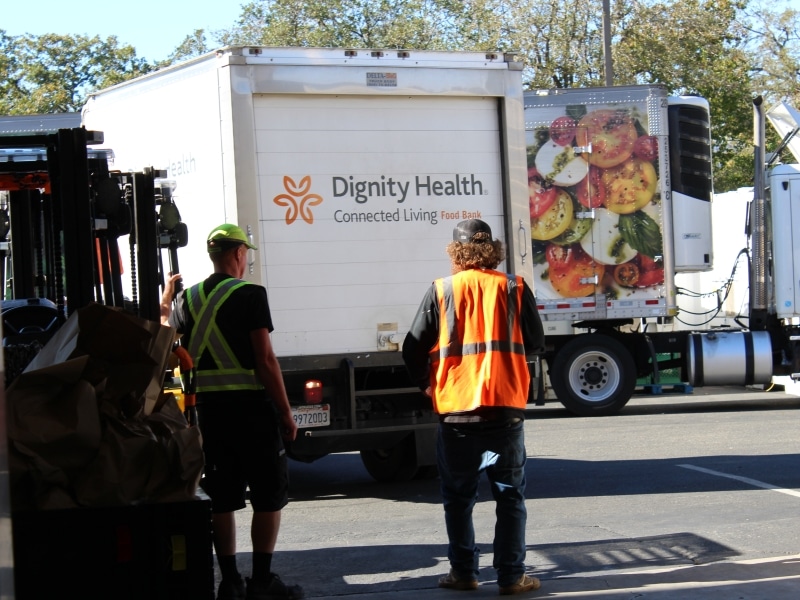
Opinion: Healthcare and Food Benefits are at Risk in Rural California. Will the Governor and Legislature Act?
The need for health care, behavioral health treatment, and food assistance will not disappear because federal funding drops. The burden simply shifts downstream to counties — forcing cuts to emergency rooms, food banks, sheriff’s deputies and already-overwhelmed local systems.