
“It’s A Monster”: ACID Struggles To Manage Water After Year of Drought
A Shasta County water district with about 700 irrigators suffered through an unprecedented drought last year. After abundant rain over the winter, District irrigators were looking forward to having water again. But it hasn’t been that simple. While the District has received its full federal allocation, distributing it has been a problem, leaving some irrigators without water while others drown in too much. The Board will hold a special meeting tonight, Wednesday, June 14, to discuss possible engineering solutions.
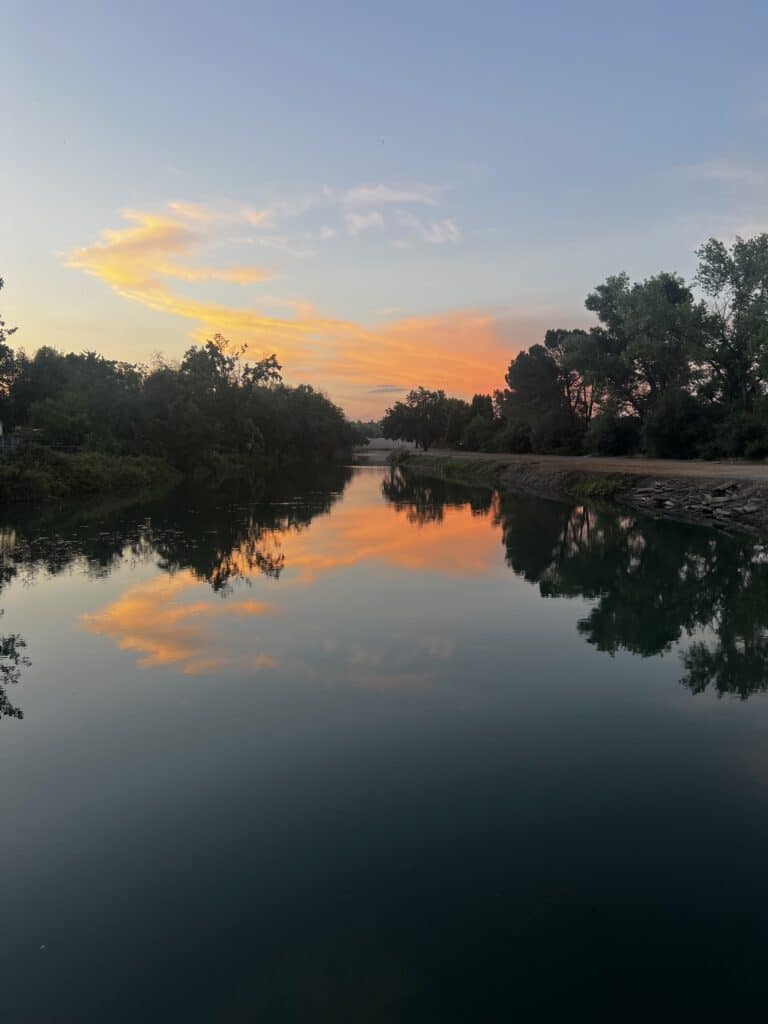
Last year, the Anderson-Cottonwood Irrigation District (ACID) didn’t receive any water for the first time in more than 100 years. Prolonged California drought conditions meant the local irrigation district, which serves about 700 users, lost 82% of its usual allocations from the federal Bureau of Reclamation. Board members sold off the remaining 18% for about $12 million, claiming they couldn’t distribute it equitabilly along the thirty-five miles of ACID canal.
The decision provoked outrage among many District users, who were left with questions about how hard the Board fought the federal government to protect the District’s senior water rights, and whether the water that was sold could have been kept in the District to provide some benefit. Some district irrigators survived the summer by selling off cattle, others let their fields turn to star thistle.
That’s why it was cause for celebration when ACID received notice this spring that the District would receive its usual full water allocation from Reclamation. ACID celebrated the good news with a community event timed to coincide with the opening of the District’s water gates in Redding.
But ACID’s troubles were far from over. The year of drought appears to have impacted the canal system, leaving the District in what Board Member James Rickert referred to at ACID’s last meeting a a “state of emergency.”
The problems are connected to water distribution. While there’s always some water loss due to seepage through the canal’s earthen walls, much of the District’s water usually flows down the central ACID canal and into a series of lateral canals and ditches that supply various neighborhoods and individual users. But this year, perhaps due to damage caused by a year of drought, ACID water is moving in unpredictable ways, leaving some District users with standing water high enough to prompt evacuation, and others with no water at all.
ACID’s Board has not shared details on how many community members have been adversely affected by the District’s water distribution issues this season. Board Chair Dan Woolery told Shasta Scout an estimated 4-6 neighborhoods are affected by high groundwater but as far as he knows “only a few people have been forced from their homes.” He did not specify how many ACID users still lack their usual water allocations saying only that “nearly all” have received water.
The ACID Board will hold a special meeting tonight, Wednesday, June 14, to discuss the results of recent engineering consults on the distribution issues. A draft resolution, included in the agenda packet for tonight’s meeitng, indicates that the Board may initiate a”shallow groundwater well pilot project at one of four strategic locationss to attempt to dewater the shallow aquifer and mitigate the impacts of high groundwater issues.”
David Grabeal says he’s been an ACID user for years but this is the first year he’s been affected by canal “seepage.”
“Water as great as it is,” he told the ACID Board last week, “is sort of a Dr. Jekyll and Mr. Hyde kind of thing. It’s all wonderful until it’s not where we want it and then it’s a monster.”
Grabael said ACID staff have been responsive but he’s concerned about how long its taking to address the standing water issues, which could cause long-term damage.
That’s also concerning to Dana Sandifer, who spoke at the Board’s meeting last week and at the Shasta County Supervisor meeting on June 6th, While Sandifer does not pay into the ACID system as an irrigator, she’s still been affected by high groundwater within the ACID user area. Flooding caused by high groundwater, she says, forced her and her family to leave their home six weeks ago.
ACID is paying their hotel costs, but Sandifer is deeply concerned about the long-term damage that could develop on her property.
James Rickert, another ACID Board member lives in the Churn Creek division of ACID and has two pastures in the District. He says he’s also been been personally affected by the water distribution problems.
“I just received water on one of these properties for the first time (this year) last weekend,” Rickert told Shasta Scout by email earlier this week. “It is at the very end of the ditch and has been the hardest to get water to.”
Those running ACID aren’t sure yet why the distribution problems are occurring. Some community members speculate that leaving the earthen canal empty over the last year has allowed new damage to the infrastructure, including gopher holes that opened up passages along the dry canals that are now collapsing as they fill with water. But no one is sure whether this is the main problem, or how to fix it.
But solutions are coming says ACID Board Chair Dan Woolery. “The reasons for this high groundwater are currently being studied by our engineers,” Woolery told Shasta Scout by email, “and it appears that the causes are multi-faceted and complex. People who’ve been forced from their homes can contact ACID for assistance.”
The problems within ACID this year are particularly challenging to address because so many of the people running the District are new to the job. Four of ACID’s five Board members have held their seats for less than a year. The District is also currently operating without a general manager, after GM Jered Shipley, who was hired just last year, left the District for a Reclamation job on June 2.
On June 8, the ACID Board, which has been scrambling to replace Shipley since his resignation in May, voted to hire Justin Dahl as their new GM.
Dahl, who will receive a salary of $155,000 as ACID manager, has a bachelor’s degree in water engineering and fire science and almost seventeen years of experience in water management. He’s currently managing the Maxwell Irrigation District.
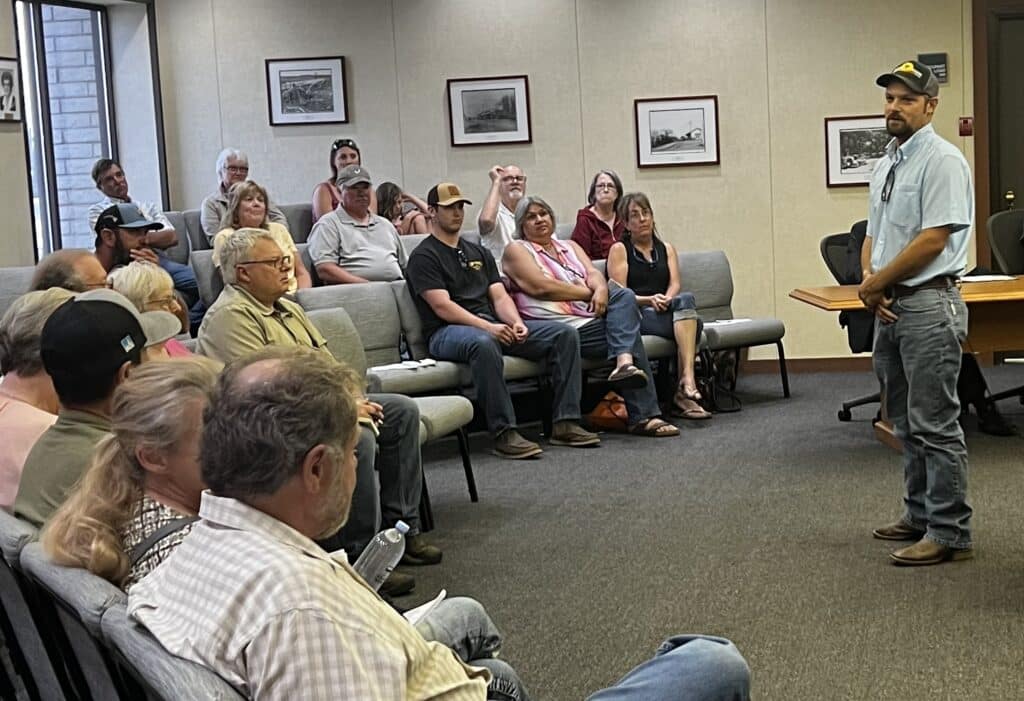
Board members also voted last week to hire four temporary staff members to help immediately fill vacancies in their ditch tender crew, which works to address vegetation blockages and other issues that can impede water movement down the canal. They’re also bringing in a former long-term employee as a consultant on the canal’s infrastructure, to help bridge the knowledge gap being experienced by newer leadership.
The ACID canal system is 35 miles long and somewhat antiquated. Besides the main canal, the system also includes a series of lateral canals that deliver water to ditches that run across individual properties. A call from District personnel lets users know when to move the wooden boards blocking their ditch to allow water to flow into their property on designated water days.
It’s a system that depends on strong and consistent communication, something that many community members who spoke at the District meeting last week said has been lacking. Some of that is due to staffing shortages, Board members said. But they also agreed to review the Board’s contract with CV Solutions, a communication firm with a contract for up to $5,000 a month to faciliate the District’s flow of information.
Tonight’s June 14 meeting will be held at the Anderson City Hall at 6 pm. You can find the Board’s proposed resolution, here.
Want to lear more? See the rest of our ACID coverage here.
If you have a correction to this story you can submit it here. Have information to share? Email us: editor@shastascout.org
Author

Related Articles
Accountability vs. micromanagement: Shasta board debates its role during wide-ranging discussion
Supervisor Matt Plummer was accused of micromanagement for asking for data in response to an assessment of fire services. Meanwhile, Supervisor Kevin Crye spent nearly thirty minutes questioning a decision by the HHSA director with no such accusation sent his way.
For Shasta, collaboration needed to solve physician shortage
Political division is a barrier to improving healthcare access in Shasta County. Experts say solving the entrenched problem requires working together.
Meet Rebecca Anne Miller for Redding City Council
Three seats are up for grabs on the council this fall, and nine candidates are running. Miller is a substitute teacher with the Shasta County Office of Education and a caregiver with In-Home Supportive Services, or IHSS.