
A Legal Shield to Protect the Sacred: Pit River Tribe Asks Biden to Make the Medicine Lake Highlands (Sátíttla) a National Monument
The designation would ban the kind of new leases for geothermal energy drilling that Pit River people have fought for decades and bestow far stronger protections for the culturally and ecologically important sacred landscape.
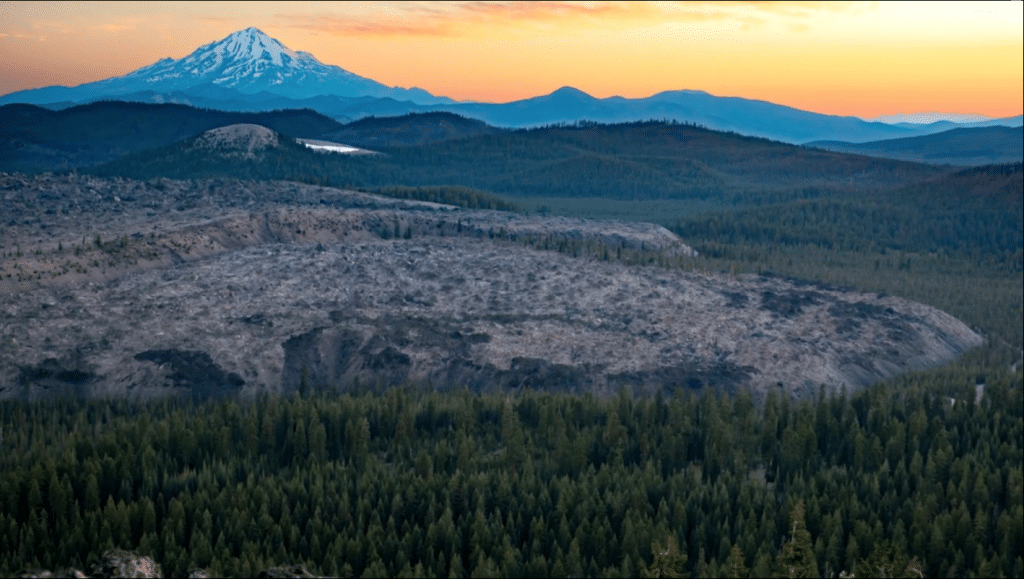
The Medicine Lake Highlands is about 200 square miles of rugged plains of rocks interspersed among forested mountains, lava tube caves and other unique, awe-inspiring places, such as the obsidian-laden Glass Mountain. Photo by Bob Wick and provided courtesy of the Pit River Tribe.
In a 2011 video interview, Willard Rhoades, the late Pit River spiritual leader and activist, tells a story of a German woman who sought out Indigenous healing to help with a crippling illness Western doctors couldn’t cure.
Rhoades sent her to Medicine Lake, which sits in the caldera of a giant shield volcano at an elevation of 6700 feet, about 30 miles northeast of Mount Shasta. He told her to take a swim and to “think about her troubles, to give herself to the other side.” When she returned to Rhoades after following his instructions, she was cured, he said.
His account is among countless stories told by Pit River people of the potent medicinal, spiritual and cultural powers of Medicine Lake and the surrounding volcanic landscape. Known as the Medicine Lake Highlands, or Sáttítla in the Pit River language, the area is about 200 square miles of rugged plains of rocks interspersed among forested mountains, lava tube caves and other unique, awe-inspiring places, such as the obsidian-laden Glass Mountain. For thousands of years, Pit River as well as Modoc, Shasta, Karuk, Klamath and other Indigenous peoples have traveled to the highlands for healing, ceremonies and connection to sacred sites that are integral to their way of life, spiritual health and identity.
But Pit River people have also faced a looming threat to their sacred landscape, as energy corporations, using federal leases, have investigated mining the Medicine Lake Highlands for geothermal power since the 1980s.
For nearly four decades, the Pit River Tribe has doggedly resisted geothermal development in the area through lawsuits, protests and ceremonial gatherings. They’re opposed to industrial geothermal energy plants because operating them in the area would cause severe harm to the Pit River people’s spiritual, cultural and ecological relationships to the highlands. They also fear geothermal drilling would endanger a massive aquifer, which according to geological studies, contains between 20 to 40 million acre-feet of water, as much as California’s biggest 200 reservoirs.

A map of the Medicine Lake Highlands. Courtesy of the National Park Service.
Seeking more powerful safeguards for Sáttítla, the Pit River Tribe announced this November that they have submitted a proposal to President Biden to designate the Medicine Lake Highlands as a national monument. If their application is approved, new projects involving geothermal power extraction, mining or other industrial activities that cause intense environmental damage would be banned in about 200,000 acres of land currently managed by the U.S. Forest Service, said Radley Davis, a Pit River Tribal citizen.
The national monument status would also give the Tribe a far stronger voice in decision-making about the management of the Medicine Lake Highlands and its natural resources. Their application to President Biden proposes the Tribe become co-stewards of the monument alongside the Forest Service and the Bureau of Land Management, which oversees the use of underground resources in Sáttítla. Collaborating in this way would provide the Tribe an opportunity to promote cultural burning, seed Native plants and diversify the tree canopy in the surrounding timberlands, according to Brandy McDaniels, who serves as the Madesi Band Cultural representative for the Pit River Tribe.
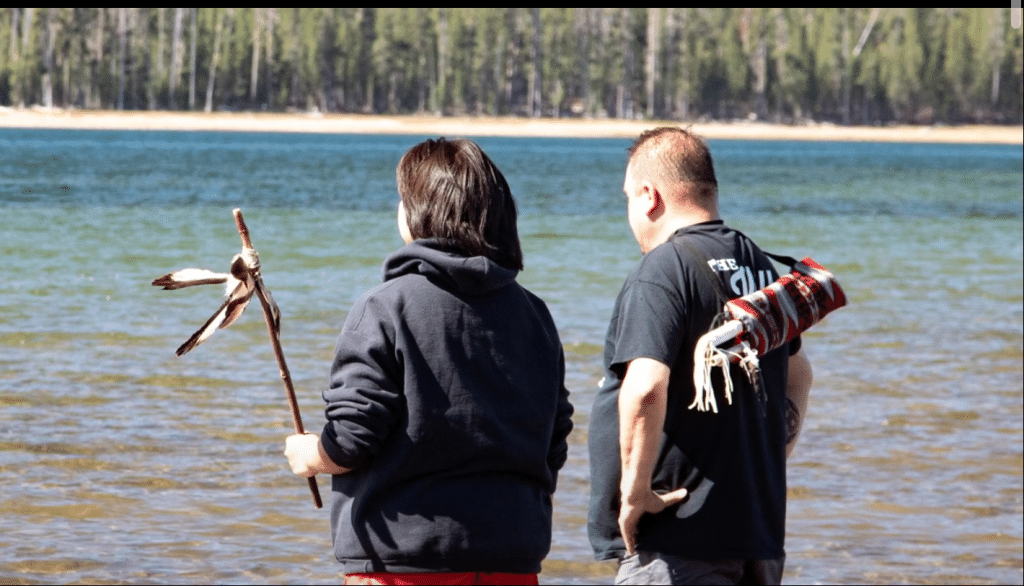
Two participants in the Pit River Tribe’s annual Ancestral Run arrive at Medicine Lake. Photo by Bob Wick and provided courtesy of the Pit River Tribe.
A national monument status is one of the few legal mechanisms that can come close to permanently protecting Indigenous ways of life that are connected to sacred sites on federal lands. In the case of the Medicine Lake Highlands, the designation would mean far stronger legal protection for a constellation of sacred sites that is vital to the continuance of the Pit River people’s place-based way of life and collective identity.
Like many Indigenous peoples, the Pit River Tribe’s cultural, spiritual traditions and history are inextricably interwoven into their ancestral landscape, where particular places are sources of spiritual power, guidance and memory. Anthropologist Keith Basso, writing about Apache people’s relationship to their territory, described landscapes like Sáttítla, as “place worlds” that evoke history, lessons of morality and guidance to help Tribes make decisions about their future. Because Indigenous histories often emphasize where important past events happened rather than when, going to sites within Sáttítla can spark the sharing and remembering of these important narratives, McDaniels said.
“Sátíttla is a place where we come to learn the narratives of our people that are embedded in the land. The land tells us those stories and provides those instructions about how to live with the land,” explained McDaniels. “Any act to destroy the topography of the land erases our history.”
The area is also a place where Tribal members go for spiritual nourishment, and where young men, in particular, experience their coming of age ceremonies. Such ceremonies help connect young men with the wisdom Tribal ancestors, Pit River citizen Davis said.
“We are the land and the land is us,” Davis told Shasta Scout. “(Sáttítla) is one of the places we can go that helps us understand that . . . and make that connection. If you’re searching for your life, go there in a good way, you will get what you’re seeking.”
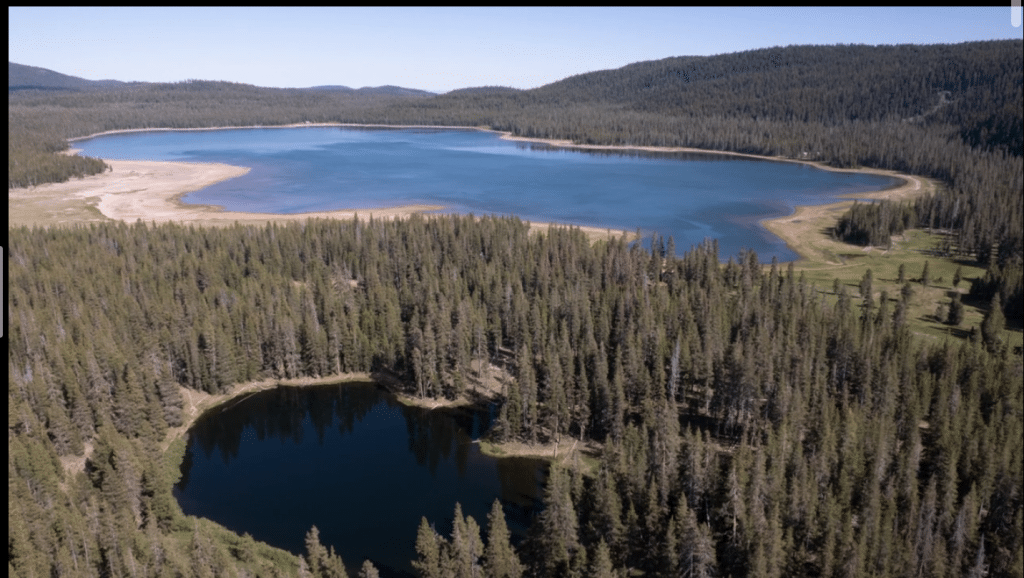
Medicine Lake is located within the caldera of a giant shield volcano about 30 miles northeast of Mount Shasta. Photo by Bob Wick and provided courtesy of the Pit River Tribe.
Agencies who the Tribe hopes will co-manage the proposed national monument have yet to endorse it. D’Artanyan Ratley, press officer for the U.S. Forest Service declined to comment about the proposal to Shasta Scout. And the BLM’s Public Affairs Officer Jeff Fontana told Shasta Scout by email that his organization “doesn’t have a position” on the designation.
But Davis still has high hopes that a national monument designation could represent a new beginning for the relationship between the Tribe and the agencies, with building a better future for Sáttítla as the collective endeavor. And the Pit River people have found a strong ally in another agency, the California Department of Natural Resources (CDNR), which has publicly supported the Pit River Tribe’s national monument application as part of its “30 by 30” conservation plan. Pit River people hosted CDNR Secretary Wade Crowfoot at Medicine Lake this summer. He later made a statement saying the area should be protected “in perpetuity” because of Sáttítla’s spiritual significance and because it is “important to our state’s river system as the headwaters of the Sacramento River system.”
This was a reference to the groundwater beneath Medicine Lake, which the Tribe argues would also be granted much-needed protection under national monument status. Water in that aquifer percolates underground for 20 to 30 years before gurgling to the surface and feeding Fall River springs allowing the Medicine Lake Highlands to supply 1 to 1.4 million acre-feet of clean water to the Sacramento River system every year, regardless of drought.
But according to the Tribe and some environmental organizations, geothermal energy production could contaminate that aquifer. In order to generate geothermal power at Medicine Lake, energy developers would have to drill into hot rock, breaking them apart using acids and other experimental means. Some studies indicate many of the acids used in fracking are in fact cancer-causing chemicals, which could spill into the aquifer if the drilling punctures barriers between the aquifer and the geothermal resources.
“This fight isn’t just about us,” said McDaniels, the Madesi Band cultural representative. “We’re trying to protect this area that will be a buffer during climate changes, holding millions of acre feet of pure water for a large part of California.”
Typically, the national monument status also includes accompanying strict land use restrictions, especially against mining, drilling for energy resources and other intensive environmentally destructive developments. Under the 1906 Antiquities Act, once U.S presidents transform federal lands into a national monument, they can’t be sold.
But a national monument status is not a total failsafe. Some presidents have shrunk the boundaries of national monuments to facilitate more resource extraction, as President Trump did in 2017 to the Bear Ears monument in Utah. Another risk is that existing projects or leases can sometimes be grandfathered in and remain valid even after a national monument designation. That’s according to Davis of the Pit River Tribe who believes that would be the case with any active CalPine geothermal leases in the area.
The Pit River Tribe has already had some success in protecting the Medicine Lake Highlands, and its aquifer. For example, in 2019, they scored a significant legal victory when a federal district judge invalidated 26 geothermal leases that the Bureau of Land Management had illegally issued to Calpine Energy Solutions. The decision forestalled further development in the short-term. But new geothermal energy proposals targeting the region are beginning to surface, and the Tribe hopes the national monument status would provide long-term relief to the constant threats.
“I don’t want my children and my children’s children to have to keep fighting these projects. They need to be healing from the past injustices that have been done to us.” McDaniels said. “We really want to ensure that our children will never know a time that they didn’t have their ceremonies, their dances, or their songs.”
Have questions, concerns, or comments you’d like to share with us directly? Reach out: editor@shastascout.org. If you choose to leave a comment please keep in mind our community guidelines. All comments will be moderated to ensure a healthy civic dialogue.
Author

Comments (3)
Comments are closed.
Related Articles
New Redding manager announces “assault” style overhaul of city operations
During what was originally planned as a press conference about city electric rates, Redding’s recently-hired city manager William Tarbox announced a “new era” in Redding’s governance. Council members haven’t yet met publicly to discuss such a plan but some say they’re on board.

Get ready for California’s 2026 primary. Your questions about voting, answered
Get answers to your election questions ahead of California’s June 2 primary election.

No state funds for proposed True North Behavioral Health campus
State funding wasn’t awarded to build a proposed behavioral health campus that supporters said would have met intersectional county needs. Local leaders say problems have been identified and solutions are still needed.
I hope we are coming to time when our country sees that development and growth can be a deepening of values as opposed to just monetary growth. Of course we need a balance but we have been out of balance for many decades and this is a positive step. I hope the tribe mounts a PR campaign so we can build support for this effort.
Hi Brooks,
I linked to it in the story, but I didn’t make it clear that the Tribe did in fact launch a PR campaign. You can see it here: https://www.protectmedicinelakehighlands.org/
It is time for white people to stop taking resources from Indigenous people.
Our colonial past has produced in us a psychological ease in taking land and resources from others because we want it for “progress”.
We need to listen to the voices of the ones who know the land and its ways before ignorantly destroying it.