
After nearly two years, Congress throws rural schools a lifeline
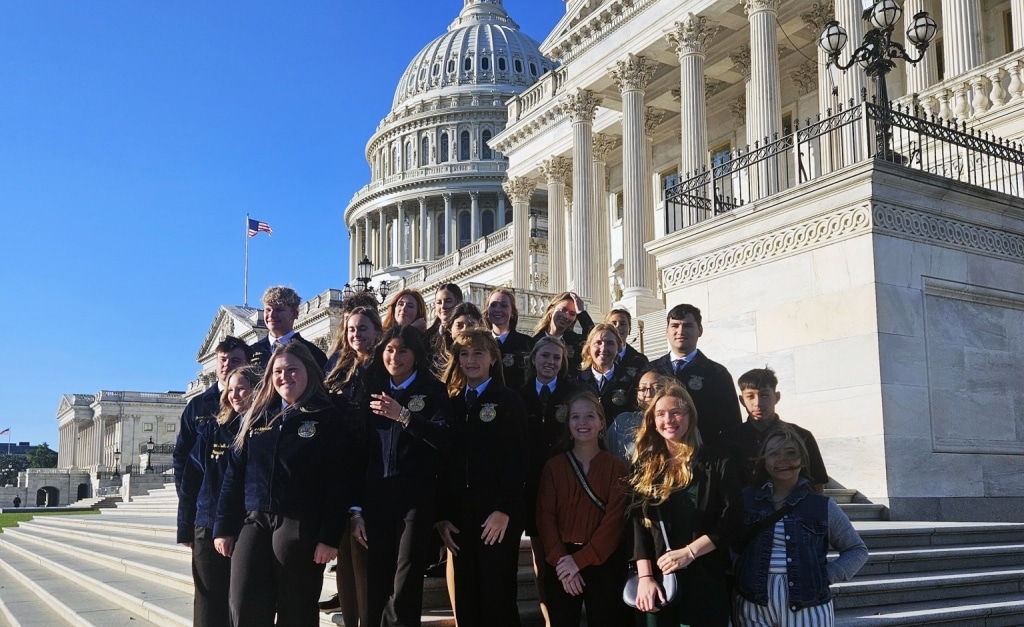
Despite decades of broad bipartisan support, funding for the rural schools in heavily forested areas program expired in 2023 and was not renewed. The program provided nearly $34 million to California counties in 2024, a lifeline for rural schools without a strong tax base. Students from California traveled to Washington, D.C., to help push the lapsed bill over the finish line.
This story was originally published by EdSource. Sign up for their daily newsletter.
When Congress showed no sign of continuing a key source of funding for rural schools for nearly two years, rural educators turned to their best advocates: their students.
The gambit paid off. On Tuesday, the U.S. House reauthorized the Secure Rural Schools and Community Self-Determination Act with a vote of 399 to 5. The U.S. Senate passed the bill unanimously in June. The bill awaits President Donald Trump’s signature.
Since 2000, the Secure Rural Schools program has compensated rural schools for the untaxed federal forests in their community, providing revenue that once came from timber sales. In 2024, it provided nearly $34 million to California counties, including heavily forested swaths of Northern California. But despite the bill’s broad, bipartisan support, Congress let it lapse in 2023.
A version of the bill unanimously passed the Senate in November 2024, but House Speaker Mike Johnson never brought the bill to a vote in the full House.
A bipartisan group of representatives wrote a letter to House leadership in January, saying failing to swiftly reauthorize the legislation could be “devastating” and lead to school closures. The funds are meant to help rural schools that lack the tax base of urban and suburban districts, and schools can use the funds for any educational purpose. Some of the funding also goes to counties, typically paying for the upkeep of roads.
But educators and lobbyists on behalf of rural communities couldn’t move the needle and push Congress to act quickly to restore funding, said Morgan Nugent, superintendent of Fall River Joint Unified School District in Shasta County.
Supporters wanted to try something different. They came up with the idea of sending some fresh faces to chat with House representatives in Washington, D.C. Nugent said: “How about we send our FFA students?”
Students from FFA, formerly Future Farmers of America, a club for students interested in agriculture and leadership, flew out to D.C.
“It was a game-changer,” Nugent said. “The kids saw that their voice matters.”
The challenge provided a unique opportunity for the kind of civic education students can’t get from a book, Nugent said.
Students from Fall River Joint Unified and other rural schools across the nation donned the official uniforms of FFA and knocked on the doors of congressional officials in October. They returned again this week to watch the House version of the bill pass.
“It’s really cool to see our voices make a difference,” said Lauren Giessner, a sophomore at Fall River Junior Senior High School.
Alexa Iniguez, a sophomore at Fall River Junior Senior High, said she learned how to speak with confidence through FFA speaking contests, including in her native Spanish language.
“Without those things, we wouldn’t be in front of them,” said Iniguez. “It gave us so much confidence to speak in our own voice and experience.”
Students told representatives that without federal funding, they worried extracurricular programming and career technical education would be the first thing on the chopping block. Clubs and athletics are a lifeline in their community, where students join every club they can, and there’s no such thing as a one-season athlete, Nugent said.
At the request of the House bill’s sponsor, U.S. Rep. Doug LaMalfa, R-CA, Iniguez and Giessner made a video that was sent to members of Congress.
Video: Alexa Iniguez and Lauren Giessner, sophomores at Fall River Junior Senior High, made a video advocating for rural schools that was sent to members of Congress.
“Without funding for rural schools, students wouldn’t have these opportunities to grow, lead, and explore their passions,” Giessner said in the video.
Administrators in rural schools said the loss of funding has been difficult because the schools already run on tight margins. Nugent said his district receives between $80,000 and $120,000 — money that he says goes far in a district of 1,150 students.
“That’s staff, that’s programs,” he said. “Every little bit makes a difference.”
Trinity County Superintendent of Schools Fabio Robles said schools in his county expected to receive $1.5 million last year. When that funding didn’t come, the county worked to ensure the loss wouldn’t affect direct services to students. But it meant schools weren’t funding services like extra tutoring that students needed.
“We cut down to as bare bones as we could,” Robles said.
The reauthorization of the Secure Rural Schools means that schools will receive retroactive funding for payments missed in 2024, as well as 2025 and 2026.
House representatives who supported the bill said the lapse never should have lasted so long.
“This is a measure that has broad bipartisan support, it’s a very popular program, it’s an important program,” said Rep. Kevin Kiley, R-CA, during discussion of the bill. “There’s no reason that Congress should fail to pass its reauthorization in a timely manner.”
This story was originally published by EdSource and is republished here with permission.
Author

Related Articles

Ironman event draws excited locals as officials share details about August’s race
About 40 people attended a Q&A held yesterday by local Redding organizations. The meet and greet featured officials from the Ironman organization who shared an exciting announcement about the internationally known triathlon event, among other details.
Shasta’s Lao, Thai and Cambodian communities will welcome the new year on April 19
Anyone is welcome to take part in the celebration at Redding’s small Buddhist temple. Festivities will include traditional dance, food and the custom of cheerful water splashing as a form of spiritual cleansing.

Redding organizations to host meet and greet with Ironman officials ahead of this summer’s race
The event will be hosted by the Redding Chamber of Commerce, Visit Redding and Choose Redding Lodging. It will be held tomorrow, April 14, at 4 p.m. at Westside Tap & Cork.