
As Shasta voters approve Measure B, California’s lead attorney says he’s ready to act
Measure B establishes multiple changes to local election procedures that contradict state law. As ballot counting nears its end, proponents are celebrating. The state says it’s ready to push back.
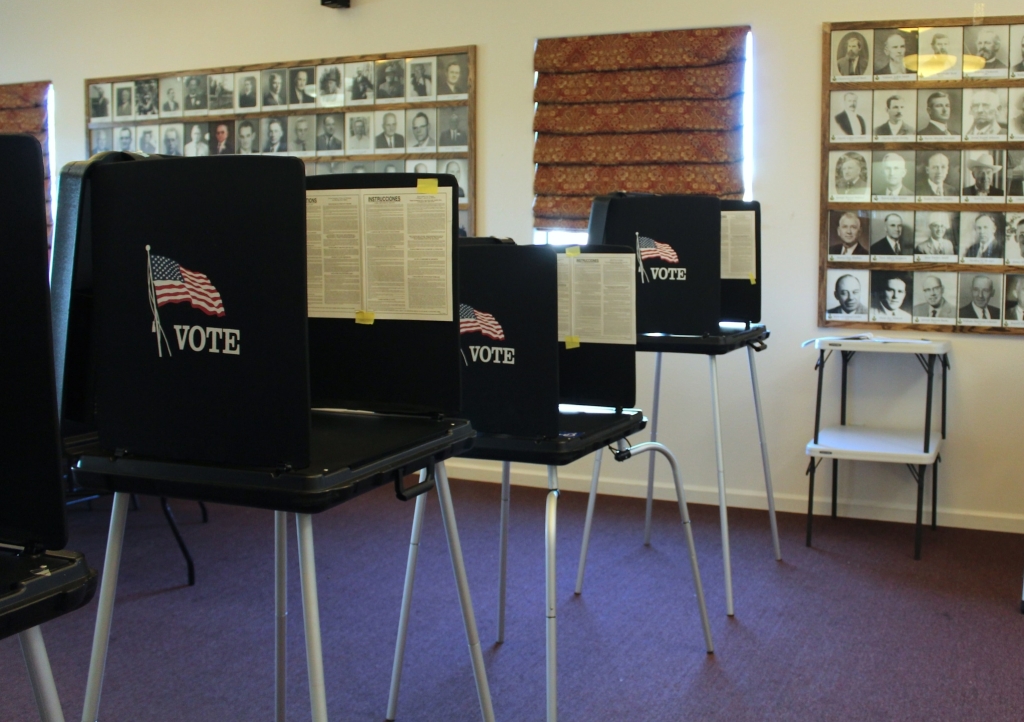
More than half of Shasta’s voters have said yes to Measure B. While election results remain unofficial until the vote is certified, almost all of Shasta’s ballots have now been counted.
Measure B changes Shasta County’s local election procedures in a variety of ways, all of which currently contradict statewide law: establishing voter ID requirements, eliminating most early voting, mandating hand-counting ballots rather than relying on machines, and containing the county’s voter roll on a device that the California state government cannot access.
That’s caught the attention of California’s attorney general, the state’s chief law enforcement officer.
“We are closely monitoring the Measure B results and, if necessary, stand ready to take appropriate action to protect voters’ rights and enforce state election laws,” a spokesperson for the California Attorney General told Shasta Scout yesterday.
If the AG moves forward, it wouldn’t be the first time the state has prevented a local government body from enacting election procedures that violate state law. In 2024, the AG filed a lawsuit against Huntington Beach, when the Southern California city attempted to implement voter ID laws by way of a similar local ballot initiative. In that case, the California Supreme Court declined to hear the city’s appeal in favor of changing its local laws, essentially striking down any voter ID requirement.
Despite looming legal threats, Jim Burnett, one of the five proponents behind Measure B, said he feels “vindicated” by the voters’ support. Speaking to a reporter at the Shasta elections office on Monday, he expressed determination.
“We’re not going to just roll over and let all of our elections be administered by, say, Sacramento. We want local control as much as possible,” Burnett said.
Another central proponent of Measure B is Laura Hobbs, who was hired by Registrar of Voters Clint Curtis to administer elections around the same time the initiative was approved to be placed on the ballot. She’s faced criticism for her hands-on approach to matters related to Measure B while in her official staff role, matters she’s taken on despite her significant financial contributions to the initiative.
While legal action from the state has yet to materialize, Measure B has already faced multiple other legal challenges. Last year, when proponents first submitted paperwork to circulate the petition in hopes of gaining signatures in support of Measure B, Shasta County’s attorney pushed back. County Counsel Joseph Larmour filed a legal action asking the courts to issue a ruling on whether the county should expend taxpayer money advancing a ballot measure that, he said, violated the California and US Constitutions. A Shasta judge determined that the county’s case against the measure did not meet the criteria for the courts to prevent it from moving forward at that time.
In March, after Measure B had been approved to appear on ballots, local voter Jennifer Katske challenged the measure again, this time in hopes of preventing it from reaching voters. She was unsuccessful. In his ruling at the time, Judge Benjamin Hanna did not weigh in on the merits of Measure B itself, but determined that the appropriate time to consider its legal ramifications would be after the election, not before. A third lawsuit, also filed by Katske, focused on concerns about conflicts of interest, but was later withdrawn.
Moving forward, Burnett said, proponents expect more such challenges.
“I do expect that this is going to be litigated,” Burnett acknowledged, adding that he’s hopeful that Shasta would win a legal challenge from the state, either outright, or in the appeals process. When asked about the possibility that the California Supreme Court might refuse to hear an appeal in the case at all — as was the case with Huntington Beach — Burnett remained calmly pragmatic.
“There’s many ways to fail, and only one way to succeed,” he said, “and that’s true in many aspects of life.”
Regardless of the potential for legal challenges, once election results are certified, Registrar of Voters Clint Curtis will need to begin preparing to administer Measure B’s complex processes in the fall election. In a declaration Curtis submitted to the Shasta Superior Court as part of a legal skirmish over the measure this spring, Curtis said he believes he can successfully do so, even within the confines of state and federal law.
The declaration outlines his proposed methods, which involve conducting both a hand count of votes at every precinct and a machine count in-office. He also plans to maintain two separate voter rolls in an attempt to comply with both Measure B and the state.
Do you have a correction to share? Email us: editor@shastascout.org
Comments (21)
Comments are closed.
Related Articles
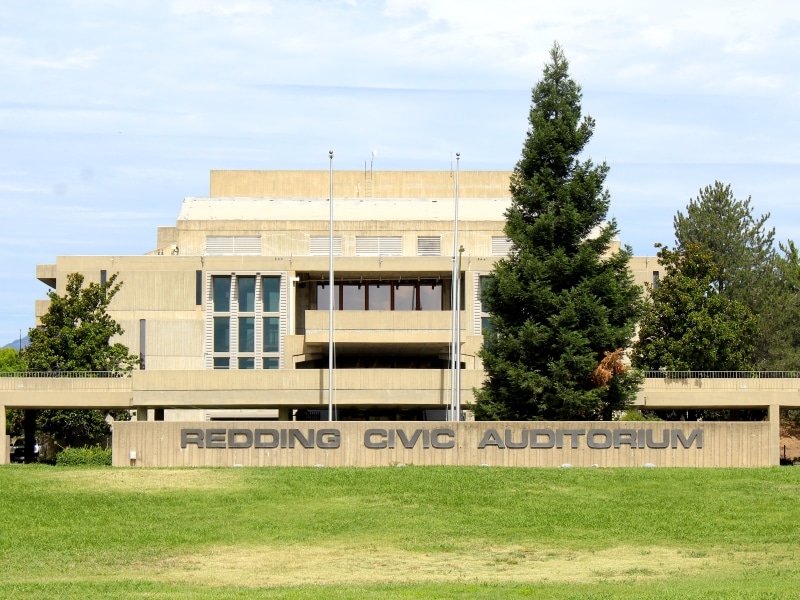
Five entities seek to run Civic Auditorium
The city issued a request for proposal this summer to allow for interested entities to apply to operate the entertainment venue. The auditorium’s fate has been uncertain as the city navigates funding and management challenges.
Open Notebook: The intersection of mental health and criminal justice
Our Open Notebook series offers readers a behind-the-scenes look at how our journalists work. In this notebook entry, reporter Madison Holcomb shares insights into the considerations she makes as she reports on criminal justice stories, especially where mental health plays a major role.
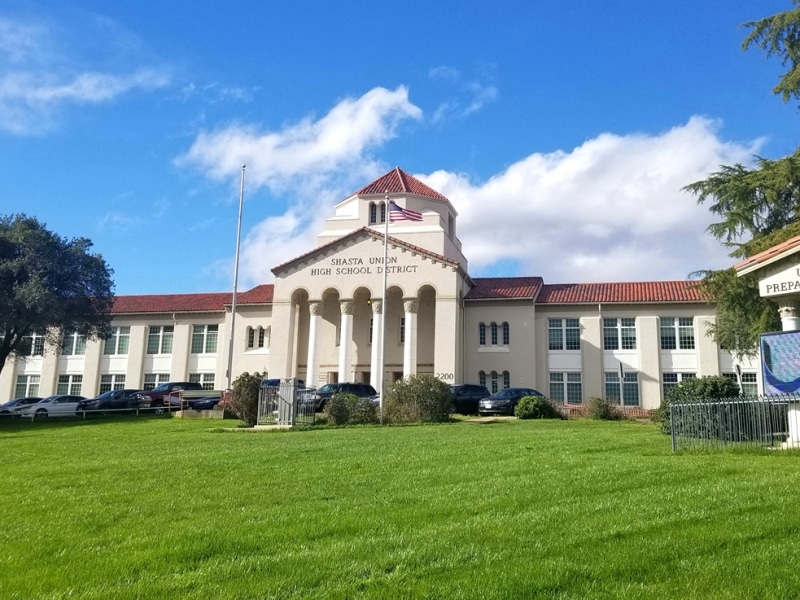
California Supreme Court to hold oral argument session in Shasta for first time in over 20 years
The oral argument outreach session is intended to be an opportunity for students and the general public to learn more about the judicial system. It’ll be held at the David Marr Theater in Redding on Oct. 7.
There is NOTHING pragmatic about Measure B. Conservatives in the North State keep participating in fiscally unconservative aura farming. When is this nonsense going to stop?
Does SS have an edit function?
The reason the state oversees elections and defines how elections are ran is to prevent groups of people with special interests from implementing corrupt scams like Measure B from hijacking elections.
What was corrupt about measure B?
Nevin, nice write-up! Now the sparks fly. Not a lawyer here, but it looks like the election can be certified, though that does not mean Measure B is legal. It just means the Secretary of State says the vote was conducted under CA state law. The real question is the “Incident” involving Curtis and staff. Could the “Incident” throw a wrench into the Secretary of State’s ability to certify?
.
Here’s where this gets interesting and could be very costly for taxpayers. Measure B was initially rejected by the Board of Supervisors. But the court told “Jane Doe” and County Counsel Larmour, without ruling on the measure’s legality, that Measure B must be on the ballot, and it passed.
.
Curtis, Hobbs, Jones, Galardo, Bernette, the Shasta Five, etc., might demand that Shasta County defend Measure B, which would, of course, cost taxpayers millions. And that’s what Jones has been working on for years. And yes, the board could do just that! But as in the past, the county might not choose to defend.
.
As in the past, Curtis and his proponents might ask the supervisors for money to defend the measure as “Interveners.” Remember, Supervisor Crye, Mr. Pillow’s buddy, was open to that idea but balked at giving Curtis $20 grand to pay Mr. Pillow’s and Tinia Peters’ colleague, Trumpian lawyer Peter Ticktin, to do so. (See: https://shastascout.org/appeals-court-pauses-shasta-judges-ruling-in-election-ballot-measure-case/) So Curtis and Hobbs got Haberbush instead. But it would be up to the court to rule on whether the Hobbs – Curtis crew can be “Interveners.”
.
The Hobbs–Curtis crew might be a bit burned out after Clint and the rest of their candidates lost BIGLY in this election, and they might just let it be. But they might be seeking help from other extreme far-right, Trumpian “Big Lie” orgs to fight in court, and I would not be surprised if Curtis is already on the phone to Trump’s DOJ, asking for help
.
If the BIG LIE proponents try to move forward, the Shasta County court might not rule on legality but instead suspend the measure for now and simply let the “Interveners” appeal upstream, as that’s where the case is headed, more than likely. Or the court might say it’s a waste of time and money, rule against Measure B, and the Curtis-Hobbs crew could then appeal the whole mess all the way to the US Supreme Court, as Jones has been fantasizing about for years. And a higher court action could take years.
.
But remember this, Shasta County taxpayers, we will be spending BIG BUCKS even if the board refuses to defend and the “Interveners” do. There will be administrative costs for the county, and as Clint has threatened, “It’s not if I will sue Shasta County, it’s how many times!” Hurting and dividing Shasta County might not be a problem for people like the Hobbs–Curtis crew, and hurting citizens doesn’t seem to be a problem for Trump or the Republican Party.
:::yawns:::
.
Measure B will be promptly struck down by a lower court, and the California Supreme Court will refuse to hear the appeal because there will be no legal merit to the case. Measure B is a revenue-wasting MAGA tantrum, nothing more.
.
I do agree with Judge Hanna that it isn’t the role of the courts to determine the legality of legislation prior to it becoming law. It’s not the role of judges to edit or shit-can proposed legislation. That would entail the court taking on a legislative role.
.
In the end, Measure B will just be another humiliating badge for Shasta County to wear. It’s self-defeating and embarrassing that we’ll be viewed once again as too pig-ignorant to understand that Shasta County is an entity of the State of California bound by its constitution and laws, not an independent principality. Same stupidity, different day.
.
Man, January can’t come fast enough.
We can’t wait for January. We need to put Clint Curtis through the wringer (you know, like the BOS Terrible Trio and their minions did to Cathy Darling Allen for months) and see how long until he breaks and leaves the state with his tail between his legs. This should be our community goal for the next couples months. The BOS needs to kick into action and quit treating Curtis like a competent, ethical person as he has proven that notion wrong by lying and colluding with the Measure B folks.
Do the people who voted for this and then mailed in their ballot honestly not realize that they voted against allowing mail in ballots? Can people really be this stupid?
Yes.
Yes they can, just look at how they navigate the South Bonnyview traffic circle!
This article didn’t mention the part of Measure B that limits vote by mail.
One day in person voting will discourage participation from people with jobs that do not allow them to leave and old people who have difficulty standing in a long line.
I belong to the latter and have found using a drop box for my mailed ballot very convenient. I have not missed an election since moving to California a decade ago.
I have seen NO FRAUD. No one has presented evidence of fraud. I sincerely hope that measure B is found illegal and negated by the courts.
The election deniers need to read the Constitution. States, not cities or counties, are responsible for elections. If anyone is considering a class-action lawsuit, I’m all in.
Looking forward to hearing how much all this litigation costs County taxpayers. Spoiler alert: a lot.
Let’s see if we can unpack this. Curtis says the ballots will be hand counted at the precincts and then machine counted at the election office. What happens if the two disagree? Also, will Curtis be installing his two video-graphing system to monitor the hand counts at every precinct? Will popcorn and sodas be for sale?
Our Master’s have decided there will be no election integrity and we all know why. Even the most basic measures to ensure election integrity are fought vigorously. Just like gay marriage, expect our masters to reject the will of the majority of the voters.
Nick Gardner
Oh man, looks like your rent’s due. Bummer. Oh, and in the real world, outside of your small, mean, insular world, the majority of voters are not against gay marriage.
Jesus says “You will know a tree by its fruits” so since I believe you are NOT A CHRISTIAN Nick Gardner… Who is your master?
So you’re good with ignoring Article 1, Section 4 of the Constitution? Since when did our elections lack integrity? 2020? A vote in one county cannot change the Constitution, right Nickie?
Headlines: guy keeps yelling at clouds but no one pays attention.
Burnett is living in a fantasy world and so is Clintie the Clown. Measure B(ozo) will meet the same fate as the HB measure, and will never be implemented. The Ca Supreme Court has definitively ruled on this issue. Our local election fabulist fruitcakes can spend their own money trying to defend it. Times up fruitcakes.
Selah