
Black and Indigenous people in Shasta disproportionately face adverse interactions with police, local study says
A report by the Shasta Equal Justice Coalition used law enforcement data to examine racial and other demographic disparities in the county’s legal system.
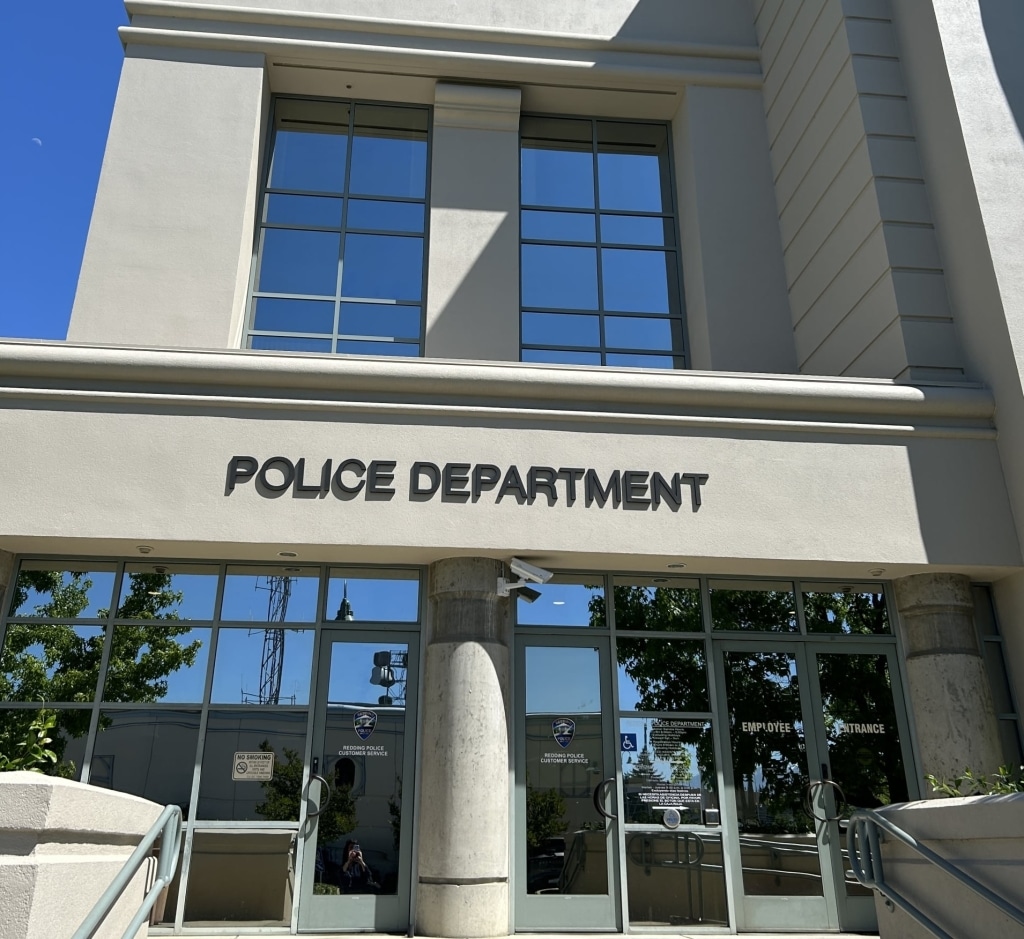
Black and Indigenous people in Shasta County disproportionately face adverse encounters with police, particularly in arrests and traffic stops, according to a study on racial disparities in the county’s criminal justice system.
The Shasta Equal Justice Coalition released a report last week that examines racial and other demographic disparities in the county’s legal system. The 2024 State of Equity Report: Shasta County analyzes the results of public records requests as well as publicly available data to identify areas of disparity and potential reform relating to Shasta’s criminal justice system.
“This report is a critical step in understanding and addressing disparities within our justice system,” said SEJC Steering Committee interim co-chairs Ted Couch and Larry Olmstead in a press release about the study. “The idea isn’t to point fingers at anyone, but instead to bring light to key issues that need to be explored further.”
The report includes data on disparities involving race, gender, LGBTQ status and age. It also provides recommendations for further discussion with local law enforcement agencies and organizations on addressing the disparities, as well as detailed descriptions into how the data was collected and evaluated.
The data was gathered from the Redding and Anderson Police Departments, California Highway Patrol and California Department of Justice, among other sources, and covers the time range of January 2022 through December 2023.
It’s important to note that racial and gender identity were collected based on visual identification by the officer — thus why identifiers are preceded by “perceived” in some instances.
Disparities involving race
There are several areas the study looks into when it comes to disparities in race-involved incidents in the Shasta legal system.
The first looks at traffic and pedestrian stops and arrests, where it was found that Black residents experienced the highest rate of stops per 1,000 individuals than any other race — despite the fact that Black people had the lowest rate of evidence or contraband being discovered during subsequent searches that were conducted during these stops.
Natives saw the highest rate of police actions during stops — meaning not only was the individual stopped, but one or more reportable actions were taken toward them by officers at the stop — accounting for 65.7% of all stops.
Black and Indigenous individuals were also found to be overrepresented in arrests, especially for Failure To Appear and Drug Possession charges. In Redding in 2022 and 2023, Black people made up 5.9% of arrests, even though they only made up about 1.5% of Redding’s population. Natives made up 4.4% of arrests in 2022 and 3.2% in 2023 while only comprising 1.8% of Redding’s population. In Anderson, Black residents were arrested at a rate of 243.7 per 1,000 individuals, compared to 147.1 for White people despite White being the predominant race in Anderson.
SEJC co-chair Ted Couch told Shasta Scout in an interview that there are two ways people could reason with why certain races are arrested or stopped more than others. In the first, he said some might believe those races are inherently more prone to committing crime than others, but he doesn’t feel that’s an accurate assumption. He said he believes in the idea of institutional or societal racism, where an outside impact is leading to these disparate outcomes rather than people having inherently criminal traits.
“If our society has some inherent biases or racism that is leading to people not having that same opportunity, I think we want to understand that,” Couch said. “We want to address it because we want to be in a place where everybody has that equality of opportunity in this country.”
When it comes to hate crimes and bias-based incidents reported by the Redding Police Department, anti-Black bias was the leading motive reported in hate crimes, making up almost half of the cases, followed by anti-LGBTQ and anti-Hispanic biases. The report shows that 80% of hate crime offenders were White.
The report also looked into disparities in probation and incarceration, where it was found from information provided by the Vera Institute that Shasta County’s jail population has increased by 22% over the last decade, contrasting with statewide declines over the same time period. Also, the study noted that the California Racial and Identity Profiling Advisory Board reported that Shasta experienced police stops at a rate 74.7% higher than the state overall.
Disparities involving gender, gender identity and LGBTQ status
The study examined stops made by the California Highway Patrol in Shasta and found that there were more field sobriety tests and incidents of handcuffing for those who were perceived as female than those perceived as male.
In both Redding and Anderson, perpetrators of crime arrested were most likely to be male — however, about half of the victims of crimes documented by the Redding and Anderson Police Departments were identified as women.
RPD’s data reported that women were also shown to be arrested more often for parole/probation violations than other arrest levels.
When it comes to service and traffic/pedestrian stop calls, incidents where suspects were detained curbside or in a patrol car or where their property was seized most frequently occurred during stops of perceived transgender individuals.
It was also found that anti-LGBTQ bias was the second largest category of hate crimes documented by RPD between 2022 and March 1, 2024.
Disparities involving age
The report noted unexpected rates of interactions between local law enforcement and children: Individuals perceived as minors were reported to be handcuffed during a higher proportion of their stops than perceived adults.
Children perceived as being between the ages of 10-14 years old had the most action taken toward them by officers during stops at a rate of 63.3%, while those perceived as being 65 and older saw the lowest rates of police action at 28.6%.
Recommendations for local agencies
The report included recommendations, both to law enforcement agencies and local organizations, following the findings of the study.
For law enforcement agencies, it’s recommended that they follow up on their current databases and ensure they’re up-to-date, work on an agency-wide understanding of demographic data and promote enhanced data reporting.
There were more extensive recommendations provided for local organizations in the report, including recommendations to engage with local law enforcement agencies to address inequities in the report’s findings, educate the public on topics the study discusses, collect data from local sheriff’s offices about arrests and jail population and monitor law enforcement agencies’ social media to stay informed about publicized changes and priorities.
The report also highlighted the limitations of the study itself. For one, publicly available data not published by the California Department of Justice is difficult to find and doesn’t always provide race statistics. Also, racial and gender identity were determined by visual identification of the officer, which could leave room for error. Additionally, some data collection systems that law enforcement agencies use are outdated, limiting access to demographic data.
Despite the limitations, SEJC co-chair Ted Couch said the public should have confidence in the report because of the long, detailed and in-depth process it took to complete it. He explained that “every effort was given to be as analytical and unbiased as possible” in the results, and that the report authors “looked at everything they could possibly find” to contribute to the accuracy of the study.
He added that he hopes this report will spark conversations among the community on how the disparities can be mitigated.
“Do we want to be in a place that is just inherently unequal and does not allow the same opportunities for other community members?” he said. “Or do we want to do something about it?”
Do you have information or a correction to share? Email us: editor@shastascout.org.
Comments (6)
Comments are closed.
Related Articles
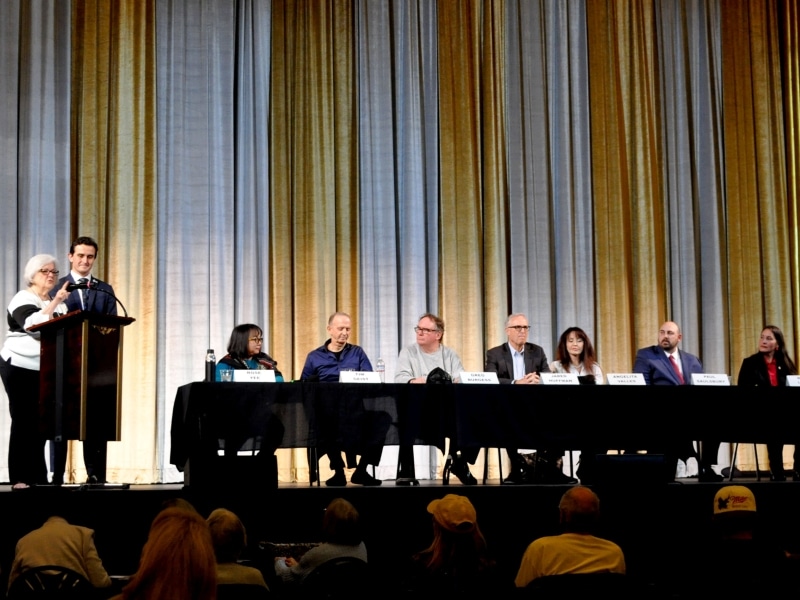
Congressional District 2 hopefuls court Shasta voters ahead of June primary
Candidates for California’s District 2 congressional seat — which will represent Shasta under newly-drawn Prop. 50 lines — appeared in Redding for a forum last night. The audience questioned candidates about immigration, voting rights, the environment and how much time they’d spend in Shasta.
Documents show the Shasta Sheriff’s Office attempted to enter an agreement with ICE last year. Doing so would have violated state law
The sheriff’s office took actions to enter what’s known as a 287(g) agreement with ICE last May, but the process appears to have been halted. ICE’s 287(g) program, which gives local and state officers immigration enforcement authority, has been making national headlines.

After the resignations of three board members, Cascade Union Elementary School District gains a new one: Jackie LaBarbera
Following a dispute with the superintendent, the majority of CUESD board members resigned over the last week. Shasta County Office of Education Board President Michael Orlicky has appointed SCOE Board Vice President Jackie LaBarbera to fill one of the empty seats, ensuring a quorum.
To not speak out in the face of evil is cowardice, XX.
Excerpts from “Strange Fruit Found Hanging From A Shasta County Tree”
“The mutilated body of 31 year-old Leo Coleman, Jr. of Redding, California was found hanging from a tree in the nearby town of Anderson by two teenage boys from the area who reported it to the police on November 24, 1997. The boys apparently told police they had seen the body November 3, 1997 but said nothing then, thinking it was a Halloween dummy.
“If I had known there had never been an autopsy, we would never have had the cremation as quickly. We were promised by the coroner it would be done,” the senior Coleman said.
The coroner, Ray D. Bailey, later told Coleman he’d never done an autopsy on a negro.
On November 25, 1997, · Leo Coleman, Sr.’ visited· the wooded area where his son’s body was located. He reported finding swastikas and other racist Aryan symbols and graffiti carved nearby the tree from which Coleman, Jr. was found hanging. Yet, on December 18, 1997, Leo, Sr. and Ernestine Coleman went with Patricia Sansom, NAACP member and community activist, and attorney Paul· Arons, to the wooded hanging site, only to find all the traces of the swastikas and white power propaganda were gone, having been obscured.
Police reports document that Officer Ochoa received three separate ‘ reports from three different people on November 24, that Leo Coleman, Jr. was the victim of hanging by adherents of so-called “white pride” elements in the local community. On the day after Leo, Jr.’s death was reported, someone made a drawing of a hanging man and put it on Bobbi Culver, Leo, Jr.”s girlfriend’s, front door. ·
The case of Leo Coleman, Jr., was closed after a two-day, investigation’ as police found “no evidence of foul play” although, according to police. reports, three witnesses told police officers that they had seen the victim alive four to seven days after November 3, and one witness claimed· to see Leo, Jr. alive November 19, 1997, and three other witnesses reportedly provided information the victim had been beaten and lynched.”
What’s That Strange Fruit Hanging From an Anderson Oak Tree?
https://reddinghomeless.blogspot.com/2020/06/whats-that-strange-fruit-hanging-from.html
Anderson California – After Cross Burning, A Town Marches Together
https://www.youtube.com/watch?v=fRlE_oNeH-k
Shasta County Sheriff Mike Johnson sure dropped the ball investigating (or lack thereof) of the hanging death of black man Leo Coleman Jr. found hanging in Anderson Ca. Reopening the case, he was quoted in a news publication that he would get a hold of Leo Coleman Senior and update him but never did. Apparently, the coroner at the time was somehow tied to Sheriff Johnson, so how through was the investigation? The only news publication covering the ruled “suicide” at the time quoted the coroner as saying “he never did an autopsy on a black man before”, as if he was some sort of 3 lung Klingon. They refused to have an open casket as mother requested, and immediately cremated the body without an autopsy. Although death was ruled a suicide, I myself found 2 of the young children who found his body so many years ago. They stated racial messages were carved into his body, and his pants were pulled down. Leo Coleman Senior told me same things were found carved into trees next to body.
So much for a ruled “suicide”
https://www.redding.com/story/news/2020/06/16/23-years-later-black-family-still-struggles-death-son-hanging/3187929001/
Absolutely can confirm a long history of racial bias in Shasta county that I have personally experienced. Unfortunately I have seen the inside of the Shasta County Jail and my experience getting there as well as my experience with many conditions inside were directly made due to race and those choices were often vocalized by Law Enforcement more than the inmates themselves. This is a deeply entrenched issue in our community that has created this culture and I thank Shasta Scout for scratching the surface of this topic.