
‘It was the only option’: Boat crews play a unique and essential role in fighting the Green Fire
Remote terrain has required the use of boat strike teams to carry firefighters across Shasta Lake to where they’ll reach their stations. It’s a challenging assignment but also, some say, a once-in-a-lifetime opportunity.
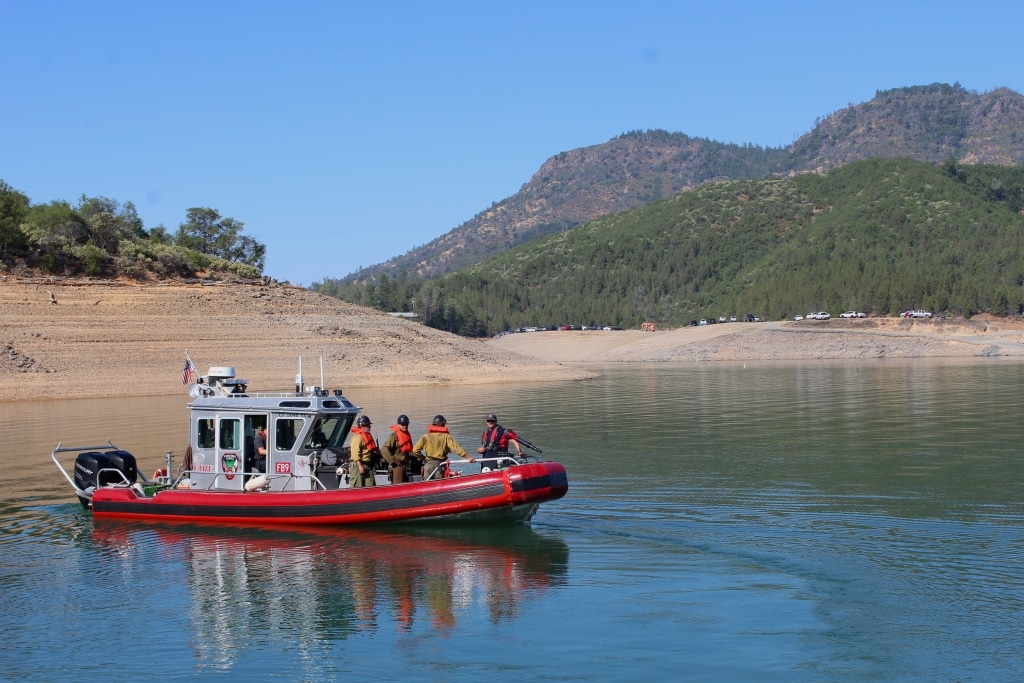
On a hot and sunny morning in July, dozens of firefighters and other fire service workers report to a boat ramp on the Pit River Arm of Shasta Lake, all working on various tasks to get ready for the day.
Some help load fire equipment onto boats that line the ramp. A couple of supervisors debrief on plans to prepare for evening storms. A medic checks his equipment. A small group makes casual conversation while waiting for orders to be directed.
Their shirts and hats illustrate how far each traveled to get there, with county names like San Diego, Contra Costa, San Bernardino and Sonoma. Though they come from various parts of the state, they’re all preparing for one thing: a day of fighting the Green Fire.
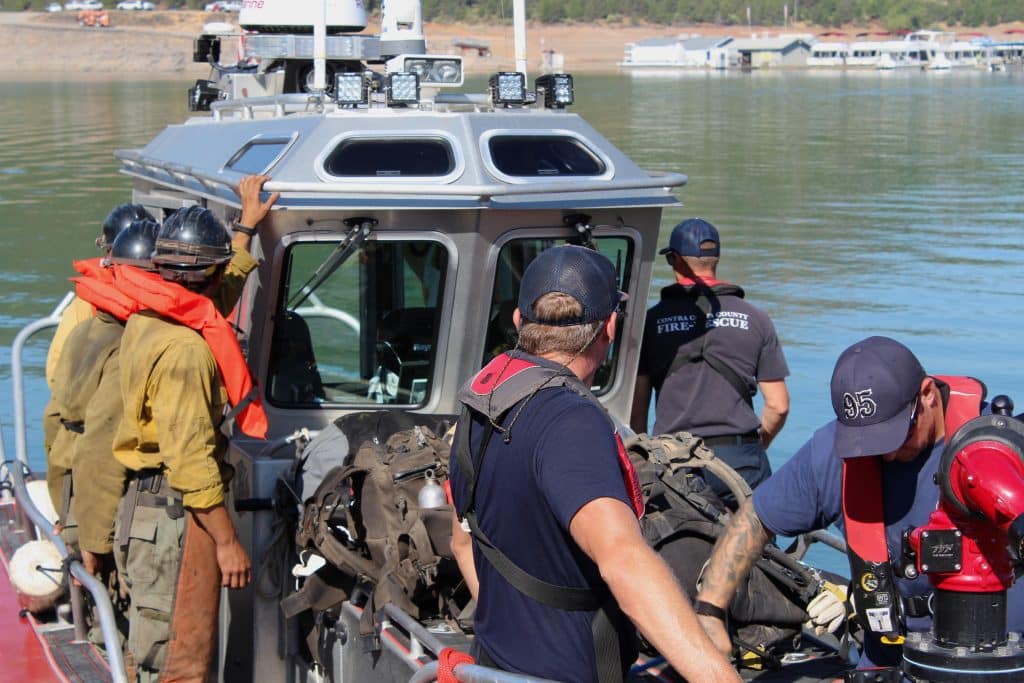
The Green Fire started from lightning on July 1. It’s grown to almost 20,000 acres, making it one of the largest fires in California this summer. After weeks of often intense battle, firefighters have nearly contained the blaze. And boat crews played an essential role.
Because of the fire’s unique location along the shores of Shasta Lake and within remote areas of the Shasta-Trinity National Forest, reaching the fire has required a boat ride sometimes followed by miles of hiking just for firefighters to get to where they’re being stationed to fight the fire.
“This is a remarkably difficult place to get to in terms of being remote and with truly unforgiving terrain, as far as getting across and getting into the fire,” said Clark McCreedy, public information officer for California Interagency Incident Management Team 10, the main team assigned to the Green Fire.
Though boats have been used to help fight fires in this region before, many of the firefighters and fire personnel working on the boat ramp told Shasta Scout that they’ve never seen boats utilized to this extent. Brenton Baum, a boat supervisor trainee and San Bernardino County Fire Department fire captain, said boats have been needed because of the difficulty accessing fire lines by truck and the complexity of using aircraft amid low visibility conditions.
“We’re accustomed to inaccessible fires, but usually the route of travel and logistics that we choose isn’t boats,” he said. “But it was the only option.”
Despite challenges, boat crews remain positive
Crew members’ responsibilities include transporting firefighters and their equipment across the lake to reach the fire, taking personnel back once their shift is over and fighting fire along the shoreline.
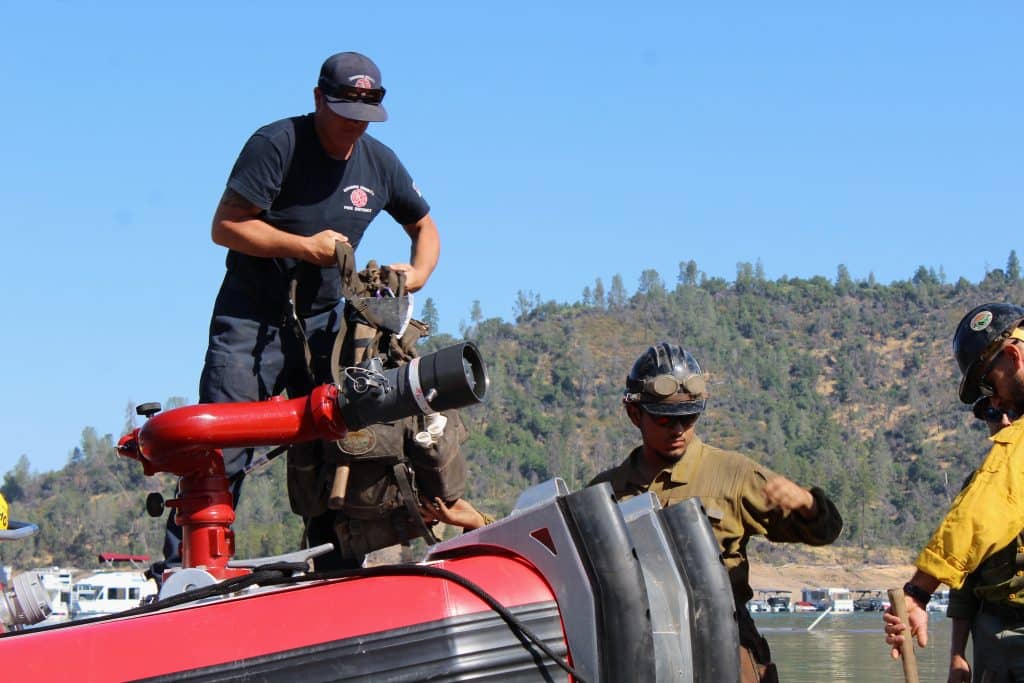
The work hasn’t come without challenges. One firefighter who’s been a part of the boat crews said traveling by boat at night has been difficult, especially when the smoke lays low across the lake. Another said the crews often have to look out for trees and islands that pop up due to changing lake levels.
Boat crews also remain available 24 hours a day in case someone needs extrication or another problem occurs. Robert Phelps, an engineer paramedic with the Coronado Fire Department in San Diego County who works on the boat crews, said the remoteness of the area is a major concern when it comes to being able to properly treat someone who gets injured.
“You’re normally used to the care of an ambulance with a large cache of gear, where here, you’re working [with] very bare bones tactical medicine, so you’re having to kind of weigh out your treatments and your response time,” he said.
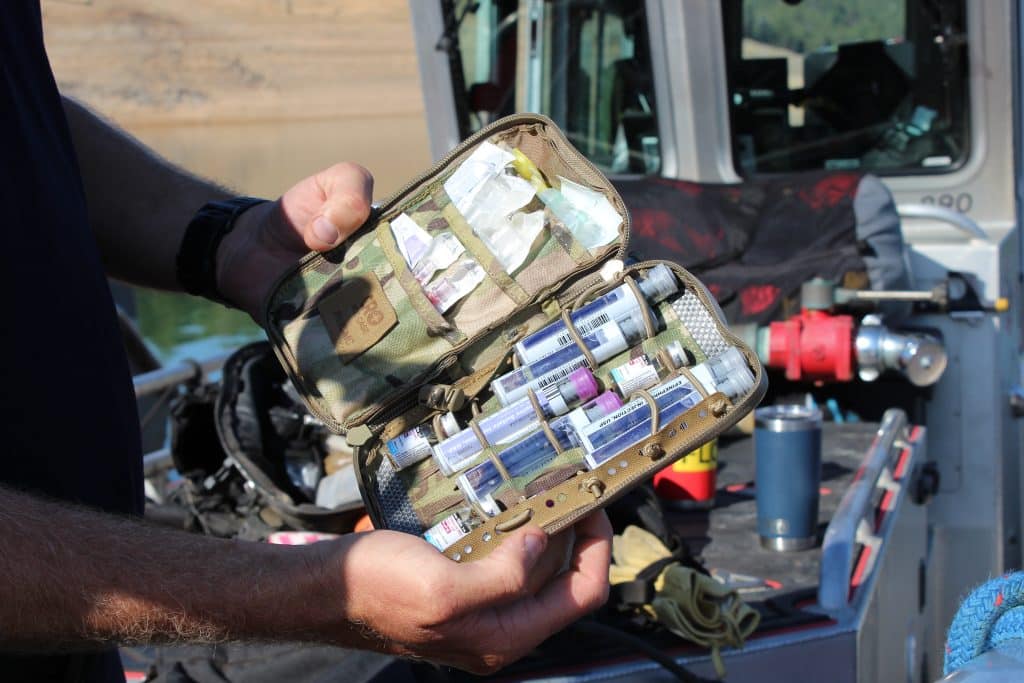
Phelps said he hasn’t had to provide any paramedic care yet. Only two injuries have resulted from fighting the Green Fire, and they were both minor.
Justin Enderlin, a captain with the Contra Costa County Fire Protection District who’s also on the Green Fire boat crews, said the 24-hour shifts have been mentally challenging. He said the nights were especially hard when he first started working the fire about two weeks ago because there was very little time to rest.
Now, with the fire more contained, he said he has a few hours of downtime at night. But finding a place to get comfortable enough to fall asleep on board has also presented a challenge. He demonstrated for a reporter where he sleeps, laying on his back tucked into a narrow space between the boat’s wall and its raised center section.
But the biggest mental challenge has been working hours away from his family, he said.
“At home, I work two days, and then I go home for four and get time with family,” Enderlin said. “Out here, I’ve been gone for 10 days. My wife has to handle everything at home by herself … If something goes wrong, I’m four hours away, and I can’t just go home.”
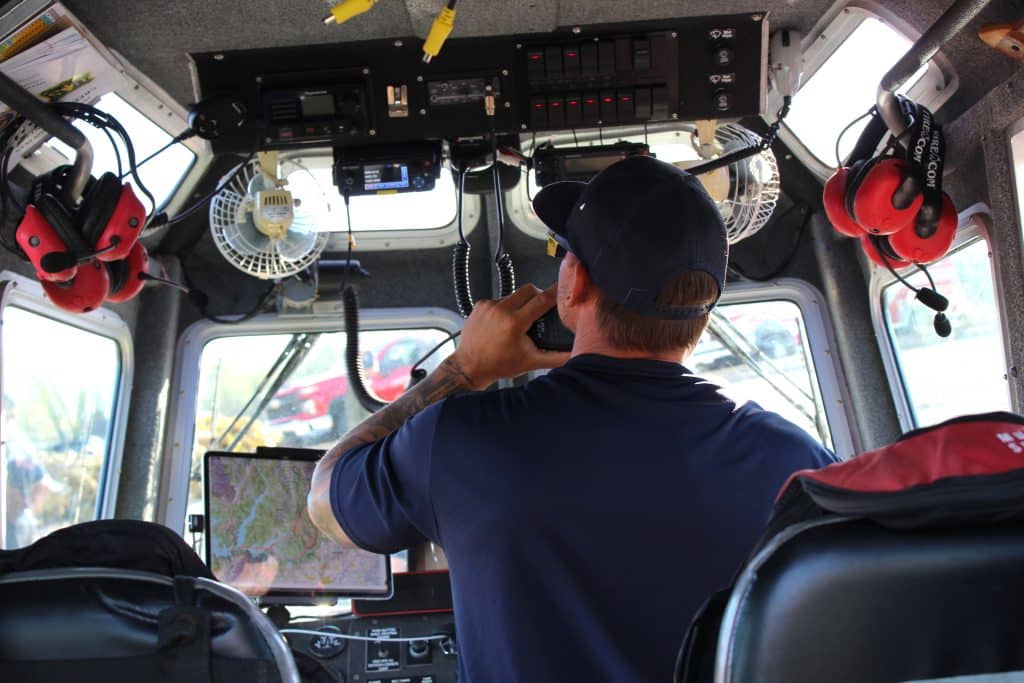
More than a thousand firefighters and fire service personnel have been deployed to fight the Green Fire, including those on board boat crews. Despite the challenges that have come with the unique approaches needed to fight this fire, several members of the boat crews told Shasta Scout they see this as a once-in-a-lifetime opportunity for themselves and other responding firefighters from across the state.
“This has been an awesome assignment,” Enderlin said. “It’s a legacy at our department that I can go back and forever say I was part of the first boat strike team, just like all these others can go back to their agencies and say the same thing.”
Officials have said they don’t expect the fire to grow any further, though fire crews might be active for several more weeks in the area to help with cleanup and suppression repair. Evacuation warnings are still in place for areas mostly north and west of the fire.
Madison Holcomb is a recent graduate of the University of Illinois Urbana-Champaign. She’s reporting for Shasta Scout as a 2025 summer intern with support from the Nonprofit Newsroom Internship Program created by The Scripps Howard Fund and the Institute for Nonprofit News.
Do you have a correction to share? Email us: editor@shastascout.org.
Comments (3)
Comments are closed.
Related Articles
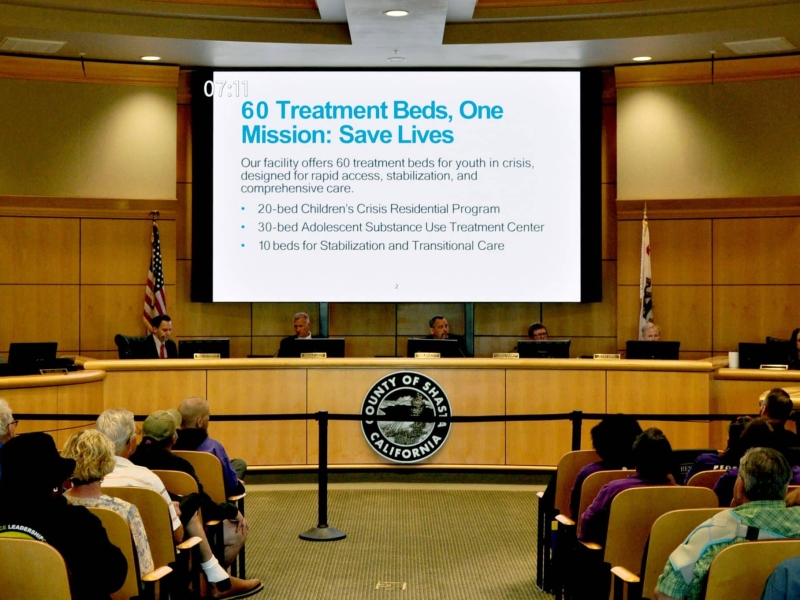
Future of Anderson-based youth behavioral health facility uncertain, despite conditional awards of millions in state and county funds
The news of one stakeholder’s withdrawal from the Pathways to Leadership project was announced after Anderson Council member Mike Gallagher and other community members expressed concerns about alleged misrepresentations on grant application materials. A second stakeholder has not announced whether the project will move forward.
Bethel Church chooses third-party group to investigate abuse allegations made against leader Ben Armstrong
The church announced last week that it chose Sintra Group Professional Investigations to conduct an investigation into clergy abuse allegations made earlier this year about Armstrong. The firm doesn’t list experience with this type of investigation on its site.
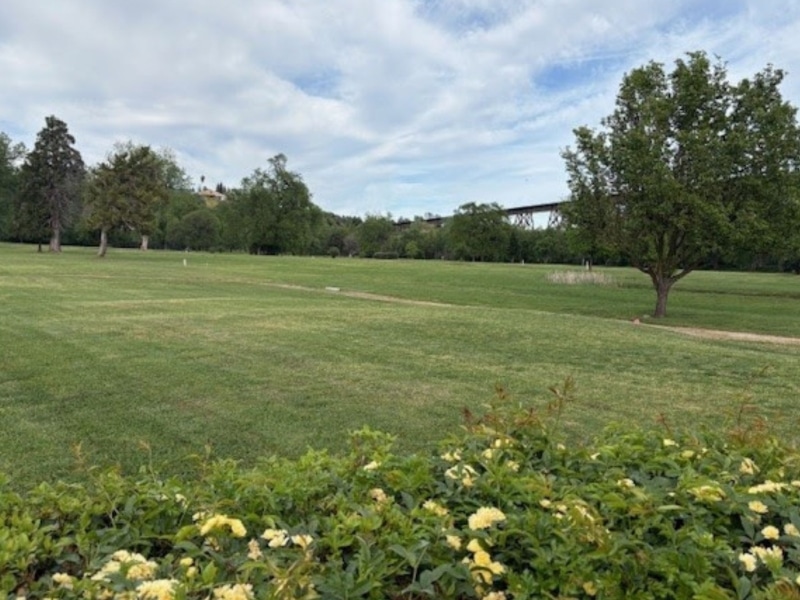
Lake Redding Golf announces reopening and new driving range
The golf course has been closed the past several months while its owner, The McConnell Foundation, figured out improvements and changes to the site.
There was plenty of access, the last two years they have conducted two significant Rx fires in that exact area (that went poorly air quality wise) this “remote and rugged” talk is spin.
Reporting on wildfires and the effects on outlying people, due to the smoke and ash produced. The wildfire burns within a specific area, but the smoke and ash rise up and are driven by the wind into many local and far away residents homes, north, south, east or west. Medically challenged persons, like Asthmatics, breathe this toxic mix of “air”, and it causes them to “Choke”, causing their throats to constrict and restrict their ability to breathe correctly.
Some fires are allowed to burn ”Free”, due to lack of access, like the lightning caused Green Fire but with high heat, lower humidity and wind, the gift of Lake Shasta being right there and very accessible to boat and aircraft use, the fire can be fought better from a distance to be contained over time.
Great article, these guys are heroes no matter which way you slice it. Great reporting for an inside look at tactical fire response Shasta style.