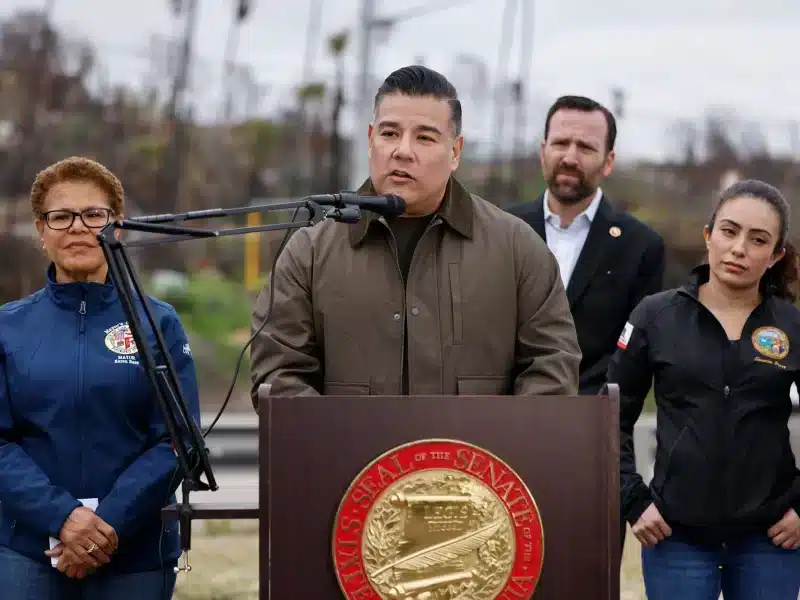
California sues to block Trump’s mail-in voting rules just days after loss at Supreme Court
California announced a new lawsuit over President Trump’s executive order on mail-in voting, arguing in part that the Constitution gives states’ power over elections.
This story was originally published by CalMatters. You can sign up for their newsletter here.
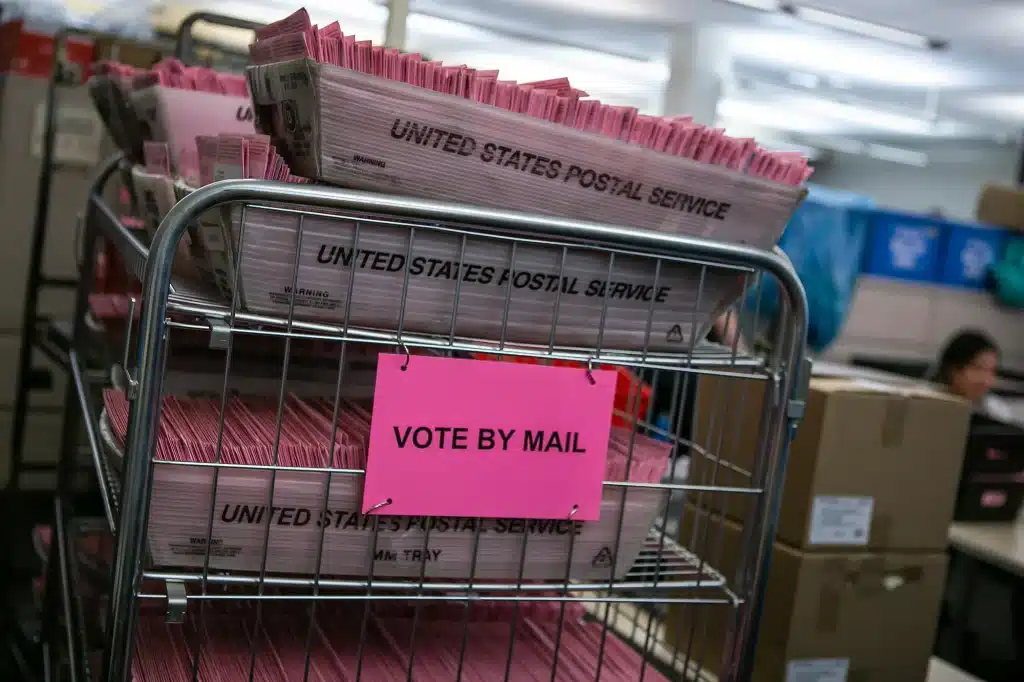
Just days after the U.S. Supreme Court gave President Donald Trump a procedural win in his effort to limit mail-in voting, California Attorney General Rob Bonta announced a new lawsuit intended to protect the state’s power over how elections are administered.
The lawsuit, filed in federal court in Massachusetts on Wednesday, makes good on Gov. Gavin Newsom’s pledge to sue again over Trump’s mail-in voting executive order immediately after the Supreme Court decision.
California is able to sue despite the high court’s ruling because of developments that occurred after justices took up the previous case.
The court majority this week essentially ruled that California sued too early over the executive order and it noted that the administration had not yet handed down formal rules that would affect voting.
That changed late last week when the U.S. Postal Service issued final rules requiring states to turn over a list of eligible mail voters, redesign ballot envelopes with the Postal Service’s approval and include new tracking barcodes.
Under Trump’s order, the Postal Service would not deliver ballots to voters who are not in a federal database the administration wants to build, and would not deliver ballots in states that do not comply with its rules.
Bonta called the Postal Service rules a “clear violation of the Constitution,” which designates states as the primary authority over elections.
The Democratic-led states joining with California in the lawsuit argue that because neither the president nor the Postal Service have the constitutional authority to run elections, the latest changes are unlawful and will undermine mail-in voting — including the more than 89% of voters in California who used mail-in ballots in the latest June primary.
“President Trump doesn’t get to rewrite our voting system on a whim,” said Bonta during an online press conference Wednesday. “And the United States Postal Service cannot sidestep the laws that govern the postal service just to carry out the president’s agenda.”
Although Trump uses mail-in voting himself, he is an outspoken critic of the method, citing unsubstantiated claims that it increases voter fraud. Last year he said he wanted to “lead a movement to get rid of mail-in ballots.”
Given its challenges in court, it is unclear whether the Postal Service’s new rule will affect the November elections.
This article was originally published on CalMatters and was republished under the Creative Commons Attribution-NonCommercial-NoDerivatives license.
Author

Related Articles
The same union supporting a billionaire tax wants voters to limit clinic spending. Here’s what to know about Prop. 44
Proposition 44 would require clinics to spend more money on patient care. The union pushing the measure is the same one supporting the billionaire tax proposal. Clinics say the measure will force closures.
With mail-in rules uncertain, here’s how Californians can prepare to vote in November
The Supreme Court is weighing President Trump’s plan to limit universal mail-in voting with just seven weeks until the November election. California officials are urging people to vote early.