
With mail-in rules uncertain, here’s how Californians can prepare to vote in November
The Supreme Court is weighing President Trump’s plan to limit universal mail-in voting with just seven weeks until the November election. California officials are urging people to vote early.
This story was originally published by CalMatters. You can sign up for their newsletter here.
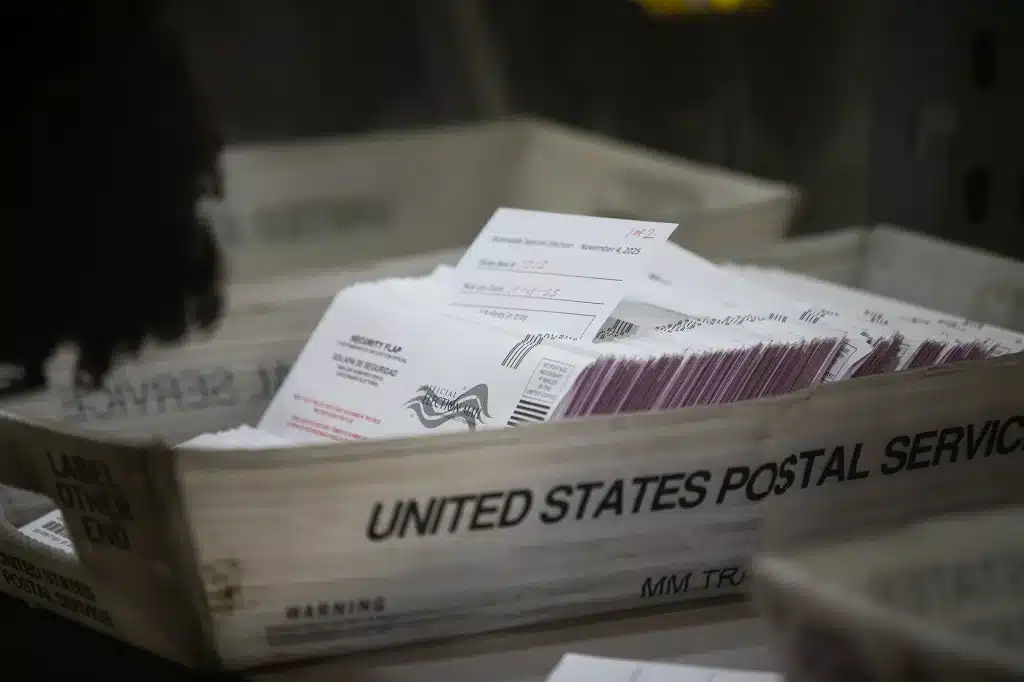
Ballots are going out in less than a month, and California remains locked in a legal battle with the Trump administration over the president’s push to rein in universal mail-in voting.
The back-and-forth has some California voters likely wondering whether they’ll be able to vote by mail in this upcoming election. And if so, should they?
In short — yes, mail-in voting will still be an option this year. And yes, it’s still safe and generally reliable, although county election officials are urging voters to send in their ballots as early as possible ahead of the Nov. 3 election.
In case you missed it, the U.S. Supreme Court is poised to issue a ruling that will determine, at least for now, whether President Donald Trump can force the U.S. Postal Service to restrict vote-by-mail ballots in time for the midterm election. Trump wants to create a federal database of registered voters that the postal service would then cross reference to ensure mail-in ballots are only delivered to eligible voters – in other words, U.S. citizens. His plan would have the postal service refuse to deliver ballots in states that withhold the data.
The dizzying, monthslong legal saga has baffled voters and even some election officials, which some voting rights advocates argue is probably the point.
But California election officials say the state is well-equipped to administer the election, regardless of how the Supreme Court rules. Although county registrars are monitoring the court rulings, they’re also preparing to mail ballots as usual by the state’s Oct. 5 deadline. Local and state officials are urging voters to make a plan to vote early and to use the state’s various non-mail voting options, such as drop-boxes and in-person voting sites, if they’re worried about the postal service.
“Like we do for all of our elections, we have contingency plans or disaster plans put into place,” said Tricia Webber, clerk and registrar of voters for Santa Cruz County and president of the California Association of County Election Officials.
Some counties, including Santa Cruz and Los Angeles, are exploring options for pop-up stations where voters could request and submit ballots. In Santa Cruz County, Webber said her team is strategizing how to deploy their votemobile around the county to add yet another option for voters.
“Until there’s an answer,” Webber said, speaking of the pending court ruling, “California counties are doing business as usual.”
What does Trump want USPS to do?
Trump issued an executive order in March that sought to give the federal government control over who receives mail-in ballots. Almost immediately, more than 20 Democratic attorneys general, including California’s Rob Bonta, sued the Trump administration on the grounds that the Constitution allows only Congress and state governments to administer elections.
Federal district and appellate courts sided with the Democratic states and upheld a temporary injunction preventing the postal service from implementing any part of its plan while litigation continues.
The central questions in the case remain unresolved. The Supreme Court last month allowed the Trump administration to continue planning for how it would implement the president’s order. Democratic states promptly sued again to contest the postal service’s plans.
The postal service’s proposal, the final version of which was published in August, would create a system to track each voter’s ballot with a unique barcode and cross-reference it with a database of eligible registered voters.
While some states fear they’ll need to reprint envelopes if the postal service’s rule is upheld, the vast majority of California counties already use compliant ballot envelopes, Webber said.
The federal government does not have a comprehensive list of every eligible registered voter and would need to rely on states to submit voter information to a “federal ballot mail portal” that does not yet exist.
It seems unlikely that the postal service’s portal would even be functional in time for the 2026 midterm elections. A postal service whistleblower asserted that the process to develop and deploy the portal was “rushed,” “risky and haphazard” due to the “impossible timeframe,” according to Democratic Sen. Richard Blumenthal’s office, which received the whistleblower complaint.
“In an effort to meet impossible deadlines, USPS has eliminated standard and needed testing, thereby creating substantial risk of a ‘catastrophic failure’ of the system that could ‘derail the midterm elections,’” wrote Blumenthal, of Connecticut, in a late August letter to Postmaster General David Steiner.
The postmaster in June told a congressional committee that the postal service would withhold ballots in states that refuse share basic voter information, including name, address and the unique ballot barcode.
Secretary of State Shirley Weber, California’s chief elections administrator, has not said whether California would comply with the proposed voter information requirement.
“California’s elections officials will continue to do everything within our power to ensure that every eligible California voter has the right to cast a mail ballot and have that vote count.”
Last year, the U.S. Justice Department sued Weber and five other Democratic secretaries of state for refusing to turn over their unredacted voter files, which contain far more sensitive personal information than the postal service rule would require. A federal judge in Southern California dismissed that case in January.
Uncertainty could fuel more early voting
Ironically, concerns about the postal service’s reliability could facilitate what election officials and voting advocates have struggled to do for years — get people to vote earlier.
Unlike the lead-up to the June primary, where nervous Democrats urged fellow voters to wait until the last minute to pick a candidate for governor, social media is now awash with posts urging people to vote early and use ballot drop boxes rather than rely on the mail.
“This whole play may backfire,” said Kim Alexander, president of the California Voter Foundation. “What you’re seeing now on social media in response to this court drama and this confusion are lots of people urging their friends to vote early — and that’s exactly what we’ve been saying.”
Voting earlier helps county election officials tabulate results more quickly on election night, which helps race callers like The Associated Press declare winners faster. And since ballots in envelopes take the longest to process, dropping them off several days before the deadline is the best way to help election officials count faster, since they can remove ballots from envelopes and prepare them for counting before Election Day.
“Fortunately, we give voters lots of options, and that’s really going to work to California’s benefit,” Alexander said. “Other states do not have the kind of robust process that creates lots of redundancies and avenues for voters to vote.”
This article was originally published on CalMatters and was republished under the Creative Commons Attribution-NonCommercial-NoDerivatives license.
Author

Comments (1)
Comments are closed.
Related Articles
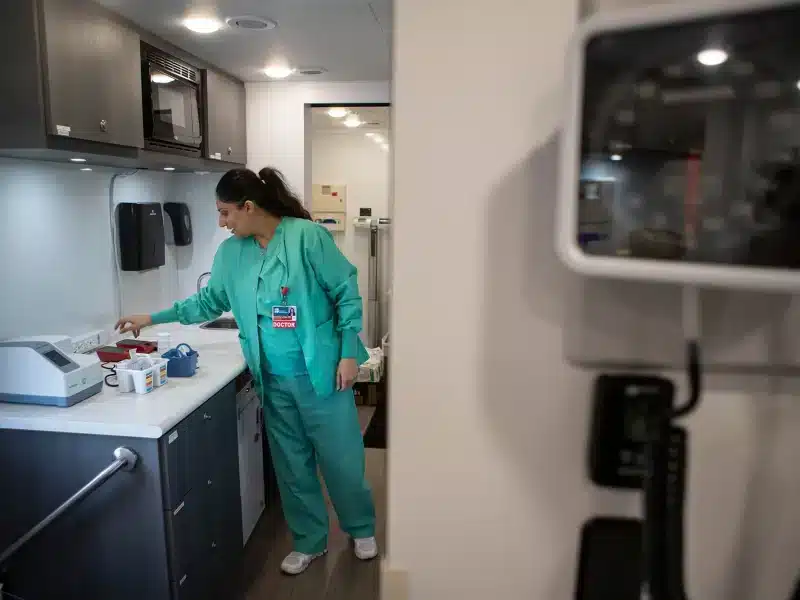
The same union supporting a billionaire tax wants voters to limit clinic spending. Here’s what to know about Prop. 44
Proposition 44 would require clinics to spend more money on patient care. The union pushing the measure is the same one supporting the billionaire tax proposal. Clinics say the measure will force closures.
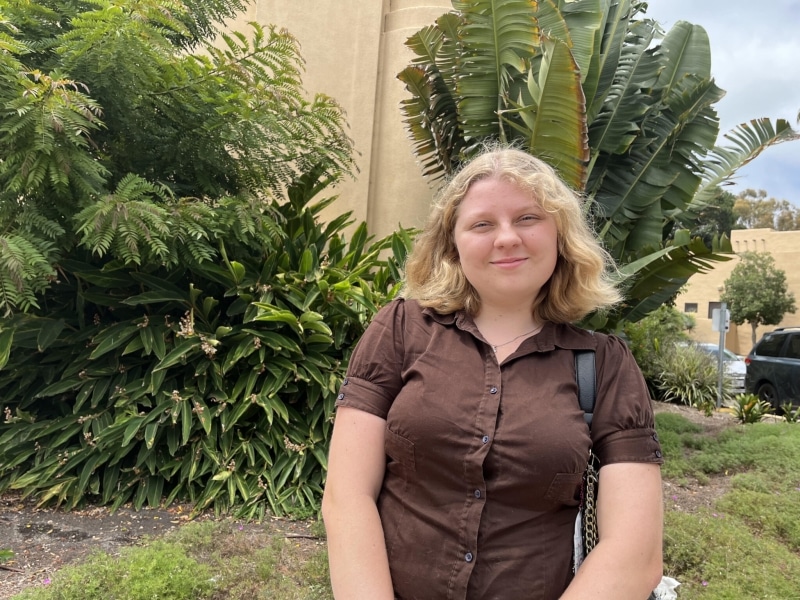
‘I’m listening hard’: Teens increasingly turn to AI chatbots for mental health support
Teenagers are relying more on AI chatbots for mental health support, often without adult knowledge. AI could make mental health care more accessible amid mental health and counseling staffing shortages, but chatbots can also feel addicting, some students say, and may have contributed to teen suicides.

This article should be updated because the Supreme Court ruled yesterday (9/14/26), rejecting the executive order restricting mail-in ballots:
https://apnews.com/article/trump-mail-voting-executive-order-lawsuit-78a4fbeb48d9c5fd27d1c865529fc65f?utm_source=copy&utm_medium=share