
California’s Surplus Land Act Won’t Get in the Way of Redding Rodeo’s Long-Term Lease of Riverfront Land
Before a lease can be signed, the Redding Rodeo Association still has to prove it can find a way to pay for more than $10 million in improvements at the site over the next 15 years.

The Redding Rodeo Association moved one step closer to a long-term lease with the City of Redding last week. The Rodeo wants at least a 25-year lease in order to have the stability needed to continue to invest in much-needed infrastructure improvements at the site. On November 19, the Redding Council unanimously approved a Letter of Intent (LOI) indicating strong interest in entering into an extended contract with the Rodeo.
The letter is non-binding, but it does contain a number of key specifics that show the significant progress that’s been made between City officials and Rodeo leadership over the last few months. Progress accelerated after Redding City Council appointee Joshua Johnson spearheaded an ad hoc committee to discuss lease specifics. That committee included Johnson and Redding Mayor Tenessa Audette as well as Redding City Manager Barry Tippin and two Redding Rodeo representatives.
Johnson was widely believed to oppose a long-term lease between the City and the Rodeo when the process started. He told Shasta Scout after last week’s meeting that his original stance was that a long-term lease wouldn’t pass without addressing concern from other Council members, including Audette, Julie Winter and Jack Munns.
“I just kind of saw the writing on the wall,” Johnson said, “that it wouldn’t pass even if I was for it. So I suggested bringing up the idea of the ad hoc committee.”
The process was a new one for Rodeo President Ted Bambino, who opposed the idea when the committee was first approved in September. By October he had changed his mind, saying he had hope that the ad hoc committee process would result in a mutually satisfactory lease agreement.
The Rodeo has leased riverfront land from the City for over 75 years. But the future of that lease agreement has been in doubt in recent years in part because of updates to California’s Surplus Land Act (SLA). Changes to the law are intended to increase available affordable housing by requiring cities that wish to sell or long-term lease public land, to first make it available for low-income housing.
It’s been uncertain so far whether the SLA would pertain to the Rodeo’s long-term lease of the land. One of the first steps the ad hoc committee took, was reaching out to California’s Department of Housing and Community Development (HCD) to determine if the SLA would apply. A representative from HCD told City Manager Tippin by email on October 3 that it won’t, explaining why.
“Generally, leases over 15 years WILL trigger the SLA and require disposition,” the representative wrote. “However, the new SLA Guidelines note that the renovation of buildings that will be used for the ‘same use and purpose’ do not constitute ‘development or demolition’, and leases greater than 15 years that do NOT include ‘development or demolition’ are not (considered) ‘dispositions of surplus land.’”
In other words, since the SLA only applies where development or demolition will occur on the public land that’s being leased, and since “development” under SLA guidelines only applies to structures that are built for a new use or purpose, the Rodeo’s plans to build improved structures for a similar use and purpose as those already on the site won’t trigger the SLA provisions.
That ruling from HCD makes a long-term lease for the Rodeo more likely, but nothing’s final yet. The non-binding LOI approved by the City Council last week also addresses other concerns, including whether the nonprofit Rodeo can find the money make necessary long-term improvements at the site.
The potential lease is currently slated to run for 25 years with two possible ten-year extensions. It comes with performance metrics, including the imperative to complete promised development, within specific timelines.
According to the current non-binding terms, the Rodeo must find a way to pay for new announcer booths and private boxes within the next 10 years and main grandstands within the next 15. As Audette pointed out, that’s no small agreement for the nonprofit Rodeo to enter into. The cost of those improvements is estimated at $11-12 million in today’s dollars, Tippin said. In 2022, the Rodeo’s financial filings showed net assets of $731,000 with annual revenue of just under $400,000.
The lease will also require the Rodeo to engage in quarterly meetings with the City and other community partners, identify opportunities for more community use of the Rodeo facilities and participate in a robust parking plan.
“The intent,” Tippin said, is that the lease leads to a “modern rodeo grounds that we can all be proud of.”
Rodeo President Bambino used his public comment during the meeting to encourage other community groups to try out the ad hoc committee process, saying it helped him develop relationships he never thought he’d have.
“Josh (Johnson) came in with the guns ablazing and went out with a little squirt gun,” Bambino said, as the audience laughed. “We became friends during this ad hoc process. There’s a lot of good things down the road that Josh and I have together regardless of what his position is with the city.”
Johnson agreed, saying the in-depth conversations that occurred during the ad-hoc process allowed everyone to see the situation from a new angle.
“On both sides,” Johnson told Shasta Scout, “we were probably believing some fallacies that were told to us by other people. I think we were both enlightened by . . . coming to the table and sitting face-to-face and actually working on the deal together. There was more alignment than we initially assumed between the City and Redding Rodeo Association.”
Council member Mark Mezzano, who originally opposed the ad hoc committee process, also spoke up at the meeting, saying he wanted to go on the record as having been wrong.
“I was the one who said it was a waste of time,” Mezzano told Bambino. “I was wrong. It does happen. I can’t wait for you to make the improvements that you are going to make.”
Do you have a correction to share? Email us: editor@shastascout.org.
Author

Comments (2)
Comments are closed.
Related Articles
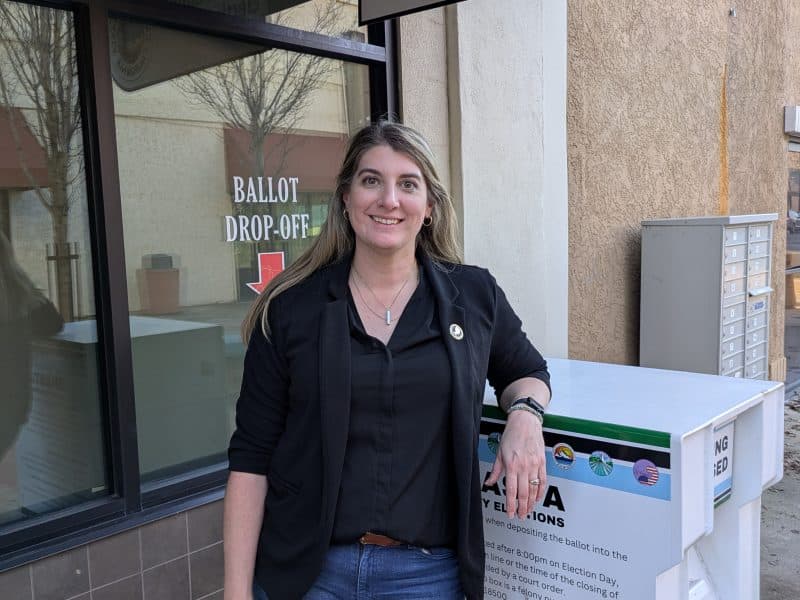
Francescut has emerged as the victor in race for Shasta County’s top elections official
With years of experience working local elections, Joanna Francescut has emerged victorious against former Florida attorney Clint Curtis, who was appointed by supervisors last year. Here’s what she had to say about implementing Measure B, and how she’ll address changes Curtis has put in place so far.
Shasta certifies Congressional District 1 Special Primary Election, though other primary results still await certification
Sixty-seven percent of Shasta voters cast their ballots for California Assemblyman James Gallagher. Shasta’s election office has certified the vote for the special congressional election. The rest of the races on the June 2 ballot are not yet certified.
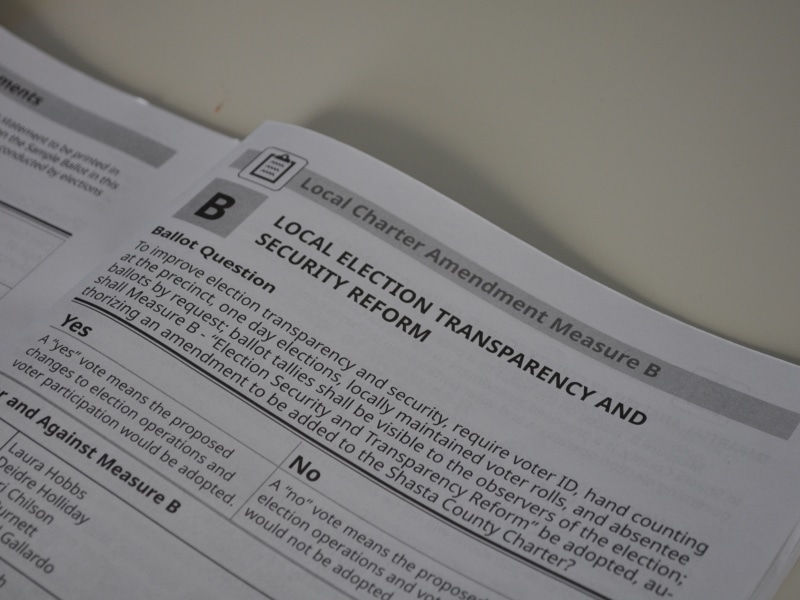
Breaking: California sues Shasta County over Measure B
The ballot initiative, which has just been approved by voters, set out to impose voter ID and eliminate mail-in voting — among other changes to local election procedures, which appear to contradict California law. The state had previously warned it was prepared to act if Shasta County attempted to circumvent state authority over elections. Today it did.
Will RODEOS even be around in 25 years?
These public lands in this area should not be prioritized for such a small sub section of our community.
Has any part of the discussion included doing a Projected Budget, listing the Projected Income and Projected expenses over a 10+yr plan ? All this discussion has been wonderful, but surely both sides know of potential investors, grants, state and federal funding sources for ventures like this. We have a Grant Workshop facility in Redding, has any Redding Rodeo Board members sought this out ? I’m all for a Modern facility, which I hope includes an all-weather dome so it can be used year-round by many entities.