
Crops, conservation, commercialization: How Shasta farms are working for their futures
Looking to the future, smaller family farms from Shasta County’s agricultural legacy have adjusted and diversified beyond crop production to survive and pass on their businesses to younger generations.
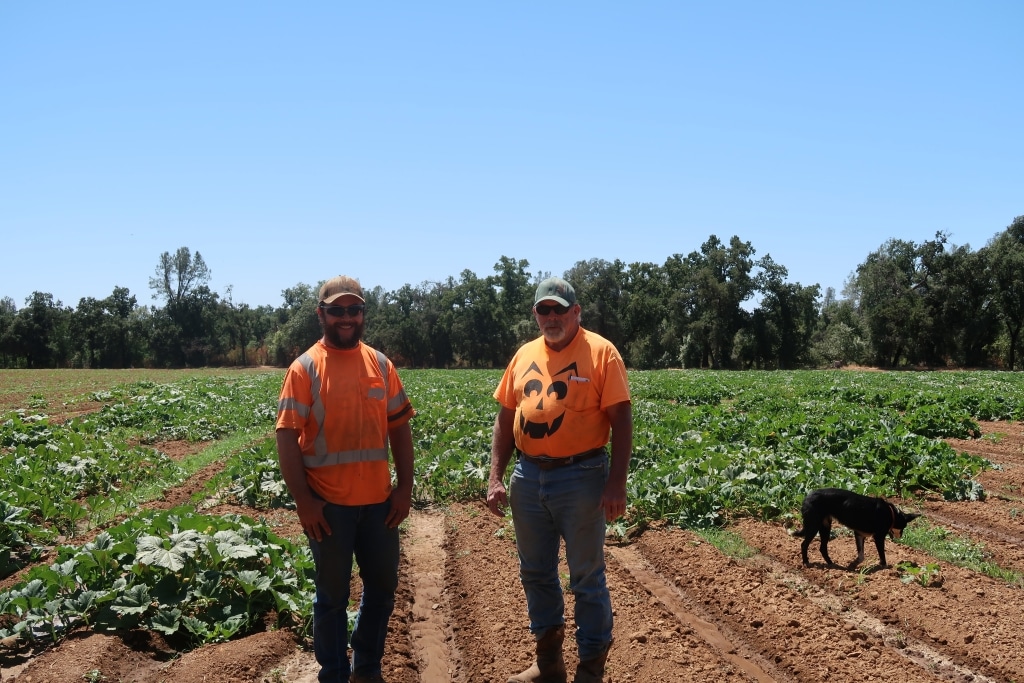
As Bob Nash drove around his family farm this summer, there were many things to look forward to. This fall marks 35 years of Nash Ranch’s pumpkin patch and at the time he gave Shasta Scout a tour in July, the fields were just turning green with growing pumpkin plants.
Just a month earlier, after years of working on the process, Shasta Land Trust had announced the preservation of 96 acres of Nash Ranch through a conservation easement, blocking any potential development opportunities and ensuring the land will remain agricultural in the future.
It’s a lot of work, managing even a small agricultural operation like Nash Ranch where Bob Nash and his adult son Louis are the operation’s primary staff. But the knowledge that a portion of the ranch is preserved for the future has relieved some worries and responsibilities.
“The big thing is, it makes the property affordable to own, because it reduces the value of the property technically. And it protects the property so it can never be developed,” Bob Nash said.
Paul Vienneau, Executive Director of Shasta Land Trust, said multi-generational farming families are less common these days, due to industry challenges, including a changing economy and climate.
Shasta Land Trust seeks to ease some of that burden through conservation. It’s a local non-profit that works with landowners to preserve undeveloped land across the county. The organization was founded in 1998, and since then has conserved over 61,000 acres of land that is used for farming, habitats for local wildlife and open spaces for community education opportunities.
Over the months since the Nash Ranch conservation, the land trust has announced the conservation of two more properties, Fort Reading Ranch and Coyote Creek Mitigation Preserve in Shasta County. Vienneau said the organization has a backlog of about 16 other properties with owners interested in conservation easements.
It’s just one approach that local farmers are taking in efforts to ensure their farms will survive for future generations.
In April, Hawes Farm received approval from the Shasta County Board of Supervisors for modified zoning changes to allow the farm to increase agritourism operations.
Though the process drew concern from some neighbors of the farm and local environmental focus groups, Nikola Hawes told supervisors on February 25 it was intended to “future-proof” the family’s agricultural business.
Agritourism – essentially any activities that bring the public to a farm – has been documented as one successful way for farmers to increase revenue in order to stabilize farming operations.
That’s important because despite Shasta County’s rich agricultural legacy, for many, simply farming the land isn’t enough anymore to provide peace of mind for the future.
“Farms have to adapt and change as times do,” Hawes told the supervisors.
Shasta Scout attempted to reach Greg Hawes over a period of several weeks for this story, but was informed this is one of the busiest times for the farm as they prepare for fall, and was unable to set up an interview.
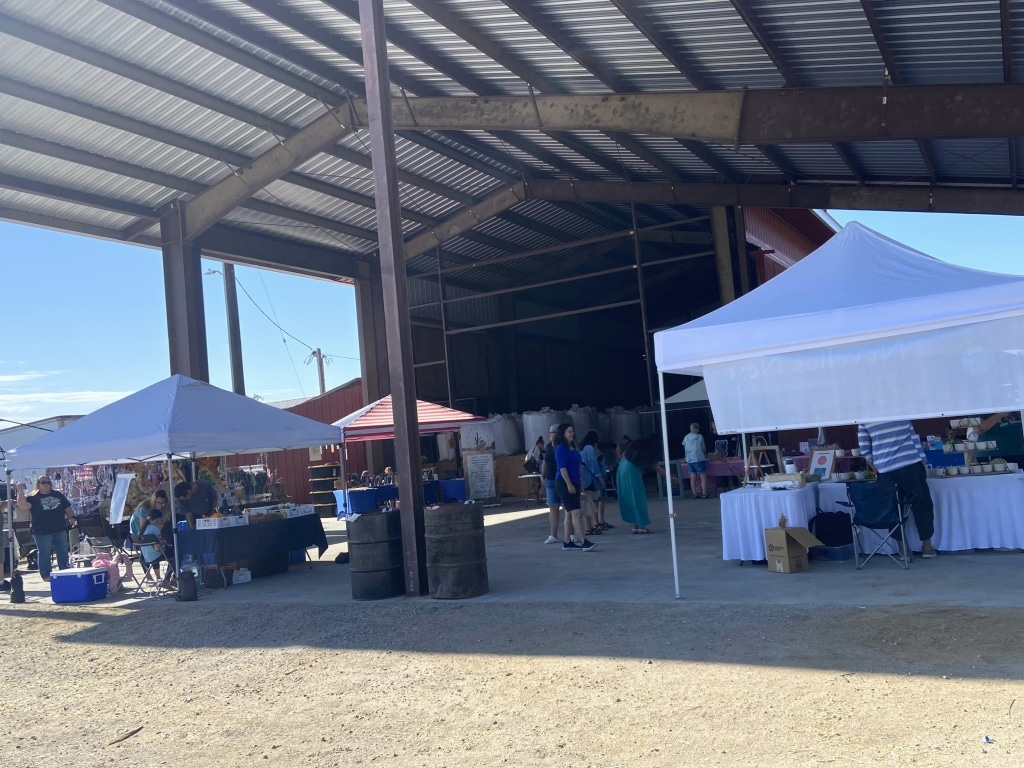
Six farms are listed on California’s Agritourism Directory for Shasta County, including both Nash Ranch and Hawes Farm. While agritourism can include larger-scale operations like the ones Hawes plans for, it can also include more simple activities like a corn maze, pumpkin patch, or a produce stand at the farm, as is the case for Nash Ranch.
Challenges for small farms in Shasta County
Technically speaking, Bob Nash retired from what he calls his “real job” several years ago, but he doesn’t like the term “retired.” Instead, he says he is a part-time farmer, who works full-time on the farm now.
He spent 40 years in finance and lending. His son, Louis Nash, is a civil engineer who also works a “real job” outside of the farm.
Since the family doesn’t rely on farming as their primary source of income, the Nashes say it works out pretty well, with the farm making enough to cover its operational costs, allowing them to keep doing something they love.
“You really miss out on the economies of scale, because back in the day, this would have been a really big farm,” Louis Nash told Shasta Scout while touring the ranch. “It’s just now it’s kind of shifted. Farms are tens of thousands of acres, and they’re all run by giant corporations.”
The shift toward larger corporate farms across the United States, including in California, has some impacts those outside the farming community may not expect. It’s changed the equipment market, Louis Nash said, so that tools like tractors are often made and priced for either small backyard operations or thousand-acre farms, with fewer options for those somewhere in the middle.
Issues like deer eating the growing crops can set small farmers back with the time and cost of replanting, whereas a larger farm with multiple fields of the same crop is far less affected by minor losses from wildlife. In drought years, the Nashes struggle even more with wildlife eating their produce, as other food sources become scarce.
And, while Nash Ranch was not as impacted by drought as some local farms because they have access to multiple sources of water, in 2019 the farm had to cut a large portion of the pumpkin patch and skip a year of their annual corn maze planting due to lack of water.
Vienneau said he has also seen other new challenges to local farms since he started work with Shasta Land Trust about 10 years ago. Speaking to Shasta Scout at the land trust office on the Sacramento River, he mentioned large swings in weather, from hotter summers to wetter winters.
“Whether we agree on how the climate is changing, there’s little disagreement that it is changing, and it’s not making their lives any easier,” Vienneau said.
Rising expenses also make it harder to operate a small farm. John Ingram, Shasta County’s Agricultural Commissioner, told Shasta Scout via email, “With seed, fertilizer, water, power, fuel, insurance, equipment, and labor prices all increasing, it can make it nearly impossible to be profitable.”
As operational costs increase, Ingram said, farmers can still only sell products at prices people will pay. This leads to losses when customers are not willing or able to pay more, something that hits smaller farms with less benefits from economies of scale, harder.
Even with these elements, Shasta County’s agriculture industry endures. In 2023, the county’s most recent agricultural operations report showed agricultural production just under $93 million.
A large percentage of farms in Shasta County are considered small, ranging from one to 49 acres, Ingram said. He provided information from the 2022 Census of Agriculture showing 69% of Shasta County farms fall into this range.
Conserving agricultural land
Shasta Land Trust, has more than 40 easements, or legal agreements with landowners that ensure the private land will be preserved and not developed. The organization’s holdings span over 60,000 acres of mostly agricultural land. Conserved properties include smaller ranches and farms close to 50 acres, all the way up to properties that cover thousands of acres.
Vienneau explained that because every landowner has some level of rights to develop a property or sell it for development purposes, that development value provides an opportunity for the land trust to purchase development rights at current appraisal value.
While Shasta Land Trust holds property development rights, effectively blocking future development, the owner can still sell, rent or lease and pass down the land to others. When the land is conserved, owners receive a payment from the land trust in exchange for future development rights. Many owners invest the money back into the land, Vienneau said.
The nonprofit isn’t against development, Vienneau said, but believes protecting properties that maintain green space or offer habitat to wildlife, is a way to push for more sustainable development options.
“We’re about smart development, and so protecting those ranches and farms allows for infill in areas that should be developed,” Vienneau said.
The conserved properties contribute back to the community and economy as well, through farming, recreation and education. Several properties that have been conserved by the Shasta Land Trust offer hunting and fishing to the public. Some host Shasta Land Trust events, from scavenger hunts for children, to birdwatching kayak trips or stargazing events. Beyond providing education and recreation opportunities, conserving land with natural resources also contributes to the land trust’s climate initiative goals.
And for the farmers who work with the organization, conservation offers an opportunity to keep land in the family, or at least ensure it is farmed in the future.
“If you believe in local farmers and ranchers, if you believe in that way of life, we’re protecting that,” Vienneau said.
When it came to the Nash Ranch conservation, Bob Nash said he first began talking about the process early in the land trust’s history. While Nash is a board member with Shasta Land Trust, he did not participate in board proceedings pertaining to his land to avoid conflict of interest. State funding for conservation easements prioritizes property like his, Nash said, which lie on the edge of a city that’s seen as likely to become a site of future development.
Shasta Land Trust’s main conservation funding comes from the state via California’s Sustainable Agricultural Lands Conservation. Vienneau explained this program is funded through cap-and-trade dollars, using the same pot of funds that has funded other local projects, including Redding’s bikeshare and affordable housing through the Strategic Growth Council.
Beyond knowing that the land will never be used for storage yards or strip malls, Vienneau said, conservation provides an additional benefit to the landowner, because removing development rights from the owner effectively reduces the value of the land making the conserved property is more affordable to continue to own and pass down. If the family sells the farm, the conservation continues to protect it from development, meaning it can provide an entry point for someone else to buy it for agricultural use.
Even with these benefits, Vienneau said choosing to give up development rights for a conservation easement is a big decision, especially in Shasta County where private land rights are heavily valued.
That’s because selling development rights to Shasta Land Trust is a permanent decision. As a private nonprofit, the land trust will always hold the rights, Vienneau explained, adding that even if Shasta Land Trust ever merged with another organization, there are provisions to ensure that the conservation easements are kept. And, if anything ever happened to the Shasta Land Trust, he said, the agreements would revert back to the Attorney General where the land would remain protected.
“You’re selling something you can’t get back,” Vienneau said. “And for some landowners, that’s a barrier to moving forward.”
Do you have a correction to share? Email us: editor@shastascout.org
Author

Comments (2)
Comments are closed.
Related Articles
Pit River Tribe prevails as California Energy Commission definitively rejects Fountain Wind Project
The state agency denied energy giant Repsol the required certification to develop a wind energy project on Pit River holy lands. It’s the third time the project has been denied. The first two denials occurred locally, in Shasta County.
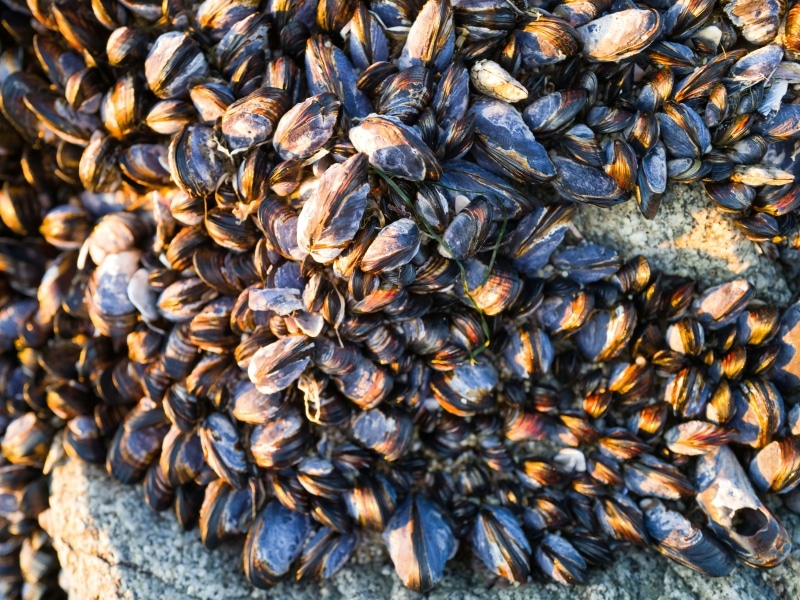
Shasta-Trinity National Forest officials issue order to curb invasive golden mussels
The order comes about a year after the species was first discovered in North America. The mussels have caused significant damage since then.
The Whiskeytown Environmental School was heavily damaged in the Carr Fire. Today, the community is working to fully revive it
Over 97% of the Whiskeytown National Recreation Area was burned in the Carr Fire, including WES. The damage halted programs for children that have been in place for decades. Five years later, WES is still working to bring back its beloved overnight camp.
One economic force making it ever harder for smaller farmers to survive is the farm policies of the federal government. A close examination of the federal Farm Bill shows that it works mostly to increase the revenues of big agricultural companies like Cargil and Archer Daniels Midland.
Great article. Refreshing to read about something other than the circus that is the local government. I did not know there was a Shasta Land Trust. Very happy to know this!