
After 35 years, EPA is updating Iron Mountain Mine’s community input plan
The agency is updating its community involvement plan for the Iron Mountain Mine Superfund site after more than three decades. It will shape how the EPA engages with residents in the years ahead. Officials say systems are working as intended at the contaminated site, and no major operational changes are planned.
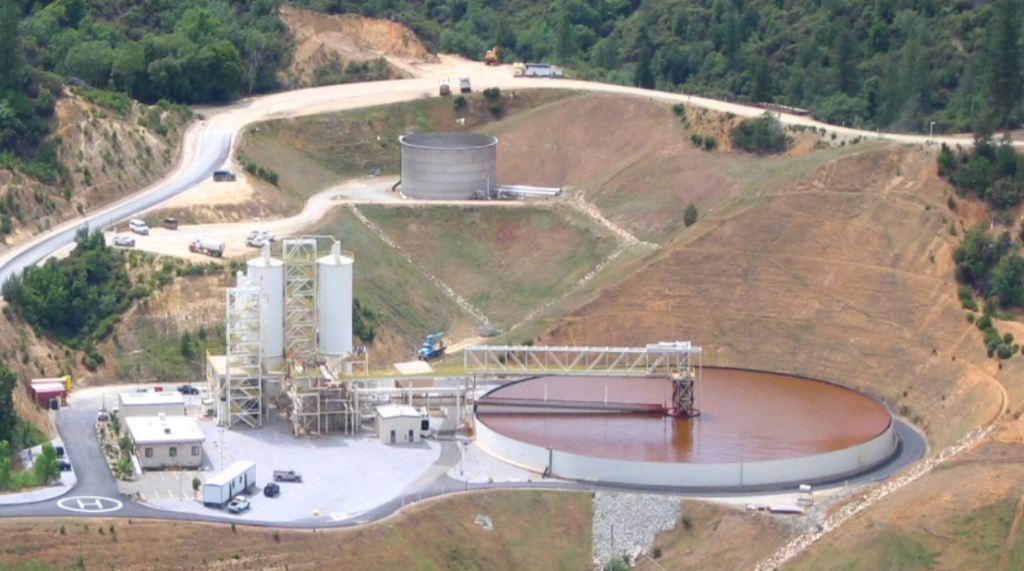
For the first time in over 35 years, the Environmental Protection Agency is seeking community input to update a community involvement plan for the Iron Mountain Mine Superfund site.
Located about 9 miles northwest of Redding in the Klamath Mountains, Iron Mountain Mine is a 4400-acre site that was mined for minerals, primarily by the Mountain Copper Company, from the 1860s to 1963. It’s famous for being one of the most toxic Superfund sites in the country, the polluted runoff from which was responsible for mass fish kills in the Sacramento River during the 1940s.
Today, contamination at the site is controlled through an extensive treatment system overseen by the EPA, and officials say it poses no immediate threat while those systems remain in operation.
Noemi Agagianian, the community involvement coordinator for the site, reassured Shasta Scout that no major changes are planned as the EPA solicits feedback from the community to determine how it can most effectively communicate with the residents and other interested parties moving forward.
What made Iron Mountain Mine so toxic, and will it ever be fully cleaned up?
Iron Mountain Mine was actively mined for about a hundred years, primarily for minerals that were rich in sulfur. When those minerals are exposed to air and water, they produce a metal-rich acidic runoff that leaches into local waterways, and eventually, the Sacramento River, according to the site’s Remedial Project Manager Wayne Praskins.
The site’s water has been classified as some of the most acidic in the world — the pH has been recorded at levels below zero. For context, battery acid has a pH of about 0.8.
In the 1980s, the EPA got involved after the federal Superfund program was created to clean up toxic sites and return them to productive use. A large water treatment plant was constructed at the site and has been in operation since 1994, neutralizing the acidic runoff and removing most of the metals from water that drains from the mines.
“We’ve been successfully controlling this runoff for the last 30 plus years,” Praskins said. While there are no big changes in the immediate horizon, the EPA is looking into whether it can recover some of the leached metals for reuse.
Today, daily site operations involve water sampling, moderation of the plant and recording data on water quality. Since chemical reactions continue as long as oxygen and water are able to reach exposed sulfide minerals, the plant would have to operate “for centuries” before EPA oversight is no longer needed, Praskins said.
While the Iron Mountain Superfund site is supervised by the EPA, a separate site operator is responsible for day-to-day operations. The site operator manages a full-time staff of about 15 to maintain the site, while the EPA provides oversight and regular inspections. Funding comes from a 2000 legal settlement — one of the largest environmental settlements in history — with Aventis CropScience USA, the corporate successor to the historic mining company that operated Iron Mountain Mine. Under the settlement, the business has committed to financing the site’s cleanup for 30 years.
Four years away from that contract’s expiration, the EPA is still developing plans for how the replacement site operator will be hired, but Praskins said “it will probably be a similar arrangement” to the current system.
Here’s what an update to the site’s community involvement plan will mean
The EPA is currently seeking community input as it updates its community involvement plan for the Iron Mountain Mine site, a process that has received relatively little public attention. Shasta Scout first learned of the outreach after a source spotted a notice posted at a rural post office.
A community involvement plan is legally required for all Superfund sites. It specifies EPA-planned community involvement activities in response to needs that are identified through interviews and other research.
At the Argonaut Mine Superfund site in Jackson, California, for example, interviews conducted as part of a community plan update led to increased engagement with a local historical society. The group had raised concerns about protecting historic mining features during cleanup, according to Mikayla Rumph, who manages media relations for EPA Region 9, which includes Shasta County.
Shasta is home to two Superfund sites. The Afterthought Mine Superfund site — which was added to the EPA’s National Priorities List in September 2024 — is still finalizing its first community involvement plan, though completion was originally scheduled for this February. Like Iron Mountain Mine, historic mining at Afterthought, located near Bella Vista, led to contaminated mine waste that began entering nearby waterways that feed into the Sacramento River. Rumph said interviews for the site’s community involvement plan led to increased outreach to downstream residents as well as to recreational users of local creeks.
Agagianian hopes the CIP for Iron Mountain Mine can have a similar impact. She has spoken with about a dozen community members about Iron Mountain Mine since the community outreach process began a few months ago. She said progress is “in a pretty good state right now,” but the team made the decision to extend the timeline for interviews until the end of July to talk to as many interested parties as possible.
The EPA said it has reached out to existing site partners, local government agencies, community organizations and tribes to spread the word, in order to hear from as wide a cross-section of the community as possible. “We’re casting a pretty broad net in terms of who we want to speak to,” Agagianian said.
Many interviewees so far have wanted reassurance that the site continues to be treated and that no major operational changes are planned, according to Agagianian. The need for ongoing communication with the community regarding the site has also been a recurring theme of interviews.
The last community involvement plan for Iron Mountain Mine was written in 1990. Most Superfund community plans are updated according to a timetable, such as every three or five years, or when significant changes to the site conditions occur. Since the operations at Iron Mountain Mine have remained in a long-term maintenance phase, there hasn’t been an event to trigger a revision. But Agagianian said the agency felt it was about time to check in with the community to make sure the plan reflects current residents’ concerns and questions.
Once the interview process with community members is complete, Agagianian and her team will begin drafting the updated community involvement plan. The plan will offer site background along with reflections on what residents shared in their interviews. Based on this information, it will prescribe methods of engaging with the community moving forward.
Agagianian emphasized that the plan will act as a “living document” — changing as the needs of the community change. The EPA hopes the plan will be released to the public before the end of the year.
Community members who wish to be interviewed for the project should reach out to agagianian.noemi@epa.gov.
Maya Nelson is a student at Brown University. She’s reporting for Shasta Scout as a 2026 summer intern with support from the Nonprofit Newsroom Internship Program — created by The Scripps Howard Fund and the Institute for Nonprofit News.
July 24, 2026 9:56 a.m.: We’ve updated the headline to clarify that this is the first time in 35 years the site’s community input plan has been updated.
Do you have a correction to share? Email us: editor@shastascout.org.
Author

Comments (9)
Comments are closed.
Related Articles
Anderson police chief tasked to respond to council questions about Flock cameras
Council members heard from more than a dozen public commenters with concerns about the cameras which have been deployed in Anderson since 2019.

Meet Elise Ramirez Sloan for Redding City Council
Nine candidates are running for three open seats on the council. Ramirez Sloan moved to Redding two years ago, and she’s worked in the restaurant industry and in administration for Eureka High School. She now focuses on volunteering and giving back to the community.

Meet Bruce Ross for Shasta County Office of Education Trustee
Bruce Ross is running for one of four open seats on SCOE. He’s served on another local school district board for more than a decade and is a parent who hopes to bring a “focus on kids’ needs, not adults’ dramas” to the SCOE Board.
For many years I have been watch and reading learning about iron mt. Mine. No one even knows what it is. Or after thought mine. It is more than just water contamination. People can develop serious illnesses from these places. Now that there are two big mines both deemed super funds sites. People should be aware of them and where they are. Last I knew the after thought mine wasn’t posted with signs or fences. Just walk right up to it. I hope they have done something about peoples safety
I remember talking with a gov. inspector up that while doing a mech. project. He was on a similar job in Utah, and he said they plotted the mountain, removed it and the deep mines and replaced it as it once was trees and all. At that time it seemed to enormous of an undertaking> Fast forward and by now it would have been done. The perpetual filtering and then redumping the hazard on top of the mountain to be refiltered is going to cost how much? Never ending story as it sits now, maybe in the future new ways of sealing the shafts will emerge?
Why now? The timing is concerning.
https://www.npr.org/2026/04/29/nx-s1-5803848/how-trumps-epa-head-has-transformed-the-agency-and-sided-with-polluters
A wonderful and informative article. Many would not be aware of this without Shasta Scout
Thanks for the update! I had no idea since I just moved here 10 years ago! Please Continue the important outreach to our community !
Aside from the massive remaining eyesore, the EPA has done a good job remediating the worst of the damage.
I remember hiking downstream of Iron Mountain a few days after a big storm in the mid-late 80s and getting home to discover the incredibly acidic runoff had already burned holes in the pantlegs of my jeans!
Id like to know why you think a anything has changed since the mid 80’s? Drainage still comes down unfiltered by 2 dams. Spring creek ( debris dam at keswick is beyond its expected life time, its made of inferior materials and has no control,if its a good rainy winter that shabby dam just overflows into Keswick Reservoir the on into the Sacramento River. Ive done my share of research and have spoken to a few calif water board members and a couple people with BLM. Only one big wig had the nerve to tell me a bald face lie. The others wanted to remain anonymous.. hmmmm … so much for govt. transparency? alot to not talk about with an epa super fund site, that and Shasta lake constantly being compromised by all the abandoned mines around it.
no one talks bout that..but a few signs around the lake speak volumes…Just an FYI, acid holes in your jeans could be the very least of concerns… take care…
Iron Mtn. is a prime example of corporate interests pillaging natural resources and leaving the citizenry to clean up the mess. Trump has opened the door for this kind of corporate plunder across our nation and beyond and is throwing our citizenry under the corporate bus while they all stuff their pockets like never before.
I absolutely agree, I wish more of our community understood this !