
In conversation with Shasta Election official Clint Curtis
A July interview with Shasta’s newly appointed election official Clint Curtis revealed his hope for the indictment of his campaign opponent, former Assistant Registrar of Voters Joanna Francescut. We’re sharing highlights of that interview.
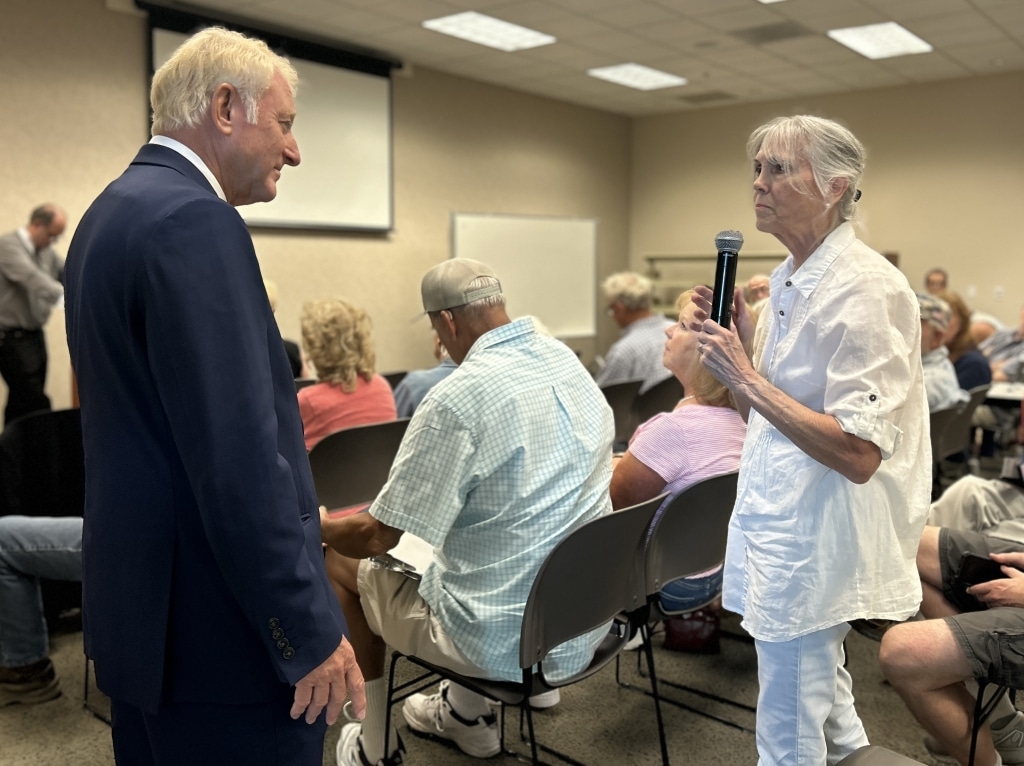
Reporter Annelise Pierce recorded a July 23, 2025, interview with Registrar of Voters Clint Curtis at his office. We’ve previously reported using some of the information shared in that interview. Today we’re sharing highlights of the interview as a whole in order to provide our readers insight into the perspectives of Shasta’s new election official and the changes he’s hoping to put in place. This interview has been edited for length.
Shasta Scout: So I have your permission to record?
Curtis: What, do you have a super memory? Record away.
Shasta Scout: I was asking you about the process you plan to use to film ballot processing. As I said, we conducted a reader survey and people have a lot of questions and concerns.
Curtis: Basically, when you go to vote, there are no cameras. They don’t see you vote. They don’t watch you vote. There’s nothing. We’re not even going to have any filming for the process of actually putting it through the machine or anything, because it just might be too much where you could identify something.
Shasta Scout: When you say “actually putting it through the machine,” what do you mean?
Curtis: When you drop your ballot off. All of those ballots on election day will stay in that precinct. The [mail-in] ballots won’t be opened early. They won’t be copied in secret, because that’s what they used to do, but that’s not what we’re going to do. Nothing is done in secret when it comes to ballots. I say nothing, but that’s technically not true, because there are some things you have to do that you can’t do on camera, and people who really don’t want to ever have their ballot possibly recorded can just do these things, and it won’t be recorded. It’ll be counted in secret by people, by a canvassing board that will decide what their vote is.
Curtis: All they’ve got to do is mark their ballot badly, because if the ballot has anything [extraneous] on it, that can be identified that will never get documented on film.
Shasta Scout: Okay, yes, this is something the Secretary of State’s Office has also mentioned to me. [That extraneous markings cannot be filmed because they could be used to identify voters.]
Curtis: We will have those separated by poll workers at the precincts — any ballot where people mark big x’s or circle things, anything that makes their ballot not countable in public. Those ballots will be counted by a canvassing board, which will be made up of people that are respected in the community. Probably somebody from each party, including the poor third parties, which basically have been eliminated by California’s jungle primary.
Shasta Scout: So what would you say to people who are concerned because they don’t want a canvassing board of volunteers you’ve chosen to see their vote.
Curtis: Well, the other way is I look at it and decide how it was voted.
Shasta Scout: What about using paid staff who have passed background checks?
Curtis: It’s the same people.
Shasta Scout: So the canvassing board is going to be paid staff?
Curtis: Yes. They’re going to be lawyers, doctors, judges.
Shasta Scout: So they’re going to be new paid temporary staff.
Curtis: I’m hoping to have you know a Democrat from the party and a Republican with the party, which will stand there together and actually screen through all of these marked ballots. What these people decide on their own [about each voters intent] is up to them. That’s what a canvassing board does.
Shasta Scout: Is it legal to hire people or identify them based on their party?
Curtis: Well, we’re going to try and get a canvassing board that covers all zones.
Shasta Scout: So, for example, if I vote, a public official or a lawyer that I report on can see my vote? Not only election staff?
Curtis: You trust [election staff] more than judges?
Shasta Scout: I don’t report on your staff. So how I vote is safeguarded by these staff.
Curtis: How you vote is safeguarded by the fact that it blends in with every other vote. If you fill it out right.
Shasta Scout: But the ones you’re putting aside for the canvassing board are the ones that are identifiable.
Curtis: Right. The people who can’t fill out a ballot.
Shasta Scout: I’m just bringing this up because this is a big concern for many in the public. This is probably the number one concern we heard on the survey is fear of political targeting of some kind.
Curtis: Well there shouldn’t be any political targeting.
Shasta Scout: Well you’re saying that but you’re bringing in a volunteer canvassing board.
Curtis: A canvassing board of four or five of the most respected people in the county. They’re going to go through and try and figure out what in the world that vote was, when it’s unclear.
Shasta Scout: Well respected by who, though?
Curtis: By the county, by the people. I mean, they’re like judges. They’re important people. They’re not somebody off the street.
Shasta Scout: But this is a pretty politically divided county. I’m not trying to be argumentative. I really am trying to understand, because a lot of the public feels like the people you may respect may not be the people that others here respect and trust when it comes to elections. And that’s fair. We’re all going to have our political persuasions. The same thing is going to be true with any election official. The people that you’re friends with and trust might not be the same ones as other people in the community trust. So that’s where this issue of who’s trusted and how they’re chosen really matters.
Curtis: The best way to do it is to mark your ballot correctly, and then it will go in the stack and the machine will count it. Because then there’s no way you’ve identified yourself, there’s no marking that tells anybody who you are, and you’ll be able to know that it is intermixed in all these other ballots that look identical. You’re going to have to have to trust because elections has a certain amount of trust. I wish it didn’t, but it does. It has a certain amount of trust that the people at the polls are not going to throw your ballot away because they don’t like how you voted.
Shasta Scout: But how is [your approach] an improvement in trust over the previous method?
Curtis: Because I’m going to try and get people to actually fill out their ballots correctly. If they fill out their ballots correctly, they’ll all be going into this nice, big, generic pile. They’ll go through them so they can actually count the election and know what it is. We’ll have the video right at the precinct where they’re putting in the stacks of 50. You’ll have a batch number. All the batches will be put together, they’ll all come down to central. That’s where all the tabulators will be. We’ll not only have observers, but we’ll also have the people that will open the ballots and then count them again to 50. So now you have this video. You match this video, which means nothing could have happened in the transportation and you know exactly what’s going into the tabulation machine prior to it going in. So this total should match what the tabulator tells you, right, if it counts it correctly.
Shasta Scout: If the video isn’t altered. That’s another concern that’s been brought up by a number of people.
Curtis: Yeah, but that makes them just kind of argumentative. They can’t hack all these videos. And there’ll be an observer right behind the people that are opening these ballots.
Shasta Scout: And who will the observer be? How will we trust the observer?
Curtis: Well, they’ll be whoever wants to sign up as an observer. I assume you’d be there.
Shasta Scout: So these could be partisan observers.
Curtis: Yes, but they’re not actually doing the ballots. They’re just watching.
Shasta Scout: And temporary staff will actually be handling the ballots.
Curtis: Yes, screened, background checked, all the things.
Shasta Scout: Will their names and affiliations be provided to the community?
Curtis: Their names will I think. You’ll have to look up their political affiliation.
Shasta Scout: Well, you’ll know their political affiliation, because you’re going to put them in groups.
Curtis: Well that’s just for the canvassing board. I want to make sure that has a blended group, so everybody is basically covered, so they can keep an eye on each other. So you don’t have someone who’s trying to put their thumb on the scale. Not that I think these people are going to do that, you know, but they will be doing it in the dark. You will not be able to see what they’re doing, just like you couldn’t see what the staff was doing before, when it rewrote those ballots.
Shasta Scout: Do you know what percentage of ballots had extraneous marks in previous elections?
Curtis: Very few. Very, very few. Most people know how to fill in the bubble, right?
Shasta Scout: When I’ve observed elections, I’ve seen quite a few write-ins, and that’s not a matter of filling the bubble accurately or not. It’s just that people want to write in a candidate.
Curtis: Well, if they write in a candidate, guess what? They’ve now identified a ballot.
Shasta Scout: Exactly, but that is their legal right.
Curtis: Can’t go through [the machine now] has to go in the dark.
Become a member: Shasta Scout is reporting from the front lines of democracy in a highly polarized environment. Your small monthly contributions make our work possible. Donate here.
Shasta Scout: I come back to my former question, which is, how does this make elections safer and more trustworthy? We don’t have a history of documented election fraud here that’s ever been proven.
Curtis: Well, you really haven’t paid much attention *laughs*
Shasta Scout: I’ve actually sat through the court hearings for both [court cases related to alleged election misconduct].
Curtis: All of the court hearings. You don’t get to hear anything. You’re on an extremely tight timeline, and they don’t want to hear it.
Shasta Scout: Well, who then, who decides what constitutes election fraud, if not the courts? Aren’t the courts our legal guideline?
Curtis: Well, it’s important that people know [fraud] doesn’t exist. And if we eliminate all of it, it’s good.
Shasta Scout: So, but what I’m hearing from the public —
Curtis: — Certainly a different public than I have.
Shasta Scout: It’s very possible. I’ve actually lived here 15 years longer than you have, and I’ve reported on a broad bipartisan segment of the community who are readers and donors. So I think I am connected to a pretty wide representation of the community. But I will absolutely agree that any survey or poll is limited, and that only catches a limited part of your audience, so it should always be interpreted with caution.
Curtis: But if you have people who really want their ballots counted in the dark well then.
Shasta Scout: If there aren’t that many ballots that are marked like that, why not just have your staffers do that work like they have in the past, right? They’ve reviewed —
Curtis: —Why would you want my staffers to do that? What makes you think they’re any better than a judge or a priest or anything else?
Shasta Scout: Well, because they’re paid staff who are responsible to their employer. It’s the same reason why you would have law enforcement do the arresting, and not a militia.
Curtis: I think you’re kinda blending there. Would you have law enforcement adjudicate the crime? Would you have them be the judge?
Shasta Scout: No.
Curtis: Why not?
Shasta Scout: Because we have a legal process for that. But any judge who works in the elections office will not be working in his official capacity as a judge.
Curtis: But you’re saying that he is dishonest.
Shasta Scout: First of all, I doubt that you will have judges serving in this capacity. How many judges have signed up for this?
Curtis: We haven’t reached out. We’re going to reach out here shortly and try and get other people, you know, city council people, maybe a congressman or two.
Shasta Scout: I very much doubt you’ll have [a judge] serving in this capacity, but if you did, they would not be able to serve as a judge in this role, because they can’t do that outside the courtroom. The courtroom is where they have jurisdiction. They don’t get to be judges in everyday life.
Curtis: I don’t think we’re going to agree on this. What do you think?
Shasta Scout: I’m not really concerned about whether you and I agree. I’m concerned about how many of the public feel less confident than before.
Curtis: That makes no sense at all, because basically 49% of the ballots were rewritten on your last election without any oversight by anyone.
Shasta Scout: How do you know that? Tell me how the public should confirm that.
Curtis: Well, actually what’s her face actually said it on a radio show, and there are complaints before the justice department because she wouldn’t let people actually see what was going on, which is a violation of law.
Shasta Scout: When you say what’s her face you’re referring to Joanna Francescut? Cathy Darling Allen?
Curtis: Yes
Shasta Scout: [Francescut] said on a radio show that 49% of ballots were rewritten? And what do you mean by rewritten?
Curtis: They rewrote them. They said that there was overspray.
Shasta Scout: Oh, you mean they duplicated the ballots.
Curtis: They duplicated them. What does that mean?
Shasta Scout: I watched the whole process.
Curtis: Did you see them duplicate anything? Were you able to watch them duplicate anything? Cause if you were you did better than anybody else.
Shasta Scout: No. So your issue is that you think the ballot overspray led to fraud?
Curtis: I don’t know what it was.
Shasta Scout: So do you think there is evidence of fraud or there isn’t evidence?
Curtis: I don’t know.
Shasta Scout: Okay. Okay. So there’s no proof of fraud, but you’re still changing the process in a way that has made voters uncomfortable with voting.
Curtis: Yeah so people don’t have to worry about [fraud].
Shasta Scout: But people are worried about it, that is what I am telling you.
Curtis: Well, see, we’re not gonna agree.
Shasta Scout: So you just think I’m wrong, that people aren’t worried?
Curtis: I just think you’re wrong. I think people are not worried. And if they don’t want their ballot to be seen on camera… and they don’t want to count it… they just want somebody they pick out of the air to tell them how they voted, then they’re really confused. That’s kind of how communist Russia does it there. So I don’t know, it’s kind of weird. You would want a system where the government tells you who wins? The worst thing you can have is the government controlling the election system that elects them to power so they have no real reason to do it correctly. And essentially, it’s what happened.
Shasta Scout: You are the government, though.
Curtis: That’s why I am not going to be doing the adjudication.
Shasta Scout: But you’re choosing the people [who will].
Curtis: We’re going to set it up and we’re going to get them in there, yeah. You’ll just have to pick on these people when they get in there and say, ‘well, I don’t trust you, because, you know, you’re just a judge and I’m a reporter.’
Shasta Scout: I will look for the number of judges you have on your panel. Are any of these processes written down yet or documented, or are these so far just like draft ideas that you’ve shared verbally?
Curtis: I guess a draft idea then, but I did present them to the Secretary of State. They had no problem with them. California actually tries to promote meaningful oversight, which means the public gets to watch. That’s not what happened here.
*Shasta Scout sought comment from the Secretary of State’s Office on September 15. Their media spokesperson responded by saying “To be clear: no new policy or approval has been issued by the Secretary of State’s Office regarding the creation of a canvassing board or the filming of ballots. California’s existing laws already clearly define how voter intent is determined, and those rules are established in the California Elections Code and the regulations adopted by our office. Determining voter intent on ballots is the responsibility of county elections officials, who follow uniform statewide standards and are overseen by our office to ensure consistency, transparency, and accuracy.”
Shasta Scout: What is meaningful oversight under the law?
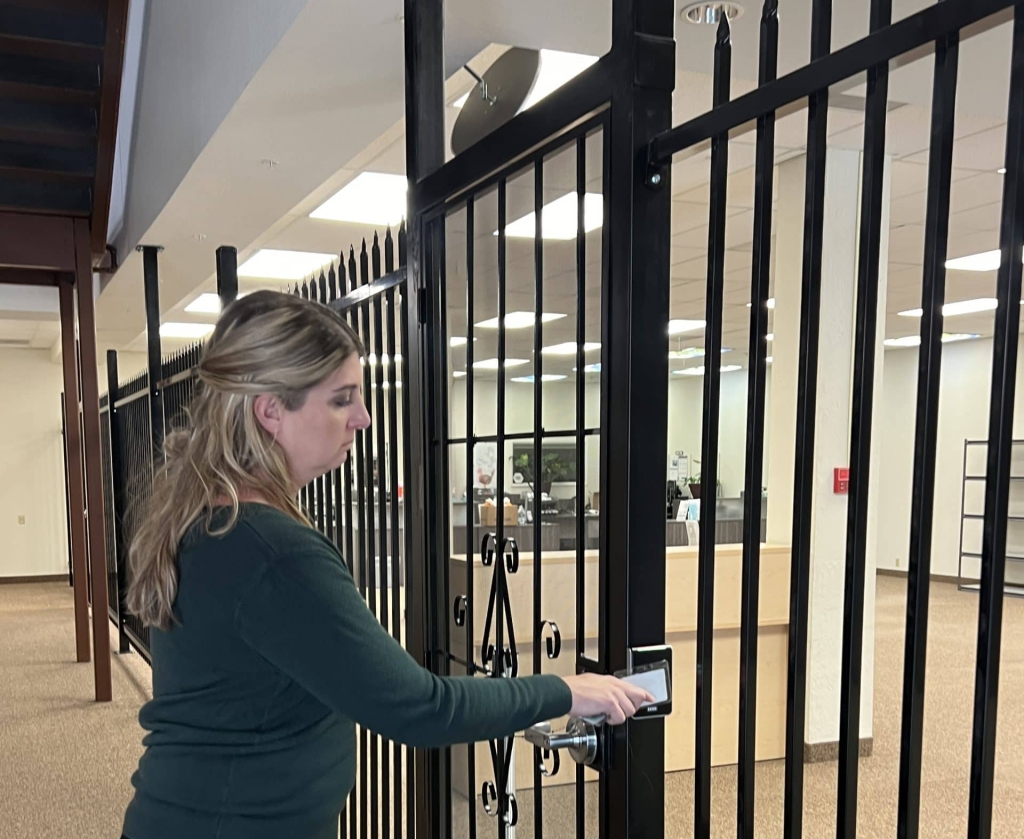
Curtis: Meaningful oversight means the public actually gets to see what goes on behind bars.
Shasta Scout: Well, nobody stood behind bars to watch. I was here. The bars are just there so that they can let you up once —
Curtis: —Well they also make a nice addition to have bars with spikes on it for your public.
Shasta Scout: I was, I was here when they put those in. So I remember the actual history on that.
Curtis: You’ll be here when they take those down.
Shasta Scout: Court precedent shows that meaningful observation can be determined by the local election official. At the precinct, you said you’ll be separating the marked ballots from the unmarked ballots. Who will be doing that?
Curtis: That will be the poll workers.
Shasta Scout: So poll workers at election places will be looking at individual ballots and seeing the markings on them?
Curtis: They will be taking them and putting them in stacks. Yes.
Shasta Scout: That seems like a potential threat [to voter anonymity].
Curtis: That is how they do that now. That’s how they count and reconcile.
Shasta Scout: I thought you said there wasn’t counting at the polling places.
Curtis: Well they don’t, but they count the number because they have to reconcile their records.
Shasta Scout: At the precinct? The [ballots] go into sealed boxes don’t they?
Curtis: They go into what?
Shasta Scout: Don’t they go into the zip-tied boxes at the precinct?
Curtis: Right, but they don’t stack them there, they stack them here.
Shasta Scout: Yeah but poll workers don’t stack them.
Curtis: They are poll workers. Let’s call them the temp workers if that makes you feel better.
Shasta Scout: Well, it’s not really about what makes me feel better. It’s about defining our terms. And you know as an attorney, defining terms is very important.
Curtis: Let’s call them all temp workers.
Shasta Scout: Poll workers are different from temporary workers. Temporary workers are paid by the county, not just a per diem rate.
Curtis: They can be paid per diem or they can be paid a stipend. And I’m trying to get with the Secretary of State to see if we can use them without paying them, because a lot of people actually care about government and about doing their civic duty and are willing to volunteer their time, and I’d like to use them, if the Secretary of State agrees. We’ll use them. There’s nothing on the code that actually specifies what an employee is. Is an employee because you say ‘here take your oath,’ or is an employee because you’re paying them so much per hour? And there’s all kinds of definitions in law and employee means different things throughout different statutes. It’s not like a word that actually means something and the election code doesn’t seem to have a defined definition. So I’m trying to get that from the Secretary of State. If they don’t than I’ll go down and talk to Governor, see if I can get something there.
Shasta Scout: Every election, I go around to… a segment of polling places. So I might go out to Burney and see one [polling place], and then I might go into the city of Shasta Lake. I just try to get around to see what complaints I’m hearing. You know, one time people had concerns about the use of Sharpies. There are always different things that people are worried about, sometimes legitimate, sometimes less legitimate, depending on the law.
Curtis: When there are concerns we need to address it.
Shasta Scout: And it’s important to report it right? Like this may not be an actual legal issue, but it’s concerning people, so let’s tell them what’s going on at these polling places. You know, very often people volunteer as poll workers at the same location together when they have similar viewpoints, similar community connections. At the moment and under past policies, that hasn’t really seemed like a problem, because people can privately vote their ballot. Doesn’t matter who’s handing them their sticker [at the polling places].
Curtis: Maybe it doesn’t matter, maybe it does. Where they throw things away like in Chicago where they threw Republican ballots into Lake Michigan.
Shasta Scout: And that’s why there’s a training process. That’s why there’s observers, etc.
Curtis: Right.
Shasta Scout: But never in the past have our ballots been exposed on a one-by-one basis to poll workers, where, if we marked them in any way, if I wrote my name on there because my husband also wrote [his in] at home and I didn’t know better, a poll worker could just see my ballot. Is that legal?
Curtis: That’s legal. They are just stacking them.
Shasta Scout: Is it legal for them to view individual ballots?
Curtis: Well they’re not going to view them as knowing who they belong to.
Shasta Scout: They will if I put my name on it.
Curtis: They will put them in. It’s the same thing as if we separate them here.
Shasta Scout: But it’s not, because it is a poll worker.
Curtis: It’s a temporary worker.
Shasta Scout: Well, so have you asked the Secretary of State whether poll workers are allowed to individually handle ballots?
Curtis: We are working on trying to give the actual definition of that, but yes, they are, according to the other places that I have asked, where they have the ROVs, and whether they use volunteers, and how they use them, and that sort of thing. And they say, Everything’s perfectly fine. You just have to give them the same oath, give them the same training that you do everybody else you go in there and they do it.’ Paying them $5 an hour isn’t going to make them any better than if they are a volunteer like it might make them worse.
Shasta Scout: Well, let’s hope you’re not paying them $5 an hour. That would be a violation of labor law. You said in your press release that people who have been denied [the opportunity to volunteer] in the past would not be denied [under your leadership.] Is there any reason somebody would not be eligible to be a poll worker or temporary worker if they are a volunteer?
Curtis: If they’re a candidate. Or if they kind of fight with everybody while they’re there. But the DOJ is really looking hard into discrimination of election offices in California and into not cleaning the voter rolls properly, so they’re doing a heavy hit looking at that, I want to make sure that doesn’t happen here. Everybody should be able to be an observer, a poll worker, a temp worker. You know, everybody should have an opportunity, as long as they do the job and they’ll be there to watch them. So it shouldn’t really be a problem. I think that’s going to be a problem with the justice department with the people that were here. I would be surprised if there’s not some sort of issue on that, with the lack of the lack of observation, the rewriting all the ballots, you know, I think they’re going to come down on them, so we shall see.
Shasta Scout: The ballot duplication process was approved by the secretary of state’s office.
Curtis: Well, it may have been approved, but it shouldn’t have been, because they’re using software that was not certified to do it, we have evidence that it wasn’t done correctly, and the fact the secretary of state let them get away with it doesn’t necessarily mean that the justice department is going to do the same.
Shasta Scout: Are you sharing information with the federal justice department?
Curtis: Yes I am.
Shasta Scout: Did they initiate the ask or did you?
Curtis: They did, but I would have. I’ve seen this all over the country. If they’d indict a few people here or other places where some similar situations kind of happen, that may stop it. That may make people go, ‘Well, I don’t think I’ll do it that way anymore, just because I can.’ So I’m hoping for some indictments.
Shasta Scout: So who are you hoping to be indicted?
Curtis: The people in charge.
Shasta Scout: So Tom Toller and Joanna Francescut?
Curtis: Absolutely.
Shasta Scout: And how should they have managed that election, other than what the Secretary of State’s office told them to do?
Curtis: They should have allowed oversight. The Secretary of State’s office did not say, ‘please block everybody back and rewrite these in private.’ They didn’t tell them to do that, but that’s what they did.
Shasta Scout: So how would somebody have meaningfully been able to observe the duplication of ballots?
Curtis: You could have used cameras where you could have let them close enough so they could have seen the ballots being duplicated. Either way, it would have worked.
Shasta Scout: Your issue is that people couldn’t watch the machine that was doing the duplication?
Curtis: And couldn’t watch the people doing the duplication. The people were doing duplication in break rooms and everywhere else. I mean, you surely got those reports from the board right?
Shasta Scout: The board?
Curtis: The board [Shasta County Board of Supervisors] actually asked to see and they couldn’t even see them. They wouldn’t even let the board members come in to see what’s being duplicated
Shasta Scout: Oh I watched board members go in and observe what was happening there.
Curtis: But the public is supposed to be able to observe it. Were their civil rights violated? We’ll find out.
Shasta Scout: Yes, I’m sure we will.
*Shasta Scout sought comment from former Registrar of Voters (ROV) Tom Toller and former Assistant ROV Joanna Francescut —who’s now running against Curtis for the ROV seat — about Curtis’ hope for their indictments. In separate interviews, both noted that Curtis’ claims about the allegedly problematic nature of observation practices during the recent elections are similar to those made in a lawsuit dismissed in a Shasta court earlier this year. Toller added that he hasn’t heard from the federal Department of Justice and doesn’t expect to. Francescut explained that she hopes Curtis will put his efforts towards using his proposed new election processes to strengthen trust rather than spreading misinformation or unfounded claims about past elections which took place before he lived in Shasta County.
Shasta Scout: So obviously, you know the law is quite strict on any kind of voter intimidation. The access to vote is extremely important for all Americans. Our polling indicates that our respondents — which, again, are a limited number —
Curtis: — A certain group.
Shasta Scout: Well, actually, I wouldn’t say they’re a particular group, because we have a pretty wide range of different readers. Seventeen percent of our respondents said that they were considering not voting because they don’t trust the process and they do not want their vote to be revealed to their political opponents.
Curtis: Well, their vote won’t be revealed. It’ll be counted in the dark, just like it was before if they mismark their ballot. But everyone should vote. I mean, you usually hear that a lot when you have, like, you know, big discrepancies in voter registration. So it’s either all Democrats or all Republicans, you know, kind of control the whole thing. I think here it’s 70/30 Republican, you know, down in San Francisco, it’s 90/10 so you get a lot of the people in the 10 range going, why should I bother? Right?
Shasta Scout: These aren’t people saying, why should they bother. They’re saying they’re afraid to vote because they don’t know who will be looking at their votes.
Curtis: Well, the point is that they will be looking at their vote, and if they don’t want to, it’ll be in the dark, just like it was before. You know, maybe I can hire Joanna [Francescut] to come in and view their votes for them. Since they seem to trust her to be able to do it.
Shasta Scout: I don’t know if these are the same people who trusted Joanna.
Curtis: [We’re] coming back to where the people need to see how elections are actually being handled, [need to] see everything. That we really have nothing to hide. I mean, you want to show everything you can. There’s things I can’t show. I can’t show anything that connects the voter to the voter, right? Just can’t. Sorry. Too bad. So sad, right? So then I have this pile here that has to be done by an outside group, canvassing board in our guard. You know, technically, by election law, all of those that vote that way, I could personally sit down and decide how their vote is, and even if their vote counts, it’s that screwy in California.
Shasta Scout: I thought you said before that you were, you couldn’t be the one to do that.
Curtis: I could. I’m not going to. There is a lot of leeway in what your county ROVs and clerks are allowed to do as elected officials so —
Shasta Scout: — But you say there’s not leeway when it comes to whether or not they were allowed to duplicate at a distance from observers
Curtis: No, that had to be under some sort of public —
Shasta Scout: — Meaningful observation, which the courts have said does not mean observers have to be close.
Curtis: Well, we’ll see what the justice department says.
Shasta Scout: Well, court precedent —
Curtis: — Well you know those don’t matter anymore right?
Shasta Scout: Why would those not matter?
Curtis: They are changing everyday
Shasta Scout: Isn’t that the whole legal system?
Curtis: Well it is but they are getting much more aggressive.
Shasta Scout: The DOJ is getting more aggressive. But that doesn’t mean they’re always winning in court. Does it? Just because the DOJ files a lot doesn’t mean they are going to win them all.
Curtis: I think they will. Most, I mean. If the DOJ is interested, they can usually make a pretty effective case.
Shasta Scout: I look forward to seeing it. So is it the Civil Rights department of the federal Department of Justice that’s investigating?
Curtis: DOJ is looking into all this stuff. I’ve heard they even have a letter out to the [California] secretary of state regarding not cleaning the voter rolls properly.
Shasta Scout: So is there a contact you would recommend I speak to at the DOJ office?
Curtis: They won’t talk to you.
Shasta Scout: Is there anyone that you can note that you’ve been in touch with to legitimize your claim?
Curtis: Of course not.
Shasta Scout: Why would you not share that with the public? I thought you wanted to be transparent.
Curtis: Because I won’t. That’s not how it works. DOJ does its investigation.
Shasta Scout: Why couldn’t you share the name of an official you’re speaking to so that the public knows it’s real?
Curtis: No, they don’t need to.
Shasta Scout: You don’t care.
Curtis: I don’t care.
Shasta Scout: So it’s an investigation, but so far, has not resulted in a finding?
Curtis: It has not resulted in any finding that I know of. If they ask me questions, I’ll give it to them.
Shasta Scout: So they haven’t asked you questions, but they’ve asked for information?
Curtis: Right.
Shasta Scout: Documents?
Curtis: Right.
Shasta Scout: Okay, but no interviews at this office?
Curtis: Oh no, not yet. Right now the DOJ is just out poking at everything. They’re looking at all of the possible issues.
Shasta Scout: We are a very visible county.
Curtis: We are a very visible county. But they are not just doing it here.
Shasta Scout: Orange County.
Curtis: Obviously Orange County. They’re all over Orange County right now. Probably more than they need to be. But what can I do?
Shasta Scout: Not our job.
Curtis: Not our job. If they call up and say, “can you give me any information?” I will tell them, “absolutely okay,” if they want to come in and look at any file, any file I can legally give them is theirs.
Shasta Scout: What privacy rights do voters have from the Department of Justice? Can the Department of Justice ask how I voted and find out?
Curtis: No, because nobody knows how you voted.
Shasta Scout: So what if I wrote on my ballot. Would the department of justice be able to come in and take note of how I voted?
Curtis: I doubt it. I think that would be protected, but depends on the judges they get and how they’re ruling it. They’d have to show a reason. I don’t think they could show a reason. Why should how you vote make any real difference to anything they’re looking at, right?
Shasta Scout: And, you know, I just want to, I know that, you know you feel maybe I have been negative.
Curtis: Oh yeah.
Shasta Scout: You never have to give somebody a long interview like this and I appreciate you doing it.
Curtis: I’ll speak to people that are semi-friendly, anybody else I stop talking to altogether – you know what Kennedy told me.
(Editor’s note: This is a reference to a conversation prior to the recording in which Curtis told Shasta Scout that Teddy Kennedy had given him advice many years ago not to speak to press that are consistently negative.
Shasta Scout: Sure. I would say that for the public, I think at least answering questions, basic questions, does seem transparent. And I know you did say that you were going to be transparent. I think if we look at the data, you know, a Democratic ROV was elected and kept office for what, 20 years? So I don’t think it’s just a small “in-crowd” with Shasta Scout that might have concerns about you. I think our [county] voting records show that a lot of people liked that person who probably is in a very different place than you [politically]. So I think it’s reasonable for me to respond to those concerns from the audience, whether or not I personally agree with them. That may come across as negative, because I’m not just publishing good news about the new ROV’s office. But doing that would just be propaganda. We’re not propaganda. So we are going to be asking hard questions. Obviously, if you view that as negative and don’t want to speak to me, that’s your prerogative. I just don’t think the public will view it as very transparent. But up to you.
Curtis: (with a smile) Teddy Kennedy knew what he was doing.
Do you have a correction to share? Email us: editor@shastascout.org.
Author

Comments (37)
Comments are closed.
Related Articles
After branding a man guilty on social media, three RPD officers have been named in $12 million defamation suit
When Phetakhom Tu Manivong was arrested in 2022, Redding Police officers posted on the department’s Facebook page, claiming he had committed a heinous crime. After being found not guilty by a jury of his peers, Manivong has filed a lawsuit against the city alleging that RPD’s false statement followed him for years, ruining his career and his reputation.
Neighborhood association files legal challenge over land lease for Shasta custody expansion project
In a legal filing in February, the River Ranch Neighborhood Association said Redding inappropriately bypassed state environmental law when it leased property to Shasta to build an alternative custody facility.

Redding council approves city-wide efficiency study at request of new city manager
The study is intended to “increase efficiency and accountability while reducing waste,” according to the staff report. The council allocated up to $300,000 to hire a consulting firm — chosen by the new city manager — that will conduct the study.
I am middle of the road, politically. I’m a fiscal conservative. I’ve lived here my whole life. Shasta County BOS: You’re willing to take mud on the face for this guy? Really? I can hear the giant sucking sound of our county’s credibility going straight down the drain. “A priest.” What in the world? And no one, Republican or Democrat, wants to be associated with a laughing stock. He just did a world of hurt.
If these comments are an indication of anything, seems pretty clear that most of Shasta County doesn’t want what Mr Curtis is sellin’.
If I was an election denier, my face would be beet red in embarrassment because of this guy.
Whew! And here I was frettin’ this would be a train wreck! (lol)
Clint Curtis: Taking the confidence out of “confidence man” since ‘25! (Campaign slogan???)
Congrats Annelise for this incredible interview. Clearly and without doubt Curtis is a grifting lunatic, completely incompetent and dishonest. I don’t know how you managed to sit down and try having a rational conversation with him, but my hat is off to you as you exemplified journalistic professionalism.
I really, really feel for the dedicated staff members still working in the Elections Office.
Donating again to Joanna’s campaign!
Annelise, in your interview, Curtis openly admits to working directly with Trump’s DOJ. Remember, one of the main criteria for the ROV job was set by Kivin Crye, who asked all ROV candidates if they would follow Trump’s March 25, 2025, Executive Order, which is now in court, because the law clearly states a president does not have the constitutional authority to unilaterally change federal election law, or for that matter, state or county election law. Clearly, Crye and Curtis would like to implement Trump’s Executive Order in Shasta County as soon as possible. So, with the help of local ROVs like Clint Curtis and convicted criminals like County Clerk of Mesa County, Colorado, Tina Peters, Trump’s DOJ is collecting massive amounts of voter roll data and other sensitive information, including driver’s license numbers and partial Social Security numbers. They are attacking mail-in ballots, trying to decertify certified voting machines, and targeting past and current election officials. The DOJ’s criminal division has reportedly investigated past and present election officials. And so, it’s no surprise that Clint and Brent are trying to build the case that our past ROV and assistant ROV ran flawed elections. After all, Clint says, “If they’d (Trump’s DOJ) indict a few people here or other places where some similar situations kind of happen, that may stop it…. So I’m hoping for some indictments.” Right. Stop free and fair elections, right here in River City, Shasta County, California.
Clint Curtis, a full-on Trump supporter and election denier, is doing what he can to turn our elections over to Trump. This traditionally results in authoritarianism and fascism. This disclosure has led to a CPRA request to Mr. Clint and the Shasta County Supervisors, demanding all paperwork and communication between the Shasta County Registrar of Voters’ Office and the DJO.
I’m truly at a loss for words. I just can’t understand how anyone would consider him for this position, regardless of party affiliation. He is simply not qualified to represent the ROV office. Lord help us!
Annelise, thank you for being fair and unbiased. This is exactly why we need to support you and your efforts, so our community can stay informed.
Thank you for this very revealing article. The total lack of competence displayed by Curtis is astounding. He can’t even get his story straight. How did he pass the bar? Did he ever go to law school? He has no concept of the scope of the questions asked and no concept of how deleterious to his competence his answers are. I never approved of replacing Joanna. This is a story right out of the White House. Hire the incompetents. they will put everything wrong.
For someone so concerned with transparency Curtis is very vague about his proposed process and sources of his “facts”. Is this man really an attorney? He doesn’t seem to know or care about the rule of law. Again another unqualified appointment by the BOS.
Wow, nothing he said made any sense. Scary!
This is not a reassuring message that I’am getting, disastrous election is coming to our County. Thank you BOS, how did you come to the decision that this was the man for the job?
Thank you for the illuminating interview with Clint Curtis.
I thought he was a poor choice for ROV. Now I’m convinced he’s absolutely deranged and incompetent.
He’s given us no reason to trust him. This upcoming election will be a shambles.
Fortunately Curtis’s first election is just for the sales tax and Prop. 50, I can see a disaster in the making, which will bring more national headlines of craziness in Shasta County.
I would send this interview to the Secretary of State – https://www.sos.ca.gov/elections/election-voter-complaint-form
Curtis is clearly not qualified to run an election. His appointment by Crye, Kelstrom and Harmon only confirms their incompetence as well to lead the county. Their main concern has been to promote their personal politics in their role as non partisan supervisors. They put our whole county at risk on so many of their knee jerk decisions they’ve made.
Curtis is clearly getting a steady diet of the Hobbs/Plumb Koolaid!
Clint, you really missed your calling as a used car salesman.
Used Tesla’s….
I just gave again to Joanna’s campaign. You can too at https://www.joannaforcountyclerk.com
I was worried about Curtis before. But after reading this interview, I’m terrified. His answers were nonsense and I don’t have the slightest faith he knows what he’s doing. We’ve got a huge mess ahead of us. Or lawsuits.
Excellent reporting Scout
As a dedicated conservative i have zero confidence in clint curtis
Yes…grifter
GIVE ME Joanna any day. I had confidence in her..i didnt care about her politics..i cared about her skill.
Thank You
“Shasta Scout: Well, court precedent —”
“Curtis: — Well you know those don’t matter anymore right?”
Finally a kernel of truth from Curtis:
Legal precedents don’t matter to authoritarians looking for power.
His insinuation that somehow he found fraud and turned it into the department of Justice is hilarious and a lie.
He’s a grifter, plain and simple and talks in circles.
If he really found fraud then why he doesn’t he make it public? It’s much easier to keep repeating the same old tired line about election fraud than it is to actually provide any real proof of it.
He also loves to talk about how he has contacts in higher up places like the department of Justice, but you will never ever be able to speak to any of these “contacts”. They don’t exist.
Shasta Scout: So is there a contact you would recommend I speak to at the DOJ office?
Curtis: They won’t talk to you.
This exchange gives strong “You wouldn’t know her she goes to another school” vibes
Annalise, you have demonstrated the patience of Job and the wisdom of Solomon with this interview. Thank you.
Thank you Annelise for persisting in trying to get Curtis to clarify his vague statements and claims. He does not come across as very articulate for someone who has a law degree, and his comments in this interview and at Shasta County BOS meetings only reinforce my opinion that Curtis has no business being let near any aspect of Shasta County’s election process.
My head is spinning. I am in New Hampshire visiting family right now and I have been reading excerpts from this interview to them. A lot of head shaking here. With just under fifty days before the election this guy still doesn’t have a finalized plan? I have zero trust in this election being run properly or fairly. Thank you Shasta Scout for your efforts. Now go take some Tylenol.
Rumor has it that Richard Gallardo and Laura Hobbes are being hired by the ROV.
Well here’s hoping it’s true, so when the state government comes up here, those two insane freaks can be locked up too
I am only half way thru this article, and it is frightening. Spoiler alert 😁I have never agreed with the appointment of Clint Curtis as SC Clerk & Registrar of Voters. But I thought that at least, like his predecessor Tom Toller, Curtis will realize that our Elections process is safe and solid, and that perhaps yes some improvements can be made to make some people in our community better trust our election officials and process. But I honestly never expected this level of incompetence from Curtis. I was worried about our next elections before. Now, I am terrified.
Geez. Talk about a (lousy) solution in search of a problem. Nothing he said here has even remotely made me change my mind about not being a poll worker on this coming election. The November election is going to be interesting.
Mark, I hope you change your mind. Our county needs people like you who has served as a poll worker before Curtis’ time.
Miguel, I’ll second that motion. We need sensible, experienced volunteers like Mark working our elections. I think that one of Curtis’s goals is to create division and despair, as opposed to his laughable version of ‘transparency’.
Mark, please reconsider. It is even more important now to have poll workers with your experience be there to witness how the elections and ballot counting will be handled.
It’s amazing how ROV Curtis talks in gyres and never gets anywhere. The man has a carpetbag of solutions looking for nonexistent problems.
Sorry for the second comment, but I was helping out in the literal “duplication” room, and they had room for 2 observers to watch the machine that was around 5 feet away from them during the entire process for the whole day, and rarely if ever did people do so, even in the beginning, when they were harassing the workers
“Is it legal?”
“Well we’re going to try”
Yeah, that’s basically the catchphrase of why he got the position in the first place.
WOW! Thank you, but just…. WOW.
“It’ll be counted in secret by people, by a canvassing board that will decide what their vote is…..” REALLY?
I will be sending this article to the CA Secretary of State and to Assemblymember Gail Pellerin. Talk about Red Flags! How can this guy think this is unifying citizens and mitigating concerns? This is NUTS!