
To save her daughter’s life, she advocated for her rights to be taken away
California’s conservatorship system can be used to force people with severe psychiatric illnesses into involuntary medical care for up to a year. Marci Fernandes said the process has been life-changing for her adult daughter, Ann, but significant obstacles to her well-being remain.

Editor’s Note: The name Ann is a pseudonym, used by request to protect her anonymity.
Ann was about to graduate high school when her mother, Marci Fernandes, first began to worry that something was off. At age 18, she started exhibiting increasingly paranoid behavior. The radio was talking to her, Ann told her mother. As was the TV. So she threw it out the window, Fernandes said, recalling one of her daughter’s early breakdowns back in 2003.
The first and only time Fernandes called the Redding Police Department to respond to one of Ann’s episodes, she still remembers what the officer told her.
“We said she was mentally ill. And he said, ‘She’s a druggie. You guys are old hippies. You probably graduated from Berkeley or something.’ You know, real condescending.”
The episode with the TV marked the beginning of many destabilizing breakdowns over the next two decades. Ann was diagnosed with both bipolar disorder and schizophrenia at different points of her life, compounded by periods of methamphetamine use.
In trying to secure her daughter adequate medical attention and shelter over the years, Fernandes said she faced near-insurmountable obstacles from every direction: law enforcement, the courts, the healthcare system and a societal attitude that treats mental illness as a choice rather than a medical condition.
“It’s the mentality and the prejudice that really kills me,” Fernandes said, expressing her commitment to challenging the stigma of mental illness in Shasta County.
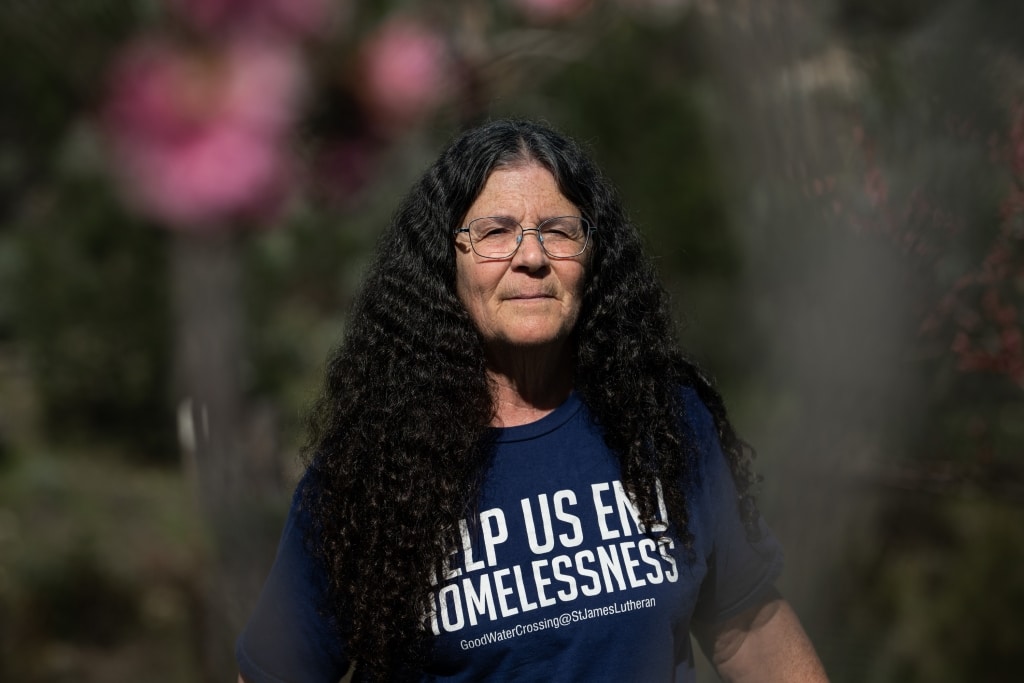
Without her schizophrenia medication, which she often resists taking because she doesn’t perceive herself as having an illness, Ann experiences auditory hallucinations, paranoid delusions and during one acute episode, was even unable to recognize that Fernandes was her mother.
In October of 2025, after years of circulating between the streets, jail cells, temporary housing and temporary holds in hospitals — much of the time unmedicated — a judge declared Ann incapable of meeting her most basic human needs. She was placed into a legal status known as a conservatorship in an attempt to preserve her life.
The judge’s ruling directed decisions about Ann’s personal finances and medical needs into the hands of a court-appointed staffer with the Shasta County Public Guardian office. Public guardian staff oversee certain kinds of conservatorships in which no family member is able to take on this role.
The type of conservatorship Ann was placed under lasts up to one year and can be renewed if the court deems it necessary. But whether she’ll have reliable housing to return to when she’s released from her conservatorship in a year, or a strong enough support network in Redding to maintain her health without the help of institutional caregivers, is still unresolved.
Prior to being conserved, like most adults, Ann was legally entitled to make her own decisions regarding her medical care — including whether or not to take her mental health medications, show up for doctor’s appointments or willingly go to the hospital for help during a difficult breakdown.
Last fall when a Shasta County psychologist assessed Ann to determine whether she’d qualify to be conserved, they found her unable to think clearly enough to care for herself physically. Her illness was preventing her from seeking adequate shelter, food and clothing, or managing a medication regimen, according to assessment documents included in her conservation paperwork. Hospital visitation notes showed that she was afflicted by wounds all over her body, including an abscess.
After being conserved six months ago, Ann was admitted to a nursing home in Pasadena. Since then, her cognizance has shifted dramatically as the result of being consistently administered her medication by caregivers, her mother said.
By March, Ann was able to communicate clearly and lucidly with Shasta Scout by phone, as she gave permission for her story to be shared, something she agreed to only with the use of a pseudonym. When asked how she’s feeling about the decision made by a judge to place her under public guardianship, Ann said it’s been difficult but was needed.
“It’s hard,” she said, describing the restrictions that come with her conservatorship — particularly the lack of access to her own finances, which makes buying the art supplies she loves almost an impossibility. “But I was in bad shape. I walked away from hospitals and stuff, so it was kind of a necessity.”
A temporary salve
Along with removing the right to self-determination, conservatorship can also put a huge strain on familial relationships, sometimes pitting the wishes of an adult child with a psychiatric condition against that of their parents or other family members.
And there are other complexities, as experts on the conservatorship system have pointed out. For one, conservatorships sometimes place a patient in private medical centers that operate with little accountability, where investigations have found widespread neglect and even physical and sexual abuse within some locked facilities.
Another issue is that the medical centers where people are placed to receive long-term mandated care are often located across the state from where their families live, reducing the kind of support network that can make or break mental health recovery. But despite those and other issues, the number of conservatorships in California could increase soon — driven by California’s push to overhaul mental health infrastructure — which added severe substance use disorder to the criteria by which people can be conserved.
Ann’s mother Fernandes said she’s terrified that once released, her daughter won’t be able to find adequate housing and will fall behind on her medications again, starting another downward spiral.
It’s happened before. Back in 2016 when she was in her mid-30s, Ann was conserved for about six months. After her release from the program, she ended up back on the streets and deteriorated over the following years until her new conservatorship ensued last fall.
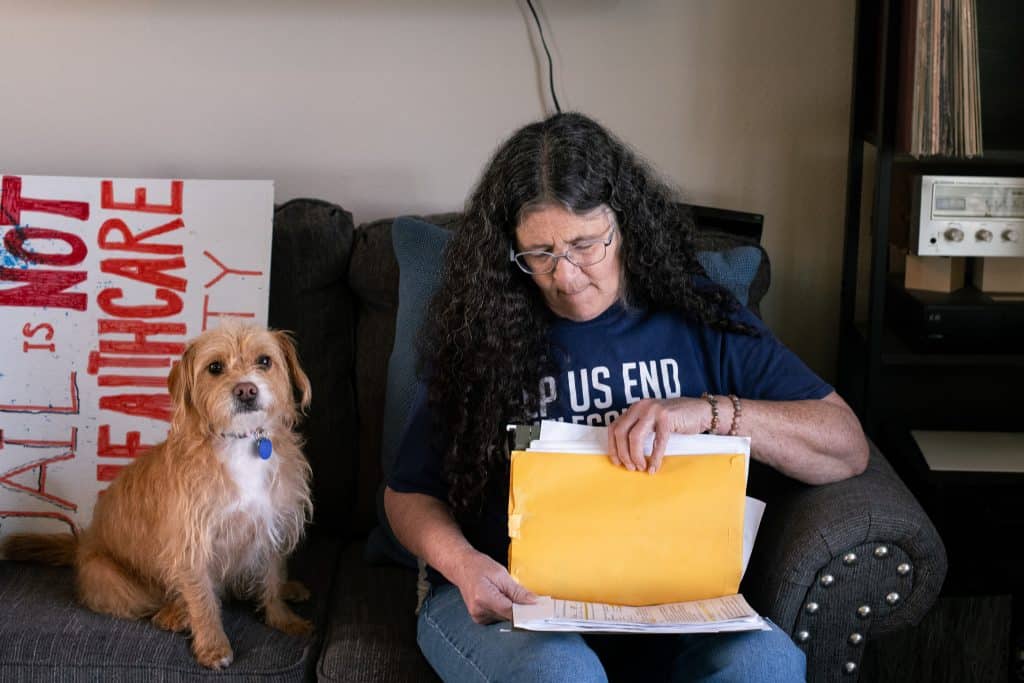
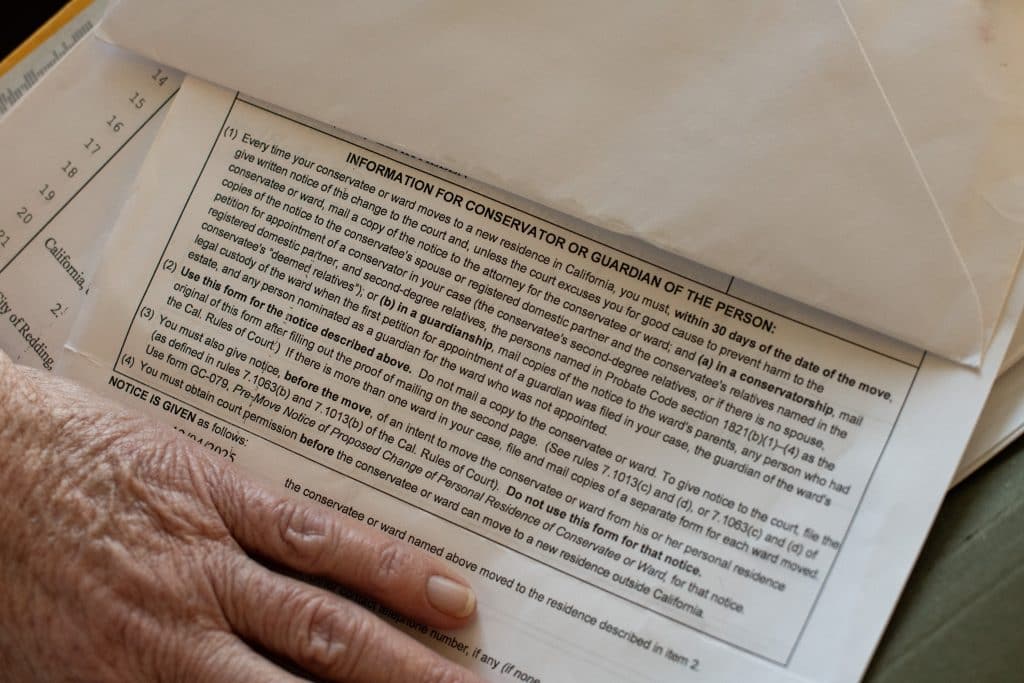
Marci Fernandes looks through paperwork related to her daughter’s conservatorship. Photo by Salgu Wissmath for Shasta Scout/CatchLight
Advocating for the county to override her daughter’s rights twice was an extremely difficult decision both times, Fernandes said. But in the time between Ann’s conservatorships, there were particularly distressing events that led her mother to conclude that the legal process of temporarily removing Ann’s liberties was the only way to save her life.
At certain periods while living on the street, Ann would walk for miles, Fernandes explained, exhausting herself as she combated debilitating paranoia. Even that coping mechanism disappeared in December of 2024, when Ann contracted a spinal infection that left her paralyzed from the waist down, significantly complicating her health needs. She’s now prone to pressure wounds from her paralysis. If these wounds go untreated, they could lead to a fatal bout of sepsis within a few days time.
The infection began in jail, Fernandes said, where Ann experienced back pain and urinary incontinence while she was being held on felony theft charges. She had been arrested for stealing makeup, because she was trying to cover open facial sores resulting from her methamphetamine use. Fernandes said her daughter asked for help from jail staff for what she described as “excruciating” pain, but didn’t receive it.
In the aftermath, Fernandes sought legal counsel, and a civil suit was filed against the county on Ann’s behalf. But at the time, Ann wasn’t able to communicate effectively with her lawyer due to her mental health condition. The case is still ongoing. The filing alleges that the sheriff and the jail’s medical staff “had reason to know [Ann] was in need of acute medical care,” but were “deliberately indifferent to [her] medical needs.”
The Shasta County Sheriff’s Office did not respond to a request for comment.
Recalling the whole ordeal makes her cringe, Ann said, emphasizing that she’s sharing her story because she doesn’t want something similar to happen to someone else in the future.
But in spite of Ann’s dire medical state, Fernandes has faced resistance from her daughter as she tried to help with her medical needs, including encouraging her to stay consistent with her schizophrenia medication. That’s largely because during periods of acute psychosis, Ann is not able to perceive that she has a psychiatric illness — a common symptom experienced by people with schizophrenia.
Anosognosia is a neurological feature that makes people incapable of recognizing their own cognitive or mental health symptoms. Research suggests it can be associated not only with schizophrenia but also with dementia and strokes. The condition is sometimes referred to by clinicians as a “lack of insight” or “lack of illness-self-awareness.” But it’s not the same as psychological denial, according to the Alzheimer’s Association, which writes that “people with anosognosia may truly believe nothing is wrong, even when symptoms are obvious to others.”
That’s been a huge barrier to Ann’s well-being, Fernandes said, noting that “she doesn’t think she’s ill. You can’t convince her that she’s ill.”
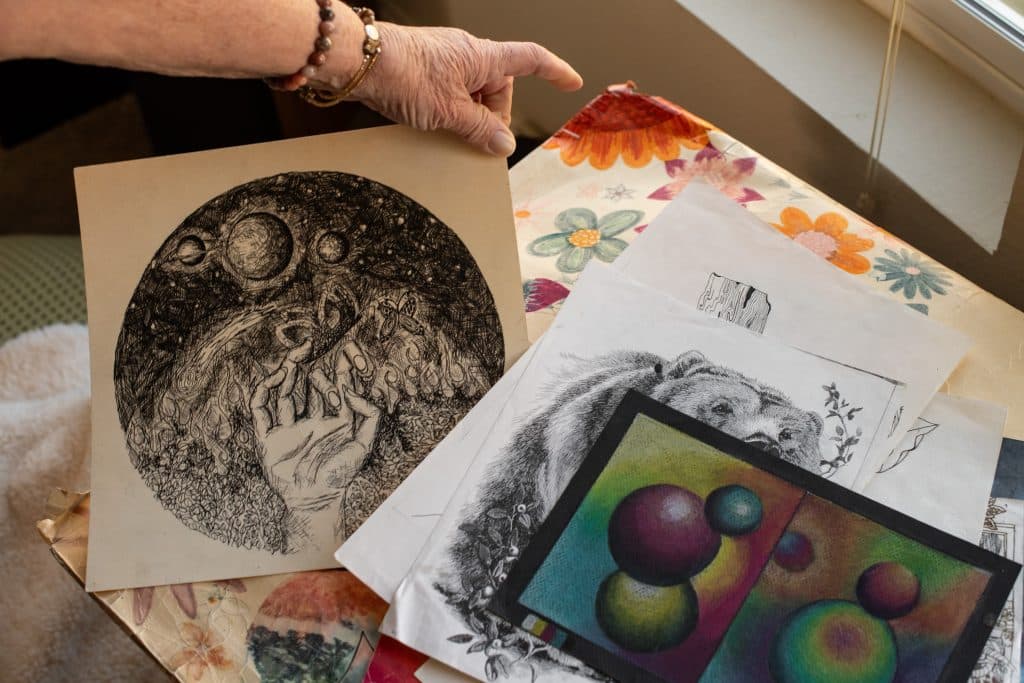

Marci Fernandes shows off her daughter Ann’s artwork at her home. On the right is a drawing Ann has made since being conserved at a nursing home in Pasadena. The drawing depicts Fernandes’ emotional support dog, Stella. Photo by Salgu Wissmath for Shasta Scout/CatchLight
In the past, when she was prescribed a long-acting injectable schizophrenia medication, Fernandes said Ann got a tattoo at the injection site to remind herself that she has a condition that requires medication. As Ann’s conservatorship documentation showed, when she has received consistent medication, she has been able to think clearly. During one particularly stable period, Fernandes recalled, Ann even leased an apartment with the help of a local nonprofit.
Though clinicians have innovative ways of working successfully with patients who experience a lack of illness-self-awareness, Ann’s anosognosia factored significantly into why her mother felt a conservatorship was necessary — even if next steps in her care still aren’t clear.
But advocating for her to be conserved is a major intervention. The erosion of one’s rights under a conservatorship is a serious undertaking, requiring an in-depth legal process, psychiatric evaluation and a hearing before a judge.
Describing that effort, Fernandes said she wished the court system would take anosognosia more seriously when assessing whether someone should be conserved.
But Alex V. Barnard, the author of Conservatorship: Inside California’s System of Coercion and Care for Mental Illness, cautions that anosognosia is only part of the puzzle when it comes to weighing potential outcomes when conserving someone.
“Anosognosia is completely real, and it’s the reason for involuntary treatment, to some degree,” he said, with a caveat.
“I think anosognosia is given to families, handed to families, a bit like the key that unlocks everything — like the explanation for everything, [but] sometimes it really distracts from conversations about what the quality of care is for people.”
A fraught history and a complex future
Even for someone in Ann’s condition, today’s laws privilege a patient’s right to refuse medical care, in part because of California’s fraught history of “medical paternalism.” The term refers to how much power is given to doctors to make medical decisions on behalf of their patients, potentially at the expense of a person’s autonomy over their own health.
The type of conservatorship Ann was put under is what’s known as an “LPS” conservatorship, which lasts for a maximum of one year and can be renewed annually. LPS stands for the Lanterman-Petris-Short Act.
Before the legislation was introduced and signed into law by then-Governor Ronald Regan in 1967, disabled people could be stripped of their rights and held indefinitely in destitute state-run psychiatric hospitals. According to a 1966 report on the court system’s lack of due process when it came to people with psychiatric illnesses, judges spent an average of 4.7 minutes before deciding whether to commit people to state hospitals, potentially for a lifetime.
The 1967 LPS Act overhauled this system by attempting to ensure safeguards for the rights of patients. It was enacted as part of a larger process that totally restructured the state’s approach to psychiatric health. Rather than locking up patients en masse with little regard, the new system created a different process for involuntary care that established a legal definition of the term “gravely disabled,” the criteria required for the state to subject someone to an LPS conservatorship like Ann’s. The legislation also created short-term 5150 holds, in which patients can be involuntarily held in a hospital for 72 hours if deemed necessary by law enforcement or a medical professional to ensure their well-being.
After the LPS Act passed, many state-run psychiatric hospitals were eventually shuttered across California, putting the onus on local communities and the private medical industry to fill the vacuum. But bridging the subsequent gaps in care never really happened in under-resourced counties. As it stands, there is no centralized public guardian agency across California. As a result, how conservatorships are handled — and how well-resourced each local public guardian office is — varies from county to county, a decision left somewhat to local officials’ discretion when it comes to budgeting priorities.
Conservatorship expert Barnard called state hospitals of the past “an absolute disaster,” but said the conservatorship system has been by no means an adequate solution for the most vulnerable people, including those severely affected by anosognosia.
Barnard cited multiple reasons why someone with a psychiatric illness may refuse treatment, even beyond a lack of self-awareness about their condition. People may have traumatic memories of being involuntarily held in a hospital during a past breakdown, or perhaps the medication that someone was forced to take resulted in significant and unwanted side effects.
“The fact that somebody is not doing well and looks like they should be in a hospital is different from whether or not the hospital will actually solve their problem,” Barnard said, emphasizing that while conservatorships are a relatively rare intervention, there’s no statewide data about what the actual outcomes are. In his experience, many families often feel a sense of disappointment once their family member is conserved as they realize that the price for much-needed treatment is a complete reliance on county officials.

“And the county is really not a particularly benevolent parent for all sorts of reasons that aren’t necessarily the fault of anyone,” Barnard emphasized.
Noting that county conservatorships are often poorly funded at the county level, Barnard said patient outcomes tend to depend on something else: the private individuals or organizations operating the institutions of care where conservatorships pay to place clients.
“At the end of the day, the conservatorship system really hinges on these private operators of long-term care institutions that operate with very little accountability,” Barnard said.
In recent years Gov. Gavin Newsom and others at the state level have pushed forward significant legislation intended to overhaul California’s mental and behavioral health infrastructure, something Barnard sees as potential progress.
“They’re fighting against not just mental illness, but the accumulated consequences of every failure of the U.S. system,” he said, referring to the consequences of California’s housing shortage and mass incarceration. “All of those things are creating mental illness much faster than even these huge investments can undo it.”
But similar to the LPS Act itself, recent reporting has found that some of the newly implemented measures — such as the one that requires a dedicated CARE Court in every county where judges rule on whether to mandate treatment for people with severe mental illness — face steep obstacles in under-resourced counties that aren’t able to connect people with stable housing or keep them in treatment.
Other researchers and clinicians Shasta Scout spoke with agreed that, though sometimes necessary, the conservatorship system is extremely fraught.
Krissa Rouse is a licensed clinical professional counselor who works with the Schizophrenia & Psychosis Action Alliance and provides clinical care at a psychosis clinic at University of Maryland, School of Medicine. Speaking from a clinical perspective, she said, “It’s a slippery and dangerous slope to say people with schizophrenia, who may experience anosognosia, should be given a fast track to guardianship or conservatorship.”
But Rouse sympathized with the anguish many families feel when their loved one is experiencing a psychotic episode, saying some push for conservation because they knew the “magnificent person” who existed before the illness.
“They want that person back,” she said. “And they’re right about the fact that their children are among the brightest of the bright, the most talented, most creative.”
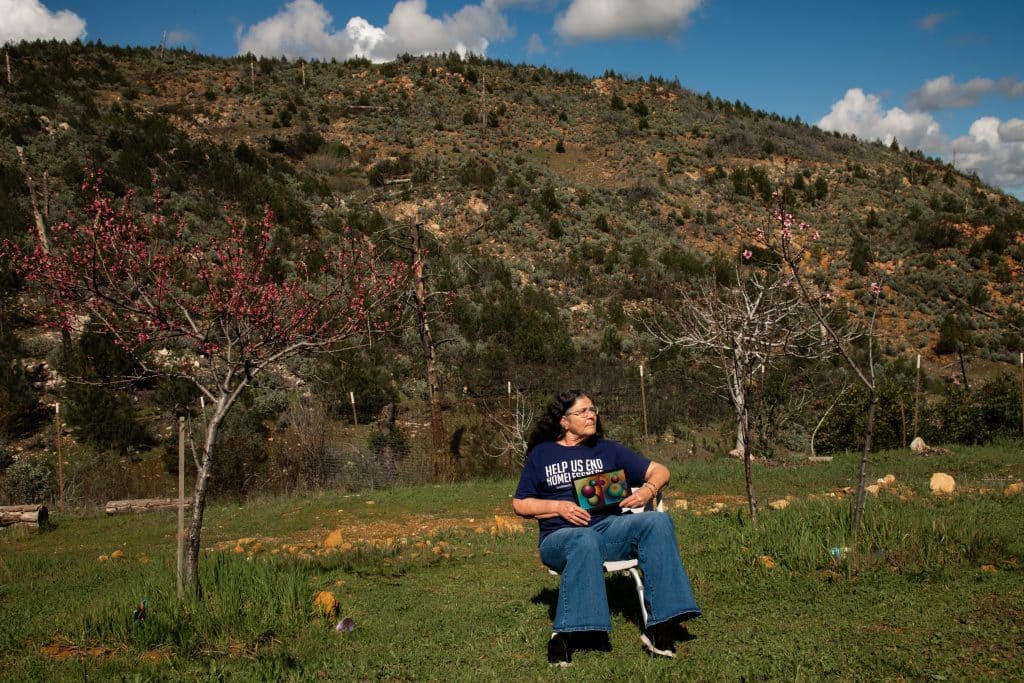
Marci Fernandes poses for a portrait with a piece of her daughter’s artwork in her backyard. Photo by Salgu Wissmath for Shasta Scout/CatchLight
Weighing survival against liberty
It may have been many painful years in the making, but today Fernandes said she is thankful to finally see Ann in a setting where she’s coming down to baseline, hopefully the first step in facing what has upended decades of her life.
“I’m happy that she’s in a place where they can do proper medical care, as far as forced treatment goes, with [taking] her meds,” Fernandes said. “She’s improved so much since she’s been down there.”
But the recent change to Ann’s rights also comes with some significant drawbacks.
With her daughter’s nursing home more than 500 miles away, Fernandes said it’s extremely difficult for her to visit Ann to see for herself whether her needs are being met.
“I want to make sure that [the facility] is what it’s supposed to be,” Fernandes said, explaining that she doesn’t necessarily trust a public official with Ann’s complex needs due to her combined paralysis and psychiatric diagnosis.
Fernandes also worries about the more practical role that a parent can play in caring for a disabled child, to ensure that they’re on the right track toward healing.
“Ann gets depressed and doesn’t want to participate in physical therapy, but will if she’s nudged to do it,” Fernandes explained. “There’s nobody there that I can count on [to nudge her], you know. She’s just too far away.”
A few months after Ann was sent to Pasadena, Fernandes got a call from the public guardian. Her daughter had kept a storage unit for years, and the county now intended to sell what was salvageable to help pay Ann’s medical bills before throwing away the rest without her involvement. Though the county has no legal obligation to include her mother either, Fernandes insisted they should at least allow her to be a part of the process if her daughter can’t be.
This was an example of the downsides of Ann’s reality now that “all her rights are taken away,” Fernandes sighed.
With some coaxing, the county acquiesced. Fernandes met Ann’s county-appointed conservator at the storage unit and was able to salvage some mementos.
Much of it was damaged from the rainstorms that swept through the North State this winter, but Fernandes was still flooded with memories. She took home children’s books, baby clothes belonging to Ann’s son and some of her artwork and photographs, even if it was all waterlogged.
This story was produced in partnership with CatchLight as part of their three-year Mental Health Visual Reporting Initiative.
Do you have a correction to share? Email us: editor@shastascout.org.
Comments (8)
Leave a comment
Related Articles

Redding No Kings protest draws 2,000 as seniors and veterans show up and speak out
Community members gathered in Redding today to express discontent with the current federal administration. The event, which was organized as part of nationwide protest action, included dozens of veterans and numerous seniors, some of whom attended in wheelchairs.

Redding seeks community members for two committees aimed at providing advice on the city’s financial processes
The city is accepting applications to join the newly-formed Financial Advisory Committee and the newly-formalized Audit Committee. Both applications are due April 17.
Shasta’s Measure B will remain on the ballot
A legal challenge to the ballot measure was dismissed because it did not specifically demonstrate how placing Measure B on the ballot would violate the law — even though implementing it appears illegal.
“We said she was mentally ill. And he said, ‘She’s a druggie. You guys are old hippies. You probably graduated from Berkeley or something.’ You know, real condescending.”
They feel the same way if they believe a murdered or missing person used drugs
I tried to give my next store neighbor Shasta County Detective at the time Will Gardner husband of Judge Molly Biglow information about missing person Cort Jones.
The first thing uninterested he said was “he is a druggie”…
While Shasta Scout is a major improvement over ANC in terms of enthusiasm, it is still so very far from independent journalism.
Reagan was not a mental health hero. He threw out the baby with the bath water. He went after saving money for the state and used the involuntary placing people wrongfully into mental heath system as the reason. That could & should have been addressed without the shutting down on the half way care houses that were even in Redding and people were unaware of them. Also he got rid of 1/2 or more of the mental health workers leaving the remaining patients in an understaffed situation that was already bad. He stated that shifting the care of mental health to the communities would save the State money. I remember the day that all the shut down happened at once. I was down town in Redding. We were much smaller city. You recognized people you. There were a couple odd folks but they were harmless and they lived mostly with family. The people who had been living in a protected environment. Many had been in these homes while they readied themselves after mental health crises had been stabilized. I had had a conversation with one lady who was going home to her hubby and kids in weeks after having suffered a complete breakdown. It had been a two year journey and she told me about the halfway house she was in and how some of the folks were there because they had no family that could care for them they were a bit odd but they were treated with care and respect and constant supervision. On the day Reagan set for the shut down across the state the disappearance of an overwhelming number of hospital staff with little to know time preparations. The appearance on the streets of a significant number of folks with mental health issue that were obvious was a shock. They were now homeless. Reagan went on to do this on a national level. One goal that needed to be addressed led was attacked while ignoring the big picture . Reagan had no understanding of mental health and he had no desire to learn or care. It was all about saving money for him. He was lucky he had wealth and family to care for him as his mental health sadly changed. Unlike the folks on the street.
Such a well-developed, textured piece, Nevin. Thanks so much for connecting with S&PAA on this—we’d love to work with you in the future.
Marci and Ann,
.
It’s noble that you shared your story.
.
Thank You
Nevin, this is an outstanding article. You put a real face on just a microcosm of the challenges Shasta County faces daily, from a client, to a provider, to the family and community, and detail the human cost (not just economic) to all of us.
.
Thank you.
Thanks Nevin for the journalistic footwork needed to contextualize “Ann.” It’s well timed with the True North and 60-unit Anderson facility proposals, as well as Britney Spears’ latest arrest.
.
Ronald Reagan draining the assylum system as a root cause for increased homelessness has always been a dusty talking point so I appreciate seeing it in writing again. 1967–Empowering civil liberty was trending and it’s hard to argue for lobotomy, shock therapy, and forced steralization. These occured before social media and most if not all of the participants are now gone. Public policy is reactionary but without the history you dont ķnow how we got here.
.
I would say with no suprise, methamphetamine use is mentioned right off the bat and, conversely, late mention of Ann’s son was a jarring (unless i missed that earlier in the piece). There is a public system in place for: fostering her minor child, child support payments from the ex, incarceration if Ann commits a crime, and a system for public convalecense was triggered by her paralysis, yet there is no system for the mentally ill who are not disabled or violent.
.
The reason lies at the foot of the most interesting theoretic debate of modern time— civil liberty vs overpopulation. The quality of living. The supreme court made sleeping outside on a pillow illegal in 2024 (Grant’s Pass vs Johnson). Another page in reactionary policy. Where is the next Australia to send the undesirables?
.
Between meth use and a baby reveal, we have Marci suing and blaming everyone but her daughter, a word salad from Gov Newsom, and some gobilygoop from a “professional counselor” on whether crazy people know they’re crazy. Mix this with the chicken and the egg of “Did the drugs make me psychotic or do i medicate my psychosis” and you can see why poor people are in the news being canceled for dumping water on homeless people and evicting squatters.
.
The system will remain a mess untill a formal decision is made as to how we violate our relatively recent civil rights.
You are a good mom, Marci! It was worth all your hard work to get your daughter the help she needs.