
In Hopes of Staving off Drought, ACID Board Agrees to Accept Less Water During Critically Dry Years.
The Board of the Anderson Cottonwood Irrigation District voted unanimously to adopt an agreement that reduces water restrictions during critically dry years. Some constituents oppose it, in part because they believe engaging in further deals with the federal government is a losing proposition.
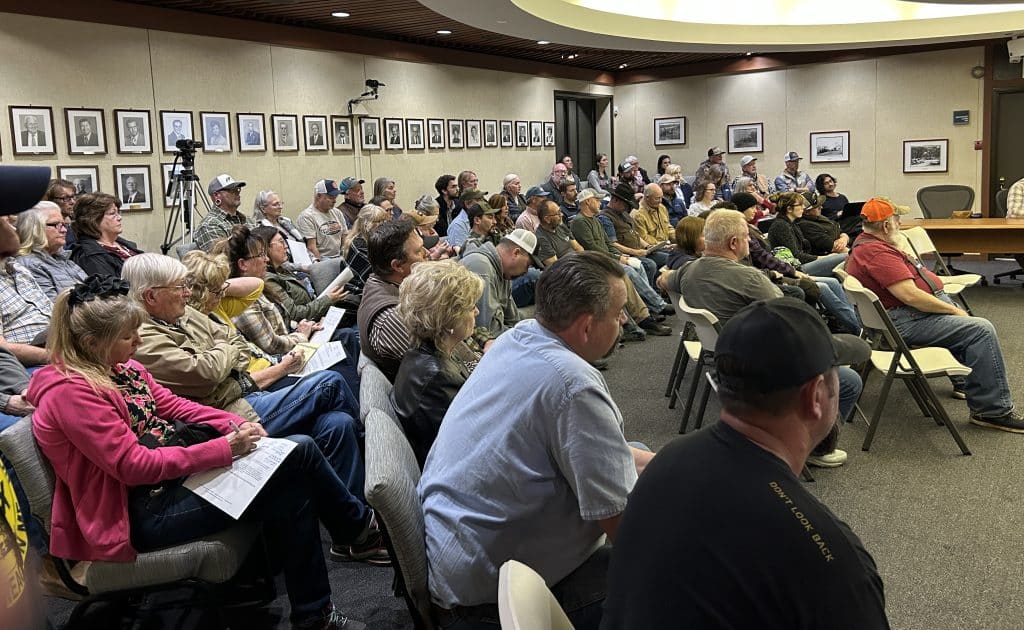
Farmers in parts of Shasta and Tehama counties have officially entered a new contractual agreement with a party which many in the District view as an existential threat: the federal government.
On January 9, the five-member board of the Anderson Cottonwood Irrigation District (ACID) voted unanimously to opt into a federal Drought Protection Program (DPP). The agreement is the result of negotiations between the federal Bureau of Reclamation and the Sacramento River Settlement Contractors (SRSC), an umbrella group of water irrigators that includes ACID.
The DPP lays out a formal contingency plan for how water will be used by ACID and other SRSC members during California’s “critically dry years”. Board members say the agreement in a joint effort by regional, state and federal officials effort to prevent the kind of devastating drought conditions that ACID water users faced during 2022.
Under current arrangements, ACID’s water allocation during critically dry years is supposed to be at least 75% of normal. Under the new twenty-year agreement, the allocation would be no less than 50% of normal during the first ten years and no less than 70% of normal during the remaining ten years.
ACID Board President Dan Woolery reminded users during the meeting of the four specific criteria that will be used to forecast whether or not conditions are considered “critically dry”, causing the DPP restrictions to go into effect. Similar conditions have occurred three times over the last ten years. Whether they’ll occur in the next ten years, or how many times, is anyone’s guess.
In return for ACID’s voluntary agreement to receive less water if and when critically dry periods occur, the District will receive a minimum of $14 million dollars. The money can be used to improve the District’s antiquated and leaky canals to reduce the loss of valuable water that’s currently occurring as ACID allocations travel from the water’s source in the Lake Shasta reservoir to individual irrigators on their properties.
The negotiations that resulted in the DPP began in the aftermath of California’s devastating 2022 drought. That year ACID received only 18% (instead of the contracted 75%) of the District’s typical water allocation after a federal judge ruled that the Bureau of Reclamation and other agencies must work to ensure the survival of endangered salmon amidst the drought.
The central tension of the DPP is that there is no steadfast guarantee to prevent something similar from occurring again. The agreement doesn’t preclude the state government from declaring a state of emergency, or activating some other legal process that could undermine the DPP’s rules of engagement, as the court ruling was used to do in 2022.
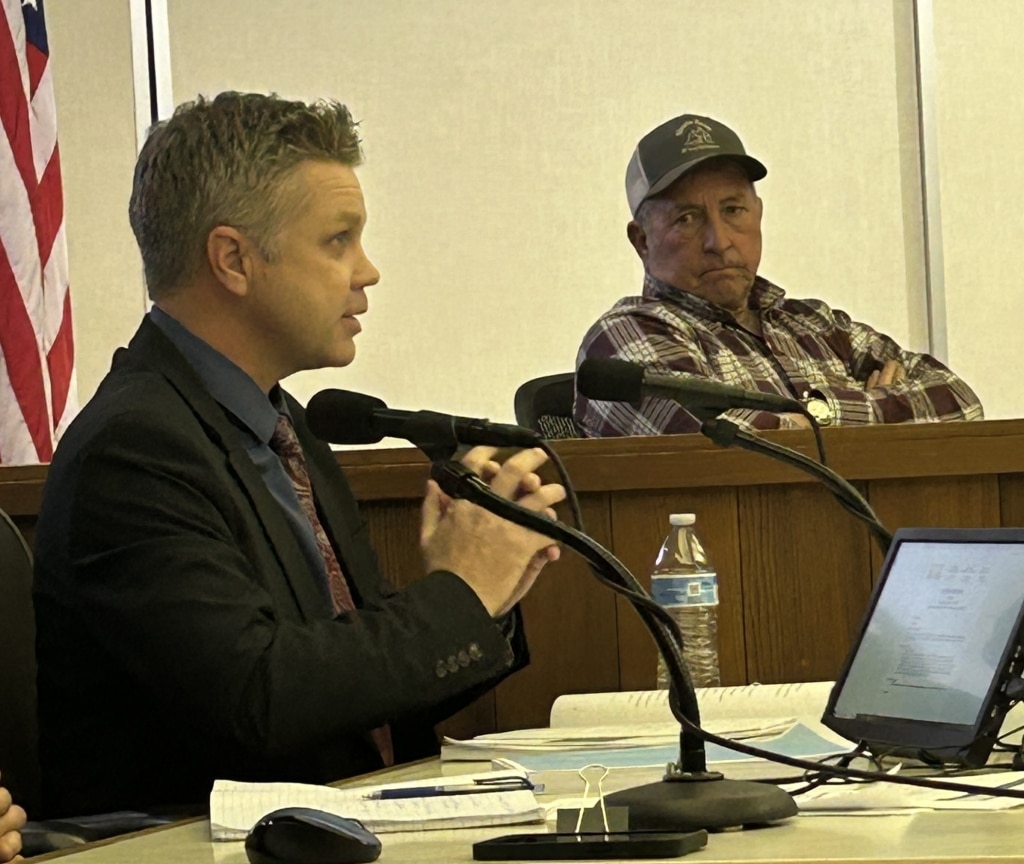
On Thursday, ACID’s legal counsel, Dustin Cooper, addressed the potential that the terms of the DPP could become largely meaningless in the face of a state-wide emergency declaration or another similar legal maneuver. The bottom line? All agreements, whether ACID’s typical water allocation or those under the DPP could be altered by the federal government under the right circumstances.
“It’s a risk,” Cooper emphasized, “whether this agreement is entered into or not.”
The DPP’s obvious central weakness presented a complicated conundrum for the ACID Board. During public comment, water users, many of whom showed clear frustration–not so much with the ACID Board as with the state of California’s water management—presented the same questions again and again in a variety of ways. Why engage further with state and federal agencies who we can’t trust? Why do we think they’ll even follow this agreement once we’ve signed in?
For Dan Woolery, ACID’s Board President, the answer is clear. He told users he supports the agreement, flaws and all, because there’s significant buy-in from multiple agencies that share similar risks.
“The impacts (of the 2022 drought) for everybody, everywhere, were catastrophic,” Woolery said, “and that’s why (the DPP) has some chance of actually really being a positive thing… Everyone says ‘we can’t do that again’, so I think that commitment is there,” he continued.
Ronnean Lund, who worked with Woolery and others in SRSC to help inform the negotiation process with federal agencies, was a little more blunt.
“Before I walked in here, I would have abstained from taking a vote on this, because I am completely torn,” Lund said. “We are screwed if we do and screwed if we don’t.”
Ultimately, she based her vote to support the DPP on the belief that ACID now “has a seat at the table” with the agencies that hold significant bargaining power for control of California’s water supply. She was also influenced by statements from ACID’s legal counsel, that signing into the DPP will ensure the District will continue to be protected from legal action if irrigators accidentally kill endangered wildlife in the process of diverting water.
Board member James Rickert, who, like Woolery and Lund was elected to the ACID Board in response to the devastating 2022 drought, emphasized the impact the $14 million in DPP funds could have in improving what he called “the most inefficient irrigation system we have in the state of California.”
Pointing out that ACID often doesn’t even use 100% of the water the District is allocated during a grow season, Rickert was among the other Board members who suggested that ‘tightening up’ the canal with more significant infrastructure repairs will mean less water goes farther.
“The biggest need for this district isn’t the quantity of water right now,” Rickert clarified. “The biggest need for this district is actual infrastructure.”
ACID Board members all made it clear they felt somewhat conflicted about the plan. Counsel Cooper seemed to sum up the Board’s general disposition about the agreement when he said, “nobody likes this, nobody would have chosen this, but the thought is that this is making the best out of what otherwise would be a pretty negative situation.”
Woolery agreed, saying unified decision-making alongside other SRSC contractors was the right course of action for ACID.
“Do we become part of what’s happening,” he asked, “and try to benefit from it the best we can? Or do we make a futile gesture and give everybody the finger?”
Some water users answered that question directly, suggesting in no uncertain terms that they believe the Board should “stand up to” the federal government and “take a stand.” During more than an hour of public comment, many irrigators expressed outright astonishment about, and disapproval of, the Board’s willingness to cooperate with state and federal agencies at all.
County Supervisor Chris Kelstrom, who lives within the ACID area but doesn’t currently use it for irrigation, was the first to speak. He took issue with what he interpreted as the Board’s capitulation to state overreach and comparing ACID’s current situation to that faced by Nevada cattle rancher Cliven Bundy, whose famous stand-off with federal agents over a dispute related to grazing permits was successful.
“Cliven Bundy knew that if you have a right, and you have to get a permit to exercise that right, that turns that right into a privilege,” Kelstrom trumpeted, directly confronting Board member Rickert. In a conversation with Shasta Scout after the meeting Kelstrom said while he still wasn’t happy with the new water agreement, he had come to at least some understanding of the Board’s decision.

Joanna Brown, who was an active ACID community organizer during the 2022 drought, focused her questions to the Board on her skepticism about the core purpose of the agreement. Although the Board answered her questions directly and thoroughly, Brown told Shasta Scout later that she still felt uneasy about the District’s approach to the DPP process, calling the January 9 meeting a “dog and pony show” for the public.
“Ronnean (Lund) did dig in—I could give her credit for that, and the changes that Dan (Woolery) did make (to the DPP on behalf of ACID) were excellent changes,” Brown acknowledged, before adding that she feels the two Board members should have involved irrigators in the DPP process months earlier.
After hours of discussion, and a little shouting, it came time for the Board to vote. The importance of the moment was punctuated by the time every Board member took to make a personal statement about their individual decision, despite the loud sighs of some water users who were ready to be done for the night.
Woolery and Lund cited the importance of a healthy fishery—if not for the sake of the fish themselves, at least for farmers whose federal water allocations prioritize the well-being of Chinook salmon, a keystone species.
“If you think about it, the best thing that can happen for agriculture in California is a healthy fishery. If we’ve got abundant salmon in the (Sacramento River), then the pressure on our taking more water is going to go away,” Woolery said.
Lund seconded this. “This particular agreement is based on the fisheries,” she reminded the public. “So theoretically, 20 years from now… (the Bureau of Reclamation) can’t come back and hang their hat on that,” meaning once endangered fish are revitalized, fisheries can no longer be prioritized in water initiatives that limit irrigators’ water access.
At 9:30 pm, a weary ACID Board moved to closed session to conduct other business. An important decision lays behind them, but the massive work of resuscitating a District beset with aged and ailing water infrastructure still lies ahead.
That work will continue to require input from the disparate perspectives of ACID’s water users. Their ongoing frustration makes one thing clear: the seeds of resentment grow fastest in dry soil.
Do you have a correction to share? Email us: editor@shastascout.org.
Comments (7)
Comments are closed.
Related Articles
Decision on city financing for the Ironman competition tabled by Redding City Council
The council’s decision followed a tense discussion on financial spending. The item will be brought back into discussion on Feb. 17. An Ironman official says he’s not concerned about the delay.

Shasta man had illicit marijuana grow and underground bunker in addition to illegal weapons, CHP says
A press release from the California Highway Patrol alleges that Michael Kamfort was operating an illegal grow when he was arrested on weapons charges, including manufacturing a “ghost gun,” on Tuesday in Anderson.
Supervisor Kevin Crye responds after arrest of Shasta man on felony gun charges
Community member Michael Kamfolt is facing charges including alleged illegal possession of a machine gun. Crye released a video yesterday referring to him as a friend and saying he had no prior knowledge of the circumstances related to the arrest.
I can’t remember the last time that the Sacramento river ran dry? I’m sure it’s happened but I just don’t remember when? Maybe it happened before I was born?
Yes, it happened periodically before the dam was built (as told to me by a very old man some years ago).
Hey Mr. Kelstorn, why don’t you get tips from Clive Bundy what it was like in a Federal prison for doing nothing for his land and country ?
Hey Ms. Lund, I say again, why don’t you apply that same logic as the Chair of the ‘not without any lawful power’ Shasta Co. Election Commission ? You seem to have two personalities going here…one when you don’t think you should obey the State of CA and its election laws; and the other when you sit on the ACID Bd. of Directors….who are you ?
Nevin, very nice report, thanks.
About Kelstorm…. Cliven Bundy? Really?
This is like secessionist Terry of the Water Users PAC warning Shasta County in a board of Supervisors meeting last month that Matt Gates was going to take care of the situation… But despite the militia rhetoric, the ACID Board made the right call.
No Mr Kelstorm, We don’t live in a modern-day Deadwood. Fun TV series though…
Great reporting, and the last sentence was wittingly appropriate.
Has Scout checked on the number of lawsuits filed because of damage incurred?
Doug: We have not but we’re well aware of how devastating the 2022 drought was. We reported on it all the way through.