
Inside Public Service: How to Recapture the Joy
In this Opinion column Salter coaches someone at Shasta County’s HHSA who been experiencing burn out as they deal with constant change, rising inflation, and lack of control over his working environment.
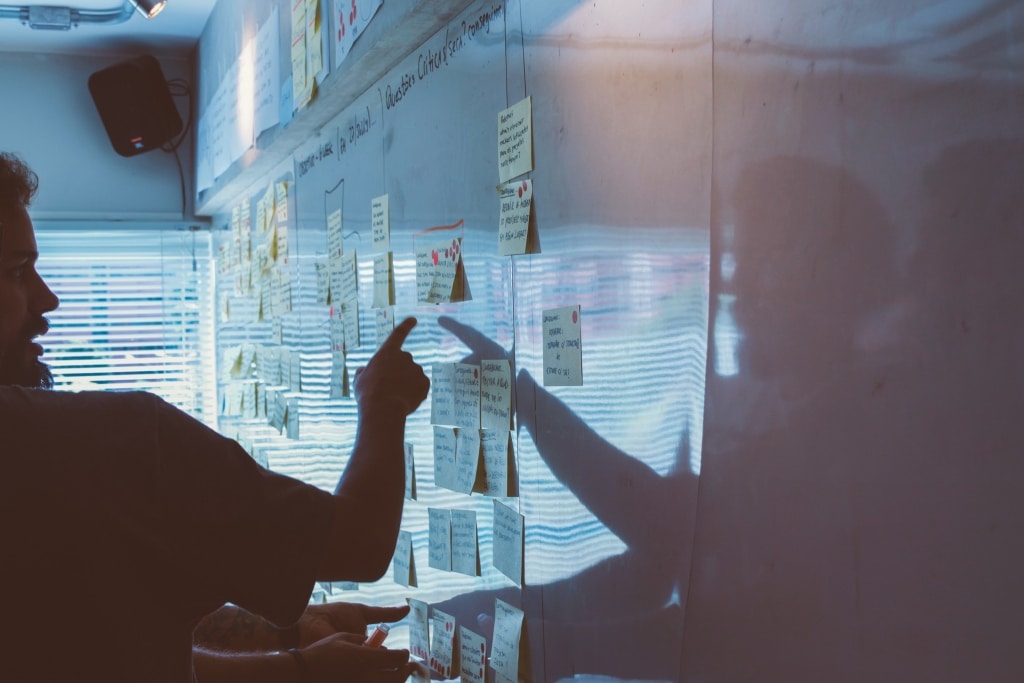
Ed Note: Inside Public Service is an opinion column by Irene Salter. It’s focused on providing a window into the workings of Shasta County government at a human level. Learn more about the series here.
I met Mark (not his real name) in my home office. He arrives to our session with an energetic and confident demeanor, casually dressed in a T-shirt.
“The struggle I’m bringing today,” Mark says, “is about the burnout of doing the everyday work. Especially the burnout that has come with the pandemic and the instability in leadership in Shasta County.”
Mark works for Shasta County’s Health and Human Services Agency (HHSA). Just this spring, he and other members of the United Public Employees of California Local 792’s Shasta County General Unit went on strike demanding a substantial wage increase. They were hoping to retain existing staff who are struggling from the results of inflation. They also wanted to recruit new employees to fill the huge number of vacancies at HHSA and other departments.
Mark laments, “My struggle has been how to maintain motivation. There’s a lot of jaded people in public service. I’ve tried very hard not to become that person. But with the changes in leadership and the seemingly arbitrary changes, it’s becoming increasingly difficult to not become that way. One of the outlets I found was participating in the strikes. It felt like regaining some control.”
Mark describes to me how lately it feels like he’s just going through the motions, trying to make it through the day. In contrast, engaging with the union offered him and others a sense of power and agency, so that they weren’t just at the mercy of everyone above them.
I’m curious about where his motivation comes from and ask, “So what brought you to HHSA initially?”
“I had friends of the family who worked for the county. Jobs with the county pay better than most and are solid, stable, career-type jobs. They’re very easily accessible, even without a degree. Well, I got a job. I had no idea what that entailed. As I started doing the job, I realized that this is an avenue for helping people. It’s actually a really great thing to do. I had a knack for it, and helping others do it well. I’ve steadily moved up.”
Mark’s rise within the organization took place against a backdrop dominated by change—new legislation, new regulations, new leadership. He says, “Everybody eventually reaches a threshold of that was one too many changes, I’m done! And when that happens, they retire and everyone else shuffles up the chain, including me. Then, in 2020 with the pandemic, they were constantly giving employees the short end of the stick. It’s not the county per se. The entire country seemed to be trying to protect the economy more than the people. That’s what made me more jaded than I would otherwise be.”
As Mark describes his situation, I hear several things. The confidence he carries so easily is rooted in a deep desire to make an impact on the community and support fellow employees who are getting the short end of the stick. Yet that inner strength is edged with exhaustion and burnout.
I refer to the work of Bill Burnett and Dave Evans, faculty at Stanford University’s Design School. Together they wrote the book, “Designing Your Work Life” in which they describe two different ways people stay motivated. There are ‘all in’ people, who find passion and purpose in the work they get paid for. (I’m an ‘all in’ kind of person.) Burnett and Evans call these all in people the unicorns.
More common are ‘portfolio’ people who find fulfillment across all the different areas of their lives when taken together. My husband, Jason, is a portfolio person. He builds complex websites for his job, something that exercises his strengths as an engineer and problem solver, but, his work is time and location flexible so he can be a great dad, sit on multiple boards, and contribute to Rotary, activities that feed his need for family, social interaction, and community engagement.
Once I explain the framework, Mark quickly identifies himself as a portfolio kind of person. So I ask him to look at his entire portfolio, all the areas of his life. If we can take that really high-level, 30,000 foot view, might there be a way to make the entire package more fulfilling?
I begin by asking him to imagine himself five years in the future. Everything is incredible, beyond Mark’s wildest dreams. Perhaps he’s moved towns. Maybe he’s changed jobs. “What would life be like?” I ask.
Mark and his partner have thought about this already. He shares their vision with me—where they’d live, the house, his job, her job, and the kids. The amazing future he describes seems different from the present day in two key ways: he has greater control and agency, and he’s more passionate about his career.
When I ask him to put his passion into words he says, “I really love to empower people and give them a voice.”
I probe, “So in the five-year vision, what would ‘empowering people to have a voice’ look like?”
He pauses, “I guess it’s being able to find ways to do something and help others do something.”
“Like, have agency?” I ask.
“Yeah, he says”
I wonder, “Has this been a theme your whole life?”
A smile spreads across Mark’s face. He responds, “I try not to let it get to my head but for whatever reason, a lot of people tell me I have leadership potential. I enjoy helping people and helping other people succeed. That feels good to me. It’s not just one person doing their own thing. It’s everybody together pushing forward. So for me, that’s picking out people who are motivated. I help point out why this work is important for everybody.”
I love Mark’s definition. The role of a leader is to bring out the best in everybody and keep everyone rowing in the same direction.
“Now that I’ve been talking this through,” Mark reflects, “I guess this does lead all the way back around to the original issue. If everybody feels a little more empowered, like if we we have that agency, that will continue even after this whole labor contract thing gets settled.”
“There are people in labor who may not be leaders in their unit,” Mark continued, “but they are people everybody can go to and trust.
“Doing that would help me and others shake off this whole jaded, ‘we’re just here getting ground into pieces of dust as we try to help the community access services’ mentality,” he finished explaining.
I observe, “That seems like a pretty big insight for you.”
“I guess that lesson is important to keep in the back of my head when I’m sitting at my desk just waiting for 5:00 p.m. so I can go home and get back to the life that matters to me,” Mark said. “Because it’s more than just helping the other people on the other side of the customer service window. It’s about helping everybody else around you. And if we’re all in a better position as far as morale goes, it has an impact on the people we are serving. It’s the whole reason we are there.”
Mark and I spend some time exploring other areas where he can lean into his passion—empowering others to have a voice—not just at HHSA, but at home and in the community.
Eventually, the conversation leads to the psychological research on happiness. That research suggests that there are two major components of a happy life. Eudaemonia which means finding meaning and purpose. And hedonia, which means finding pleasure and delight in the moment . . . doing something simply because it feels good. The research shows that people who have both are the happiest.
We complete our conversation by exploring Mark’s day-to-day moments of pleasure. Where does he just feel good? Where at work? Where at home? Unsurprisingly, in both places its when he connects with others (coworkers, family, friends, and kids) and empowers them to connect with the resources they’re looking for or exercise their voice.
Whenever there is a choice between two actions like walking down the hall to chat with a colleague directly, versus sending a more efficient email, Mark will choose the one that feels good in the moment. Often it might be the human interaction, but the dopamine hit from checking off a box is also not to be underestimated.
After our session, Mark says he’s feeling a lot better about things. His biggest insight?
“Figuring out how to recapture the joy of what I did participating in the strike, and funneling that into my day-to-day work,” Mark says.
You can find the rest of the Inside Public Service series here.
Have questions, concerns, or comments you’d like to share with us directly? Reach out: editor@shastascout.org. If you choose to leave a comment please keep in mind our community guidelines. All comments will be moderated to ensure a healthy civic dialogue.
Author

Comments (2)
Comments are closed.
Related Articles
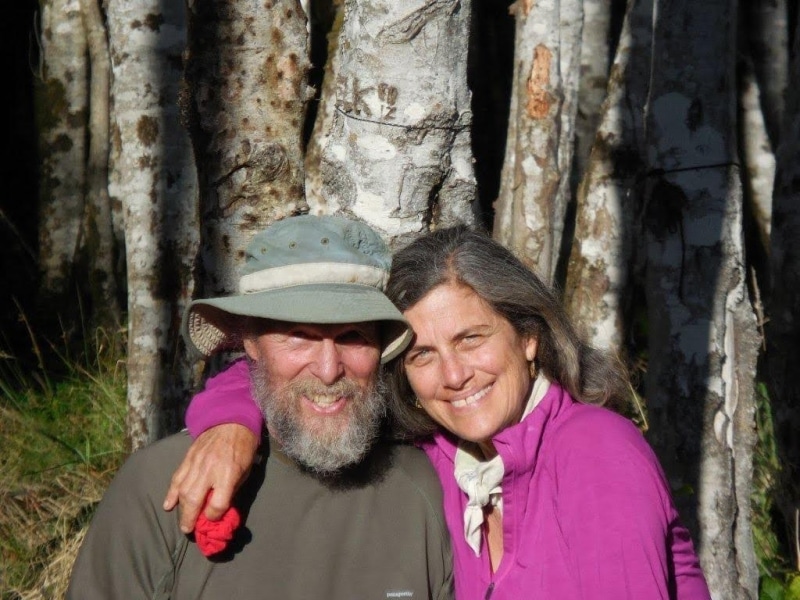
Underground Good: Terri and Gary Orwig
“I love to encourage people to become volunteers. There are so many opportunities out there that could match your interests. If they have time, it’s such a fulfilling thing for your spirit, for your heart. That’s important to me. I want to leave this earth knowing I did good work, that I helped people.”

Opinion: It ‘took a village’ to heal her trauma and homelessness. Will California keep funding this help?
This story is part of California Voices, a commentary forum aiming to broaden our understanding of the state and spotlight Californians directly impacted by policy or its absence.

Opinion: What We Lose If We Lose the Sáttítla Highlands National Monument
Trump’s “Energy Emergency” Threatens Endangered Species, an Enormous Aquifer, a Sacred Place of Peace—And So Much More
Dear Salter
This is great. Thank you for sharing. Does Mark participate in the Five Counties Central Labor Council of the local branch of the AFL-CIO?
Hi Bill! Wish I could say but Mark prefers to remain anonymous. I’m so glad that you liked the article.