
Legal Action will not Immediately Halt Chriss Street’s Contract with Shasta County for Healthcare Consulting
During a June 5 hearing, a Shasta County judge denied plaintiff Jeff Gorder’s request for a temporary restraining order that would have halted Shasta County’s contract with healthcare consultant Chriss Street, pending further court hearings.
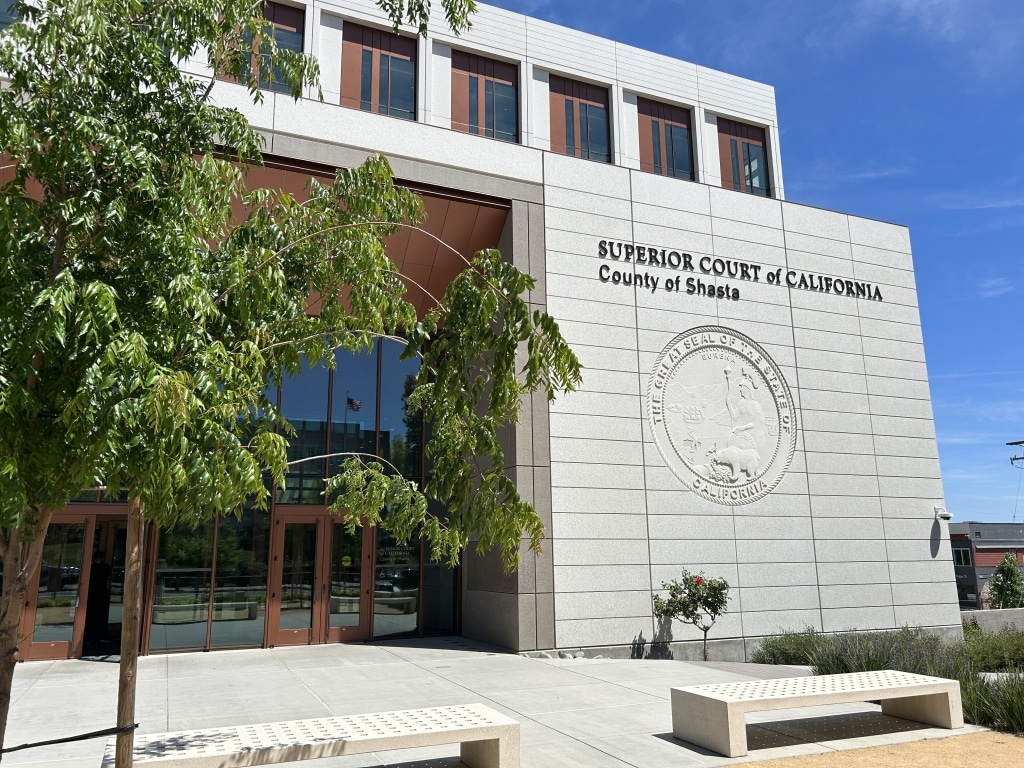
About 10 community members filed into a courtroom on Thursday, June 5, to hear whether a judge would grant a temporary restraining order to pause Shasta County’s contract with healthcare consultant Chriss Street. Ultimately, Shasta Superior Court Judge Benjamin Hanna denied the order, allowing Street’s work under the contract to continue, at least for now.
The request for a restraining order was part of a lawsuit filed by Jeff Gorder, a former Shasta County public defender, on May 8. The lawsuit was filed against David Rickert, the County of Shasta and the Board of Supervisors under a California code that allows taxpayers to take legal action over what they see as a misuse of taxpayer funds.
The judge’s decision this week denied only the request for a restraining order. A determination on the full merits of the case is still to come but likely won’t occur until after Street’s six-month contract term ends. A settlement hearing is scheduled for February 2, 2026.
In a phone conversation with Shasta Scout on Friday, Gorder noted that the case is still active and either he or the defense may choose to bring other interim legals actions before the February hearing date.
The lawsuit arose out of a February decision by the Shasta County Board of Supervisors, which approved a contract with Street for a consulting role intended to address Shasta’s shortage of healthcare providers.
Gorder alleges that Street was hired via an unfair process for an unnecessary consulting role. During Thursday’s hearing, he reminded the court that county documents obtained by records requests show Street had advance notice of the position and that the hiring process only had the appearance of being competitive.
In the lawsuit, Gorder further alleged that the position was unnecessary as current county staff could have undertaken similar work, and that choosing Street was unfair because other candidates who applied had more current or recent healthcare experience than Street does. Street’s most recent healthcare related experience is from about twenty-five years ago.
Before denying Gorder’s request for the temporary restraining order, Judge Hanna explained the high bar needed to approve such an action by the court, indicating that Gorder would have to prove that an immediate restraining order was necessary in order to prevent irreparable harm.
Gorder said the harm he is experiencing is the continued expenditure of taxpayer dollars to fund Street’s contract, which allows for up to $40,000 of county funds to be spent. Additionally, Gorder said there is harm in knowing that the county’s hiring process is unfair and, in his view, unlawful.
He argued there was no harm to the county if the temporary restraining order was granted, as Street could continue advocating for local healthcare in public meetings as a private citizen, just as he had already been doing prior to the contract.
Representing the county, attorney Joanna Gin of Best Best & Krieger told the court that a valid contract exists between Street and the county, and asked that the court continue to recognize its validity.
Gin said Gorder’s arguments did not show evidence of irreparable harm and that there was no immediate danger, as the contract was in place in February, and Gorder did not file his suit until May. Gin also expressed concern that granting a restraining order in this case could cause issues for future contracts the county creates.
Gorder countered that he does face irreparable harm, because he sees no equitable remedy for the situation by law. He said the delay in filing was due to trying to reach County Executive Officer David Rickert, but receiving no response.
Gorder also said he did not feel future county contracts would be jeopardized, as potential plaintiffs would need to show there was some illegality present or their suit would be dismissed as frivolous.
At the close, Judge Hanna reiterated the high standard for granting a restraining order, which requires that the court’s action is necessary in order to prevent great or irreparable harm. He said examples where a similar order may be granted is in a case where there was destruction of irreplaceable environmental resources, or if rights were being infringed upon.
Judge Hanna said issuing a restraining order in a case like Gorder’s is a delicate judicial power to be exercised only with great caution. If he did so, he explained, he could be stopping the action of a co-equal legislative branch of local government.
In his decision not to grant the temporary restraining order, Judge Hanna elaborated that he was concerned granting the order would be irresponsible and could encourage the public to take legislative actions they disagreed with to court in the hopes of having actions by elected officials be contradicted by the rulings of unelected judges.
Do you have a correction to share? Email us: editor@shastsascout.org.
Author

Comments (3)
Comments are closed.
Related Articles

The fate of the Civic Auditorium may be decided this week. Here’s what you should know
The Civic needs between $1.4 million to $1.6 million in additional annual funding to keep its operations going, according to the organization that runs the event space.

Active measles case in Shasta County, officials urge vigilance and immunization
A patient with newly-diagnosed measles is being kept in isolation to prevent the spread of the highly contagious illness. Community members who might have been exposed during the patient’s eight-day contagious period are being contacted by Shasta’s public health staff.

Killing of armed Minneapolis protester Alex Pretti ignites 2A debate in conservative Shasta County
Second Amendment supporters in Shasta County including some with connections to a local militia, weigh in on topics including the right to carry at protests and the federal government’s current approach to immigration enforcement.
hmmm, but judges are elected, every 6 years. Why was the settlement hearing set so far out, Feb 2026 ? If Street were smart he’d bank that $40k and be ready to return it, and interest, to the county, especially if the ruling is in favor of Gorder et al.
I’m so disappointed Matt Plummer voted to hire Chris Street. I thought Matt was one of the good guys.
Thanks Heathewr, nice reporting.