
Meet Allen Long For Shasta County Supervisor
Allen Long says he’s running for supervisor to shift local government back to common sense, civility and stability.

Photo courtesy of Allen Long.
This story is part of Shasta Scout’s ongoing citizen-powered election coverage. Our election reporting flips the script by asking candidates to answer questions from the community. Long is running against three other candidates for the area of Shasta County known as District 2. His interview was conducted long-form and in person. The questions were drawn broadly from reader responses to Scout’s latest reader survey on elections. Long’s responses have been curated and paraphrased for this format. Unsure what district you’re in? Find out here.
1.18.23 2:50 pm: We have corrected Long’s response on wildfire which was previously inaccurate due to an editorial error.
Scout: What should we know about you? What brought you to Shasta County?
I grew up in the Bay Area but decided to move here thirty-two years ago because I love the outdoors, natural resources, fishing and all of that.
I got a bachelors from the University of California, Berkeley and then went through their business school and got a degree in business administration and finance. Right out of college, I took a job with Bank of America and went through their management training program and became a commercial loan analyst. I think my limit at the time was to lend $500,000 to businesses and I had to really understand their financials in order to justify the bank loan.
I eventually went into a police career and got a masters degree in public administration. I started my police work in the Bay Area for about five years and then came up here. So my whole life up here in Redding has been about public service. And it’s been a broad base of public service.
I worked for the Redding Police Department for about 20 years. It gave me a lot of varied experiences, which have given me a lot of unique perspectives on our community. I was a homicide detective. So I saw that ugly end of life. I was the sergeant for our neighborhood police unit. So I was out in the homeless camps, working to try to plug people into services and treatments and trying to resolve those issues. I wrote the policy for how the police department responded to homeless camps.
I was a union guy all the way through my career as an officer and was involved at all levels with negotiations for labor contracts, and things like that, as the Redding Peace Officers’ Association treasurer. So I have a really good broad understanding of what employees go through and what it takes to get a good contract.
As an RPD officer I eventually ended up promoting through the ranks and was put in charge of one of the four divisions in the department. That included budgets and equipment and personnel management. So, a really good microcosm of what county management looks like.
After twenty years I retired from RPD as a lieutenant and ran for the Grant School Board where I have two kids in school. I’ve been on the school board for five years now and have served as the president. The board has given me a whole new skill set. I have to be concerned with budgets, transparency, solvency and also keeping a happy and well-compensated workforce.
We had to navigate our district through COVID. And one of the things I’m most proud of is that we did not close the schools in the district down. Instead we carefully examined state mandates and risks. And while the state had highly encouraged schools to close down they hadn’t mandated it so we worked together past divisions as a board and came to the decision that our constituents are our kids, and we have to do what’s best for the kids. And we’ll let the science and mitigation factors guide us through this. And we’re going to figure out how to do this.
We were one of the few districts in the state that kept our school open and our kids are not behind with learning-losses now. We bought high-end air purifiers, we followed masking protocols, and our kids stayed safe. We also offered homeschooling options to those families that were more concerned with COVID. So we took care of all of our people.
I think when you combine my educational background, my financial background, my board management background and my history of public service, I’m a good fit for a county supervisor.
Scout: Why did you decide to run for the Shasta County Board of Supervisors?
I’ve been watching local politics closely for many years but especially for the last few. I don’t like what’s happening in our county. I don’t like the outside influence of a mega-donor who is unduly influencing our local politics. I don’t like some of the priorities being focused on.
I really don’t like what’s happening to our county workforce. The constant turnover of department heads has led to a significant loss of collective wisdom and expertise. It’s also caused demoralized employees that are fearful for their jobs and exacerbated the problem of vacancies not being filled.
I believe I’m electable. And I’m going to step up, and I’m going to try to shift some of our local government back to reasonableness and common sense. I want to reintroduce some civility and calm. I believe that if we stabilize our local government we can get on with some of the more important work that’s needed.

A map of the Shasta County Board of Supervisors’Districts.
Scout: How would you describe yourself as a candidate?
I’m right of middle, and definitely conservative but it’s important to remember that this position is nonpartisan. I’m conservative by nature, I’m cautious with money. And I am very much for respecting the rights of everybody to have their own way of thinking. I’m not a conspiracy theorist. And I’m not a fan of pet projects.
Scout: Are you committed to following state law?
We are a society with a lot of divergent people, needs and perspectives. So we have to respect all the people. But I’m also a cop and a law and order kind of person, I believe in following the boundaries of law. And if you don’t agree with a law, you go to Sacramento and you change it. As a county we are also a subdivision of the state, one of fifty-eight counties, and we have to respect that.
Scout: Who are your largest funders? What PAC’s have supported your campaign either directly or indirectly?
I don’t have any special interest group ties. No PACs are supporting me. And no major donors really, just a lot of mom and pop contributors. My biggest single donation is $500. That’s why you haven’t seen as many of my signs or heard radio ads about me. But more and more funds are rolling in.
Scout: How will you work to represent all of Shasta County, even those you disagree with?
Everybody in this county are equal citizens, and we all have a right to be heard. We all have a right to be represented. As an elected representative, you do what you think is right, what’s moral, what’s ethical, and you work to understand and know your constituents so that you can balance that when you make your decisions because you’re trying to represent the needs of everybody.
I was a peace officer and a peace officer is somebody that tries to reach a peaceful resolution. In my experience there are times when we have to take quick, decisive action but there are many more times, probably the majority of times, that you can slow down and back off before deciding on a course of action. Listening to people and trying to incorporate their perspectives in decision making helps solve problems without alienating people. And it’s really important to focus on issues, not on attacking people.
Scout: How would you work towards a sustainable county budget?
Right now in our county government, there are excesses that are occurring at all levels and it’s going to be a massive cleanup, to get this back on track. It’s going to be challenging but it’s something I want to take on and I understand numbers.
I’ve sat down with the county auditor and looked at how little of our county funds are actually discretionary, how much we can actually choose how we use, locally. It’s not much. So we have to be fiscally conservative and figure that out. We also have to look for new revenue sources, like grant funds that we haven’t tapped into yet.
Overall we need to stop waste, stop defunding our government through things like suspending impact fees, and then increase revenue.
Scout: How would you approach the election process?
I do not support hand counting our votes. It’s a process that’s subject to more error and fraud than if we use voting machines. Also, it’s now against the law with the passing of AB 969. I support normalizing the election process. These machines have been working for a long time and the current five-member board all got elected with these machines. I want a free and fair election as much as anybody does, but I have not seen evidence of fraud.
Scout: How would you work to address homelessness?
I’ve looked at the crime statistics released by the Redding Police Department. And I also think that just as important as the actual statistics is the perception of crime. If a person doesn’t feel comfortable walking outside at night, is that unsafe or not? Perception is really important. And part of the homeless issue is understanding all these perceptions of criminality, drug use, and mental health issues. These are big issues for quality of life.
First we need to stabilize our government, because if you don’t have a stable government, you can’t do anything. Then my top priority is expanding jail capacity and holding people accountable for their crimes. That includes figuring out what portion of our homeless are committing crimes.
Homelessness is a really complex nut to crack. If anybody tells you it’s solvable, that’s false. But there’s state and federal government support available to address the problem, along with a lot of funds.
I think building a community coalition of local experts who understand mental health concerns, drug concerns, housing concerns. I like the new AT HOME Shasta committee that’s meeting with representatives from all the city governments and county government. That’s a think tank, if you will, and that’s where problems are solved.
You have to listen to the experts and then you have to educate yourself. I’m taking on a steep learning curve by becoming a supervisor, but it’s so important to the homeless that we focus on learning.
Scout: How would you address the need for developing additional housing in our community?
We need more housing, especially transitional housing, because some of these people just need just a little bit of a nudge to get back on their feet. But how to do it? There are a lot of logistical concerns there that I need to educate myself on. But if you don’t want people on a street corner, where are they going to go? When I was a police officer, we were always just moving the homeless to the next location, constantly shuffling them around, but never solving the problem.
I know subsidized housing is not a popular idea in this county, but I look at it like “pay now or pay later”. If you invest money now, you end up with a better outcome down the road when people are not committing crimes, no longer using drugs, and having their mental health needs addressed.
Scout: How would you address labor concerns at the County?
Maintaining a solid workforce is paramount to me, because if that falls apart, we’re in trouble. So we have to do that. When we don’t prioritize wages, we end up with a disgruntled workforce that’s demoralized and heading out the door. So we have to provide a living standard wage.
Having said that, as a supervisor, I am also responsible for the budget and I shouldn’t live beyond my means. To balance those, we have to understand our mandate as a county and our revenue sources and then we have to decide how to prioritize our spending. There’s never going to be enough money to do what we want. But there is enough to do what we should.
My position with labor is that my phone is always open. I want to hear what you guys are doing and what struggles you have. I want to know about those before we ever get into a situation of actual negotiations, so that I can help problem-solve and make this work for you, while also staying within our constraints, which I have a fiscal responsibility to do as well.
I’m a labor guy, and I think like labor. So when I move up the ranks, I have to take care of my employees, that just has to be a priority. I’m not saying we give them everything they want. I’m saying we must maintain a reasonable competitive wage where we can retain current employees and attract future ones.
I also want to put some of the trust and faith back into our department heads. They’re the subject matter experts if we hire good ones. So let’s hire good ones and then let’s let them stay and do their jobs.
Scout: How would you help our community prepare for and reduce the risk of wildfire?
So my list of priorities starts with governmental stabilization and addressing our homeless situation and jail space issues. Tucked in right behind those issues is wildfire mitigation risk. I live in District 2. I live in the rural part way out, and I almost lost my home in the Carr fire. I don’t know a person in District 2 that hasn’t been evacuated, myself included, that hasn’t either lost a home or been in great fear of it. So we need to never lose focus of that.
The response is multi-faceted. Improving zoning requirements for new developments is one piece. With the Carr Fire they found that homes that were built with the newer construction survived when much older homes didn’t.
I also believe in proper forest management including forest thinning and getting rid of all the bio-fuel buildup.
And I want to see more clearing near the roadways, buffer zones, creating natural fire breaks so car traffic sparks don’t ignite new fires. It takes good cooperation with the public and we need to work on it.
Thank you for your time! How can people learn more about your campaign?
People can find me at my website to learn about my platform and find out about how to donate and volunteer.
You can find our other candidate interviews here. Have questions, concerns, or comments? Reach out to us: editor@shastascout.org.
Author

Comments (1)
Comments are closed.
Related Articles
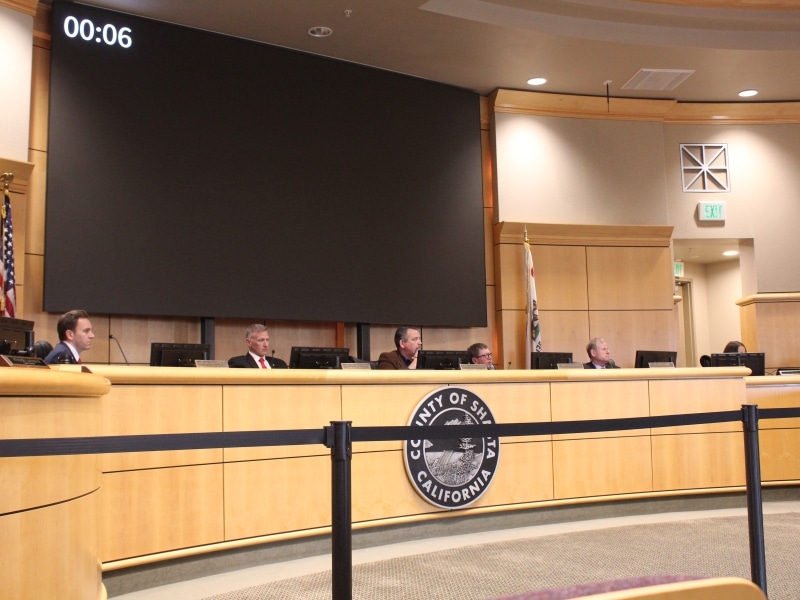
Shasta board divides over county counsel’s contract
Joseph Larmour is already slated to serve as the county’s attorney for another nearly three years, but supervisors were divided on whether to enter a new contract with the attorney that would extend his time in Shasta for another year.
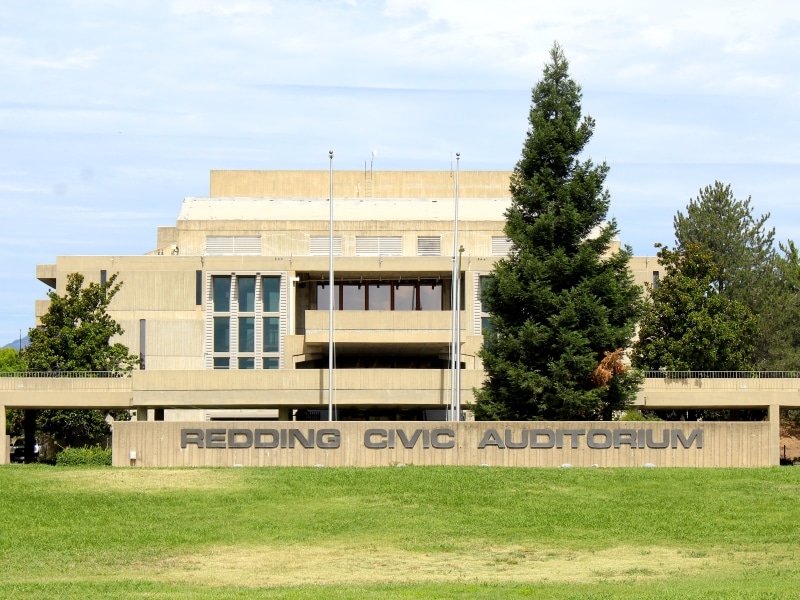
Five entities seek to run Civic Auditorium
The city issued a request for proposal this summer to allow for interested entities to apply to operate the entertainment venue. The auditorium’s fate has been uncertain as the city navigates funding and management challenges.

Open Notebook: The intersection of mental health and criminal justice
Our Open Notebook series offers readers a behind-the-scenes look at how our journalists work. In this notebook entry, reporter Madison Holcomb shares insights into the considerations she makes as she reports on criminal justice stories, especially where mental health plays a major role.
Where’s Allen Long’s comments ? What does one have to do to review them ?