
Meet Erin Resner For Shasta County Supervisor
There are four candidates running for two seats on the Shasta County Board of Supervisor this fall. Erin Resner currently sits on the Redding City Council. She says she’s running to use what she’s learned in city government to help the county make progress on issues like public safety, mental health and children’s services.
This story is part of Shasta Scout’s citizen-powered election coverage. For the November 8, 2022 general election, we’re focusing on three races: the Redding City Council, the Shasta County Board of Supervisors, and the Shasta County Board of Education. View all of the Meet the Candidate interviews.
Four candidates are running for two open seats on the Shasta County Board of Supervisors this fall. Our elections reporting flips the script by asking candidates to answer questions from the community. We’re conducting long-form, in-person interviews that last about an hour each and utilize questions drawn broadly from your responses to our Scout reader survey. Candidate responses have been curated and paraphrased for this format.

For our county supervisor interviews we have added additional questions that address significant community concerns about governmental stability, cooperation and campaign funding.
What would you like voters to know about you?
My husband and I have been business owners in Shasta County for the last 18 years. I’ve volunteered locally in many capacities, but over the last decade I’ve focused mostly on Shasta County’s children and families. I was the on the board of the Women’s Fund for a long time. I’ve also been a Court Appointed Special Advocate (CASA), advocating for the needs of children in dependency court. And I’m a founding board member of the Children’s Legacy Center. I am a wife, and a mother, and a business owner, and my overall goal in life really has been to serve my community and help others. We’ve received awards at the state level for our generosity and our philanthropy. I think if you have the opportunity and the availability to help out, you should. You should do everything you can.
You’re currently on the Redding City Council; why did you decide to run for the county Board of Supervisors?
There are things that are managed primarily by the county that are really important to me, especially mental health and children’s services but also jail space. Stepping into a county role, I want to take what I’ve learned about governmental structure to move the county’s approach to public safety and mental health needs forward. I also bring a business mindset to government, an approach to ensuring efficiency and effectiveness of programs. I want to make sure that county programs are evidence-based, and have measurable outcomes. I think I can take what I have learned at the city level to help our community as a whole, not just the city of Redding, but all of Shasta County.

Do you think the county needs to be more open and transparent? If so, how would you work towards that?
I think the government in general does a terrible job at communication and that’s because we tend to sit in a silo with others in government. It’s easy to assume that everyone in the community understands what the structure of government is, what the rules are. But we try to communicate in ways that people don’t use, like through utility bill inserts. In Redding government we’ve been working really hard with our communications team to bring the city into the modern age. I think the same is very needed at the county level. The county has hired a new public information officer, but it would be really great if there was an entire communications team. Most people have regular lives. They don’t have time to come to 9 am county meetings. So we have to meet them where they are, online, on social media, or on podcasts.
I’d also like to hold quarterly evening meetings of the county board so more people can come. And when we discuss big issues, like the budget, do a series of public workshops like we did in the City of Redding, where we focus on smaller departments’ budgets to make them more accessible. Government budgets are very confusing and they don’t work like people’s budgets at home, so I think it’s really important to hold these kinds of meetings. Some people will engage and some won’t, but it matters that we increase the number of opportunities for people to do so.
It’s also important as a government official to be accessible. As a city council person, I have tried to answer every email, although we do have somewhat of an antiquated email system and I think I sometimes miss some things. I also always try to post digestible updates about what’s happening on my Instagram, so that people have a heads-up on meetings and how we voted. I’d like to continue to do that as a supervisor.
Do you think there needs to be more unity or collaboration on the board? If so, how would you work towards that?
On the city council we address things in a very respectful way, even when we disagree. And the public doesn’t really see a strained tone between us, unless it’s a really contentious topic. Even then, the tension doesn’t carry over into the next vote. On the council, when we leave the dais, we’re discussing people’s grandkids, people’s pets. I brought my newborn to the dais with me for the first six months and everyone on the council was amazing about accepting that. There are topics that we definitely disagree on. But we’re still respectful to each other as human beings.
You have to establish respect and decorum with others on the board, whether you agree or not. And we have to establish the same kind of respect to the public, during public comment. If we can have that discussion as a board and agree to find common ground and respect each other, it will translate out to the general public. I think it’s achievable.
How do you describe yourself as a candidate?
This is a non-partisan office I’m running for, even though it often doesn’t feel like it. I’d like to be seen as a qualified candidate, a business owner, a mother and wife, a person who wants to do the best I can to help my community.
Can you respond to concerns about your funding sources? Are you supported by Shasta Vote?
You can’t talk about transparency and then not be super-transparent about where your money has come from. I hope people will look at my 460s so they can see exactly what funding I have received and where it came from. Many people think Sierra Pacific is a big funder to our campaign because there are comments that I voted for the Bechelli land sale because of Sierra Pacific’s funding. That feels silly to me. If you think for a $4,900 donation I can be bought and paid for, then you think that I have a very low bar. I vote for what I do because at the time, with the information I have, I think it’s the right business decision. And I’ll continue to do that, no matter who’s funding.
We haven’t received any money from Shasta Vote, but they did endorse me during the primary. I don’t think they have endorsed anyone this fall for the general election.
The majority of my support has come from local business owners.
What is law enforcement doing well in Shasta County and what can they do better?
I think we have incredible leadership in law enforcement and rank-and-file law enforcement that really care. I really commend our sheriff for making the hard decision to shut down a floor of the jail recently. I know that that was a really difficult decision and he made it to be fair to his team, to the people he leads, because of staff exhaustion and safety concerns. We need to do a better job of making sure that we’re supporting law enforcement and listening to their ideas. California’s public safety laws don’t always make the people of Shasta County very happy, but I think our local law enforcement has been pretty creative at coming up with solutions that fit the law and the needs of our people.
I don’t want to see the jail in the middle of downtown. With all of the development work we’ve done with businesses to move towards a vibrant downtown, I think it’s a bad idea to bring people who commit crimes into downtown and release them there. I’m really supportive of the Sheriff’s ideas about integrating Health and Human Services into a new jail and I think the state will also support this and that will make it easier to access money.
The city’s Crisis Intervention Response Team (CIRT) was originally designed as an integration with the sheriff’s office as well as the city and city police. I would love to get the sheriff’s office staffed to where they can contribute personnel to that team because CIRT has a ripple effect that’s huge in addressing mental health needs and public safety.
The future of policing is integrated, evidence-based services. Research shows that it’s effective to give people a sense of purpose and teach them what they need to be successful. That has to work better than locking them up and releasing them with the same lack of skills into the same scenarios they were in before and hoping for a different outcome. We have to teach people how to value themselves and we have to offer them the help they need. It’s easier to offer that kind of help after someone has made a mistake because we have their attention.
What do you see as the most important issue or issues facing Shasta County right now?
Definitely mental health, homelessness and public safety. And they are all interconnected.
How would you address the significant number of people living without housing in our community?
We need to start looking at our continuum of care and we need more mental health workers at the county level. One of the difficulties the CIRT team says they face is a lack of case managers. They’re able to identify people who need help and they are able to identify service providers like mental health clinicians, but managing each person’s case effectively requires case management. I was out with CIRT one day and they were speaking to a gentleman who is schizophrenic. And they showed me his record and he had 50 or 60 warrants for his arrest. They explained that his crimes were connected to his need to self-medicate, because he hears voices. The clinician was able to get him into the right treatment facility, onto the right meds, and into a facility where he now lives independently in a small community and does well. They also worked to get rid of his outstanding warrants by having him do community service. The clinician on that case she told me she needs more people who can help to make sure these kinds of solutions happen for more people.
The county is the funding source for addressing homelessness, which means we have an opportunity to invest in programs that are working and make them better. We need to work hard on closing the resource gaps. Right now, there are serious disconnects in the system, it feels a little bit like there’s like a plug somewhere in the funnel. Part of it is probably that there hasn’t been a board who was willing to attack those problems in a really engaged sort of way in quite a while, and especially in the last two years. People working on these programs in the county don’t feel like the entire board is on the team, and they’re holding their breath, worried about losing their jobs. You can’t work effectively in those circumstances.
To solve these issues you’ll have to have collaboration. I think that’s a benefit to having someone like me on the council. I’ve worked with council members in other cities already. And as a board member of the League of California Cities Northern Division, I’ve worked with leaders in other communities to learn more about what works and what doesn’t, especially in rural settings. It’s also really important to be able to collaborate with Sacramento. We’re much more conservative than the majority of legislators, which is one reason why it’s so important to communicate in a respectful way so they’ll take our calls and we can share how their decisions will affect our community.
How would you address concerns about our community’s access to water during a historic drought?
I sit on the Enterprise Groundwater Sustainability Agency board and we recently had to come up with what our long-term plans are for water sustainability. Long-term, we may have water locally but we may also have limits on how we can use that water imposed by the state or the federal government. So it’s really important to talk about how we’re going to manage our water long-term.
As a board, we have to engage with the water issue. We have to be willing to speak up to officials in state and federal government. And we have to be willing to make unpopular decisions when needed, with the right information. I don’t understand this topic fully, but I do have some history and background and I know who I should be speaking to when these things come up.
What’s happening in A.C.I.D. right now, from my outsider’s perspective, looks like a serious miscommunication, or a failure to have the right conversations between Reclamation and A.C.I.D. Drought isn’t a new thing in California, so why weren’t we having these conversations earlier? We’ve been fighting over water in California since the late 1800s. It’s not new. But elected officials and government entities are not always willing to leave their egos at the door and acknowledge that we have a shared problem that’s impacting real people in our communities. No one wants to see our community members without water, so instead of pointing fingers, we need to get around the table and collaborate on solving problems so it doesn’t happen again. It’s okay to acknowledge that mistakes were made and then move forward on solutions. I think we need people in government who can do that.
How would you help our community prepare for and reduce the risk of wildfire?
We have to make sure our Fire Safe Councils have everything they need. We also need to have more conversations about individual responsibility. We’re a red county, so we like to say that we really care about individual responsibility. So how can we help people take responsibility? Are we making sure that everybody has resources? Are we holding things like chipping days so people can clear the brush on their property, stack it and have it chipped and removed for free? I think we can do more to educate the public, particularly in areas with high risk, through neighborhood meetings that focus on how they can make their properties more fire-resistant. And I think we can use grant money, wherever possible, to support people’s ability to clear property, put in fire-resistant landscaping, and make sure they’re able to stay safe.
Thank you for your time! How can people learn more about your campaign?
They can find me at my website or on Facebook or Instagram. DMs on social media are the easiest way to reach me.
Additional Resources:
- Here are Erin Resner’s form 460s, documenting donations to her campaign.
- Here is her official candidate statement.
- Here is her form 700, documenting potential conflicts of interest.
Have questions about local elections? We’ve provided resources here.
Through December 31, NewsMatch is matching donations dollar-for-dollar up to $18,000, giving us the chance to double that amount for local journalism in Shasta County. Don't wait — the time to give is now!
Support Scout, and multiply your gift
Author

Related Articles
Flood impacts continue, as some Shasta tenants face displacement
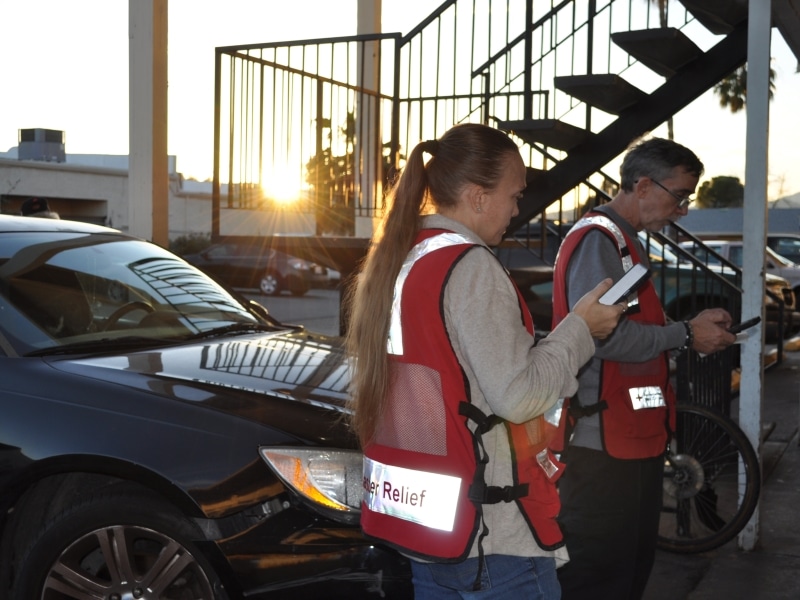
The ongoing impact of flooding that began on Dec. 21 is forcing some residents to leave their homes. This week, a Red Cross team has mobilized to assess damage across Shasta but there’s still relatively little public information about how many residences and businesses were affected.

This Native man from Northern California has gone missing not once, but twice
A portion of Nick Patterson’s skeletal remains, finally recovered years after he went missing, were lost again by officials during his missing person investigation. The stunning error has complicated the Pit River Tribe’s grieving process and led to suggestions for policy changes.

Some Northern California Mien refugees grapple with renewed fears of statelessness
The North State’s Mien population took root as families sought escape from an American bombing campaign during the Laotian Civil War. Now, 40 years after resettling, some are at risk of being forcibly returned to a country they have little connection to.
