
More than Six Months After Passage of Proposition 36, Shasta County has Yet to Implement Crucial Aspect
Under Proposition 36, the District Attorney has significantly increased felony convictions. But a part of the bill that requires counties to implement an alternative process for drug treatment is not yet in place.
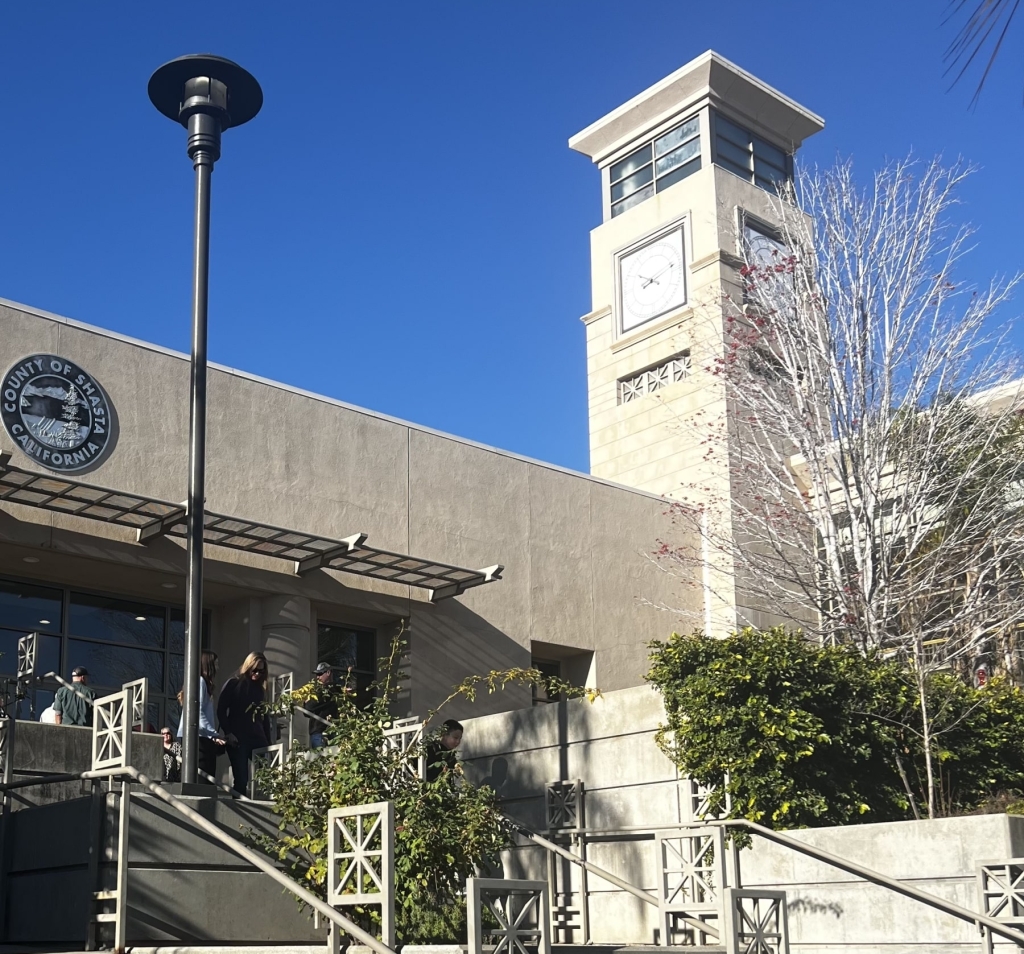
Since Proposition 36 went into effect late last year, the Shasta County District Attorney’s office has diligently updated the public on how the department is taking full advantage of the state’s new tough-on-crime policy.
By January 24, the DA had filed 39 felony cases under Prop 36; two weeks later, that number had grown to 55. On March 7, the DA logged their number of Prop 36 felony filings at 91, 41 of which were for theft with the remaining 50 for drug related offenses.
The new law was overwhelmingly voted into action last November by 68.4% of California voters. For some Californians, the draw of the bill is its tough on crime stance, making felonies out of what used to be misdemeanors by further criminalizing petty theft and drug possession at the same level as other nonviolent felony crimes.
Also known as the “Homelessness, Theft, and Drug Addiction Prevention Act,” the bill increased the severity of certain retail and drug related offenses. It also required counties to implement alternative drug treatment options in hopes of treating the cause of ongoing crime.
Shasta Scout’s investigation reveals the county has yet to create the needed infrastructure to offer that treatment as an alternative to custody, a gap which deprives affected community members of resources they’re entitled to by California law.
What the Law Requires
Prop 36 put some charges into a category known as “treatment-mandated felonies,” a specific subset of Prop 36 offenses related to specific drug-related crimes.
The bill updated the state’s California Health and Safety Code § 11395, to allow those with prior drug-related convictions who are facing a new drug-related charge to to “elect treatment by pleading guilty or no contest,” thereby “agreeing to participate in, and complete, a detailed treatment program developed by a drug addiction expert and approved by the court.”
Under the new law, if a defendant chooses this option, counties are required to provide a “drug addiction expert” to evaluate them and the courts are required to rule on whether to allow them to choose treatment as an alternative to incarceration. ap As outlined in the health and safety code, the court can only refer defendants to treatment options that come at no cost, unless the defendant elects to pay for a treatment facility of their choice. If the treatment option is approved, the court will continue to hold subsequent hearings to check on the defendant’s progress.
The new law mandates changes at the county level that require new policies and procedures to be put into place but there’s no language in the law that dictates the exact departments through which counties should facilitate such treatment. And since budgets, personnel, and access to medical facilities vary vastly across the state of California, there is no one size fits all approach to facilitating this new category of treatment-mandated felonies.
Larger and wealthier counties like Orange have set up a designated Prop 36 courts and are relying on preexisting infrastructure to refer people out. Meanwhile, smaller and less resourced counties such as Yolo, Stanislaus and Shasta are struggling to provide the option of treatment some defendants are legally entitled to.
Here’s what’s happening, or not happening, in Shasta County:
According to Prop 36 survey data aggregated at the state level, Shasta County had filed 37 treatment mandated felonies as of February. As of early May, this was the latest data available from the state.
Shasta Scout submitted records requests and questions to public safety agencies across Shasta County to inquire if and how those charged with drug offenses under Prop 36 are being given access to their legal right to opt into treatment instead of incarceration.
Across every agency, there was a similar response. So far, they’re not.
Asked about the process, Shasta County’s Superior Court executive officer referred Shasta Scout to Shasta’s Health and Human Services Agency (HHSA).
Kimberly Ross, HHSA’s Supervising Community Education Specialist, responded, writing “the health agency does not have Prop 36 defined processes outlined with the courts yet.” She described the county’s response to treatment-mandated felonies as being in the “implementation phase.”
Speaking to the Shasta County Board of Supervisors during budget hearings on June 11, HHSA Director Christy Coleman used the same phrase, adding in response to a question from Supervisor Allen Long that the the agency has “had a lot of meetings,” and indicating that the county has started the paperwork process to “make sure that all the players involved know how it’s going to flow.”
Shasta County’s district attorney’s office also confirmed that there’s no process in place yet. Briona Sisneros, a Community Education Specialist at the DA’s office sharing by email that the treatment mandate process has “not yet been established in Shasta County (and) we are actively working with our community partners to determine what this will look like.”
The public defender and probation offices did not respond to questions.
Document Requests Offer Little Additional Information
In an attempt to learn more, Shasta Scout requested documentation from the District Attorney, the Public Defender, Probation, and HHSA asking for the number of people charged with treatment mandated felonies that have expressed interest in seeking drug treatment. Shasta Scout also requested written procedures or policies regarding treatment mandated felonies and asked for the specific number of employees designated to this process at each agency.
Three of the agencies — the DA, Probation and HHSA — said they had no responsive records at all. The Public Defender’s (PD) office provided two documents. One included survey data from the state showing the total number of defendants charged with drug treatment-mandated felonies and the second was a screenshot of a single email that instructed staff with Prop 36 clients to contact HHSA’s Behavioral Health who can “assess (the) clients for level of care and needs for services.”
It’s not clear from that email or any other available information how the process will work in Shasta County once a qualifying client is referred to HHSA but under Prop 36 the clients would require assessment by a “drug addiction expert.” HHSA told Shasta Scout the agency has six employees who handle treatment-mandated felonies saying those individuals are all social workers with certifications in alcohol and drug counseling. But no policies or procedures for how such client referrals will be received or processed, or how clients will be served, exist.
Do you have a correction to share? Email us: editor@shastascout.org.
Comments (8)
Comments are closed.
Related Articles
Wintu people say proposed reforms to a state list of tribes is erasure, threatens their homelands
A state commission’s proposal to remove Wintu and other federally non-recognized tribes from a consultation contact list would leave cultural sites vulnerable to destruction, tribal members say, and represents a form of unconstitutional discrimination.

Decision on city financing for the Ironman competition tabled by Redding City Council
The council’s decision followed a tense discussion on financial spending. The item will be brought back into discussion on Feb. 17. An Ironman official says he’s not concerned about the delay.

Shasta man had illicit marijuana grow and underground bunker in addition to illegal weapons, CHP says
A press release from the California Highway Patrol alleges that Michael Kamfort was operating an illegal grow when he was arrested on weapons charges, including manufacturing a “ghost gun,” on Tuesday in Anderson.
Didn’t Prop 1 pass and give a bunch more money for drug and alcohol services? Or rather, I think it redirected some of the MHSA money away from mental health into substance use services. In any event, what’s the holdup? Tehama has drug court, go down there and observe and figure it out. If they can do it, Shasta can do it. You can’t just ignore the law. I don’t know who’s in charge but if the current director can’t get their act together and implement a mandated program, maybe it’s time for new leadership.
There is a direct correlation between substance use disorders and crime. The citizens of California have finally realized the need to return to more stringent laws and the need for treatment. The BOS needs to make this the highest of priorities in my opinion. You have been given the opportunity to perform, please do for your constituents.
I wish I were surprised
Go get ’em, Scout!
The fact is the people voted to make felonies misdemeanors and then voted them back. The problem stems from people voting without reading all the detail and instead voting on the title and summary of the proposition, as well as those writing the summaries who make the titles disingenuous.
I’m very curious how proposition 36 was designed and who were the designers. Have those people been assembled again to look at the dynamics of it. I know it’s not always so easy but since this is a majority passed bill then you’d really believe those people would stand up for assisting in the implementation of it.
Jon, is a leftist anyone that disagrees with you?
Cuz I am a fiscal conservative, and you are full of it.
Shamelessly, the scout said “what used to be misdemeanors are now felonies!” How absolutely disingenuous to say that!! What used to be felonies were changed to misdemeanors by the democrats! We the people just changed them back to felonies!