
Neighborhood association files legal challenge over land lease for Shasta custody expansion project
In a legal filing in February, the River Ranch Neighborhood Association said Redding inappropriately bypassed state environmental law when it leased property to Shasta to build an alternative custody facility.
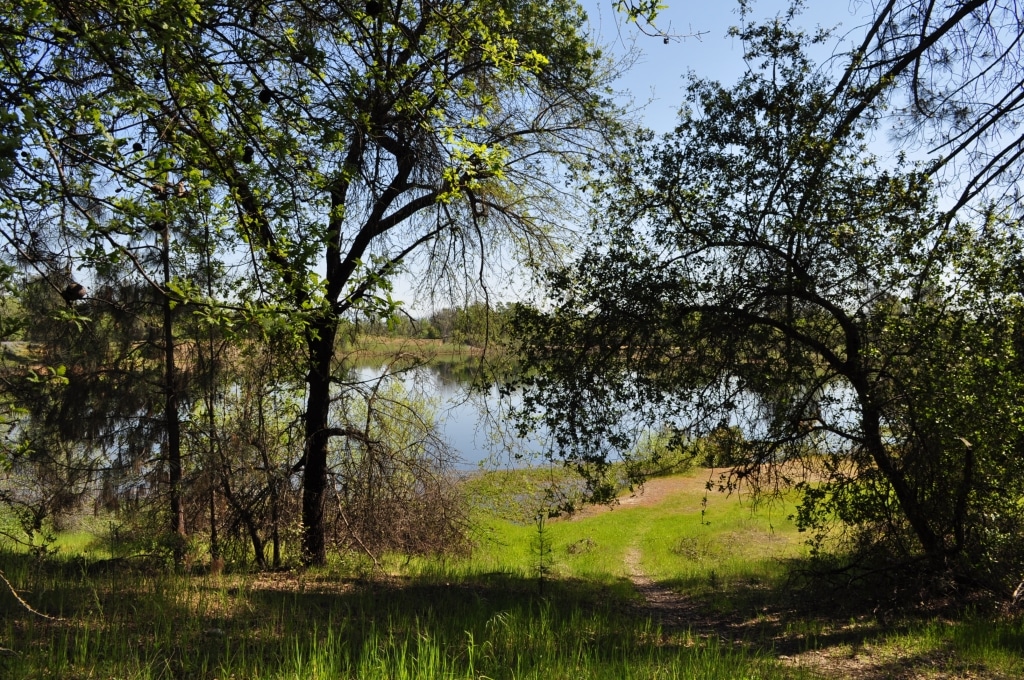
Last September, Redding City Council members agreed to lease land off Eastside Road to Shasta County. As the contract made clear, the lease was intended to facilitate the county’s plan to build one or more custody facilities on the property, including a long-touted expansion to Sheriff Michael Johnson’s current alternative custody program .
The city determined last fall that no environmental review was required before entering into the lease, designating the property as surplus government land.
But attorney Jason R. Flanders says that’s not true. Flanders is an attorney for the Aqua Terra Aeris Law Group, which is representing the River Ranch Neighborhood Association, a group of home owners whose property lies close to the land in question.
In a legal filing against the city on Feb. 27., Flanders said the exemption the city used to bypass environmental review during the lease process was inappropriate because the county’s plan to build custody facilities on the property would substantially affect sensitive wildlife habitat located there, triggering the need for review under California’s Environmental Quality Act, or CEQA.
Redding’s city manager did not immediately respond to a request for comment.
The River Ranch Neighborhood Association includes 96 homes, 17 of which are located on the Sacramento River, the suit says. Their properties are located between two open spaces, both publicly owned, including the 90-acre site of the proposed correctional facility and another parcel of land designated as the Kapusta Open Area.
“All of these areas are home to significant wildlife including mountain lion, endangered Elderberry beetle, deer, geese, hawks, otters, beavers, osprey, bald eagles, turkey and many migratory birds,” the suit documents, noting that the property also sits “upstream and adjacent to well-defined, critical spawning habitats of the Sacramento River’s winter-run Chinook salmon.”
According to neighbors, the city took an improper “piecemeal” approach when deciding whether to conduct an environmental review, treating the lease of the land as a matter entirely independent of what future development would occur there. That occurred, the suit indicates, despite the fact that the city’s contract specifically names the land lease as being “for the purpose of developing and expanding custody operations in Shasta County.”
The neighborhood association is asking the court to issue a ruling that the city must vacate its prior lease agreement with the county and prepare an Environmental Impact Review of the project planned at the site, or find another way to comply with CEQA.
CEQA is a landmark California law intended to mitigate environmental harm. For some projects, the law requires public agencies to consider what environmental harm could be caused by proposed development using a state-mandated process. It includes guidelines that require public agencies to consider projects as a whole for environmental review processes rather than splitting them into piecemeal smaller projects that might individually have less environmental impact.
That could be problematic in the case of the Eastside land in question because the county itself has never defined what might be placed there. A few months ago, Supervisor Matt Plummer said during a conversation about the county’s contract for design services for the site that there are three potential projects that could be built at the property, including an alternative custody campus, a reentry campus for state prisoners preparing to reintegrate into the Shasta community and an expansion of the jail itself.
During a county board meeting discussion last November about the county’s design contract for the site, Public Works Director Troy Bartolomei said now that the land has been leased by the county, the plan is to conduct an environmental review of the site with the whole three-phase plan in mind so that there would be no need to return to the issue later to add additional projects.
That approach, if followed, would be the opposite of “piecemeal.” But documentation provided to the public prior to the county’s discussion mentioned the proposed projects only briefly without defining how many clients might be served at the various facilities or how many would live there — elements that would be fundamental to estimating the scope of construction and thus the project’s potential environmental impact.
Regardless, the county’s environmental review for the project is a separate issue from what the recent legal challenge by the neighborhood association is currently claiming, that the city knew the county was leasing the land for custodial facilities and should have considered the risk to the environment before entering into the lease at all.
Redding City Council members discussed the case in closed session on Tuesday but took no reportable action. The first hearing on the matter is scheduled for April 27 at 9 a.m. in Dept. 64 of the Shasta County Superior Court.
Do you have a correction to share? Email us: editor@shastascout.org
Author

Comments (2)
Comments are closed.
Related Articles
Accountability vs. micromanagement: Shasta board debates its role during wide-ranging discussion
Supervisor Matt Plummer was accused of micromanagement for asking for data in response to an assessment of fire services. Meanwhile, Supervisor Kevin Crye spent nearly thirty minutes questioning a decision by the HHSA director with no such accusation sent his way.

For Shasta, collaboration needed to solve physician shortage
Political division is a barrier to improving healthcare access in Shasta County. Experts say solving the entrenched problem requires working together.

Meet Rebecca Anne Miller for Redding City Council
Three seats are up for grabs on the council this fall, and nine candidates are running. Miller is a substitute teacher with the Shasta County Office of Education and a caregiver with In-Home Supportive Services, or IHSS.
The environmental impacts are somewhat similar to the project in Manton that the Bd of Supes approved yesterday, 3/24, despite 8 resource professionals and numerous residents appealing to them. Shasta Co is not upholding laws which are meant to protect the common good, instead allowing the piecemeal destruction of everything that makes the county beautiful and unique, and supports quality of life. Some of our comments and background information can be found here: https://www.linkedin.com/in/marily-woodhouse-a6ba90237/
Refusing to uphold the laws exposes the county to additional lawsuits, which we are in process of.
Why build when you can remodel large vacant buildings all over town? The city and county are just tossing away acre after acre of open spaces and urban wildlands. These small open spaces are barely keeping local wild birds, insects and animals etc. alive after so much has been destroyed by fires and illegal Marijuana growers etc. The one thing they could have built that would really help was a Mental Health facility, but it was shot down.