
Reading, Riding and RABA
The Redding area bus system sees local partnerships as a way to expand services and programs to the community. One of those partnerships has resulted in free rides to libraries, book exchange baskets on local buses, and a little free library at the downtown Redding transit station.
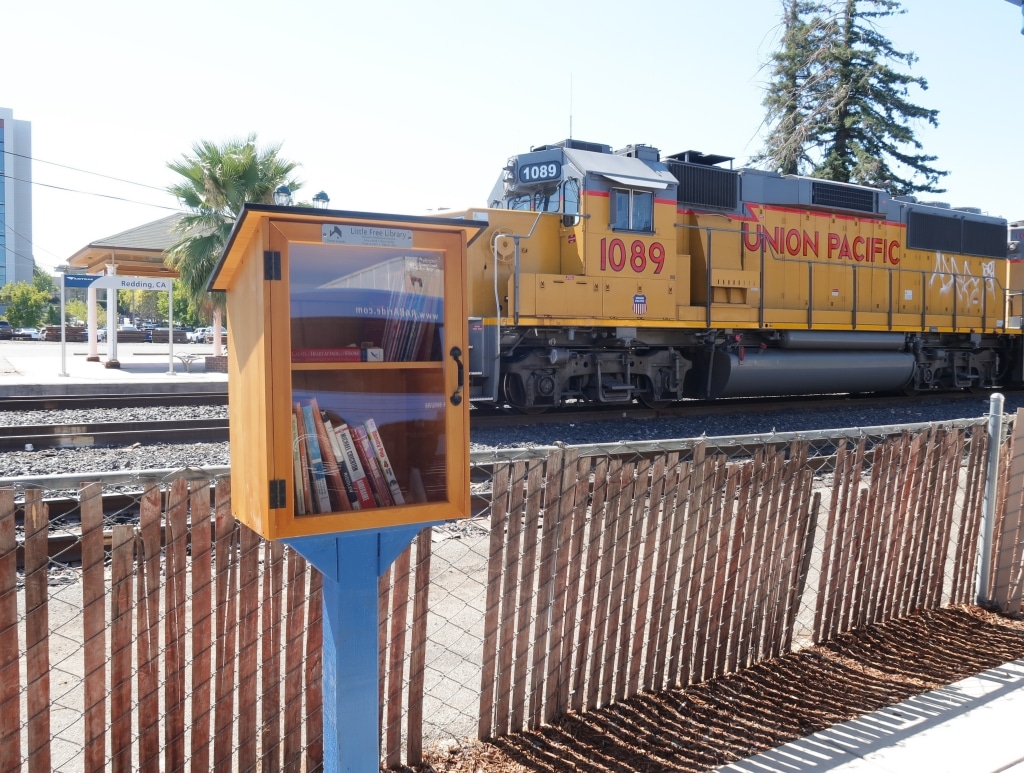
When two buses pulled into the downtown Redding station before 3:30 p.m. on an especially hot August afternoon, executive assistant Kelly Sepelyak found both on-bus book boxes empty. It’s a sign people are using this relatively new service from the Redding Area Bus Authority (RABA), Sepelyak said, noting that she would soon restock the baskets, using the boxes of donated books stashed under her desk.
It’s one of the many programs and services that gets Sepelyak excited as she talks about her work with RABA. It also highlights one of many ways the transit service is working to coordinate with other organizations. A shelf in Sepelyak’s office, which overlooks the bus depot platform, is stacked full of paper-stuffed folders, each representing a different community partnership.
The programs aren’t just about encouraging people to use the bus, Sepelyak explained. “We’re encouraging them to also have other healthy habits, go to the library, go take the Beach Bus, get outside, go do other things. I think it helps spark that sense of adventure for people.”
The book programs spark a passion for Sepelyak too, one that she passes on to others through her outreach work for RABA. In her position, she appreciates opportunities to speak to large groups of people and find ways to connect them to services. But she says she also measures success by the individual impact these services have on people.
In addition to the “take-a-book, leave-a-book” boxes that can now be found on all RABA buses, there is also a Little Free Library installed at the downtown Redding transit station. The very first day it was set up, Sepelyak saw a waiting child go over, look through it and find a book to take on their ride.
She shared that a lot of people from varied backgrounds and age groups are already using and relying upon Redding’s expanding and evolving bus system and said it’s encouraging to see even more people get involved through their partnerships.
“It excites me to see RABA becoming a valued member of the community,” Sepelyak said.
Books on buses
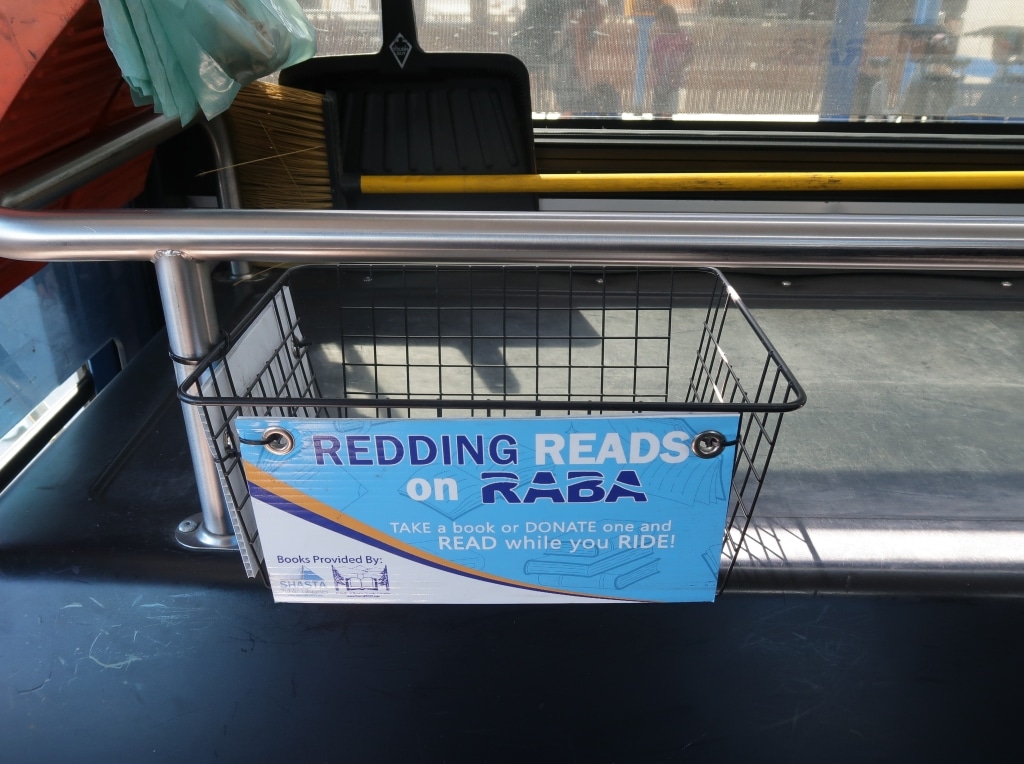
RABA started the, “Redding reads on RABA” initiative in October, 2024. The program put free book baskets on all RABA buses, including the Beach Bus, a seasonal shuttle to Whiskeytown.
The baskets are stocked with a weekly supply of books from the nonprofit Friends of Shasta County Libraries (FOSCL). The organization’s current president, Ray Van Diest, explained that FOSCL receives book donations from members as well as pre-used library books that are no longer in rotation. While some of those books are added to FOSCL’s bookstore, where funds are used to purchase new library books, others are set aside to be used for the RABA book boxes and other local Little Free Libraries.
Some FOSCL activities and book donations are currently paused as the library experiences renovations, but Van Diest hopes operations will resume around October.
Once a week, Van Diest said, a RABA employee comes to pick up a box of books the bookstore manager has compiled to fit the interests of the reading public. These include books for both children and adults. Sepelyak noted that a recent donation batch even included a variety of graphic novels.
While the hope is that people will trade books in and out, sometimes there is more taking of books than leaving them. Still, Van Diest said, either way the exchanges satisfy FOSCL’s goals.
“The books disappear into readers’ hands, which fulfills [Little Free Library’s⦎ simple mission in the community,” Van Diest explained in an email to Shasta Scout.
The impact of making books easily accessible to the community extends beyond on-bus entertainment. Services like Little Free Libraries can also positively affect community literacy.
Wendy Dickens is the executive committee chair and literacy co-lead of Reach Higher Shasta, a collaborative effort to encourage literacy in Shasta County. While the organization works on educational programs that increase reading activities, a more out-of-the-box approach to increasing county literacy rates is encouraging the implementation of Little Free Libraries across the county.
This effort is meaningful, as the county faces what Dickens described as “significant literacy challenges,” with only around 42% of third graders meeting or exceeding proficiency in reading and other language arts for their grade level.
Dickens explained via email to Shasta Scout, that with no library card or fees involved, the little free library approach makes reading more accessible to everybody. It incorporates books as a part of everyday life, and also encourages connection and sharing within the community.
“We hear wonderful stories from families who make visiting Little Free Libraries part of their weekly routine,” Dickens said. “Parents love the surprise of finding new books, and kids enjoy the independence of choosing their own.”
In addition to finding books on buses, Dickens said a map is available, showing where neighborhood Little Free Libraries exist all over the county.
For residents who have library cards, rides to the Shasta County Library are free and provide even more access to books. Sepelyak encourages new users to check the Moovit App to familiarize themselves with county transit services and demystify bus routes.
Other community programs and services from RABA
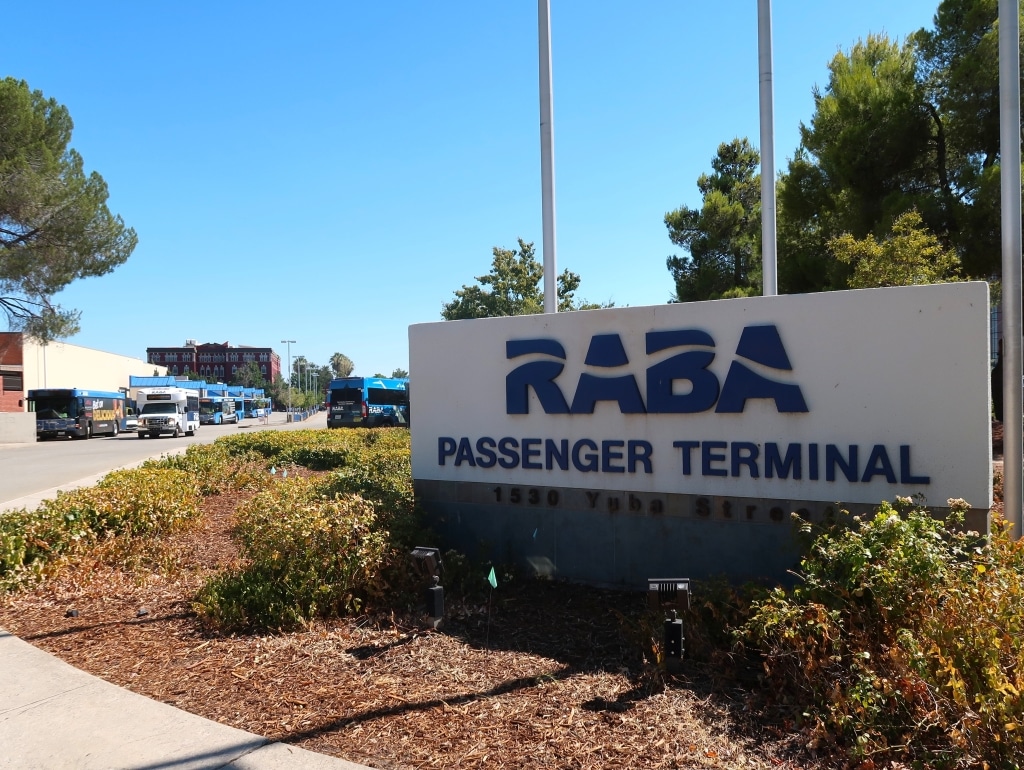
RABA has also established other partnerships that encourage the community to ride.
Youth under 18 can ride the bus for free, as can veterans who qualify to ride for free through a donation-funded program. Shasta County jurors needing a ride to their jury duty service, or those who simply want to avoid courthouse parking, can also ride free by showing their summons. Additionally, Shasta College students and faculty have options to ride free with their college I.D.
While many RABA programs and partnerships draw upon available funds, or, as with the book exchange, don’t require much additional funding, other programs can be affected when outside funding sources change.
A program allowing qualifying seniors to ride the bus for free recently ended due to an alleged dispute between RABA and the funding organization. Sepelyak said RABA has found alternative ways to fund the passes for seniors currently signed up for the program, and while RABA is not signing up any new applicants at the moment, the organization is keeping track of interest in the program to pursue new funding options in the future.
The influx of new programs and community involvement that have come to RABA over recent years is due in part to staffing changes. Sepelyak identified five full-time positions that have been added, and as of the end of the 2024 fiscal year, RABA had a total of seven employees fully dedicated to work with the organization. In the past, many employees were City of Redding employees with partial time dedicated to RABA.
RABA is a Joint Powers Authority, or an organization created by two or more public agencies. In RABA’s case, it was created by an agreement between Shasta County and the cities of Redding, Shasta Lake and Anderson, and serves all of those communities with public transit.
Representatives from each of these cities and Shasta County are also members of RABA’s board of directors. Sepelyak said these directors are also essential to brainstorming new ideas for transit services in their local communities, like offering RABA’s Runabout buses as transit to Anderson’s summer concert series, the Mosquito Serenade.
Sepelyak has been with RABA for a little over a year, working out of the downtown station where she’s right in the midst of all of the movement that comes with transit services. She takes time to meet people who ride the bus and has learned on-the-job about the different routes and services, some of which she uses herself. In addition to Sepelyak, another employee specifically focuses on teaching people how to use buses and other transit options.
Beyond the scope of the programs and services offered through RABA, Sepelyak said she hopes the public will continue to grow in understanding who in the community is utilizing alternative forms of transportation, and why.
“I think there’s a common misconception about who widely uses the transit system,” Sepelyak explained. “And a lot of our ridership are senior citizens that couldn’t drive even if they wanted to.”
She’s witnessed the ways unhoused individuals are using RABA to connect to resources like healthcare and housing, and she’s also seeing families and kids use the buses.
Stepping out of her office to check on the next bus’s book boxes, Sepelyak pointed out a family with three young children waiting near RABA’s new Little Free Library. She said they were regulars who she sees all the time.
That’s a part of why they added the book boxes to the buses, Sepelyak explained, for the families and kids for whom buses are part of their daily commutes.
“We’ve had people that have been raised with RABA, and you don’t think of that if you never have to rely on it or use it,” Sepelyak said.
Do you have a correction to share? Email us: editor@shastascout.org
Author
Comments (1)
Comments are closed.
Related Articles

After branding a man guilty on social media, three RPD officers have been named in $12 million defamation suit
When Phetakhom Tu Manivong was arrested in 2022, Redding Police officers posted on the department’s Facebook page, claiming he had committed a heinous crime. After being found not guilty by a jury of his peers, Manivong has filed a lawsuit against the city alleging that RPD’s false statement followed him for years, ruining his career and his reputation.
Neighborhood association files legal challenge over land lease for Shasta custody expansion project
In a legal filing in February, the River Ranch Neighborhood Association said Redding inappropriately bypassed state environmental law when it leased property to Shasta to build an alternative custody facility.

Redding council approves city-wide efficiency study at request of new city manager
The study is intended to “increase efficiency and accountability while reducing waste,” according to the staff report. The council allocated up to $300,000 to hire a consulting firm — chosen by the new city manager — that will conduct the study.
Thank you Heather and a huge thank you to all the wonderful folks Heather writes about in this article. In these strange and troubled times, we (I) need to be reminded of the grace and positivity of so many in our community. I love seeing those popup small libraries! Remember of all that is good. Thanks again!