
Redding Police Say They Sometimes Use Drones To Document Homeless Camps And Monitor Public Events
The Redding Police Departments’ military equipment policy was just re-approved by the City Council. It allows RPD to use unmanned aerial vehicles for any purpose that assists city departments or aids tourism, as long as it complies with constitutional rights.

In September 2021, California passed AB 481, a bill designed to increase police accountability in response to the murder of George Floyd.
The bill requires local law enforcement agencies to provide increased transparency around the use of items that the state designates as “military equipment,” including unmanned aerial systems, or drones. Under the law, the police must provide a written policy for how the equipment will be used, establish a complaint process, and provide an annual public report.
But whether or not AB 481 provides real police accountability is largely left up to local public officials, who are tasked under the bill with approving police policies for military equipment. On Tuesday, June 20th, after less than a minute of discussion, the Redding City Council approved RPD’s military use policies unhesitatingly.
According to the report presented to the Council, RPD has launched drones more than seventy-five times over the last year, or an average of about 1.5 times every week.
Since 202, the City has spent about a quarter-million dollars on drones, the majority of which came from Redding Electric Utility’s Wildfire Mitigation Plan funds. That’s because RPD uses its drones as part of REU’s annual power line inspections that help prevent wildfires.
RPD’s policy states that police drones “must be used in strict accordance with constitutional and privacy rights,” and that police drones can be used to “enhance the Department’s mission of protecting lives and property when other means and resources are not available or are less effective.”
That’s the kind of statement that civil liberties groups like the ACLU encourage community members to closely examine to determine whether public safety objectives could be met through other processes that come with lower costs and less risks of privacy violations.
Last week during a public meeting on military equipment, RPD Captain Brian Cole tried to allay some public concerns by saying that drones “can’t be used without some legitimate reason that’s specific in our online policy.” It’s a statement that’s almost meaningless because RPD’s policy is so broad, allowing drone deployments for “any purpose that assists city departments and aids tourism.”
RPD bought its first two drones in 2020, after Bethel Church donated $25,000 for that purpose, according to reporting from the Record Searchlight. Some citizens spoke up against the donation at the time, saying they were concerned that drones could be used to aid in the removal of homeless camps. Statements from the police chief at the time, Roger Moore, indicated that RPD had no plans to do so.
But that’s exactly what’s happening now. In response to questions during a public presentation last week, Cole told the five members of the public who attended the meeting that police have used drones six times over the last year to take aerial photos of large homeless encampments at locations including Nur Pon Open Space off Cypress Avenue and on private land off Masonic Avenue.
Cole said the drones used at Nur Pon helped police map the area and determine how much trash they’d find on the property. At the Masonic camp, he said, drones were needed “to make sure that the No Trespassing signs were actually out there marking the (private) property.”
It’s unclear why drones would have been needed to check those properties to visualize trash and signs when, according to other police statements provided to Shasta Scout in the past, members of RPD’s Crisis Intervention and Response Team (CIRT) visited the camps in person for months prior to the cleanups to provide outreach services. RPD Chief Bill Schueller and Redding City Manager Barry Tippin have not yet responded to a request for comment sent earlier this week.
According to the National Healthcare for the Homeless Council, drones should never be used to monitor or clear an encampment because they increase fear within a population already living in a significantly difficult environment. Over recent months, members of the homeless community at Masonic Campground and the Mercy Canyon camp have shared with Shasta Scout how the police’s use of drones over their camp sites angers and frightens them. None wanted to share statements on the record because they feared police retaliation.
While Cole told the public “drones aren’t really used for surveillance,” police use of drones over homeless camps and during public events raises questions about the level of authority police have been given to decide how police benefit outweighs community privacy.
Using drones to take pictures of community members on public land like Nur Pon is reminiscent of the reason AB 481 was first passed, in response to overreach of police power in the wake of George Floyd’s murder.
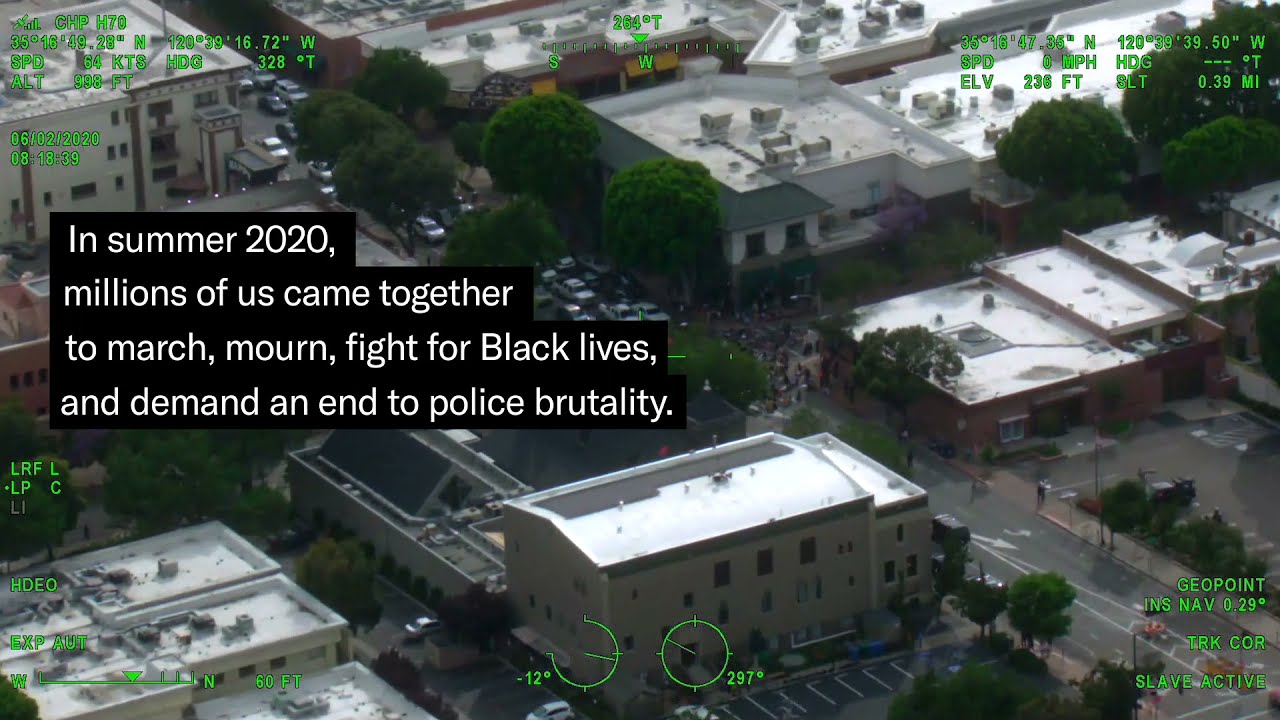
During June 2020 protests against police brutality in Redding, law enforcement used drones for surveillance of protesters. The drone use, documented by the ACLU, was carried out by California Highway Patrol, but must have occurred in cooperation with the Redding Police.
During his presentations both last week and this week, Cole spoke about the expanded possibilities ahead for police use of drones, which he said “are changing the landscape of law enforcement.”
In Chula Vista, he continued, police have built a series of drone nests throughout the city, allowing them to launch drones to a variety of locations almost immediately when needed to provide a live feed to law enforcement responding on the ground. Chula Vista police have also received public criticism for their use of drones over homeless encampments.
Cole said the department did not receive any citizen complaints about the drone program last year, proof, he believes, that the public trusts RPD’s judgment when it comes to drone use.
Heather Taylor contributed reporting for this story.
If you have a correction to this story you can submit it here. Have information to share? Email us: editor@shastascout.org
Author

Related Articles

With James Gallagher as LaMalfa’s replacement, an ardent conservative will continue to represent California’s District 1 — for now
James Gallagher, a former state assembly member from Yuba City, will represent Shasta in its final months as a part of congressional District 1. But new Prop. 50 lines will pose a significant challenge to Gallagher’s bid to retain the seat moving forward.
Redding planning commissioner and engineer announces run for city council
Russ Wenham has served on the city’s planning commission for about two years and previously spent over two decades working for CalTrans. There are three spots on the city council up for election in November.

This California bill could impact public records access. It’s of special interest in Shasta
The proposed bill’s proponent says it would reduce “frivolous” public records requests. A transparency group says it would “chill” public access. In Shasta, California’s mandated public records process is already under scrutiny by local government officials who say it’s costing taxpayers too much.