
Redding Rancheria’s harm reduction initiative shows early signs of promise
After eight weeks the number of people utilizing the Rancheria’s harm reduction services, which include access to clean syringes, has more than doubled. Research shows harm reduction helps protect community health.
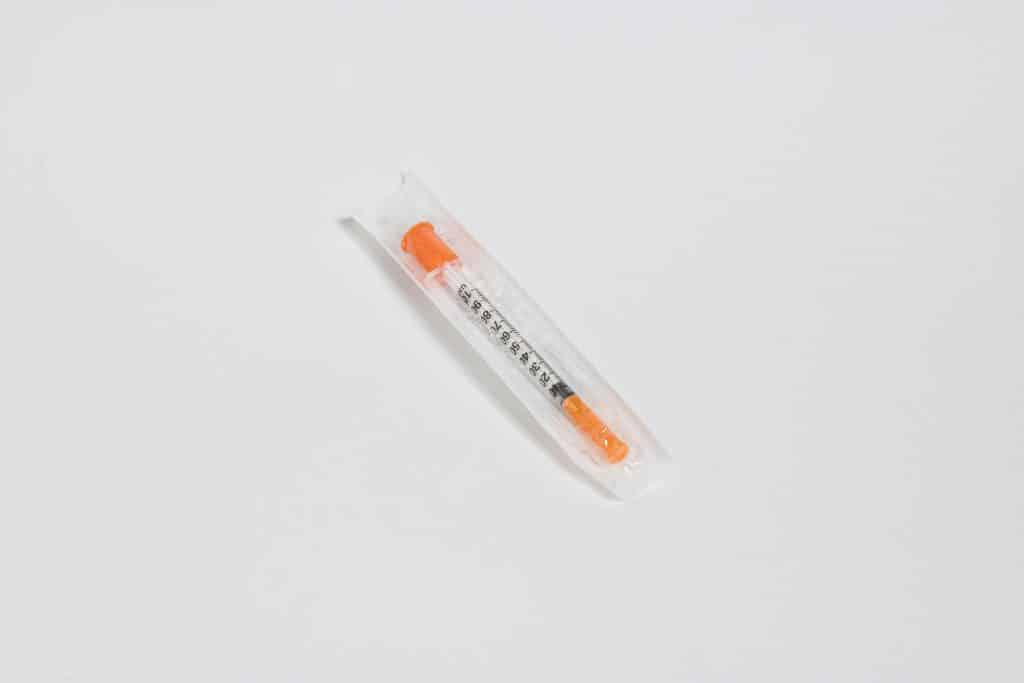
The Redding Rancheria says since launching its Harm Reduction Program at the Tribe’s Churn Creek Recovery Center eight weeks ago, the number of people they’re serving each week has grown from about seven each week, to 20. Clients of the program are picking up clean syringes, food, and clothing — all at no cost.
Staff have also safely disposed of more than 600 used syringes that were turned in as part of the program, ensuring the used needles are kept out of public space and parks.
The Tribe is using a harm reduction approach to reducing substance use. Harm reduction is designed to meet the needs of people, right where they’re at. It’s an approach that facilitates an environment in which people can continue using substances more safely, if that’s what they choose.
As the Redding Rancheria pointed out in a recent press release, harm reduction is rooted in compassion, connection, and taking care of people. “This principle drives the program’s approach of creating a welcoming, judgment-free space,” the Tribe wrote, “where relationships are built and individuals learn they have options.”
Data shared by the Center for Disease Control indicates that users of clean needle exchanges are “five times more likely to enter drug treatment and about three times more likely to stop using drugs than those who don’t use the programs.”
The new initiative is led by Recovery Director Katherine Haley, who states, “We understand there are countless reasons why people who use drugs may avoid treatment and generally healthcare. Our goal is to change that by creating an environment where individuals feel safe, respected, and cared for.”
The Safe Project points out that harm reduction is a well-known approach to reducing risk in many scenarios, not just substance use. For example people wear seat belts while driving, bike helmets while riding, and sunscreen while spending time at the beach. All of these are harm reduction efforts designed to make something with inherent danger, safer. In the substance use setting, harm reduction includes clean syringes. It also includes the use of Naloxone to reverse overdose and the use of medically-supervised medications as an alternative to illicit drugs.
A common criticism of harm reduction is the belief that it incentivizes people to continue to use, but research has shown that people who are using substances will do so even without access to clean needles, at greater risk to themselves and others. Reuse of needles can cause life-threatening skin infections and spread blood-borne diseases like HIV.
Fostering a safe space can be a catalyst for change, the Rancheria says, noting that “research shows it can take at least seven positive contacts before someone with a substance use disorder accepts treatment,” and emphasizing that positive contact helps bring more people into the fold of eventual recovery, if they so choose.
Multiple participants in the Rancheria’s new harm reduction program have also sought out medical treatment during their visits and some have working with caseworkers to find more permanent housing.
The Redding Rancheria’s Recovery Center provides “drop-in” style harm reduction services every Friday from 1 p.m. to 4 p.m at 3110 Churn Creek Road.
Disclosure: In 2024, Shasta Scout received a $2500 grant for office supplies from the Redding Rancheria.
Do you have a correction to share? Email us: editor@shastascout.org.
Comments (13)
Comments are closed.
Related Articles
Wintu people say proposed reforms to a state list of tribes is erasure, threatens their homelands
A state commission’s proposal to remove Wintu and other federally non-recognized tribes from a consultation contact list would leave cultural sites vulnerable to destruction, tribal members say, and represents a form of unconstitutional discrimination.

This Native man from Northern California has gone missing not once, but twice
A portion of Nick Patterson’s skeletal remains, finally recovered years after he went missing, were lost again by officials during his missing person investigation. The stunning error has complicated the Pit River Tribe’s grieving process and led to suggestions for policy changes.

This week, the California Energy Commission is expected to decide the future of the Fountain Wind project
Wind energy company Repsol needs the Energy Commission’s approval to proceed with a plan to develop a wind energy plant in Shasta County. The recommendation coming from the commission’s director makes that approval seem unlikely.
Needle exchanges are a good way to reduce infections from needle sharing. The article is not clear to this reader whether the Rancheria clinic is running a one-for-one exchange or just encourages users to bring syringes in. Some “harm reduction” sites in California just give out syringes to anyone user who asks, and those very much do end up discarded in parks and willy-nilly to endanger children, parks and sanitation workers, etc., which really makes lots of people question whose harm we care about.
The writer’s swallowing wholesale of the harm-reduction story and dismissal of critics is really beneath the standards of Shasta Scout. Here’s a more hard-headed point of view on the subject from a Stanford professor and psyciatrist specializing in addiction and addiction policy, to also be published today. The notion that this is an open-and-shut case of good policy is very naive.
https://www.nytimes.com/2025/09/02/opinion/forced-drug-treatment-rehab.html?unlocked_article_code=1.i08.VtEk.D9Yxsi9yjclg&smid=url-share
Wow, this is great! If they distribute Narcan along with clean needles, they will save so many lives. FYI for the people speaking negatively about this program: addicts DO NOT BUY NEEDLES. They re-use them, a 1000 times if need be, with 1000 different people. Seriously, name one single way distributing clean needles will negatively affect your life??
They should take this program to the next level and hand out free drugs with the free needles. They should also make sure they register them to vote. Democrats can count on people during the election who get “free” stuff from the government.
spoken like someone who didn’t read the research link in this article. More stupid, toxic masculinity…
This harm reduction service is a hand out and not a hand up. This philosophy and thinking encourages more drug incentive use. Picking up used needles is a good thing. But handing out fresh needles is a bad thing. Redding Rancheria are using slim gambling odds handing out clean fresh needles.
Have you ever tried to help a person who genuinely wanted help getting clean when they were addicted to something?
You sure do like to talk a lot of garbage, Nick, without a lot of understanding.
“Harm reduction is designed to meet the needs of people, right where they’re at. It’s an approach that facilitates an environment in which people can continue using substances more safely, if that’s what they choose.” Nevin Kallepalli
This is the very definition of enabling bad behavior.
I’m sure the drug addicts appreciate not having to spend money on needles. That leaves more cash available to buy drugs.
Wow. Nevin’s Khalistan article is a great read, though graphic and disturbing. I didn’t know. Thank you.
For a really helpful and insightful view of harm reduction, and its pros and cons, here is an article.
https://www.independent.org/article/2025/08/20/rethinking-harm-reduction/
Statistics on this subject do not lie. The kinder gentler approach costs significantly less than the status quo bureaucracy and saves lives. Herein the conflict does lie… Welcome to the new front line of the drug war.
I’m glad to see this program exists, it has great potential, I think. Your article does an excellent job of explaining how harm reduction can work, especially with the examples of other ways that we engage in that approach. Thanks.
Are there any cities or townships in California that have extremely low drug abuse and addiction?