
Shasta County is asking for the public’s help into how mental health funding is spent. Here’s what you should know.
The Health and Human Services Agency is inviting the public to provide input into how about $10.5 million in state mental health funding will be spent in Shasta.
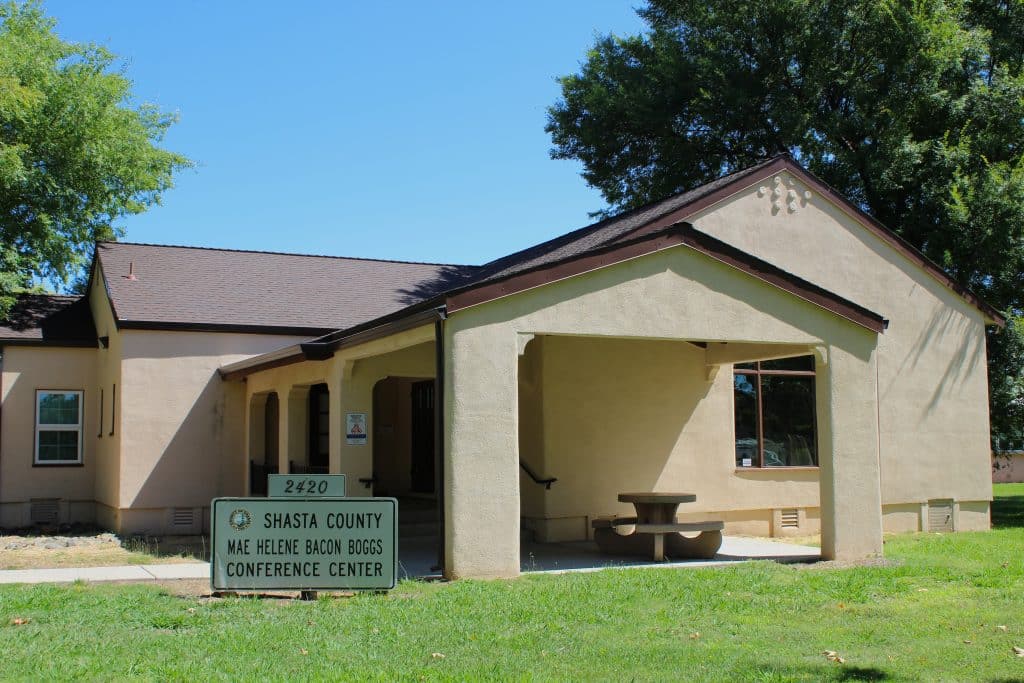
The Shasta County Health and Human Services Agency (HHSA) is inviting the public to a meeting to weigh in on how mental and behavioral health funding will be used.
The meeting comes as the Mental Health Services Act (MHSA) — a state law passed in 2004 that helps fund mental health services — is in the process of being replaced by the Behavioral Health Services Act (BHSA) due to the passage of Prop. 1. The new act aims to reform the former by adding treatment for substance use, expanding housing interventions and strengthening the behavioral health workforce. Counties are required to have a plan in place to utilize funds under the new act by July of next year.
Both acts are funded by what’s known as California’s “millionaires tax,” a statewide 1% tax on personal income that exceeds $1 million. The county will receive about $10.5 million in MHSA funding this year, an amount that can vary somewhat depending on how well the economy is doing, according to HHSA.
The August 7 public meeting where community members can share insights into fund use is being hosted by the county’s MHSA Quarterly Workgroup, a group of community members that provides guidance to Shasta County on MHSA programs.
Makaylah Fazzari, community education specialist for HHSA, said the meeting is part of a regular, quarterly meeting series that’s always open to the public. While new budget amounts for BHSA spending are not yet being decided, she said, the public’s concerns about MHSA-funded programs are always taken into account at these meetings.
Locally, MHSA spending is allocated in a three-year plan that runs from fiscal year 2023 to 2026. There are five components to Shasta’s plan. They include Community Services and Supports, Prevention and Early Intervention, Workforce Education and Training, Capital Facilities and Technological Needs and Innovation. Within each of these categories, HHSA uses MHSA funds for a variety of programs, including crisis services and outreach and projects that support children in stressed families.
Several of the programs Shasta has chosen to fund with MHSA money so far aim to respond to the needs of those with severe mental health challenges.
A major portion of Shasta’s annual MHSA funding, about 30%, is currently used for the Shasta Triumph and Recovery (STAR) Program, which provides supportive housing, therapy, crisis intervention, education, medication support and employment preparation services. These services are provided to adults with severe or persistent mental illness, particularly those who are homeless or at risk of homelessness or incarceration. Children with severe emotional disturbances are also served via the STAR Program. In fiscal year 2022-2023, more than $3.1 million was spent on this program, with 103 people served.
Another large portion of funding, about 40%, pays for the county’s Crisis Residential and Recovery Center, as well as other crisis services. These programs serve people experiencing mental health emergencies by providing a range of care and support. In fiscal year 2022-2023, more than $2.1 million of MHSA funds were spent on crisis services for 1,236 people. Another $2.1 million funded the county’s crisis center, which served 82 people.
Other programs that are funded by Shasta with MHSA funds range in cost from just a few thousand dollars to over a million. Some individual programs serve a few dozen people, while others serve thousands. There are around 27 programs in total including the Suicide Prevention Collaborative and Stand Against Stigma, both of which are working to address Shasta’s suicide rate which is the highest in California, at more than double the statewide rate.
A press release from HHSA explained that the transition from the MHSA to BHSA funding model will improve oversight, transparency and accountability at state and local levels and create “pathways to ensure equitable access to care by advancing equity and reducing disparities for individuals with behavioral health needs.”
The meeting will be held on Aug. 7 at 10 a.m. at the Mae Helene Bacon Boggs Building, located at 2420 Breslauer Way in Redding.
Madison Holcomb is a recent graduate of the University of Illinois Urbana-Champaign. She’s reporting for Shasta Scout as a 2025 summer intern with support from the Nonprofit Newsroom Internship Program created by The Scripps Howard Fund and the Institute for Nonprofit News.
Do you have a correction to share? Email us: editor@shastascout.org.
Comments (4)
Comments are closed.
Related Articles
Shasta election official Clint Curtis uses board presentation to praise his own leadership, critique predecessors
The county board voted unanimously not to act on requests included in Curtis’ presentation.
Recent flooding closed Cal’s Books. This group of young people is working to bring it back
In December, after Cal’s Books was flooded with two feet of water — and thousands of books were damaged — its owner decided to close the store permanently. Now a team of 20-year-olds has a plan to save the beloved store.
Board majority faces off against Supervisor Plummer on liaison positions, supervisor raises
During the board’s first meeting of 2026, Supervisor Matt Plummer was removed from a number of pivotal liaison positions.
There needs to be help for getting people off of the streets to make our community a safe place to live. As the years go by it’s getting worse and more unattractive to live here.
There is an overlooked crisis of mental health patients that have been on benzodiazepines for decades. This is life threatening if people are not tapered extremely slow over a couple years time. There is significant life altering nerve damage from this. Most doctors are not educated in how to safely detox these patients…this is a critical need. Stopping these meds could kill the patient. Attention to this group of people is critical.
What has the county done about training for law enforcement when dealing with people who are having a mental health crisis? Has money been set aside for this training or continuing training? Any thoughts on having a trained social worker or therapist ride along on calls when a mental health crisis occurs? People with mental illness are not criminals and unfortunately, when it comes to law enforcement, they are more often to be treated as such than not. Officer and deputy training is vital.
The county has a mobile crisis unit contracted to hill country. They go out 24 hours a day to respond to crisis calls. This are only staffed with mental health providers. Law enforcement can also request they respond when they identify a mental health situation. You can search Shasta County Mobile Crisis Team for the county page that explains more and provides contact information for them.