
Some Redding Council Members Want Planning Commissioner Aaron Hatch Out. Here’s Why.
Redding Mayor Tenessa Audette has already worked to replace two of the seven Planning Commissioners in the last month. Aaron Hatch could be next.

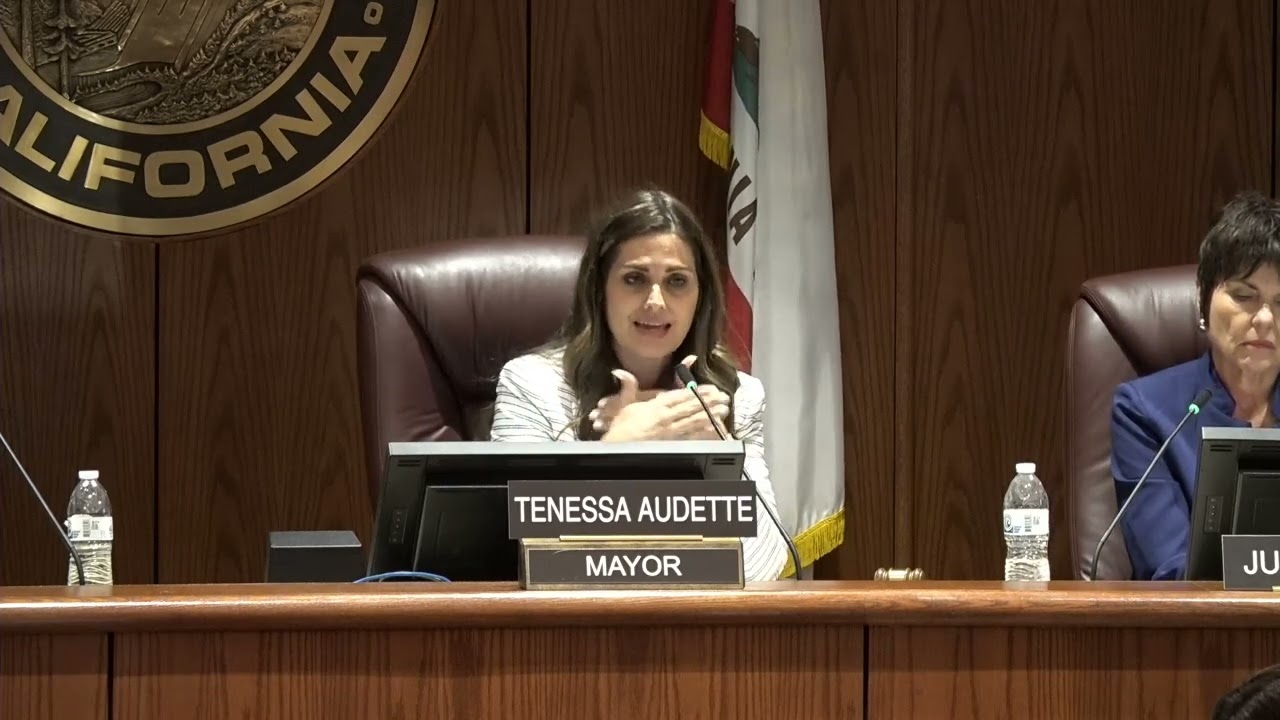
On April 16, Redding Mayor Tenessa Audette and Vice Mayor Julie Winter told the rest of the City Council they feel Redding Planning Commission Chair Aaron Hatch contributes to a “toxic” and “divisive” environment on the Commission.
This Tuesday, May 7, the Council will consider whether to remove Hatch, who works as a financial advisor and serves as a Shasta Land Trust board member, from his Planning Commission role.
Hatch is facing particular scrutiny for his comments at an April 9 Planning Commission meeting. During that meeting, Hatch said the city attorney had offered him advice that seemed “non-standard” and said it felt like staff intended to use that advice to “design a specific outcome” on a Council vote.
That statement by Hatch, Audette said, “went too far.” Winter agreed, telling her fellow Council members that she’d like to see Hatch removed from office.
Redding’s municipal code allows Planning Commissioners to be removed and replaced by a majority vote of the Council. If ousted, Hatch would be the third commissioner to be replaced by Audette within the last month. The other two commissioners had completed their current terms but could have been reappointed rather than replaced.
The Planning Commission will play a significant role in shaping an in-process update to the Riverfront Specific Plan, a document which will help guide development at the riverfront in the years to come. Audette and Winter have supported proposed development at the Redding Riverfront. Hatch has expressed concerns about it, as have the two other recently replaced Planning Commissioners.
Here’s What Happened
Just hours before a City Council meeting regarding an update to the General Plan, Hatch and other commissioners received advice from Redding City Attorney Christian Curtis. It came in the form of an email sent to Commissioners from an executive assistant in the City’s Planning Department.
That email suggested that if Commissioners refrained from speaking during the meeting, they would “avoid legal risk and help maintain orderly operation of the City Council meeting.” Choosing to share public comment, the email said, might “create a bit of a debate-like atmosphere and undermine the perception of the commission as professional and impartial.”
Hatch has called the advice in that email “non-standard,” explaining that he’s often seen members of various city boards and commissions speak up on public matters at Council meetings in the past without it being an issue.
“It’s hard for me to see a way,” Hatch told his fellow Planning Commissioners and staff on April 9, “that this (email communication) doesn’t feel like staff was trying to kind of design a specific outcome . . .”
During the April 16 City Council meeting, Audette said she felt Hatch’s comments, which she characterized as “accusing staff of crimes,” went too far.
“I don’t know if the remedy is removal (from office),” Audette said. “But I also don’t know how you move forward on a body when you’re accusing staff of crimes. So I’m not sure what the Council wants to do or is willing to do, but I feel like that just went too far.”
Her fellow Council member Winter concurred.
“It pains me to say this,” Winter said, “but I do think if the council has the authority I would like to discuss and consider removal of Mr. Hatch from the Planning Commission. I don’t know that we can get past this. I think the environment of the Planning Commission is pretty divisive and toxic . . .”
A tense discussion followed, in which Council member Michael Dacquisto said Winter and Audette’s agreement on this was another example of what he calls “the Bethel juggernaut.” He’s used that term before to reference the fact that a majority on the City Council have connections to Redding megachurch Bethel, which teaches its members to “infiltrate” and “take dominion” over all aspects of society, including the government, in order ”to bring heaven to earth.”
Dacquisto’s reference to Bethel angered Audette, who called his speech “bigoted.”
“We just need to be done with the bigoted comments,” Audette said, “Do not reference my church again. It has nothing to do with this. Nothing. And I’m tired of you making negative comments about it.”
Dacquisto was not deterred.
“I’m entitled to give my opinion,” he said.
Audette disagreed, saying, “You’re not entitled to have a bigoted comment about my church. My church has nothing to do with this . . . if you say bigoted comments, I will stop you.”
Dacquisto shot back, “Well, there’s a First Amendment right to say whatever I want to say.”
Council member Jack Munns then made a motion to bring the issue of whether to remove Aaron Hatch from the Planning Commission back to the Council at the next meeting, saying he’d need more information before deciding how to vote on the issue.
According to David Loy, an attorney with the First Amendment Coalition, Hatch is right to wonder about the City Attorney’s advice on this issue. Loy said public officials have the same First Amendment right to speak during public meetings as all other community members.
“The City Council is covered by the Brown Act,” Loy told Shasta Scout by phone, “and when the city holds a meeting under the Brown Act, it is obligated to hear from any member of the public on any item on the agenda. ‘Member of the public’ means what it says, it means anyone.”
It’s important to note that Hatch’s comments on the attorney’s legal advice are only one aspect of Audette’s concerns. She’s also unhappy about how he recently voted to advise the Council on the update to the city’s General Plan.
Hatch was one of three Planning Commissioners to advise the Council against approving the specifics included in that update. He was joined in his opposition by fellow commissioners Brandi Greene and Cameron Middleton, although the three gave different reasons for their votes.
A fourth Commissioner, Marcus Partin, recused. That left the seven-member Commission tied on whether to advise the City Council to approve the update on the General Plan. Since the Commission’s votes on matters such as the General Plan are advisory only, the Commission’s failure as a whole to recommend the Plan update did not impact the Council’s ability to do so. The Council passed the update to the General Plan a few weeks later.
Within weeks of Planning Commissioners’ votes on the General Plan, the City Council, by a majority vote of Audette, Winter and Munns, had replaced Middleton and Partin with vocally pro-development commissioners. If Audette and Winter have their way, Hatch will be next.
The Planning Commission is a state-recognized body that serves two functions: one is to provide advice to the council on the General Plan and other similar legislative documents, including zoning codes; the other is to review and make rulings on public applications for development permitting that include some discretionary decision making.
When it comes to providing advice to the Council, the Planning Commission serves as a sort of public check and balance on elected officials, weighing in from a detailed planning perspective on documents that elected Council members have much less familiarity with. Which is why, although the Commission’s vote on the General Plan update was only advisory, not binding, it meant something.
Audette says the role of the Planning Commission is about serving and supporting the Council’s will. In continued comments during the April 16 Council meeting, Audette said she was surprised not to have been asked by commissioners whether they should support the General Plan update.
“There wasn’t a single question that came to a Council member,” Audette said, “(asking) what does the council want.”
That night, Audette told the public that what the Council wants is a Planning Commission that is “pro-Redding”, which means, she said, “pro-development.”
New appointments to the Commission last month, Joshua Johnson and David Stine, were approved by a vote of Audette, Winter and Jack Munns, Johnson is a builder and developer. Stine is the CEO of Bethel Media. He wrote on his application for the Commission that he’d like to grow the city by “making it easier for businesses and entrepreneurs to expand.”
Do you have a correction to this story? You can submit it here. Do you have information to share? Email us: editor@shastascout.org
Author

Related Articles

Active measles case in Shasta County, officials urge vigilance and immunization
A patient with newly-diagnosed measles is being kept in isolation to prevent the spread of the highly contagious illness. Community members who might have been exposed during the patient’s eight-day contagious period are being contacted by Shasta’s public health staff.

Killing of armed Minneapolis protester Alex Pretti ignites 2A debate in conservative Shasta County
Second Amendment supporters in Shasta County including some with connections to a local militia, weigh in on topics including the right to carry at protests and the federal government’s current approach to immigration enforcement.

Race for Shasta’s District 5 gets crowded as Anderson council member Mike Gallagher announces candidacy
Gallagher, who’s in his second term on the Anderson City Council, joins former Supervisor Tim Garman and current Supervisor Chris Kelstrom in a race for the seat. The three will face off during the primary in June.