
Speaking up for the environment: David Ledger and the Shasta Environmental Alliance
Since David Ledger founded the organization in 2017, the Shasta Environmental Alliance has become a key player in Shasta County, activating community voices to provide feedback on local development from an ecosystem lens.
Oak woodlands, like those found across much of Shasta County, are home to over 300 different species of wildlife. Woodlands form the hub of an interconnected natural community; animals find shelter and food from oak trees which then grow, spread their seeds, recharge groundwater and provide clean air.
By themselves, none of the elements of the woodland would be as effective, but together they form an environment that teems with life. It’s a way of being that resonates with environmental organizer David Ledger.
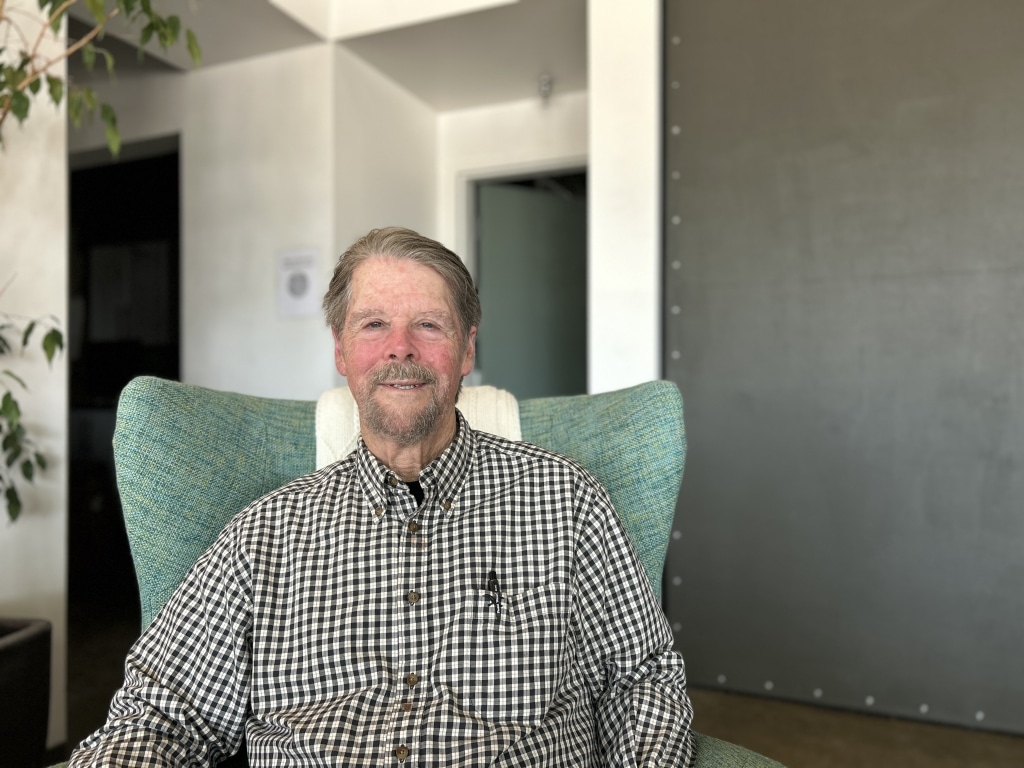
“If you’re united, you can do a lot more,” Ledger, founder of the Shasta Environmental Alliance (SEA) told Shasta Scout in an in-person interview prior to his retirement as president of the organization in April.
Ledger, who co-founded SEA with Melinda Brown in 2017, said the alliance was developed to address the lack of a unified environmental voice in Shasta County.
SEA’s overarching mission is “to protect the plants, animals, water, soil and air of the Sacramento River watershed.” It’s a broad scope that Ledger says has allowed the alliance to weigh in on environmental issues across Shasta County as well as those in communities both upstream and downstream.
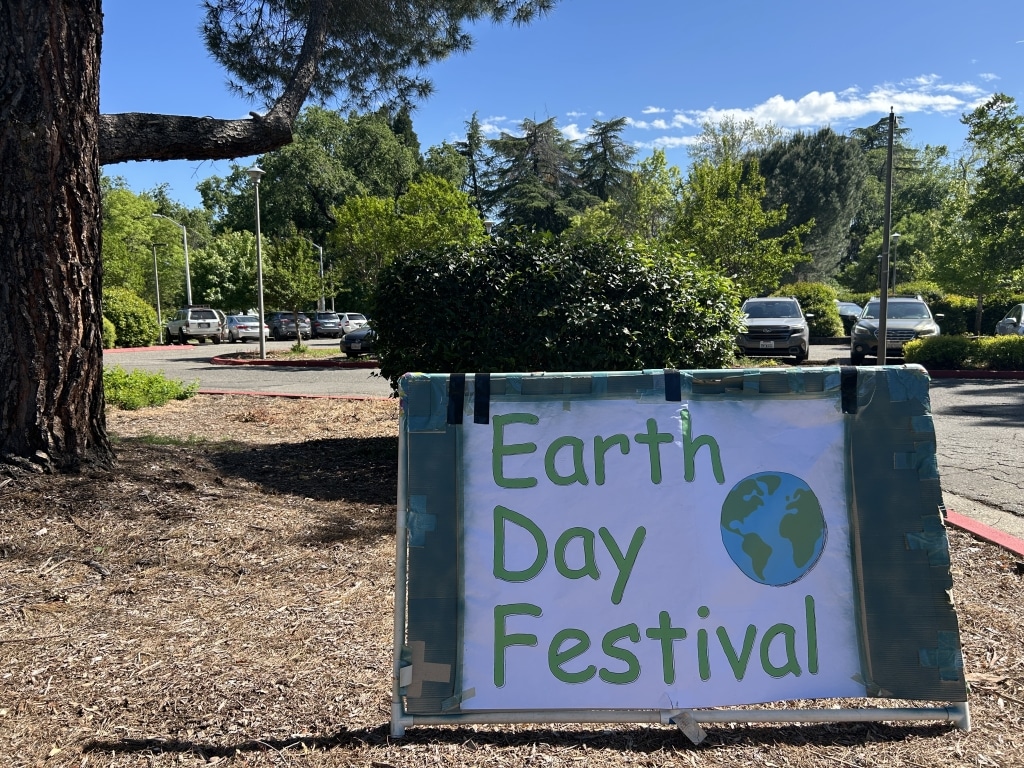
This spring, seven years after founding the organization, Ledger decided it was time to move on. He officially retired on April 30, after SEA’s third year at the helm of Shasta’s Earth Day Festival. The organization, which has also lost several other key players over recent months, is actively seeking a new president as well as new board members, current board member Juliet Malik wrote by email.
“All of us are passionate about fostering SEA into its next phase of serving our region’s need for environmental advocacy, education and community building,” Malik said. “To support this next chapter, we’re seeking new board members who can help broaden our perspective, strengthen our efforts and respond to the evolving conservation priorities of our community.”
In addition to hosting hikes and nature-related outings and activities, she said, SEA keeps people informed about both local and national environmental issues through Facebook, Instagram and the organization’s monthly newsletter, all of which help highlight issues that need the public’s voice to ensure environmental protection.
“This is a challenging time for environmental advocacy,” Malik explained, “but it’s also a really exciting time to get involved.”
While Ledger will no longer serve as SEA’s president, his local conservation work is unlikely to end anytime soon. In an update to Shasta Scout over the phone in July, Ledger admitted he is still performing many of his previous activities, including sending out regular emails to inform the public about environmental causes needing advocacy.
He has always been connected to nature, starting in his youth which was spent growing up on a 280-acre ranch in the San Luis Obispo area. Ledger moved to Shasta County in 1979, and found the area full of its own natural resources and environmental challenges.
He attended university to study history, but left two classes short of a degree. He then established a successful business selling packaging, which provided a steady income and enough flexibility of schedule to pursue adult education classes aligned with his passions. Since his retirement, Ledger has continued to grow his knowledge of environmental issues through a variety of classes on science and the natural environment he’s taken at Humboldt University, Shasta College and Chico State.
The idea to create the environmental alliance that came to be known as SEA developed out of his work ten years ago to preserve an area in Redding known as Oregon Gulch. In 2015 — as city staff prepared an update to the city’s Parks, Trails and Open Space Master Plan — Ledger asked the Redding council to commit to preserving Oregon Gulch. The city had recently considered selling the area, which includes a creek with trout and salmon. Ledger said he worked with city council members and city staff to move forward the idea of conservation and the area was ultimately designated as open space in 2016.
As he did with Oregon Gulch, Ledger says he’s often one of the first people to publicly address a local environmental issue, jumping in where others might be more cautious. Utilizing SEA’s email network to activate others, Ledger works to shine a spotlight on issues many of the environmentally-concerned don’t yet know about, leading to media attention, and more advocacy.
SEA’s Local Efforts
A recent environmental issue that illustrates the force of SEA’s community involvement is the Hawes Farm zoning debate. After Hawes’ owners asked the county for a recreational zoning designation in order to add rollercoasters, RV parking, septic systems and more, Ledger was among those who spoke up. He called for a biological survey of the property, citing the farm’s close proximity to the river where protected species could be impacted.
Drawing in part on Ledger’s advocacy, a coalition of neighbors who had also been organizing, wrote additional letters to the county and planned a town hall style meeting, attended by two supervisors, to voice their concerns.
Ultimately, county supervisors approved rezoning Hawes Farm earlier this year, but only after amendments to the plan to add restrictions for noise, lighting and heights of attractions. Perhaps the most significant change from the original plan, was a decision by supervisors to ensure about 40 acres of riverfront land would remain designated as agricultural, not rezoned for recreational uses.
“People don’t realize how much their emails have an effect,” Ledger said.
Another win for SEA came in May, after a fight to require more in-depth environmental studies for a Millville Plains property that former county supervisor Patrick Jones hopes to turn into a gun range. Following a lawsuit by community members over the county’s original approval of the gun range project, a Shasta County judge vacated the board’s previous approval of the project, stopping progress on the shooting range until a full environmental impact report is conducted.
Other projects SEA is involved with remain ongoing, with no clear end, in sight. An effort to update Redding’s Tree Ordinance is among those ongoing battles. Given the current city council, Ledger says he is unsure the changes he hopes for, including having developers pay fees for trees they cut down, will be enacted.
Resisting development at the Redding riverfront has also been a long fight, and one Ledger says he’s not dropping out of any time soon. After the idea to develop prime public riverfront land in the heart of Redding was first proposed in the fall of 2021, a coalition — including SEA, the Sierra Club and the Audubon Society — flooded the city with letters, emails and comments opposing development. Plans for future riverfront development remain in flux, but the Redding council recently gave the green light for planning staff to move forward on a draft specific plan for the area. Public officials noted the importance of maintaining the environmental integrity of public land at the riverfront in their comments.
Ledger’s Future Plans
When Ledger spoke to Shasta Scout via cellphone in July, he took the call from high above Whiskeytown Lake where he was teaching a young man about the botany of the area. The conversation included several pauses as Ledger pointed out plants and trees and their identifying features. He said he hopes to continue to lead field trips and study botany now that he’s stepped down from his leadership role.
Getting out into the natural world, Ledger said, can make people more aware about what’s behind some of the development issues that arise in city and county meetings. Some SEA field trips are focused on regrowth after wildfire and what kinds of mitigation efforts are most likely to be successful. Other field trips, he said, are less education-focused and more about recreation and the simple pleasure of enjoying the outdoors in community.
In his second retirement, Ledger also plans to continue working with the Shasta Chapter of the California Native Plant Society, where he has been a member for 20 years. He is also involved with Horsetown Clear Creek Preserve and Northstate Climate Action and has plans to join the board of the local Audubon Society.
Among his many other goals, he hopes to reactivate a Shasta group of the Sierra Club, an organization which facilitates a broader regional approach to environmental issues, particularly those related to clear-cutting of forests as well as preservation of public lands, including the Sáttítla Highlands National Monument in Siskiyou County.
Do you have a correction to share? Email us: editor@shastascout.org.
Author

Comments (9)
Comments are closed.
Related Articles
Pit River Tribe prevails as California Energy Commission definitively rejects Fountain Wind Project
The state agency denied energy giant Repsol the required certification to develop a wind energy project on Pit River holy lands. It’s the third time the project has been denied. The first two denials occurred locally, in Shasta County.

Shasta-Trinity National Forest officials issue order to curb invasive golden mussels
The order comes about a year after the species was first discovered in North America. The mussels have caused significant damage since then.
The Whiskeytown Environmental School was heavily damaged in the Carr Fire. Today, the community is working to fully revive it
Over 97% of the Whiskeytown National Recreation Area was burned in the Carr Fire, including WES. The damage halted programs for children that have been in place for decades. Five years later, WES is still working to bring back its beloved overnight camp.
Thank you, Mike. I appreciate that you (the only councilman) always reply to tree concerns within Redding.
I’ve appreciated every conversation and meeting with David Ledger. He is a wealth of knowledge.
David and SEA focus on all threats to the environment. As stated in the excellent article, they have worked on a tree ordinance, the Riverfront Property plan, the gun range, developments that threaten the ecosystem and try to remove as many trees as they can get away with. He has never “focused” on farming. The Hawes Ranch issue involved taking land OUT of farming, paving it and installing a carnival there instead.
As to the other comment, what on earth do you mean by “the money”? There has never been any monetary gain for David, SEA, or any other local environmental group. Instead there has been countless volunteer hours.
If not for David Ledger drawing attention to so many issues, Redding would have become even more of a sprawled out, treeless, hot parking lot than it already is.
David is truly a marvelous environmentalist. Unlike so many that ignore the effects of climate change, David is out there every day and every year to help people enjoy and understand the natural environment around Redding. We need a tree ordinance in Redding and nearby urban areas that protects and replants native trees. Developers have so much power that the City Council does not dare to protect any native trees lest they loose campaign funding. The heat is getting worse, and trees can cool our cities immensely. We need many more David Ledgers.
It’s interesting that when asked, 65% of Americans say climate change negatively affects our communities, and two-thirds of us are concerned about human-created policies and lifestyles that exacerbate the problem at micro and macro levels. It’s not just “environmentalist” but even some religious leaders report we are failing to be the shepherds of the earth God requires of us, as we, supposedly the “smartest” creature God created, defecate in our own habitat, in a raging storm of environmental destruction called ecocide, created by our greed, sloth, apathy and ignorance. Thank you, Mr. Ledger, and all local “environmentalists” for making real a few and simple solutions, like saving and creating urban forests, and ecologically balanced planning, that can make life better for all Mother Earth’s creatures and even mitigate climate change. You are shepherds, doing noble work.
Why do these so-called environmental enthusiasts always target farmers? We have horrific issues in these northern counties with illegal grows in our forests. They are using toxic chemicals in our watersheds. Not one word about that in this article. What about all the unhoused who are camping on our public lands, depositing their drugs and human waste on our watershed, and starting fires that destroy not just the evergreens but the oaks this guy fiegns to care about. Someone who is two classes shy of a degree in history is also shy of some common sense, in my opinion.
Truer words never spoken! The money has dried up and he’s moving onto the next payday….
Barb: If the farmer you’re referring to is Mr. Hawes, I’ll note for fellow readers that the expansions opposed by SEA and others on the Hawes property had to do with large-scale entertainment, not agriculture.
Thank you, I am familiar with the Hawes situation. I wonder if they are shifting more toward entertainment because numerous roadblocks from environmental agencies make it impossible to grow food? In any event, my point is, why not focus on the illegal grows and the horrific chemicals they use, as well as the unhoused and their impact on our environment? Why is it only farms? Honestly, the answer is obvious to me but I still think the question needs to be voiced.