
State of the Tribe: Redding Rancheria Highlights Tribal Sovereignty, Health Care Services and Community Investments
At the Redding Rancheria’s first State of the Tribe address in three years, CEO Tracey Edwards emphasized the Tribe’s status as a sovereign nation seeking increased self-determination and autonomy. She also outlined the Tribe’s role in the greater community, especially in the arenas of health care and economic development.
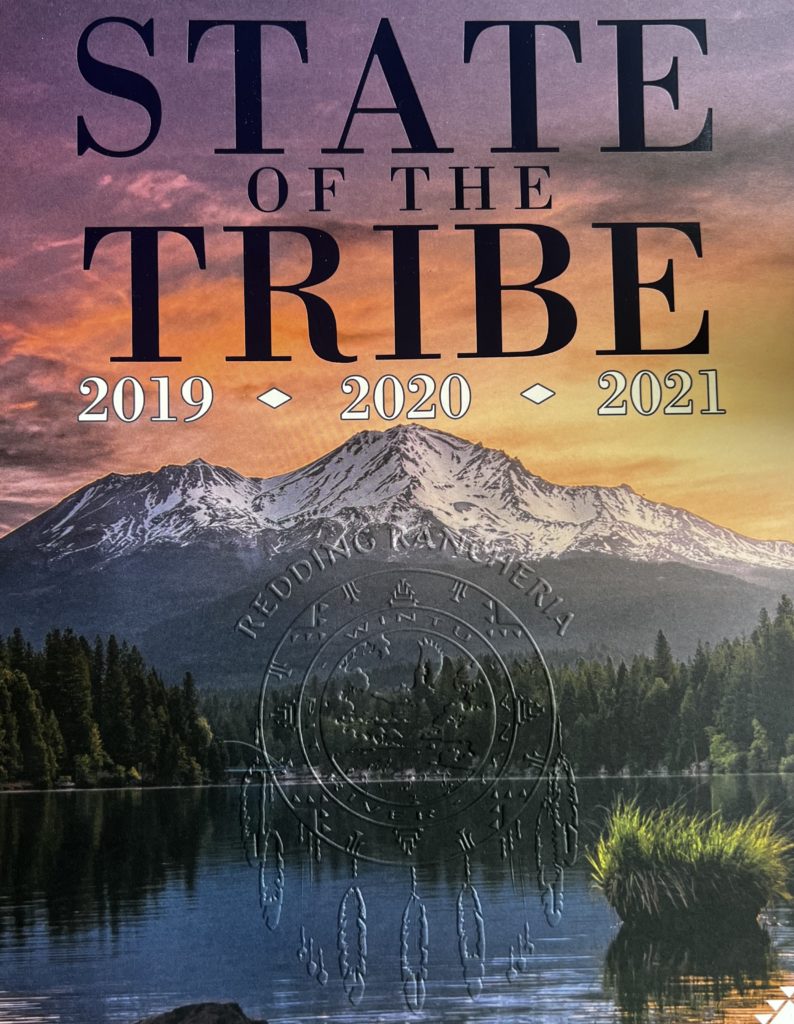
During the height of the COVID-19 pandemic, the Redding Rancheria proved to be an essential player in the response, likely preventing numerous unnecessary deaths.
According to CEO Tracy Edwards, the Rancheria’s four health clinics provided 229,000 patient visits, treated 2,000 COVID patients and administered 10,000 vaccines. Edwards shared the information as part of the Redding Rancheria’s first State of the Tribe address in three years, referring to it as an example of how the 410 member Tribe provides contributions to Shasta County through economic development, healthcare access and community service.
“I would not be surprised if everyone here knows someone who’s benefitted from the services from our Tribe,” Edwards said. “We are an integral part of this community.”
Since 2020, the Rancheria has expanded existing health care operations. They currently serve both Native and non-Native community members at four clinics. Their Churn Creek Healthcare facility which is open to all Medi-Cal patients, serves 12,000 patients. In March of 2022, the Tribe also opened the state-of-the-art Trinity Health Center which includes a community gathering place, in Weaverville.
Close to 400 people attended the Tribe’s private lunch held on October 12. Edwards used her presentation at the event to highlight the Tribe’s recent significant breakthroughs in exercising their sovereignty including a precedent set by the Redding Rancheria’s Tribal Court. First convened in 2006, the court has been authorized by the Tribal Council to handle marriage licenses, tribal employment matters, workers’ compensation and child welfare issues. Under a California law, state and local courts must now recognize money judgments from civil cases decided in tribal courts. The Redding Rancheria Tribal Court had its first civil money judgment enforced by the Superior Court in Stanislaus County this January, a major milestone in the recognition of their judicial branch, Edwards said.
Although how Indigenous people conceive of their political status may differ, legally Tribes are best understood as sovereign nations who have government-to-government diplomatic relations with cities, states and federal agencies. Because of simplistic narratives that cast the United States as “a melting pot” or “a nation of immigrants”, Indigenous people are often misconstrued as another American racial minority. But Indigenous people have sustained distinct and sovereign societies in California for millennia and, in many cases, have signed treaties with the U.S. government just as other foreign nations have. However, due to the lasting impacts of colonization, the abrogation of treaty rights and anti-Indian legal decisions their continue to be significant restrictions on Tribal sovereignty.
“We’re hopeful that local politicians do understand and respect our sovereignty,” Edwards told the crowd, which included many representatives from both city and county government adding that when they don’t understand the Tribe “must continue to educate them . . .”
Her statement seemed to reference the way that tribal sovereignty can sometimes be obstructed at the local level. Edwards expressed feeling “disheartened” by the actions of four Redding City Council members who approved what was ultimately ruled an illegal land sale on Bechelli Lane in 2020. The sale of the small parcel blocked road access to the Tribe’ property known as “Strawberry Fields,” where they plan to build an expanded Win-River Casino and Resort. As a result of a lawsuit filed by the Tribe and a ruling by the Shasta County Superior Court, the Redding City Council voted last month to return the land back to public hands in return for the purchase price, according to the Record Searchlight.
Edwards emphasized that the Tribe has followed every necessary legal procedure to set up the Casino re-location and said that the Rancheria is committed to restoring the “cooperative relationship we thought we had” with the City of Redding explaining that the Tribe is willing to work with any government or politician that supports their sovereignty. “We’re not going anywhere. We’ve always been here. We want to make this a better place to live,” said Edwards, who is of Pit River descent.
The Redding Rancheria includes members who are of Wintu, Pit River and Yana descent, a diverse citizenship that represents a complex history, shared by Chairman Jack Potter at the opening of the meeting. During the last half of the 19th century, unratified treaties, de facto enslavement and genocidal military and vigilante massacres led to many Indigenous people across the state to flee their villages and ultimately suffer from homelessness.
After a great deal of advocacy by California Indian activists as well as their supporters, federal officials began purchasing land for homeless California Indians. In 1922, the Bureau of Indian Affairs (BIA) purchased land located in Wintu territory, now known as the Redding Rancheria, and designated it as a place for homeless Native people to live and camp.
In the 1930s, the Redding Rancheria and other rancherias were recognized as official tribal governments by the BIA under the passage of the Indian Reorganization Act. But in 1958, as part of a federal campaign to assimilate Native people by dissolving communal land, the Redding Rancheria was terminated and its parcels were sold to 17 Native people. These late elders are now known by the Tribe as the original “distributees.”
According to the Tribe’s constitution, Redding Rancheria Tribal members must descend from the original distributees. Potter, in his speech, expressed his gratitude for the elders for maintaining their ties to the land. “We would not be here today (without them). These elders guided us and showed us how to persevere and be strong for future generations,” he said.
Many contemporary federally recognized Tribes in California originated as rancherias, or lands for homeless Indian lands, and include tribal citizens of different Indigenous descents. This can make exercising sovereignty and government-to-government relationships more complex but also provides opportunities for collaboration, when multiple Tribes have members with ties to sites and homelands. For instance, the Wintu Tribe of Northern California also has members who have ancestral ties to the “Strawberry Fields” property and will work as cultural monitors during the new casino construction, said Art Garcia, the Wintu Tribe’s Cultural Resources Manager.
Economic autonomy is an important aspect of sovereignty for many Tribes, and Edwards emphasized the significant local revenue and jobs generated by the Redding Rancheria. “Our economic impact in the community is substantial,” she said. “We raise our families here, we want to keep the money here.”
In addition to Win-River, the Rancheria has an economic development arm known as RedCO which manages the Win-River mini-mart, the Garden Hilton hotel and the newly acquired Sundial Collective, a cannabis business. In all, Edwards said the Rancheria employs 820 people and has contributed $349 million in sales, taxes and vendor payments to the local economy over the last three years. She also estimated that building the new Win-River casino will employ 2,000 construction workers and the casino expansion will create 900 permanent jobs.
Edwards confronted stereotypes about Native people as part of her presentation, noting that the State of the Tribe address is a way to prevent outsiders from “filling in the blanks” with misinformation about the Tribe. Pushing back against the stereotype of Indian gaming being associated with crime and quality of life issues, Edwards reminded the audience that Indian gaming is one of the most regulated industries in the nation.
She also responded to a common misconception that “Native people” don’t pay taxes, clarifying that the Redding Rancheria has paid more than $11 million for water and power to the City of Redding. The Tribe has also sponsored city and county events, funded firetrucks and helped build Caldwell Park, Edwards said, adding that the Redding Rancheria Community Fund has contributed money to important community projects including $100,000 to Mercy Hospital for their pediatric wing.
“In our tradition, when we have an abundance,” Edwards explained, “it’s our job to share with others.”
Author
Related Articles

Federal government allocates $40 million in preparation for potential Shasta Dam raise
One Big Beautiful Bill funding will be used to make progress towards raising the Shasta Dam, federal government officials announced today. The money allocated so far isn’t nearly enough to actually do so.
State officials visit Redding to discuss update to California’s Extreme Heat Action Plan
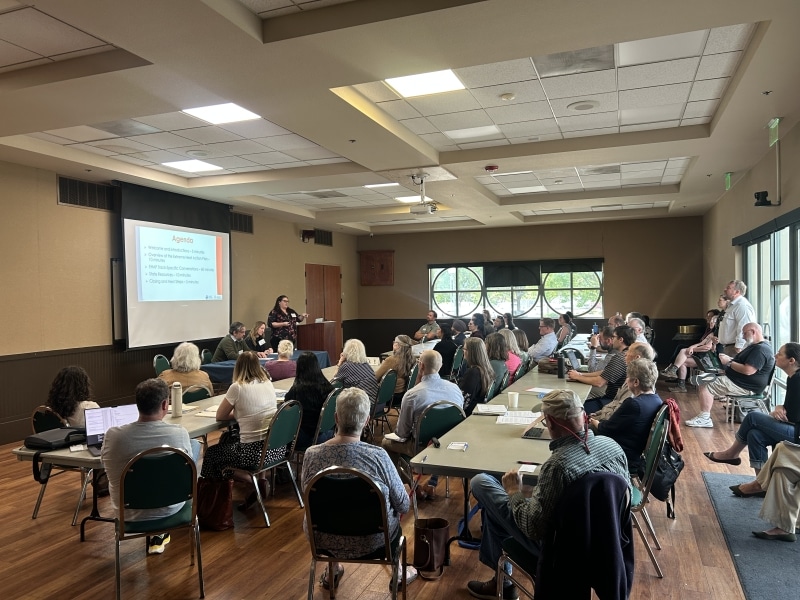
Officials with several state agencies held a listening session in Redding today. They asked community members to weigh in on topics connected to extreme heat, including appropriate services, resilient infrastructure, nature-based solutions and how to increase public awareness of risk.
New Redding manager announces ‘assault’ style overhaul of city operations
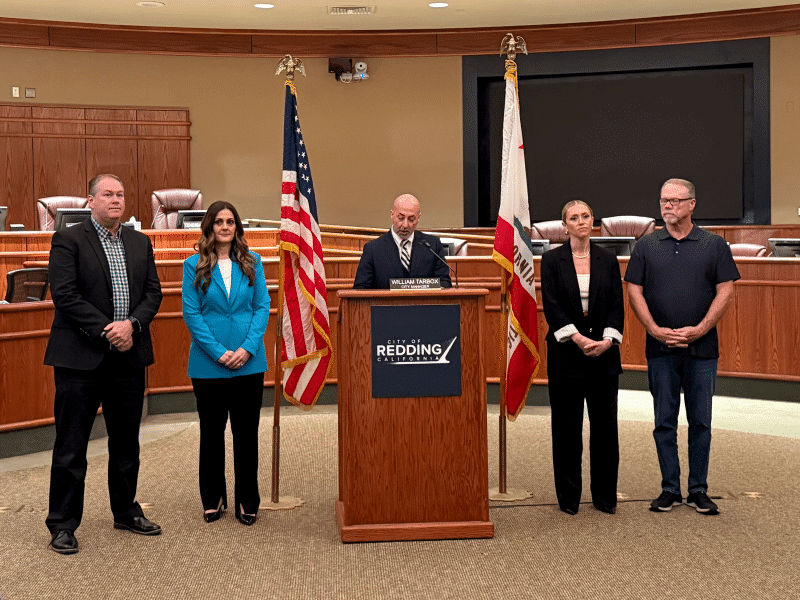
During what was originally planned as a press conference about city electric rates, Redding’s recently-hired city manager William Tarbox announced a “new era” in Redding’s governance. Council members haven’t yet met publicly to discuss such a plan but some say they’re on board.