
Stories From the Picket Line: Shasta County Workers Speak Out As UPEC Strike Begins
On International Workers Day, we talked to some of the County’s lowest-paid workers, many of whom provide critical State-funded services that help prevent homelessness, increase public safety, and respond to food insecurity.
May 2, 7:10 am: We have updated the article to correct a state-mandated timeline for services.
May 1, 6:32 pm: We have updated the article to correct an error in an employment date and program name.
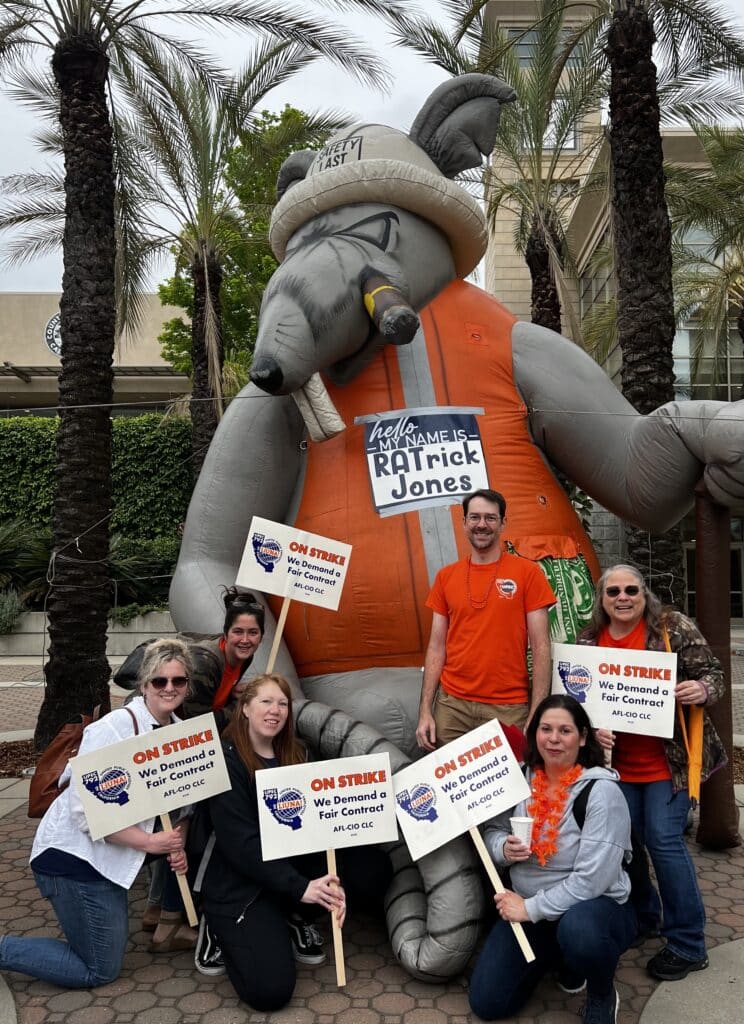
By 8:30 on May 1, nearly 300 Shasta County employees had already signed in at the picket line in front of the County’s Administrative building on Court Street.
They’re part of a bargaining unit that represents almost half the County’s staff. They’re striking after months of failed negotiations led to a Declaration of Impasse, a California labor law term that indicates recognition that future discussions would be futile.
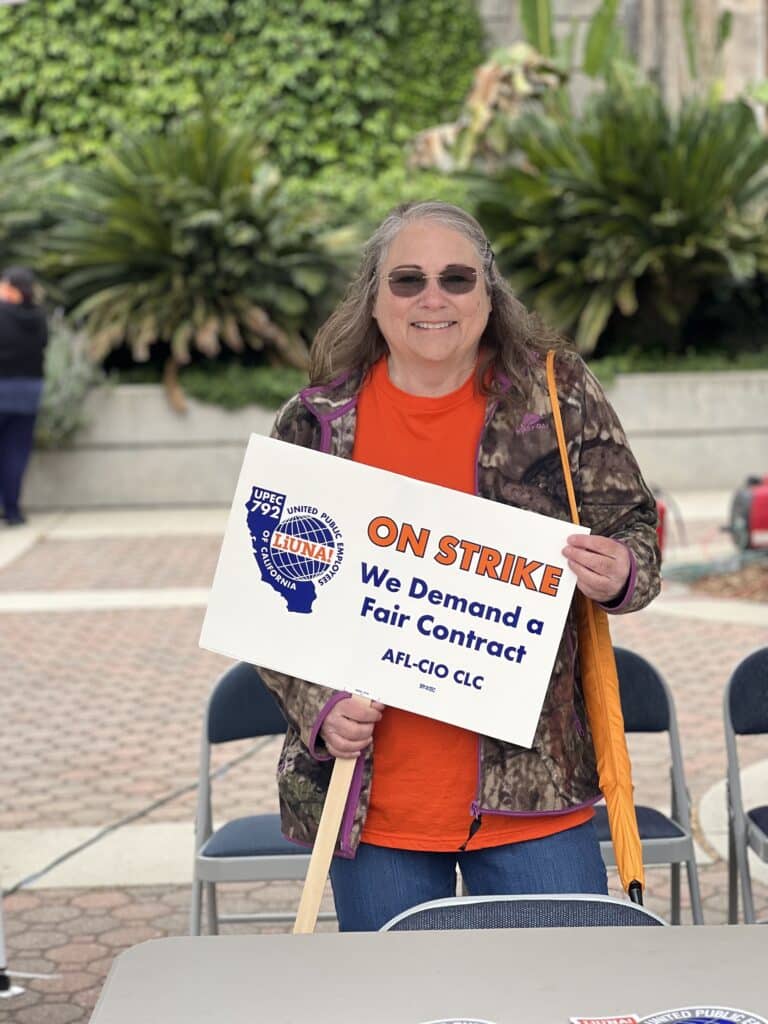
Twyla Carpenter spent her early morning at the picket line. She’s the Vice President of Shasta County’s General Unit, a bargaining unit under United Public Employees of California Local 792.
Carpenter says many of her fellow staff are college-educated and like their jobs, but are so overworked and underpaid they don’t tend to stay with the County for long.
“Once they get in here,” Carpenter said, “and they see how little their paycheck is, once they bring it home and see the high cost of medical, they find out they can’t afford to work here.”
Shasta County’s General Unit includes almost 1,000 staff, working in almost 200 different classifications that include vital services like accounting and auditing, social work, animal regulation, permitting and building inspecting, and epidemiology.
They’re asking for a wage increase of 15% over the next three years which, they say, will help their salaries keep pace with rising inflation and a recent steep increase in their insurance premiums.
We visited the picket line on International Workers Day. Here are a few of the stories we heard.
Catreena Johnson

Catreena Johnson says when her grandmother worked for Shasta County seventeen years ago, finding an opening for a County job was a rare opportunity.
Now, Johnson says, the number of staff vacancies and high staff turnover are overwhelming.
“I’m the lead worker in the call center for eligibility,” Johnson said, speaking to Shasta Scout at the UPEC Gen picket line on Tuesday morning.
“And the staffing shortages have really just shoved us into the ground. We’re drowning in work. We’re out of compliance. We can’t stop getting further behind and the State’s breathing down our necks for being out of compliance.”
Eligibility staff work in the County’s Economic Mobility Branch, helping to ensure that eligible Shasta County residents are able to access California-funded programs like CalFresh, which provides food stamps, and CalWORKS, which provides cash assistance to help families with children pay rent and other essential costs.
Those services must be provided on a strict state-mandated timeline to ensure that those most at-risk receive the help they need to prevent a further downward spiral into poverty, hunger, and homelessness, Johnson explained.
“Our direct services office, they handle the intake. They handle families coming in the day of, saying that they need homeless assistance or they’re going to sleep in their car. And we do interviews on the spot and get them what we can to help get them into a motel for the night, up to 16 nights for emergency assistance. And then once applicants are granted CalWORKs, there’s additional housing support that helps pay their monthly rent.”
Johnson said at the wages the County pays, she’s unsurprised that recruiting, hiring, and maintaining staff are so hard.
“When minimum wage is $15/hour,” Johnson explained, “and the positions we’re hiring start at $17 an hour and it takes three months of training before you even touch a live case?”
Virginia Mason
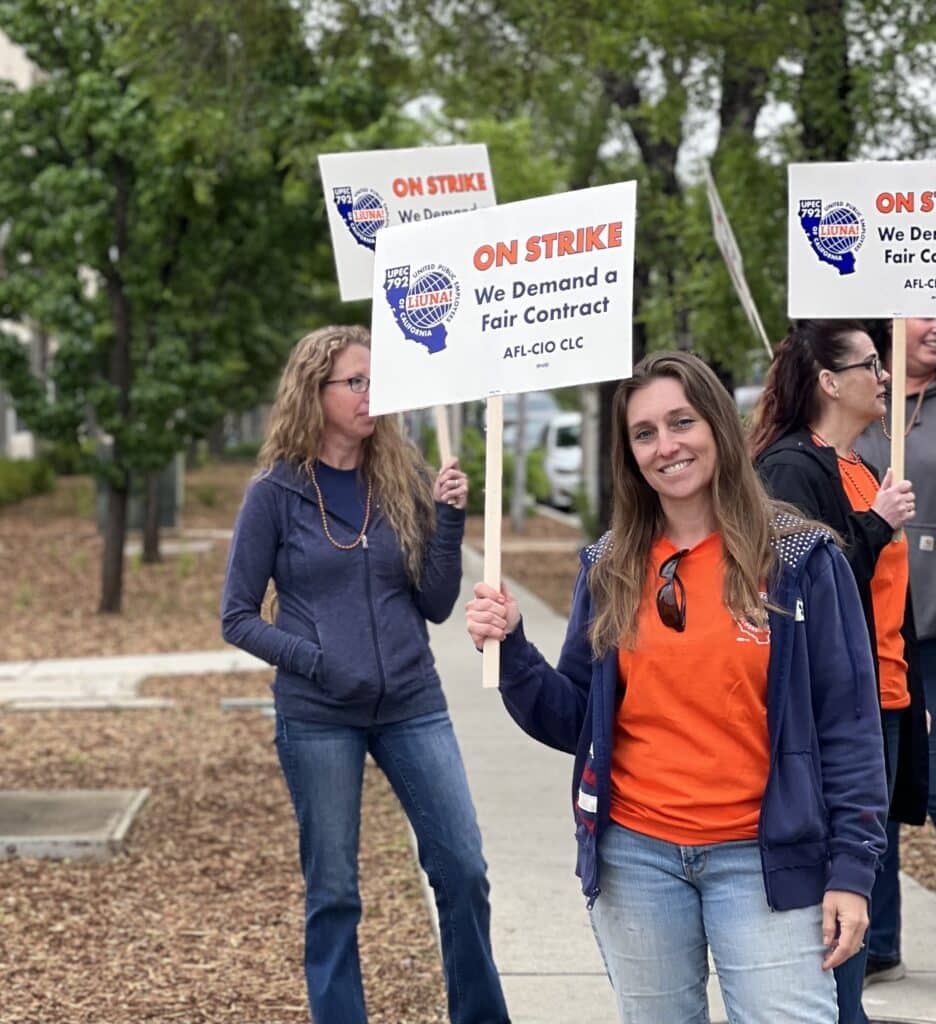
Virginia Mason came to Shasta County from Contra Costa in 2021. She says she worked the same job there with fewer requirements and for twice the pay.
As an employment and training worker, Mason says she teaches people how to write resumes and perform well on interviews. Her program also provides a number of additional services, she says, including paying for childcare, education, housing, and transportation.
“We’re trying to reduce barriers to people becoming employed,” she said.
“We’re skilled workers and we have extensive training in our field. We’re not cashiers, you can’t train us in a week to do this. Not only that, but because of the social services that we provide, we talk to people at their worst. We definitely have emotional fatigue. It’s actually a training we have to go through. So to ask us to work for the same amount of money as the people at Chick-fil-A or Denny’s without giving us the pay that we deserve . . .”
Mason says the low wages are challenging. It’s hard knowing that she has clients who have graduated her program and are now making far more than she is.
But she’s also very concerned about staff vacancies.
“Right now, with the lack of workers that we have, there’s no way that we’re meeting state timeline requirements (for our program) and we must be being fined,” Mason said.
“I would be interested to know how far behind we are, because right now the state says case-carrying workers should have between 60-65 cases, but right now our workers are carrying 90-plus cases. So we’re not being able to give the correct services and attention to our clients that they deserve.”
“We’re overloaded,” Mason continued, “but they can’t hold onto workers at these wages because of the amount of stress [we experience]. Might as well go work somewhere else.”
Mary Shaver
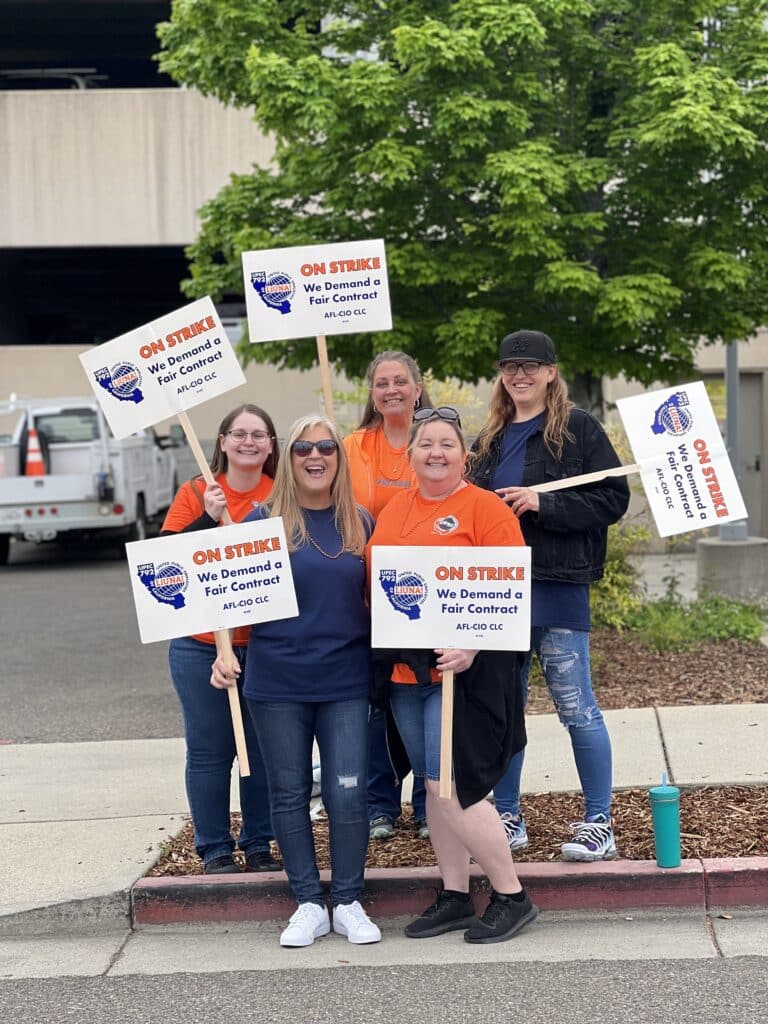
While Mary Shaver loves what she does, she says her income is no longer enough to pay her expenses.
“At this point, with inflation I’m struggling to pay my mortgage,” Shaver said. “I have two of my grown children living with me to help pay the bills.”
Shaver was a beneficiary of the County’s cash assistance program, before she began working for the County in 2010.
“Right now, I’m giving back and helping people. Some of our participants have never really had anybody to support them or be there for them. To tell them that they can make a difference, they can get good jobs. So we help people get education, work on barrier removal so they can get out and become productive members of society.”
You can read additional coverage of the Shasta County UPEC Gen Strike here.
If you have a correction to this story you can submit it here. Have information to share? Email us: editor@shastascout.org
Author

Related Articles
Meet Jack Munns for Redding City Council
There are three council seats on the ballot this November, and nine candidates are running. Munns is a current council member and former police officer.
Meet Lisa Barry for Shasta County Office of Education Trustee
Lisa Barry is running for one of seven seats on SCOE. She has a background of service in the Intermountain area including as a community organizer with Burney Friends and Neighbors.

Meet Joana Rebollar for Redding City Council
There are three open seats on the council, and nine candidates are in the running. Rebollar is a tax preparer and accountant who has a primary focus on the city’s finances.