
Superintendent Terminated as Fiscal Crisis Puts Oak Run Elementary School District at Risk
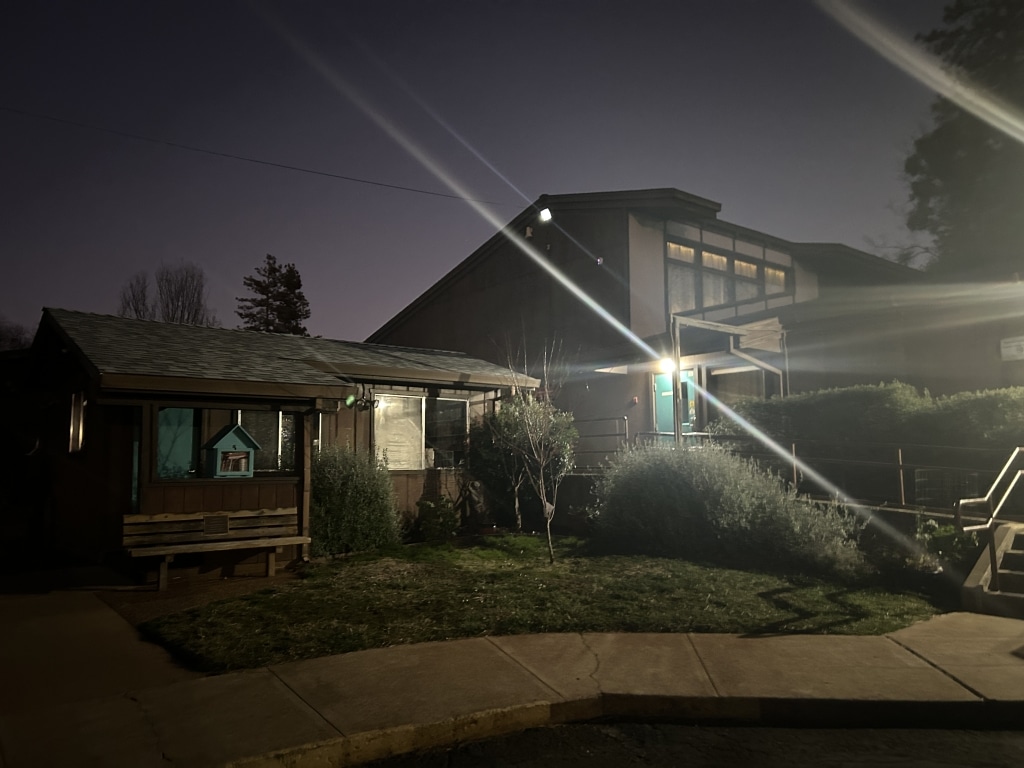
Oak Run Elementary – a rural one-school district situated in Shasta County’s mountainous wilderness – is in trouble.
Across California, the Department of Education (CDE) uses each school’s average daily attendance (ADA) data to calculate a significant portion of funding.
Having over-reported the school’s ADA in fiscal years 2021-2023, Oak Run Elementary – the only school in the Oak Run Elementary School District – has received a surplus of funds that it must now pay back to the state. Oak Run owes the state about $825,000. That’s no small number, especially for a tiny school district with an annual budget of approximately $775,000.
According to Shasta County Superintendent of Schools Mike Freeman, who leads the Shasta County Office of Education (SCOE), the fiscal problem arose when Oak Run Elementary school District claimed attendance for students who did not have legally required immunization records, without providing appropriate documentation to show that the students were enrolled in an independent study program.
California students without vaccination records must be, by law, enrolled in either independent study or a home schooling program in order to attend a public school. Independent study consists of academic instruction provided by either parents or teachers, outside of the traditional classroom setting.
Freeman said Oak Run could have counted non-immunized students in average daily attendance data if they had been appropriately enrolled that way. But, he explained, in addition to the lack of vaccine records, “the District was unable to provide adequate independent study records,” something that’s also required by state law.
SCOE serves as an impartial liaison between the county’s schools and the state, offering support services for every District and conducting annual reviews of schools’ budgetary and planning documents. For this story, Shasta Scout relied heavily on interviews and documentation provided via SCOE. It’s been difficult to connect with leadership at the rural District itself, in part because the fiscal issues are only one of the problems currently facing Oak Run.
On December 9, the Board placed the District’s former all-in-one superintendent, principal and special education teacher, Misti Livingston, on administrative leave. Then, on January 21, Board members announced that they had fired Livingston, under whose leadership the financial issues occurred. They did not specify a reason for her termination saying only that she would receive three months severance pay, in line with the terms of her contract. Livingston has declined to comment on her termination.
According to a June 2024 report by SCOE’s Fiscal Crisis and Management Assistance Team (FCMAT), Oak Run’s issue with over billing the state for attendance goes back about two years. FMCAT’s analysis from last spring indicated Oak Run Elementary District already had a high risk of insolvency then, meaning the District could become unable to pay debts when they are due – a situation which could eventually lead to the District’s closure.
The FCMAT report on Oak Run also detailed a number of other financial issues at the District last year, including the aforementioned misreporting of ADA data, heightened deficit spending and a lack of business oversight. The latter of which, according to the analysis, was concerning because it increases the risk of inaccuracies, inefficiencies and potential fraud due to insufficient preventative and detective measures. No public statement has been issued on how many of those issues, if any, have been resolved since then.
On January 21, newly appointed Interim Superintendent Mark Telles told Shasta Scout that the fiscal issue is just one of several significant challenges the District faces moving forward. Another, he said, was that one-third of the school’s approximately 25 students were still unvaccinated at the time, something he was planning on urgently addressing to prevent further financial penalties.
Telles was appointed Interim Superintendent on January 9, by a unanimous vote of the Oak Run Board. He has come out of retirement to serve the small school District for a period of no more than 90 days. According to the Board, Telles’ main role during this time is to spearhead the hiring of a permanent replacement to for the superintendent position.
In a phone conversation with Shasta Scout before she was terminated, Livingston, the former superintendent and principal at Oak Run Elementary, expressed frustration about how she feels the state, SCOE and the Oak Run Board handled the District’s fiscal crisis, saying she was left alone without enough support.
“I told [SCOE] I need help. I don’t know what to do here,” she said, referring to the lack of independent study documentation and missing immunization records. “I know nothing.”
While he acknowledges the immense obstacles that Livingston and the District-at-large have faced, Freeman also asserts that SCOE did offer support, in the form of financial advice, attendance at board meetings and providing an explanation of what was required for Oak Run to come into compliance with state laws and standards.
“We come alongside to be able to help school staff know what is allowed, what is not allowed, what are the state requirements,” Freeman explained. “Our goal is, how can we optimize? How can we make sure you are getting every dollar you’re entitled to, so that you can provide those essential services?”
But support can only go so far, Freeman continued, especially if the data provided to SCOE for review is inaccurate.
“They’re providing the numbers, the attendance,” he said. “We’re working with what they have provided.”
Within Shasta County, Oak Run Elementary School District is extremely unique insofar as its exceptionally small size, remote location and minimal staffing. But the everyday struggles of managing the District are relatively commonplace for schools in similar rural environments, Freeman said.
“Staffing is difficult for some of our inner-mountain, rural districts, and that puts administrators in tough spots,” he explained. “Sometimes, administrators are running schools and teaching classes and driving buses and… Oak Run has been in that situation.”
The District is also receiving ongoing help from fiscal expert Rick Fauss, who was contracted by SCOE to support Oak Run Elementary over the last several months. Fauss’ role is to provide a financial sounding board for staff and to be a liaison between the school and SCOE on financial matters as the District regains its footing.
According to both Fauss and Freeman, there are continued concerns that the District may not meet its financial obligations over the next two years. In order to indicate the ability to sustain programs for students in the long-term, districts should be able to provide a multi-year budget projection. At the moment, Oak Run is unable to do so, which is why the District’s budget is currently listed as “qualified”, indicating ongoing financial uncertainty.
Fauss’ support will help Telles and the District’s Board as they work to put the District back on stable ground. As previously mentioned, paying back the more than $800,000 that Oak Run now owes won’t be easy, given that the school’s annual budget is only about $775,000. The District has issued an appeal to the state, requesting a payment plan to ease the significant financial burden of repaying back ADA revenue. A positive response is possible, said Kerri Schuette, SCOE’s Director of Communications, but only time will tell.
“The District may be eligible for a repayment plan of the overstated revenues, payable at approximately $103,000 over 8 years,” Schuette explained, indicating that there has not yet been a response from the Education Audit Appeals Panel.
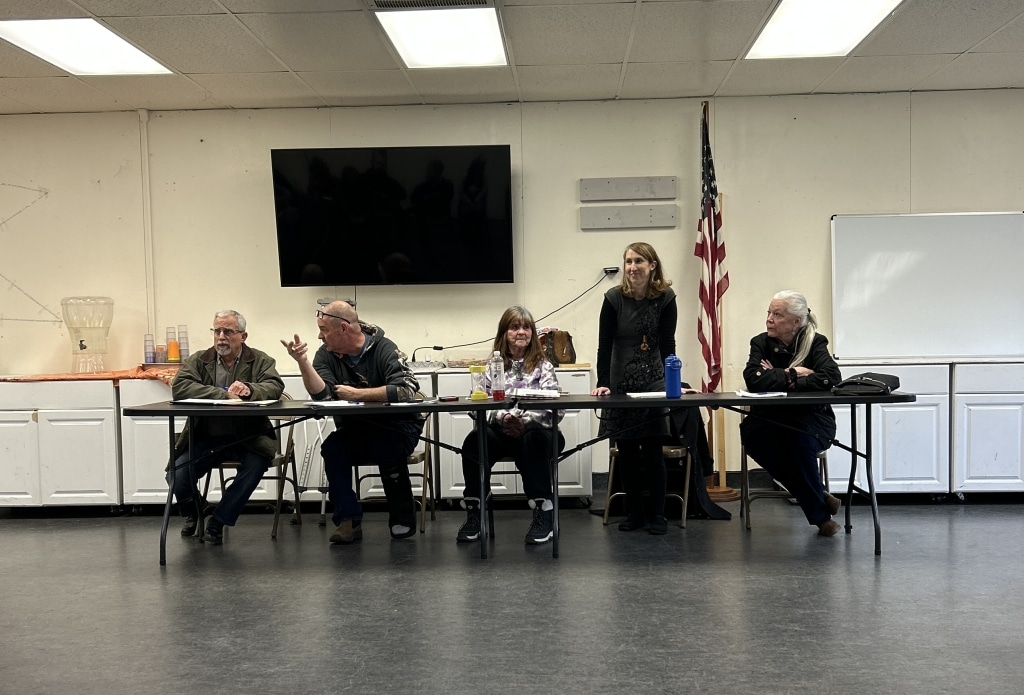
Over the last month, Shasta Scout attended two Oak Run Board meetings. The atmosphere revealed significant accumulated tension and disillusionment among the roughly 20 members of the small school community who attended, including guardians, current and former school employees, and Board members.
On January 9, the meeting devolved into a brief yelling match between those who supported former superintendent Livingston (who was on administrative leave at the time) and those who had concerns about her leadership. Board President Shawn Hill addressed the issue by raising his own voice to instruct two individuals, one from each side of the room, to leave the meeting. When they did, the meeting calmed, but only a little.
The Board’s current members are set to participate in their first Brown Act training in February. A comprehensive understanding of the Brown Act – which mandates transparency and public access to decision-making processes – is necessary in avoiding potential violations and maintaining compliance with the law. It will also help the Board know what authority they have, and how they can use it. The Board is also hoping to recruit someone to fill it’s fifth vacant seat. There hasn’t been much interest thus far, President Hill told the public, at the last Board meeting. But based on recent involvement by members of the community, that could change.

Oak Run’s current predicament exposes both the complexities of navigating state education requirements, and the consequences Districts may face if they fail to do so. To avoid the District’s closure, SCOE Superintendent Freeman and contracted fiscal expert Fauss explained, Oak Run must prioritize paying off its debt, while continuing to maintain services for students.
“School districts can’t technically go bankrupt […] they can be dissolved” Fauss explained, “and we want to do everything we can to keep that from happening.”
According to California Educational Code, the decision to close a school district is made at the local level by the district board. Doing so requires a significant series of steps which must be conducted in view of the public, during board meetings. So far, the Oak Run Board has not started down that path.
Annelise Pierce contributed reporting for this story.
Do you have a correction to share? Email us: editor@shastascout.org.
Author

Comments (10)
Comments are closed.
Related Articles

Redding No Kings protest draws 2,000 as seniors and veterans show up and speak out
Community members gathered in Redding today to express discontent with the current federal administration. The event, which was organized as part of nationwide protest action, included dozens of veterans and numerous seniors, some of whom attended in wheelchairs.

To save her daughter’s life, she advocated for her rights to be taken away
California’s conservatorship system can be used to force people with severe psychiatric illnesses into involuntary medical care for up to a year. Marci Fernandes said the process has been life-changing for her adult daughter, Ann, but significant obstacles to her well-being remain.

Redding seeks community members for two committees aimed at providing advice on the city’s financial processes
The city is accepting applications to join the newly-formed Financial Advisory Committee and the newly-formalized Audit Committee. Both applications are due April 17.
This was a very informative, well written article about a tough subject. Thank you.
Why do we have so many small or tiny school districts in Shasta County? Why not combine them to save money. Not into one giant district but have several medium size districts.
Because the county is as large as the combined states of Rhode Island and Delaware, yet half the land is federally owned. This creates a large number of sparsely populated towns located miles apart.
Studies have shown bus rides that are longer than 30 minutes result in diminished performance and lead to increased absenteeism & incidents of bullying.
Mahmoud — Bella Vista, Mongomery Creek, North Cow Creek, Millville, and Junction schools are all less than 25 minutes from Oak Run Elementary.
There are no compelling reasons to have single-school districts in California that outweigh the huge financial subsidies required to keep them open. The administrative burden is ridiculous. Even with the top-heavy allocation of funds to admin, Oak Run Elementary proves that even the most important admin function—keeping track of average daily attendance—is either beyond the technical or ethical capabilities of the administrators.
Brian: This a great question.
Excellent reporting.
It is sad that despite generally advocating for “harm reduction” California Democrats are punishing the most isolated children among us to score political points against anti-vaxers. Public schooling offered these kids their best chance at a productive life (maybe as an accounting specialist for Shasta College rather than as a felon on Shasta County’s Most Wanted list).
Mahmoud — Democrats are not punishing rural kids to score political points against anti-vaxxers. Vaccine mandates have been hugely successful at mitigating the deadly and damaging risks associated with communicable diseases like smallpox, polio, rubella, tetanus, diphtheria, pertussis, and others. Some like to argue vaccines should be parental choice, but many kids can’t be vaccinated for medical reasons and have to rely on “herd immunity.” There have been substantial increases in some of these diseases where anti-vax sentiments have taken hold.
Here’s one context where the anti-vaxxers have zero influence: The U.S. Department of Defense. Immunization shots for 12 diseases are required, plus some of 8 more depending on where you might be deployed. Readiness is the agenda, not indulging the paranoid.
Try not to be so cynical that you’re blind to the medical and public health reasons for vaccine requirements.
It isn’t Democrats’ intent to punish kids, but the effect of their legislation does just that. Until they turn 18, these kids have zero say in whether or not they will be immunized -that’s wholly on their parents. Abortion? no problem. Immunization? Sorry, we need parental permission…
I know you’ve had your own experiences in The Hole so you already know many of these parents are members of a (dis)organized crime family that are extremely distrustful of the government and only tolerate public schooling to the extent it serves as free daycare.
As a result, they’re turned away from what little worldly socialization that schooling in Oak Run has to offer and, if they’re lucky, get put into an independent study program. If they’re unlucky, they wind up homeschooled where they learn the fine science of honey oil production
Let’s not gloss over the fact that under Misti Livingston’s watch, they violated the Williams Act by not purchasing or providing textbooks. She also hired her un-credentialed daughter at a high rate of pay and allowed an un-credentialed individual to teach P.E. And what about the donation of $18,000 she received in the Fall of 2024, which she posted about online?
The exact argument could be made of the state of California in general! Will there be made to pay back their debt? Deficit spending is all California does! The can of worms that you have opened in this very microcosm of the state should be breathtaking!