
Supervisor Jones Wants More Power To Set The Board, And The People’s, Agenda
Behind the scenes last week, a struggle played out over the Shasta County Board of Supervisor’s agenda. That struggle led Jones to create a new agenda item that could give him, and future Board chairs, more power over what Supervisors are able to vote on.

As the Chair of the Shasta County Board of Supervisors, Patrick Jones always reviews and approves the Board’s upcoming agenda.
That’s what he was doing last week when he noticed an item that had been placed on the Board’s agenda at the request of the County’s elected Clerk and Registrar of Voters, Cathy Darling Allen.
It turns out both Jones and Darling Allen wanted the Supervisors to discuss the local elections process, but they had different ideas for how to approach the topic.
Darling Allen wanted to ask the Supervisors to consider moving forward on contracting with a state-certified electronic voting machine system.
Jones wanted the Board to consider piloting a hand counting process, without use of electronic voting machines.
Jones wanted to make sure supervisors saw his hand counting item first. So, he says, he asked the Clerk of the Board to remove Darling Allen’s item from the Board’s agenda.
Jones says that request prompted pushback from the County’s attorney, who said while Jones couldn’t remove a time-sensitive item that had been placed on the Board’s agenda by a County department head, he could change the order of the agenda items.
So, Jones said, “I just did a little bit of maneuvering . . . and put mine up front (of the agenda) and hers towards the back.”
The result is an agenda that features Jones’ ideas for how to move forward with elections towards the top of the Board’s calendar, and leaves Darling Allen’s until almost the very end.
It was a powerful move that’s well within his scope of power as the Board Chair, according to agenda notes from the County’s attorney. And it’s likely to significantly impact how the other Board Supervisors, and the public, will engage in decision-making about the County’s election process.
On Tuesday, Jones will present his ideas for how to move forward with elections without the use of voting machines, early on. That means by the time supervisors get to Darling Allen’s request to choose an electronic voting system, they could have already decided to eliminate the use of voting machines altogether.
And that was Jones’ intent.
“To be honest,” Jones said, explaining why he had separated his election item from Darling Allen’s on the agenda, “I wanted to have a talk with the Board first . . .so we’ll have that discussion and then we’ll get to hers, later in the agenda and it could, it might even be, a moot point by the time we get to it.”
Asked if this was in the best interest of the people he serves, Jones said, unequivocally, yes.
“It’s all properly agendized,” Jones said. “We’re not hiding anything. “Its all there. It’s a public meeting, there’s public comment and people can comment on the items during the meeting or before. I don’t see any issue there at all.”
Reordering the agenda seems to have worked well for Jones. But he’s still trying to avoid having to do it ever again. Which is why he’s added another item to this week’s Board agenda: a discussion about the County’s policy for how the Board’s agenda is set.
In an approach to business that’s becoming familiar under Jones’ leadership, he hasn’t included any specific suggestions for changes in the policy, just a general request to discuss the policy, with a possible vote. Without those specifics in the agenda, County Counsel says, any amendments to the County’s policy would have to be brought back to the Board at a future meeting, even if supervisors already agree on the path forward.
Resources:
View the County’s policy on how items are put on the Board’s agenda, here.
Do you have a correction to this story? You can submit it here. Do you have information to share? Email us: editor@shastascout.org
Author

Related Articles
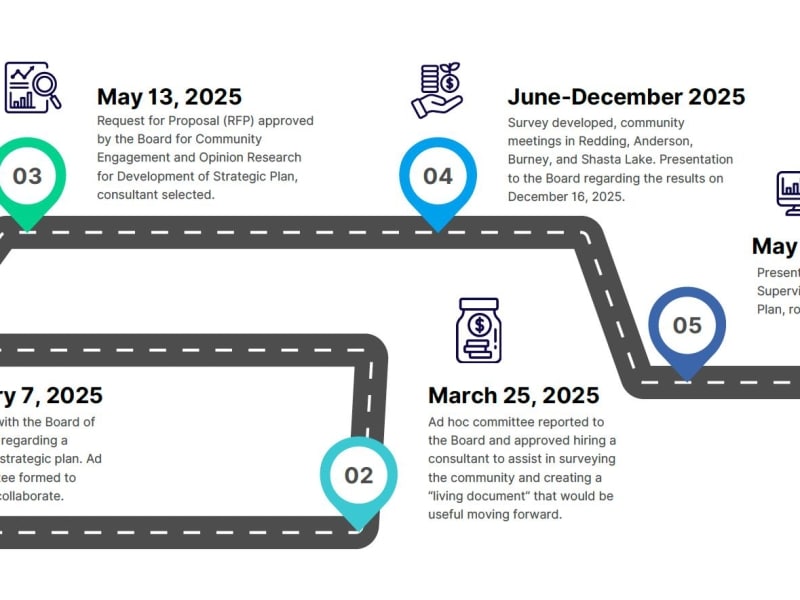
New Shasta strategic plan lays out ambitious five-year agenda. Money remains a central problem
Shasta’s new five-year strategic plan prioritizes several projects, including a corrections and rehabilitation campus and local medical school. But a lack of clear funding sources may keep Shasta from following through.

Juneteenth celebration in Downtown Redding will honor African American history
The Shasta Coalition of African Americans for Community Health, Education and Empowerment is hosting a community celebration in Downtown Redding to celebrate and educate about Juneteenth, which commemorates the end of slavery in the United States.
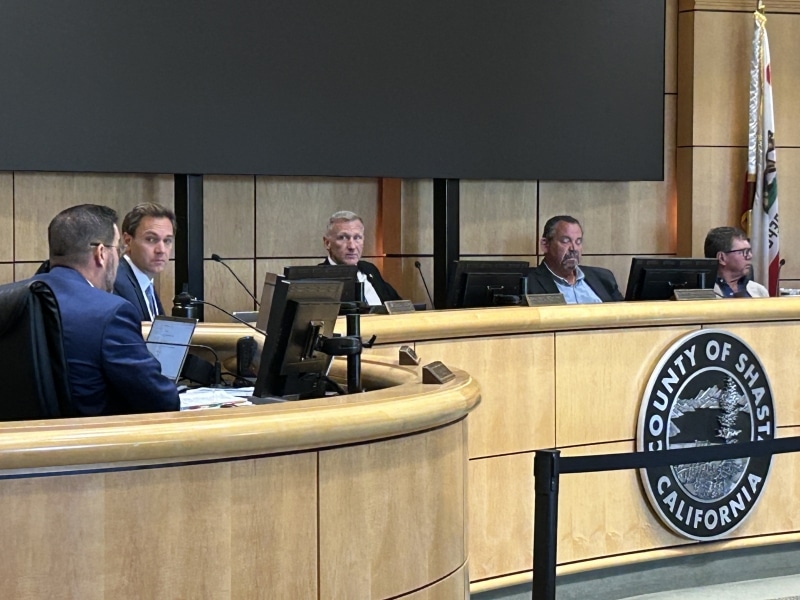
Two measures, rejected by Shasta voters in 2024, could return to ballots on taxpayers’ dime
Two years ago, dual ballot measures related to land rights and filing midterm vacancies both failed to gain the 50% of votes needed to pass. Supervisor Kevin Crye wants to try again. He may have enough support to do so.