
This week, the California Energy Commission is expected to decide the future of the Fountain Wind project
Wind energy company Repsol needs the Energy Commission’s approval to proceed with a plan to develop a wind energy plant in Shasta County. The recommendation coming from the commission’s director makes that approval seem unlikely.

Earlier this spring, members of the Pit River Tribe, elected officials, and others in the community took a stand once again against energy giant Repsol Renewables. For years, the company Repsol, which acquired Fountain Wind’s previous owner ConnectGen, has had its eye on a tract of land in the ancestral homeland of the Pit River Tribe, in hopes of developing the Fountain Wind turbine project.
Though some community members have expressed their support for a project they believe could encourage more local jobs, the vast majority of participants in local public meetings about Fountain Wind have lambasted Repsol, which is the American arm of a larger Spanish corporation. The community’s opposition to Fountain Wind has been framed as both an effort to protect the decision-making power of local government, and a defense against the increased encroachment of industrialists on Tribal land.
In attempts to secure permission to build Fountain Wind, Repsol and its predecessor company have already been dealt significant blows, including two project denials by the county. In 2022, a California law made it possible for a state agency, the California Energy Commission, to reexamine whether to approve the project. A final decision on the project is expected to be made by the commission this Friday, December 19. According to the meeting agenda, the commission is likely to deny Repsol the required certification to build, assuming commissioners follow the executive director’s recommendation.
The recommendation follows a staff assessment released in March that concluded that the proposed project would cause irreparable and significant harm on multiple fronts: including Tribal heritage and wildfire mitigation. Meanwhile, Repsol has made little progress in its effort to convince Shasta County locals that the project would be an “economic boon” for the area, which would contribute to Gov. Gavin Newsom’s battle against fossil fuels.
The CEC’s draft 1,200-word environmental impact report also outlines that the energy generated by the Fountain Wind will not necessarily be allocated for local use. It’s a dynamic that’s consistent with a long history of Tribal resources being leveraged by energy companies to serve the needs of urban communities in other parts of California, as Native communities on rural ground go without reliable power.
The December 19 meeting will take place at the California Natural Resources Building in Sacramento, at 10 a.m. The public can also participate via zoom. More information can be found on the CEC website and in the meeting agenda.
Do you have information or a correction to share? Email us: editor@shastascout.org.
Comments (1)
Comments are closed.
Related Articles
Wintu people say proposed reforms to a state list of tribes is erasure, threatens their homelands
A state commission’s proposal to remove Wintu and other federally non-recognized tribes from a consultation contact list would leave cultural sites vulnerable to destruction, tribal members say, and represents a form of unconstitutional discrimination.

This Native man from Northern California has gone missing not once, but twice
A portion of Nick Patterson’s skeletal remains, finally recovered years after he went missing, were lost again by officials during his missing person investigation. The stunning error has complicated the Pit River Tribe’s grieving process and led to suggestions for policy changes.
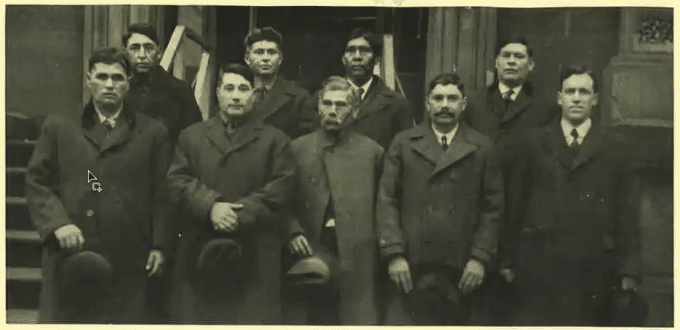
“My ancestors have not deserted me”: The life and writings of Wintu poet Alfred Gillis
After recent erasures of the historical contributions and experiences of Indigenous people from public sites, the work of an early 20th century Wintu poet provides poignant insights into how local Native people have fought against invisibility for centuries.
I’m praying that the residents of Round Mountain, Montgomery Creek and Moose Camp are given a “Christmas present” with this project being rejected. It’s been many years of fighting this battle to ensure the safety and quality of life for these residents and for the members of the Pit River tribe will be protected. During the years I served as the D3 representative at the county, we spent countless hours working with the Pit River tribe to prevent this project from moving forward. Let’s hope our efforts have paid off.