
Underground Good: Greg Lawson and Vicki Ono
“I told him I hadn’t brought a guitar and he sent me to borrow one from a woman who turned out to be Sarah Lee Guthrie, Arlo Guthrie’s daughter. That was an incredible moment for me, to be standing in the Capitol Mall, on a stage, using Guthrie’s guitar and singing one of my songs about Darfur.”
Editor’s Note: This Opinion piece is part of our Underground Good series, which focuses on providing a window into the mindsets of ordinary people doing good work in their community. It’s written by sociologist, coach and evaluation consultant Sharon Brisolara. You can find the rest of our Underground Good series here. Want to nominate someone? You can do that here.
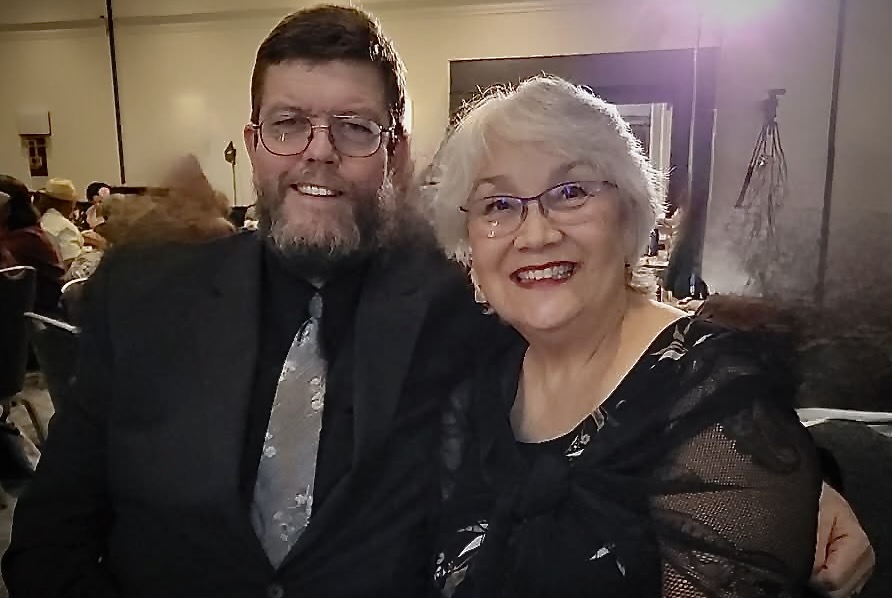
Greg Lawson and Vicki Ono are educators and deeply engaged community members who have been involved in humanitarian causes throughout their lives. They have also been involved for years with the California Teachers Association, which honored Lawson this year as the winner of the CTA’s Peace and Justice Human Rights Award. The award recognizes educators who have promoted peace and justice in their classrooms and communities.
Before serving as president of North Cow Creek Educator’s Teacher Association, Lawson was involved with iAct, an anti-genocide educational nonprofit. He was moved to write a song called “For the Camps” to commemorate the first time Camp Darfur, a traveling awareness and education event, came to Redding. The husband and wife duo is often found together, bringing their musical talents and support to a number of community efforts. It seemed fitting to interview them together.
How would you describe what CTA is and what it does?
Vicki: CTA is the largest labor union in California. It was started back in 1863 and among its earliest battles was a focus on free public education so that there would be public schools everywhere, not just where the property taxes paid enough. It was also involved in advocating for labor laws to end child labor so that kids could be in school and be protected.
How did you first become involved in CTA?
Greg: There’s a term that we use in CTA: I was “volun-told.” I had been going to meetings, but not paying a whole lot of attention because it was always about bargaining, and I’m not a skilled negotiator. Then they needed a chapter president in my school. It was a very small chapter, and I missed a meeting. I came in the next day and one of my coworkers pleaded with me to serve as president and so I took on that role.
As a member, I had been going to the Human Rights Conference for years. I was participating before George Floyd’s murder. I remember about 10 years ago discussing Ibram X Kendi’s book “Stamped from the Beginning” with others at one of the conferences. Human rights issues were already close to my heart, probably from being a Methodist and growing up in a household where we had a lot of exchange of ideas.
Vicki: When I first got involved with CTA, I was teaching at Cypress School. The president of our local union was at Cypress school, and she asked me if I would go to the Equity and Human Rights Conference and be the women’s representative to learn about current changes in the laws regarding women’s need to have a place to nurse their babies or pump milk. I am the bargaining chair for the Redding Teachers Association now. It has been really interesting to work on the teachers’ union contract with our school district. I’m also the Ethnic Minority At Large CTA representative for this part of California which goes down to Tehama County, all the way to the borders of Nevada, but not the coastal range.
Here in Redding, our union and our administrations are not adversarial. We might fill the boardroom when we’re in the process of bargaining for working condition changes or cost of living increases but both teachers and the district are working within budgets and trying to keep up. We both want what’s best for the students.
How do you navigate being educators, your CTA positions and some of the contention that school boards are experiencing?
Greg: One of the things that’s difficult for us is that CTA might send out directions about policy positions, but our members hold different perspectives. As president, I make sure our local members are heard. That said, CTA is just like the rest of California, and there are a lot of conservative members in the association. It’s a “small d” democratic body with people representing all different parts of California and issues are discussed and debated before it can become a policy of CTA.
Vicki: I have seen some misperceptions about the role of CTA. Teachers represented by CTA don’t have tenure. We’re not college professors; you can get fired from your job and can be disciplined for insubordination and the like. There are checks and balances.
Greg: Over time, our area has been able to receive some recognition from CTA. Eddie McAllister won the National Education Award last year, and I was recognized for this one.
Vicki: Northern California has rarely gotten recognition in the past. But with Greg being a Human Rights Advocate within CTA for a long time and me serving as an Equity and Human Rights Team leader representing this region, we’ve been able to get funding to support many of our local events.
Greg: We had been involved in human rights work with Eddie McAllister and other community groups working in Shasta County. We advocated for an equity team that focused on doing work in the community through events like the Martin Lither King celebration. We also worked with SCCAR (Shasta County Citizens Advocating Respect), the Sikh Center, and others.
Can you tell us a little more about the award?
Vicki: Greg received one of the Human Rights Awards. There are several categories, and his is the Peace and Justice Human Rights Award for Exemplary Contributions in the area of Human and Civil Rights.
People on the selection committee were impressed with his work on speaking out against the genocide in Darfur, Sudan. His songwriting about Darfur especially stood out. We were able to share those songs in Eugene for the track and field qualifiers for the 2008 Beijing Summer Olympics and in Washington, D.C., where he sang on the National Mall.
Greg: So the award was really for work done outside of CTA. I had been peripherally involved in educating about this issue at school. My kids knew what was happening in Darfur, and we participated in the Tents of Hope project with kids from different groups. But that work and the songwriting, those activities weren’t specific to CTA.
Editor’s Note: The Tents of Hope project was a national initiative to raise awareness about the humanitarian crisis in Darfur, Sudan, and to advocate for more support for the people of Darfur. Local Tens of Hope groups helped fund, assemble and/or decorate tents to raise awareness and to be used in humanitarian assistance.
Greg, what was important to you about receiving the award?
Greg: I made a point in my speech of emphasizing that it really isn’t my work that was being recognized. It was the work of a lot of people, especially Vicki. I speak well in front of people, but I’m not involved in all of the organizational things that are needed to make things happen.
What we’ve been doing involves a lot of people. It involves everybody in our service center, especially those community groups in Redding. People in Redding know that they can come to us and we’re open to being part of things and helping them. In the past, when I’d see the awards, it was usually given to somebody who had come up with a really good idea and implemented it at their school or in their classrooms. This is the only award that’s broader; it actually says in the description that it’s not just about what you do in the classroom, although what you do in the classroom matters a great deal.
Vicki: Yes. Our society, over time, has become more diverse. We work with people of all different backgrounds, and it’s really important that we understand each other better. We should teach about those different backgrounds, to include information about different groups — Chinese immigrants, cowboys, railroads — and share what has been documented and what happened as a result.
Greg: It’s important to help students think through that maybe somebody you know, who might be sitting next to you and is different than you, might have a different perspective. That’s part of the standards for social studies: learning different perspectives. Knowing the history of these movements, that’s important for all of us.
Vicki: Right. When I was teaching fifth grade, for example, I always made sure I taught about Phillis Wheatley, a poet and an educated black woman who lived in an era when most people couldn’t get an education. She became famous. Her story is an important story.
What is the power of music and song in social justice work?
Greg: I grew up at a time when I would sneak into my brother’s bedroom to check out the Woodstock album. Music was something that was just cool. When you talk about shifting culture, you can look at the music scene. If you turn on a country music channel, you’re going to hear hip hop beats and see guys with their truckers caps turned backwards. These are things that you can’t fight because they’re cool; young people usually determine what’s cool.
My cousin had moved here from Kentucky, and he turned me on to what I thought was country music because it had banjos and instruments like that. I heard the Nitty Gritty Dirt Band and Willie Nelson. They were making statements and were going against the norms of what traditional country music was doing. When these groundbreaking, cultural phenomena grow, it’s a powerful thing. And if you can put some kind of coherent statement into it, too, even better.
I can pin down my real start as a songwriter to one afternoon at the front of the auditorium when I heard Gabriel Stauring of iAct speak for the first time. I went home that night, drew from his speech and wrote a song about Darfur. It had kind of a reggae beat, and it took off in the refugee camps and elsewhere. That was the first song I’d written with a statement, a purpose. Gabriel liked it. Pretty soon Vicki’s brother and I were collaborating on making an album, and the songs were being heard on Gabriel’s tours. It was getting picked up and eventually being played in Africa.
In fact, there’s a Swedish soccer club that is made up of Sudanese refugees. The coach knew Gabriel and contacted me. They made a video recording of one of my songs. They played it in Sweden, these Sudanese guys sing in the chorus in English, and there’s a Swedish rock star singing the lyrics.
Vicki: When we went to Washington, D.C., in 2008 for the Tents of Hope event, we attended a Darfur refugee children’s seminar, and the kids knew his songs. They were all singing it like they had known it forever. It was very powerful.
Greg: I had played at the seminar, then a little bit on Saturday near the Tents of Hope that were on the Capitol Mall to a small crowd. The next day they had three or four thousand people there, and Gabriel was getting ready to speak, and he said, “Why don’t you get up and do a song?” I told him I hadn’t brought a guitar, and he sent me to borrow one from a woman who turned out to be Sarah Lee Guthrie, Arlo Guthrie’s daughter. That was an incredible moment for me, to be standing in the Capitol Mall, on a stage, using Guthrie’s guitar and singing one of my songs about Darfur.
Vicki: My music upbringing is completely different than his. We didn’t have a lot of records or a lot of live music in the house. But growing up, we were taken to marches for civil rights. My parents actually met at an NAACP event at University of Connecticut. If my dad hadn’t lived in California, they would not have even been able to get married since they got married before the Loving v. Virginia legal decision, which made it legal in all states for people of different races to get married.
Music relaxes everybody. Greg and I are also involved in outreach to people living with mental illness. We bring people to the First United Methodist church to enjoy a good meal together and have a sing-along. They get a choice of what they want to hear. Some sing, some clap, and that experience unifies people.
Greg: I remember visiting my parents at a memory care facility in Sacramento. There was a man with a guitar, playing some coffee house music I didn’t know. I had brought my guitar, and he told me I could play anything I wanted since people weren’t really listening.
I started playing songs like “You are my sunshine,” and people perked up and started singing along. He was so surprised; but of course, they knew those songs. Pete Seeger once told a story about playing in Spain during Franco’s regime, and the government told him which songs he couldn’t sing. When he got up on stage in front of 100,000 people, he said, “The regime told me I can’t sing these songs. But he didn’t say you couldn’t.” Then he just played the chords on his banjo and the crowd sang.
That’s the power of music.
Editor’s Note: You can listen to some of Greg’s songs here.
Do you have a correction to share? Email us: editor@shastascout.org.
Author

Comments (2)
Comments are closed.
Related Articles
Underground Good: Terri and Gary Orwig
“I love to encourage people to become volunteers. There are so many opportunities out there that could match your interests. If they have time, it’s such a fulfilling thing for your spirit, for your heart. That’s important to me. I want to leave this earth knowing I did good work, that I helped people.”
Opinion: It ‘took a village’ to heal her trauma and homelessness. Will California keep funding this help?
This story is part of California Voices, a commentary forum aiming to broaden our understanding of the state and spotlight Californians directly impacted by policy or its absence.
Opinion: What We Lose If We Lose the Sáttítla Highlands National Monument
Trump’s “Energy Emergency” Threatens Endangered Species, an Enormous Aquifer, a Sacred Place of Peace—And So Much More
So proud to know these two and have them in our community! Congratulations to you. You’re both wonderful role models and a gift to our area. Grateful for all you do.
Loved the article. Thank you Greg and Vicki for all you do for our community, our students and all the educators in California.