Underground Good: Kelly Hemphill, Lelnamis Wintu Qol
“As we continued with class, we began to think there’s more to Wintu Qol than learning the language. Language is community, it’s culture, it’s who you are and how you connect with the community, your family, and your history.”
Editor’s Note: This Opinion piece is part of our Underground Good series, which focuses on providing a window into the mindsets of ordinary people doing good work in their community. It’s written by sociologist, coach and evaluation consultant Sharon Brisolara. You can find the rest of our Underground Good series here. Want to nominate someone? You can do that here.
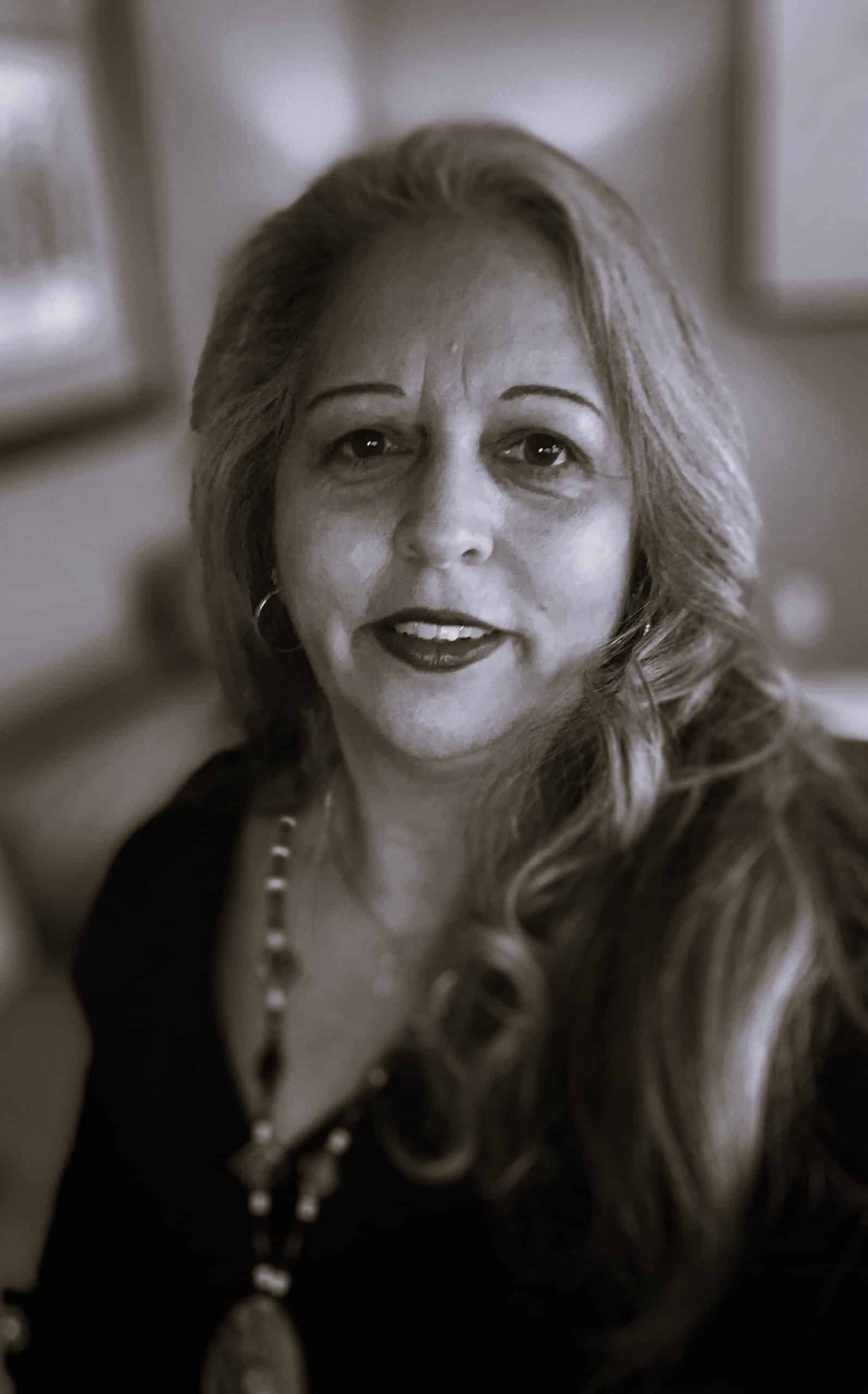
Kelly Hemphill is a Wintu woman from McCloud River who is a board member and vital part of The Wintu Circle nonprofit. She’s significantly involved in the Lelnamis Wintu Qol core group that guides Wintu language development and Wintu Qol, the Wintu language class. (Qol means language and Lelnamis means revitalization). Kelly is a passionate advocate for promoting knowledge about and learning of the Wintu language. She says, “Revitalization, to me, is bringing back our ancestors. It’s bringing back a connection and being able to be proud of where I come from … and growing more into who I am.” You can find details on connecting with The Wintu Circle at the end of our conversation.
How would you like to introduce yourself to readers?
Nehto yet Kelly Hemphill. Poqtah Wintu ibida. Nehto tu.n p’utah c’e.pe.t Mary PuChalakeme, Lucy Silverthorne, Rhoda Campbell biya. Nehto tu.n k’iye. c’e.pe.t William Silverthorne, George Chil-ac-ta-chamy, Jeremiah Blizzard Campbell and Joseph Campbell biya. Ni Winemmem bo.s. Ni po. Georgia bo.s. Lelnamis Wintu qol yo.runada.
What I said was, “My name is Kelly Hemphill. I am Wintu woman. My long time ago grandmothers are Mary PuChalakeme, Lucy Silverthorne, Rhoda Campbell. My long time ago grandfathers are William Silverthorne, George Chil-ac-ta-chamy, Jeremiah Blizzard Campbell and Joseph Campbell. I come from McCloud River. I live in Georgia. I am working on revitalization of Wintu language.
I introduce myself in my language first because I want to honor my elders and who I am. What I’ve also learned is that it fills my spirit and it empowers me to stand tall and be proud of where I come from, who I am and who I’m learning to be. It gives me a true sense of freedom.
What does language revitalization mean to you?
I think, for me, it is having the knowledge of the first language of the Wintu people, a language that is as close to me as my grandmother on my father’s side. I was kind of surprised to realize that use of the language was that close in generations.
My grandmother knew the language, but she wasn’t allowed to speak it in public because speakers were threatened. I’ve never heard anybody say what they would do to them, but it was clear that it was not a good thing. Then, of course, we had the boarding schools. Children sent there were taught English and told not to use our language.
My father never learned to speak Wintu. My aunts and uncles never learned because they were sent away — outside or to another room — when the adults spoke Wintu. In that way, it was taken away from them and from us.
Now that I am a grandmother of 12, I can’t imagine not being able to express myself in my language. Revitalization, to me, is bringing back our ancestors. It’s bringing back a connection and being able to be proud of where I come from, the people I’m continuously learning more about and growing more into who I am.
Do you have a sense of who or what groups in the community, outside of boarding schools, were telling people they couldn’t speak?
I don’t know. It wasn’t spoken of a lot, and so this journey of revitalizing the language helps us to learn the language and how they connected with words and what types of things they said that are different than how we use language today.
I think it was a scary thing for them, because they didn’t know who would say what or how they would be dealt with if they spoke Wintu. I think it was pretty harsh when they were very little, so that by the time they had children, they thought, “I’m not going to speak in front of them.” But we Wintu are very blessed to have people who have come into the community, who were being educated and wanted to learn more. We do have some things in writing, and we have recordings that were allowed since it was for educational purposes.
I don’t know where the lines were drawn, but I’m thankful that I have something that I can look at, learn, share with my grandchildren, revitalize, and then create something a little more modern for the future.
When did you first develop the idea that learning the language was possible and that you could take that journey?
I grew up in Quincy, California, but I did not grow up with my father’s side, the Wintu side of the family. I’ve always had a yearning to know. As a child, you yearn for an absent parent or family member. Of course, I knew them and was connected through birthdays or graduations, things like that. It took time and a tragic life event for me to step up to the plate and say, “I’m ready. I want to dive in.”
It was only 3 years ago that I joined in with Michelle Radcliffe-Garcia. She was already teaching the class and she is also my cousin, so that’s how I knew about the class. I had never heard the language before. I’d seen a few words and a few books, but I was always told to be careful, so I also walked lightly in terms of what I read and what questions I asked. I didn’t know what I should believe. What is real? What is the truth?
What is the project you’re involved in now, and how is it contributing to the revitalization process?
For me, it began out of that language class called Wintu Qol, which literally means Wintu language.
As we continued with class, we began to think there’s more to Wintu Qol than learning the language. Language is community, it’s culture, it’s who you are and how you connect with the community, your family and your history. We then created the Lelnamis Wintu Qol as a core group to check spelling, have deeper discussions on orthography and more. Lelnamis morphed into The Wintu Circle Inc., becoming our 501c3. It’s just amazing how we have popcorned into different things, all the while supporting the development of the Wintu language.
People receive things differently. Each of us have different gifts. People wonder, “Can I do this?” “Of course, you can. Why not?” I was invited to present to two elementary schools to talk about Wintu culture. We can be of assistance in adding language into things like street names, the downtown mural and the Sundial Bridge kiosks.
We have two projects currently that we are working on. I have received a grant to create a book of our class lessons. We also received an apprenticeship to digitize our language into an archival program, which will create a current dictionary and app. We participate, we advise and we let them know we are still here.
We, and the language, were not completely wiped out. We do not have any fluent speakers. So that’s our goal. We’re working on it today and for our future generations. We have some things to learn from the past. That’s important to me, having 12 grandchildren. I don’t want them to face that stumbling block of not knowing where to find information about the language.
Whereas we can talk, we can learn. When I’m gone, I need to have something for them to look at or listen to. I want to make that easier to find for them than it was for me.
The 501c3 nonprofit status has really enabled us to reach out and gather support. Also, with support, we have been able to attend conferences like the Breath of Life conference at UC Berkeley.
What have you learned about yourself by learning the Wintu language?
I think that’s kind of twofold. I did have the desire when I was young to have a connection. I felt that I was missing something or that there was something else there. But growing up in a small town and in a rural area, you don’t realize how much is out there. Also, I have moved a lot during my life. I’ve lived all the way from the Bay Area to Northern California, and now I live in Georgia, so I’ve been able to see a lot more people and their diversity, including where they’re from. I can go to a store 30 to 45 minutes from my home and hear maybe 7 to 10 different languages in the city of Atlanta. So, I have realized how knowing the language helps me understand who a person is and that just because they are different, that doesn’t mean that we have to be separated. We can come together and talk about our differences — or not, but we can respect each other.
There is a level of respect and of understanding the truth of what happened; that language was taken away from us. But I don’t have to stay in that experience of anger. I can move forward. I can receive and give respect.
An important part of the revitalization for me is to be free. I haven’t always known what freedom meant, because I always thought it was for somebody else to be free. The liberation, freedom and strength that it gives me to know something true about myself — not what somebody else is saying or what has been put down in a book — but what I’m feeling. That is probably different for everybody, but it is very important to see other cultures, to have community and to be community in today’s society.
Moving to the deep south was a huge eye-opener for me. It’s almost like having blinders on when you stay in one place. When you move out, those blinders begin to open, because you have an opportunity to see more, do more, and hear more. I’d never been out of the country until last year, and I was so full hearing mostly other languages. That was so cool. I was hearing sounds that I would not have heard prior to three years ago, and I was making connections. People speaking other languages doesn’t make them different. It makes them who they are and shows where they are. All of that is amazing,
Currently, what do you do to support the circle?
I am a board member of The Wintu Circle Inc., Lelnamis Wintu Qol and Wintu Qol. We are engaging with the language the old way, the way that was written in 1935 or that was recorded in the 70s.
Because of that, the language may not have new words like our young people would use today, like email. Somebody has to think about how to handle this. We have an alphabet. We have sounds. How would you write or create a word email? You think about: “What is email? What does it do?” I heard at a Cherokee language meeting that when they had to create a word for email, they interpreted it as fast news.
So, to manage the interpretation of the word, the different symbols, the whole orthography and linguistic matter of putting things together, we needed a group of people that could look at the words and make decisions about how we are going to spell it and what symbols we are going to use. We talk about whether the discussion is something that needs to be opened up to the entire community or if it needs to stay in the Indigenous community.
The state of California has a large number of Indigenous peoples of all kinds; they also receive great support. We’re going to another conference, and we’ll get to listen to and hear from other people. Languages change. There are new words every year, in every language. The English language in 1935 is sometimes very difficult to read and understand. I’m sure somebody will say that about us one day!
I’ve become a nerd. I read the Wintu dictionary and came across a saying that says essentially, “It’s my fault” or “It’s on me.” What do we say today? My bad, or in Wintu — nis man. The young people like to know that they can say nis man, my bad. Things like that get kids interested and we also make sure that we’re keeping up.
But there are also some words that just don’t exist. The Wintu Language Circle will be able, through an apprenticeship, to establish an archival system for our words in the future using the Indigenous Languages Digital Archive (ILDA). Eventually, when we have enough content, the system will create a dictionary that will export into an app. We’re trying to make sure that we’re keeping up with technology to keep things consistent; that’s important.
Maybe one day, the language learning will be in schools. That would certainly be a goal. The Diné have schools in their language, and some of the bigger tribes have complete full immersion schools. We got a grant to create a book. We’re 3 years into the Wintu class, and if somebody just comes into this class right now, they wouldn’t have the vocabulary or know some of the sounds. With the book, they could have a list of vocabulary. We’re also putting games in there so that you can learn the language by having fun. It will be the kind of book that will be a bridge from those in the past to the current class. All of that takes time.
What, if anything, has surprised you about the language that you have learned?
I’ve learned history. I didn’t know how much was available to me through books, newsletters or newspapers. In terms of culture, I have seen that there is just a whole different way of living: the fast pace versus the slow pace, or the necessities versus the wants. For example, if you are making acorn soup, you’re not going to go out and take all the acorns that you can gather. You’re only going to get what you need.
That was an important lesson for me. People weren’t in a rush to have everything be bigger or better. People thought, “How do I do this and still live well? How do I have the things I need to have and not be greedy?” We give a lot, and a lot was taken from us because of our giving and openness. Now we have another opportunity for change. And change is necessary to grow and keep moving.
It seems that there are a number of different Indigenous language projects locally. What opportunities do you see in these multiple efforts happening at the same time?
I think it’s great. We need to come together, because the common denominator is that we’ve lost something, and we need to find it. We need to heal from it. We need to build from it, individuals or a community, figuratively and literally. More hands are better.
The next conference that we’re going to is bringing together a group of young leaders and families that are working on learning their language. You can find projects that help people do that or sponsor people to learn how to speak their language. The idea is to think about what you can create. For example, I’m creating a book on our lessons. Another person is creating a digital book on floral and fauna. Another group might expand simple games people already know, games like Scrabble, but using your language’s letters. You get some blank pieces and create your own letters so that people will be able to create their words.
There are things that we can all do together and so many different groups in the same community doing different things. There is a Pit River home where you can attend an immersion camp for a week. If you cross the line of the kitchen, you can only speak your language there. You can get help, of course, but there are parameters about what you can do.
These things are happening with different tribes in the state of California and in Oregon. It gives you a level of comfort to say, okay, I can do this, too. I might not be where they are, but I’m going to get there.
Is there anything else I should have asked you?
What keeps coming across to me is yesterday, today and tomorrow. You have to go deep into yesterday and then bring that out and then go somewhere else. As you’re digging, you’ll be sparked, and your spark is going to look different from somebody else’s. Your spark may be a book or being a speaker in the school, or it may be in just sitting at a computer and archiving information so that it is accessible to more people.
Think: What are you leaving? What are you doing for future generations? What are you going to leave behind? Leave a path to the things that you learned so that people can use what was found as a springboard into something that could be bigger. Something that lets people know this is bigger than you. It encompasses your entire ancestry and future.
I understand that it’s not going to be easy. I can teach my grandchildren easier than I can teach my children. They’re grown and they want to do their own thing. My grandchildren say, “Oh, how do you say goodnight, grandma?” So, we say “cala cipi.” Now my grandkids will say “yole” instead of saying goodbye, which is a shortened version of see you later.
Do what you can when you can, and find someone, maybe a relative like Michelle, that will teach you whatever you need to know. I’m hoping The Wintu Circle will be around for a long time and will grow. I’m hoping that people will come and say, “Hey, I’m here, and I want to learn more. Where do I go? How do I say this?”
Right now, we have an Instagram account so that people can see some words in print and hear some words spoken. We’re at the very beginning stages, but I see nothing but bigger and more moving forward. Someday I’ll just be able to go to the Redding area and meet all my relatives and participate in person.
Do you have a correction to share? Email us: editor@shastascout.org.
Author

Comments (1)
Comments are closed.
Related Articles
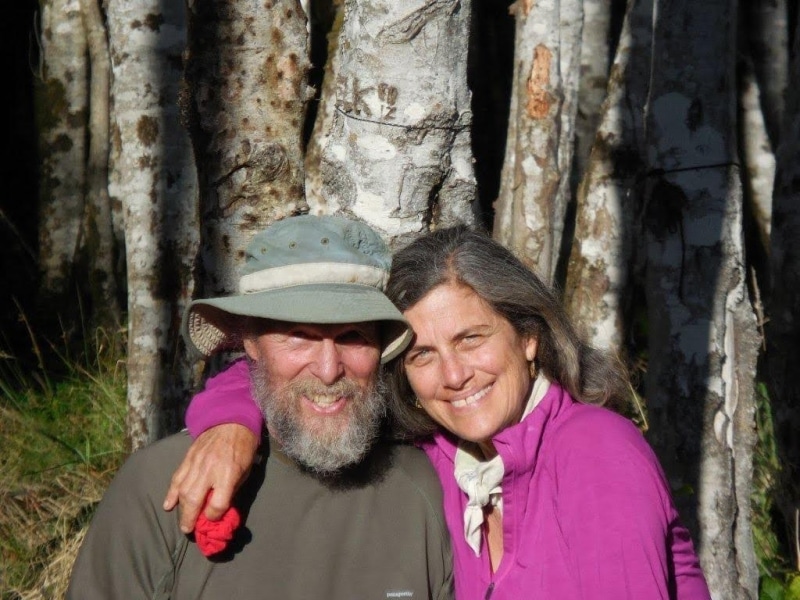
Underground Good: Terri and Gary Orwig
“I love to encourage people to become volunteers. There are so many opportunities out there that could match your interests. If they have time, it’s such a fulfilling thing for your spirit, for your heart. That’s important to me. I want to leave this earth knowing I did good work, that I helped people.”
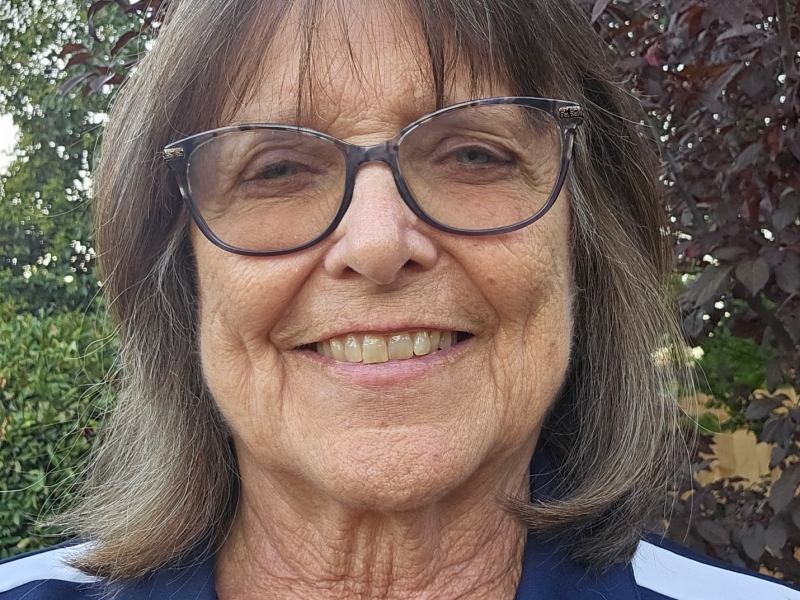
Underground Good: Linda Rube of Goodwater Crossing
“It has been surprising to me to see how well a housing first model works! When people step up and take responsibility for themselves and make decisions for themselves, they’re much more apt to follow through. They are doing what they want to do with their lives. There’s hope in that.”
Underground Good: Greg Lawson and Vicki Ono
“I told him I hadn’t brought a guitar and he sent me to borrow one from a woman who turned out to be Sarah Lee Guthrie, Arlo Guthrie’s daughter. That was an incredible moment for me, to be standing in the Capitol Mall, on a stage, using Guthrie’s guitar and singing one of my songs about Darfur.”
Fascinating article. It is so powerful to think about reclaiming this language and sharing it with young people.